Kilbolane Castle: A Fifteenth- or Sixteenth-Century Fortification in Ireland


Site at a Glance
- Rating
- 4.6
- Popularity
- Very Low
- Country
- Ireland
- Primary era
- Medieval
- Eras represented
- Medieval, Early Modern
- Civilizations
- Norman
- Site type
- Military
- Remains
- Castle
On this page9 sections
History
Origins and medieval ownership
Kilbolane Castle is a fifteenth- or sixteenth-century fortification in Ireland, built in a thirteenth-century Norman style on Kilbolane Hill near Milford, County Cork. The site was reportedly established as a stronghold shortly after the arrival of Strongbow, the Anglo-Norman nobleman Richard de Clare whose intervention helped establish Anglo-Norman power in Ireland during the twelfth century. It was probably associated first with the De Cogans, before passing to the Earls of Desmond and then to the FitzGibbon branch of the Fitzgerald family.
The castle grounds were church property held by the Bishop of Cloyne. The Pipe Roll of Cloyne, a medieval administrative record of the Diocese of Cloyne, notes this ownership in 1291. Father Vaughan stated that the Synan family had an interest in the site before moving to the Doneraile area.
Sixteenth-century changes and destruction
In 1587 the castle was granted to Hugo Cuffe, who could not exercise effective authority in the surrounding area. In 1590 it passed indirectly back to the FitzGibbons when it was granted to Sir William Power, the husband of Helena FitzGibbon.
Cromwell’s forces destroyed the castle in 1642. Two towers survived the destruction, preserving part of the fortification’s defensive structure.
Later ownership and preservation
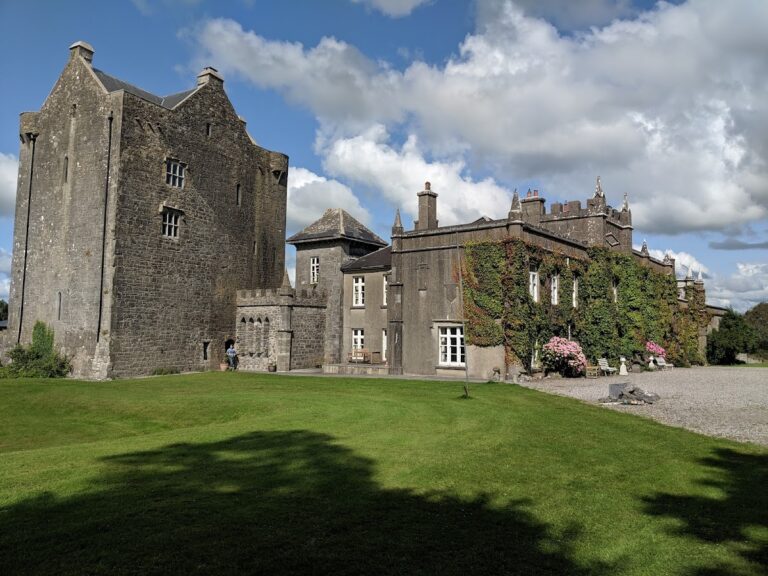
Captain John Nicholls acquired the east tower and built a single-storey house against the enclosing wall. He later passed the property to his eldest grandson, John Bowen, who began constructing Kilbolane House at the end of the castle garden shortly after 1695.
After the remains of an ancient church were removed, the Synan family tomb, dated 1446, was transferred to the new church building. A further church was erected near the castle in 1832, chiefly at the expense of the Reverend J. Bruce and with support from the Ecclesiastical Commissioners of Ireland.
The ruins stood vacant for several years before David O’Leary Hannigan purchased them in 1897. They are now maintained by the Office of Public Works, the Irish state body responsible for many national monuments and heritage sites, and Kilbolane Castle is regarded as a National Monument of Ireland.
Remains
Castle fortifications
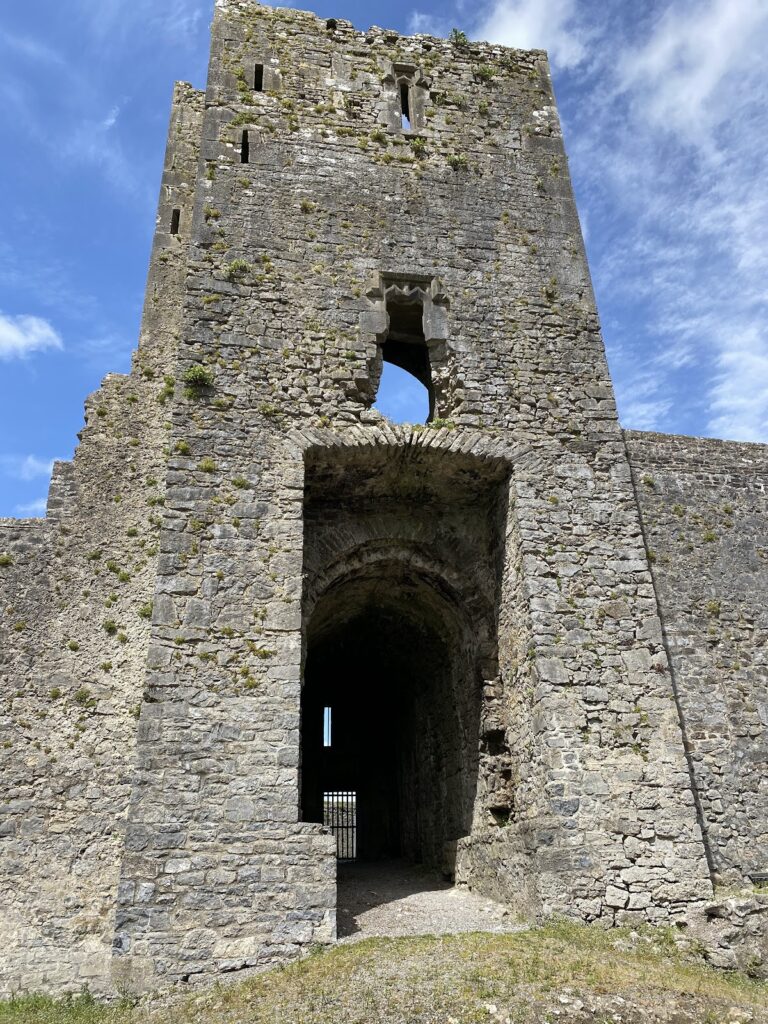
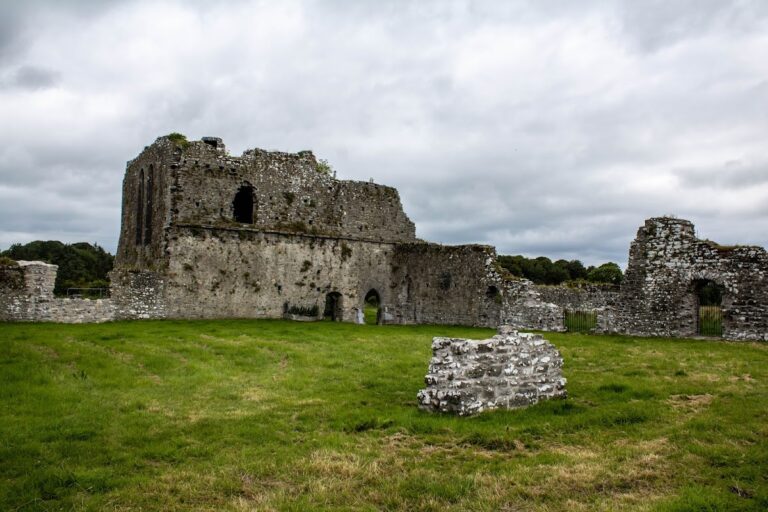
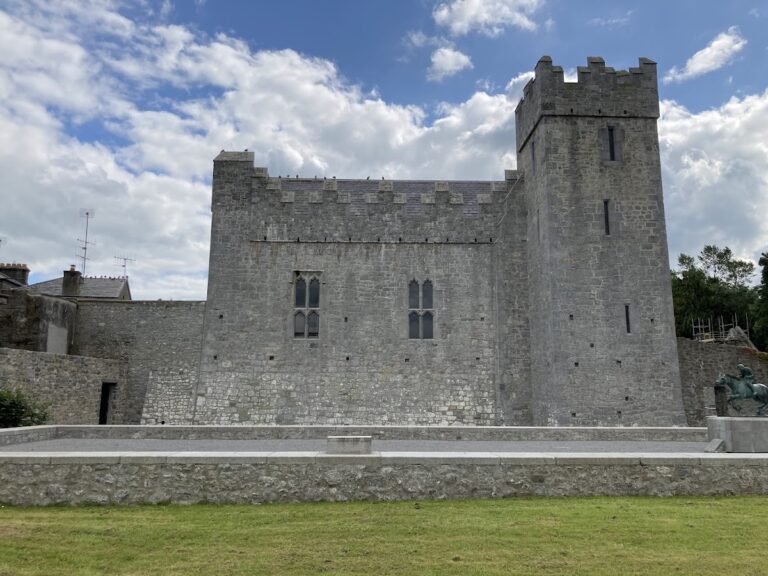
Kilbolane Castle is a lowland fortification of rubble stone positioned on Kilbolane Hill. High walls were joined by circular guard towers and surrounded by a moat. This arrangement has been compared with Liscarroll Castle and Ballincollig Castle. The castle is now ruined, but the south tower and the western section of the enclosing wall remain intact. The surviving high walls and tower, particularly when viewed from the southwest, convey the scale and original layout of the stronghold.
Associated buildings and memorials
East tower and later house
The east tower was acquired by Captain John Nicholls, who built a single-storey house against the castle’s enclosing wall beside it. Kilbolane House was later begun at the far end of the castle garden, creating a separate later building associated with the castle property.
Synan family tomb
The Synan family tomb bears the date 1446 and was associated with the ancient church formerly located at the site. After that church was removed, the tomb was moved into the new church building erected nearby in 1832.
Nearby sites