Château de Chanzeaux: A Historic Residence in France

Site at a Glance
- Rating
- 4.7
- Popularity
- Very Low
- Country
- France
- Primary era
- Modern
- Eras represented
- Early Modern, Modern
- Civilizations
- French
- Site type
- Domestic
- Remains
- Castle
On this page9 sections
History
A Regency residence, 1769
Château de Chanzeaux is a historic residence in Chanzeaux, France, now part of Chemillé-en-Anjou. Jacques Gourreau built the present seigneurial residence in 1769 in the Regency style, a French architectural and decorative style associated with the period between the reigns of Louis XIV and Louis XV. The building rose beside the Hyrôme on the ruins of an older manor.
Destruction during the Vendée uprisings
Chanzeaux was caught up in the Vendée uprisings, counter-revolutionary rebellions in western France during the French Revolution. In January and April 1794, Republican forces known as the Infernal Columns burned the château, the church, and almost all the houses in the settlement. Their operations in the Vendée involved widespread destruction during the conflict.
Nineteenth-century transformation
After Rose Gourreau de Chanzeaux inherited the residence from her father, she and her husband, Théodore de Quatrebarbes, commissioned the Angevin architect René Hodé to transform it into a château between 1846 and 1848. The work adopted the troubadour style, a nineteenth-century revival that idealized medieval and Renaissance architecture. Around 1847, the Count of Choulot designed the estate’s 32-hectare park.
Heritage status
Château de Chanzeaux was entered on the register of French historic monuments in 1980. The property remains privately owned.
Remains
Residence and exterior design
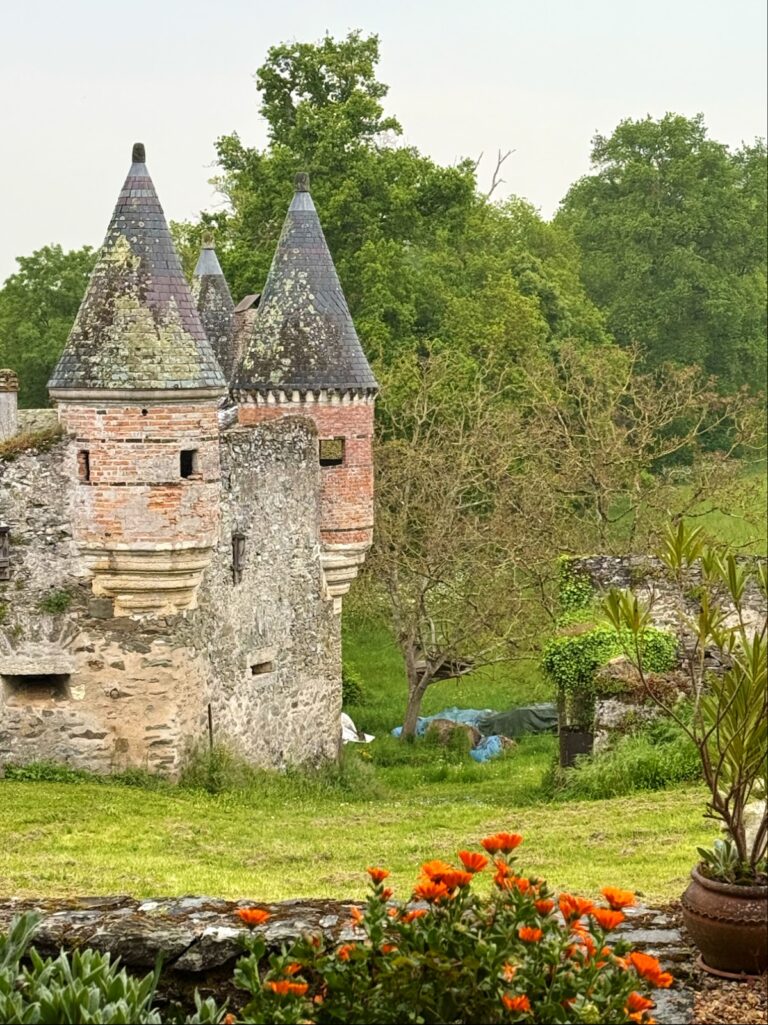
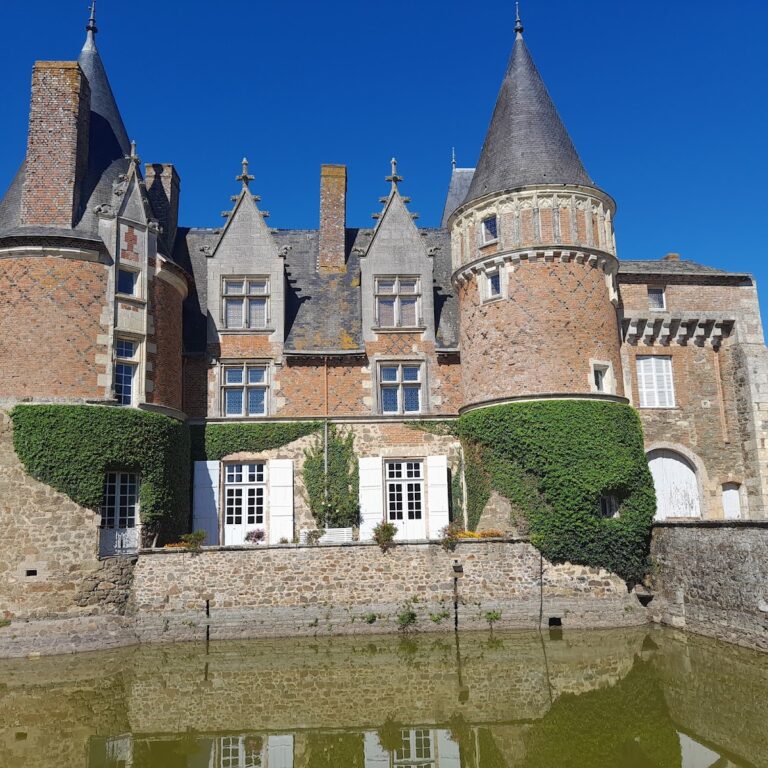
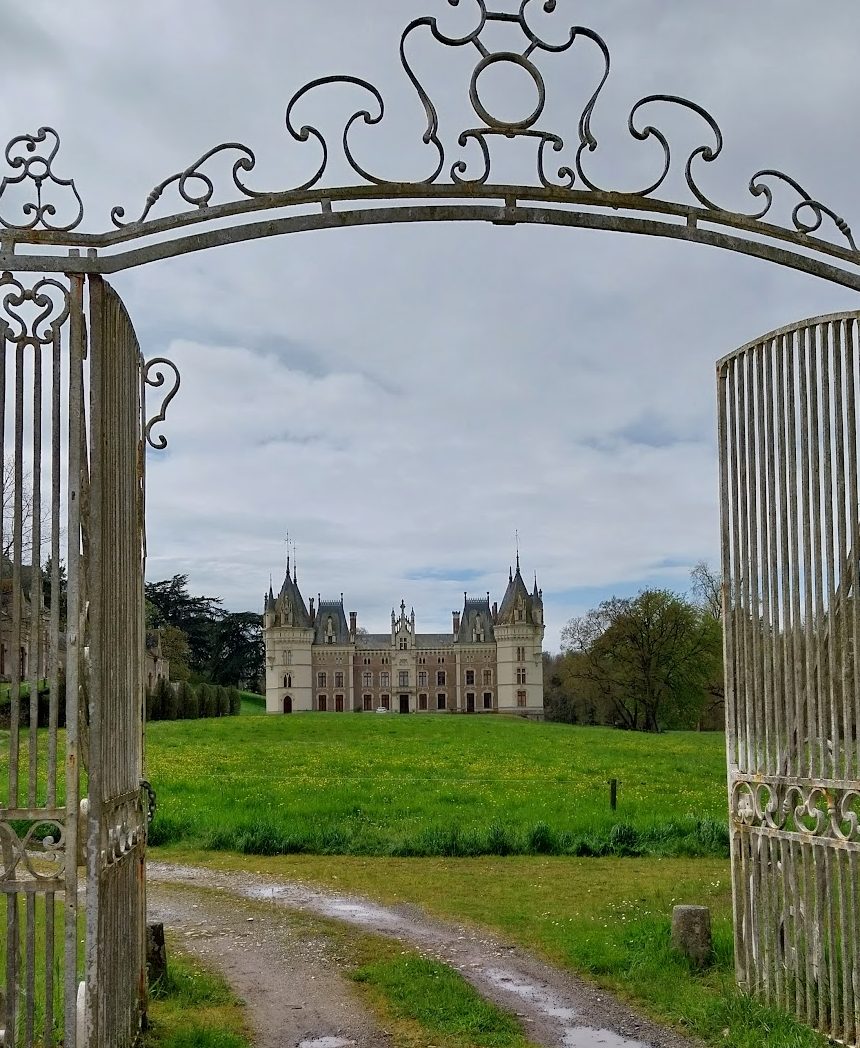
The château is arranged as a large bourgeois residence with a central building and two pavilions. Four octagonal towers were added during the nineteenth-century transformation, along with steeply tapering roofs, dormer windows, pepper-pot turrets, neo-Gothic chimneys, and a false wall-walk. The estate also contains service buildings, a lodge, and an old bridge crossing the Hyrôme.
Interior rooms and collections
Inside, the residence includes an entrance vestibule, grand salon, dining room, billiard room, library, chapel, and bedrooms. Its collections include works of art and memorabilia connected with the Vendée, among them a chalice associated with Abbé Blanvillain and a processional cross from Pin-en-Mauges associated with Cathelineau. A gallery presents paintings describing the histories of the Gourreau and Quatrebarbes families and of Anjou. The library displays the original plaster model of the statue of King René, made by the sculptor David d’Angers in 1853. King René was René of Anjou, a fifteenth-century prince and ruler associated with Anjou.
Images of the château
A portrait of Rose Gourreau de Chanzeaux by Hortense Haudebourt-Lescot, dating to around 1840, shows the residence before the alterations that gave it its neo-Gothic appearance. A lithograph based on a drawing by Olivier de Wismes, dated 1854 to 1862, also depicts Château de Chanzeaux.