Rahan Castle: A Fifteenth-Century Clan Stronghold in Ireland


Site at a Glance
- Rating
- 4.2
- Popularity
- Very Low
- Country
- Ireland
- Primary era
- Medieval
- Eras represented
- Medieval
- Civilizations
- Irish
- Site type
- Military
- Remains
- Castle
On this page8 sections
History
Rahan Castle is a ruined fifteenth-century lowland castle in Ireland, built by Clan Suibhne, also known as the McSwynes or McSweeneys. Located near Dunkineely on the St John’s Point peninsula in County Donegal, it served as a stronghold for the clan, which retained the surrounding land until the Plantation of Ulster.
Clan Suibhne and the Castle’s Construction
Clan Suibhne was a Gaelic Irish clan associated with County Donegal. The McSwynes probably came to Ireland from Argyll in Scotland during the thirteenth or fourteenth century, although another tradition traces the clan to Suibhne O’Neill, king of Ailech. The family served the O’Donnells as foot soldiers and standard bearers, and Irish clan leaders also employed its men as galloglasses, heavily armed foreign mercenaries. In later conflicts between the O’Neills and O’Donnells, the McSwynes fought alongside the O’Neills.
The McSwynes built Rahan Castle in the mid-fifteenth century and held the estate until the early seventeenth-century Plantation of Ulster. This colonization of much of Ulster by settlers, especially from Britain, followed the English Crown’s conquest and confiscation of Gaelic territories. After the conquest, the castle and its lands passed to Scottish settlers.
Estate Ownership and Litigation
William Stuart and John Murray were associated with the transfer of the estate after the conquest. John Murray received the title Earl of Annandale in 1625. An earl was a high-ranking British nobleman. When Murray died in 1640, his son James inherited the castle and title. James died without children, and his cousin Robert Creighton then took control of the castle and adopted the name Murray.
Ownership became contested after the Rebellion of 1641. The dispute between the Creightons and Robert Murray of Scotland continued during the reign of Charles II, king of England, Scotland, and Ireland from 1660 to 1685, and involved courts in Ireland, Scotland, and England. The Creightons eventually lost the estate, while the castle became unoccupied and rapidly deteriorated.
The conflicting claims remained visible in the Irish census of 1659, which listed Sir Robert Murray, Archibald Pearson, John Griggs, and James Creighton as claiming ownership of Rahan Castle. Robert Murray of Broughton in Scotland and his cousin later obtained confirmation of ownership, but the dispute continued. The Scottish Murray family could not conclusively establish its title and struggled to sell the estate even in the nineteenth century.
Decline and Later Changes
Trustees in Dublin administered the property, while local tenants eventually paid rent to David Creighton because they favoured the Irish Creighton family. The Murrays remained the official owners until the Irish Land Commission took control of the land and castle in the twentieth century. The commission was a state institution that acquired and redistributed landed estates during Ireland’s land reforms.
By the nineteenth century, the ruined castle was also being treated as a source of building material. In 1844, stone from Rahan Castle was reused to construct the parish church at Killybegs, dedicated to the Annunciation.
Remains
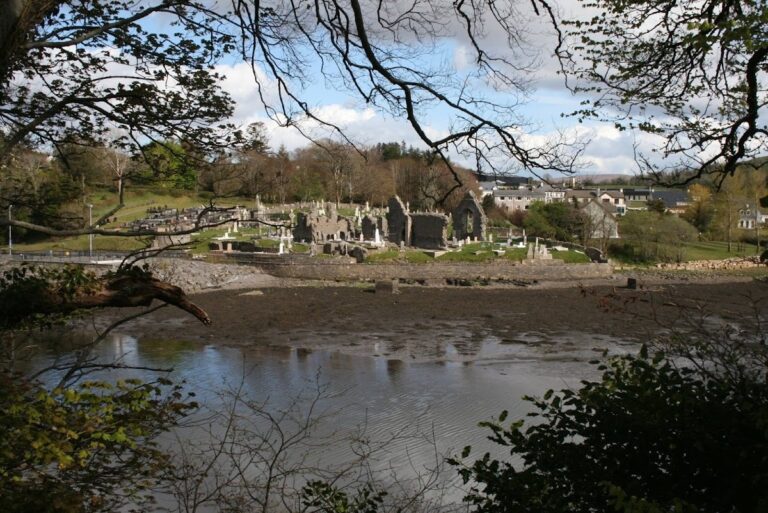
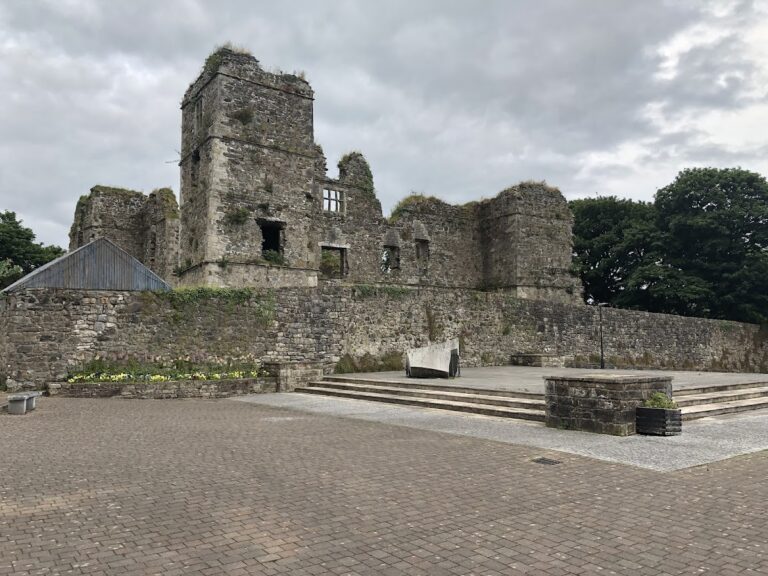
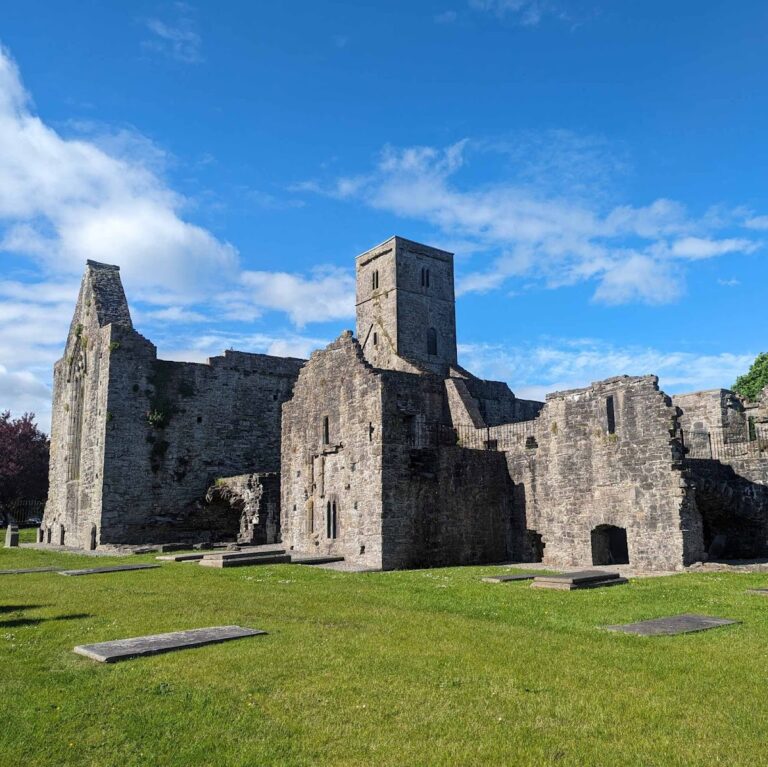
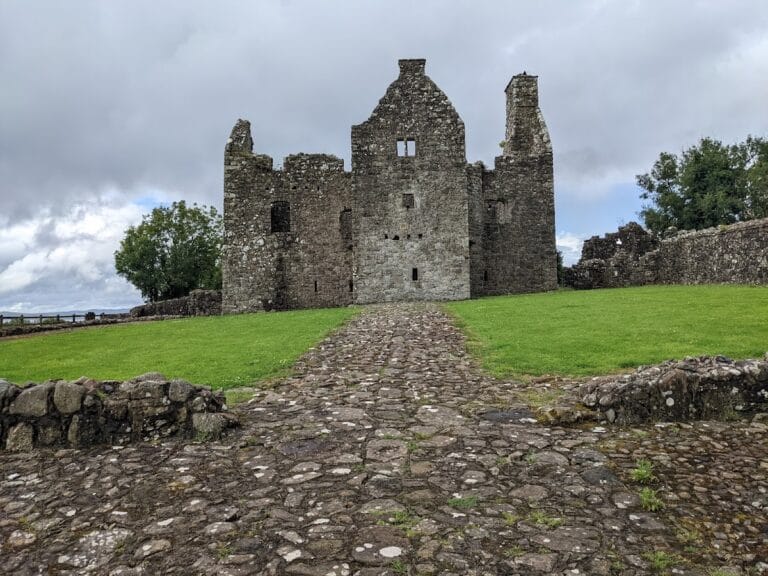
Rahan Castle survives as a lowland castle ruin on the long, narrow promontory of St John’s Point near Dunkineely. Built in the fifteenth century from rubble stone, the structure has been heavily battered by Atlantic storms. Only poor and scanty ruins remain, though they are visible from the promontory.
Surviving Features
Rubble-Stone Castle
The castle’s surviving fabric consists of fragmentary rubble-stone remains. Its exposed position on the St John’s Point peninsula has subjected the ruins to severe Atlantic weathering, leaving little of the fifteenth-century stronghold intact.
Ancient Stone Crosses
Ancient Irish stone crosses are preserved near the castle. They have been described as among the oldest surviving examples of their kind and form a separate group of historic remains associated with the site.
Nearby sites