Bočac Fortress: A Medieval Defensive Stronghold in Bosnia and Herzegovina


Site at a Glance
- Rating
- 4.5
- Popularity
- Very Low
- Country
- Bosnia and Herzegovina
- Primary era
- Medieval
- Eras represented
- Medieval, Early Modern
- Civilizations
- Kingdom of Bosnia, Ottoman
- Site type
- Military
- Remains
- Castle
On this page6 sections
History
Bočac Fortress is a medieval Bosnian fortress in Bosnia and Herzegovina, built at the beginning of the fifteenth century on the left bank of the Vrbas River between Banja Luka and Jajce. It formed part of a chain of strategic defensive positions in the Vrbas valley, alongside Banja Luka, Zvečaj, Greben, and the old city of Jajce.
Medieval Origins and the Banovina of Jajce
The fortress was established during the medieval period, although its first surviving documentary mention dates from 1494. It later became part of the Banovina of Jajce, a historical territorial district centered on Jajce and closely associated with the Vrbas valley. Its position contributed to the control and defense of this strategically important route.
Ottoman Administration and Defense
Bočac came under Ottoman control during the sixteenth century. The new authorities maintained the fort, strengthened its defenses, and stationed a garrison there. An anonymous description called it a strong fortress for its period, while also noting that it possessed relatively few cannons.
The fortress was administered by a dizdar, an Ottoman commander responsible for the administration and defense of a fortified site. The first known holder of the office was Smailaga, son of Muhamed, who served from the middle of May 1617 until after March 1626. In 1704, the position belonged to Mehmedaga, son of Alija, who was Smailaga’s son. Mustajaga held the office in 1793, and another Mehmedaga was its commander in 1815.
Endowments and the Settlement Near Bočac
Before May 1617, Smailaga founded a mosque, a mekteb, or elementary Islamic school, and a tekija, a Sufi lodge or prayer house, in Triskovina, possibly his native village. He endowed the institutions with 30,000 akçes, small Ottoman silver coins used in financial transactions, together with private property and the Ponir and Ponikve agricultural estates. Income from those estates supported the institutions, and the later settlement of Agići developed in the area.
A foundation document from May 1617 also refers to a small settlement, or varoš, near Bočac. In a decree issued in Rajab in 1626, both agricultural estates were converted into private property. The timing may have reflected the special importance of Rajab in Islam.
Abandonment and Modern Recognition
Bočac Fortress was abandoned shortly before 1833 and was then described as uninhabited. It was not included in the 1838 census. Evidence found by the writer Jukić indicates that two cannons remained at the fortress around 1850.
Dr. Ćiro Truhelka made the first study of Bočac’s walls in his work Kraljevski grad Jajce. The historian Hamdija Kreševljaković also examined the fortress and its historical records. In 2005, the Commission for the Preservation of National Monuments of Bosnia and Herzegovina declared Bočac Fortress a National Monument of Bosnia and Herzegovina.
Remains
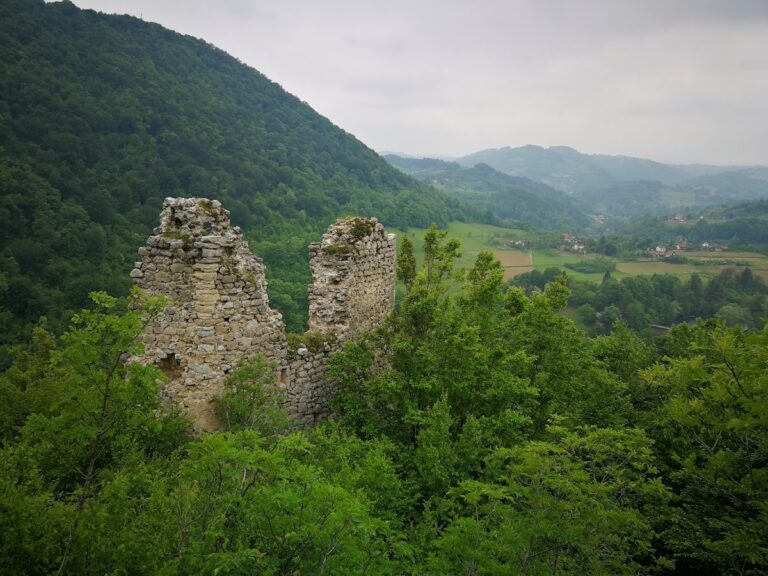
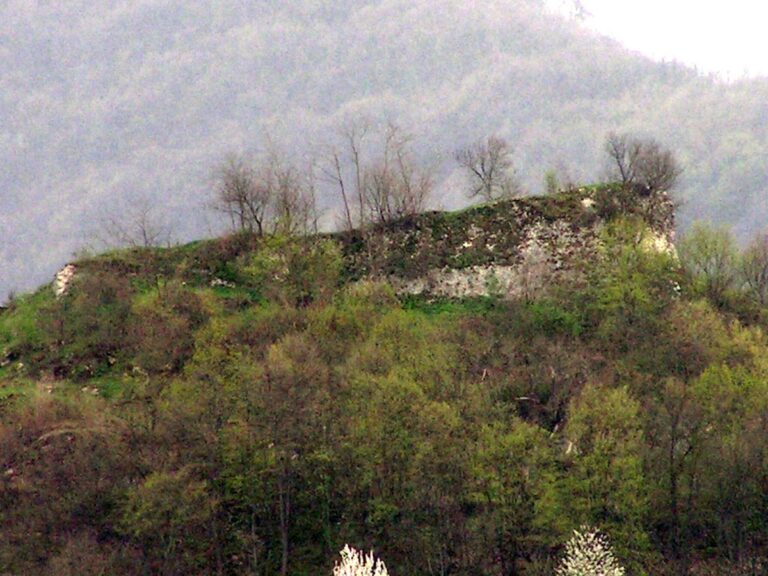
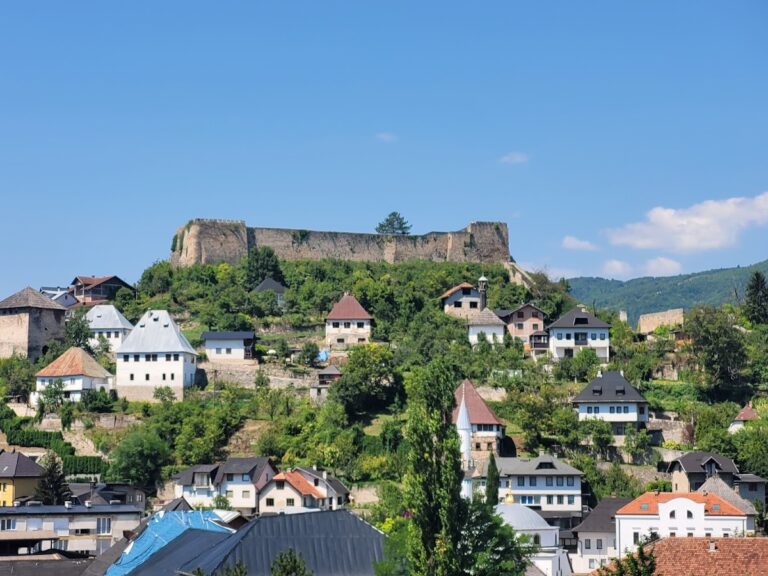
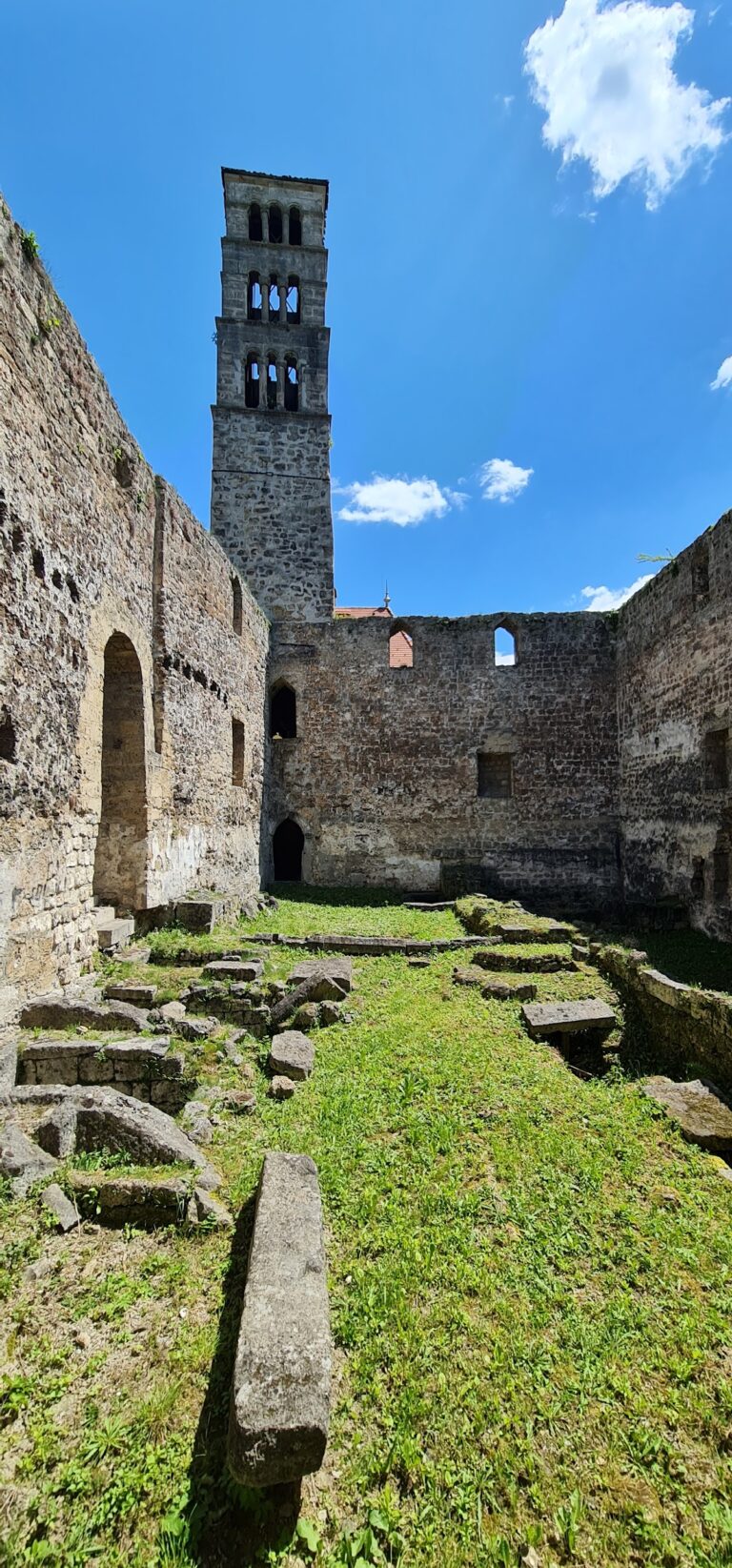
Bočac Fortress stands above the reservoir of the Bočac Hydroelectric Power Plant and below the settlement of Bočac, with its surviving walls positioned on the left bank of the Vrbas River. Powerful walls and towers enclose a spacious courtyard, forming a compact defensive complex. The medieval fortifications were reinforced during the Ottoman period, and the walls and towers remain relatively well preserved. The surviving structure presents Bočac as a robust defensive work whose military strength was expressed primarily through its enclosing walls and towers, despite the fortress’s comparatively small number of cannons.