Castello di Castroreale: A Historic Fortress in Sicily


Site at a Glance
- Rating
- 4.6
- Popularity
- Very Low
- Country
- Italy
- Primary era
- Medieval
- Eras represented
- Medieval
- Civilizations
- Kingdom of Sicily, Norman
- Site type
- Military
- Remains
- Castle
On this page8 sections
History
Castello di Castroreale is a historic fortress in Italy, above the town of Castroreale in Sicily. Its initial construction dates to the eleventh century, when the settlement developed as a simple rural community during the Norman-Swabian period, the era that began with the Norman conquest of Sicily and continued under the Hohenstaufen, or Swabian, dynasty. The castle occupies the site of ancient Cristina or Crizzina and later became a stronghold guarding routes and settlements in northern Sicily.
Norman and Swabian Foundations
After the Norman reconquest, Roger I of Sicily assigned the fief in 1092 to descendants of Goffredo Borrell’s family. The fortification and its castellany formed part of the territorial holding of Milazzo. Earlier, the area had been involved in the wider contest for northern Sicily during Muslim rule. Muslim forces attempted to conquer it in 836 and 837, while Arab control was reaffirmed after the battle of Milazzo in 888. Rometta, the last Christian fortress on the eastern Tyrrhenian coast, fell between 903 and 905, and Messina remained the final Byzantine stronghold to surrender.
Reconstruction under Frederick III
The castle took on renewed importance during the Wars of the Vespers, the conflicts in which the Angevin rulers of Naples contested control of Sicily with the Sicilian kingdom. In 1324, Frederick III of Sicily rewarded the town’s loyalty by promoting the rebuilding and strengthening of a fortified castle. He also granted privileges intended to attract settlers around the stronghold. Its purposes included defending the plain of Milazzo, overseeing the Tyrrhenian coast, and controlling inland routes toward the Peloritani and the fortified centers along the Ionian coast.
Around 1330, Frederick III gathered inhabitants from Curatio, Nasari, Protonotario, Bilichi, and Rudi around the castle and further reinforced the fortress. The settlement then became known as Castroreale, a name associated with its royal connections and with a royal recreational residence used for hunting and leisure. During Frederick’s rule, the fief was assigned to Ferrario de Abellis. It passed to Vinciguerra d’Aragona, baron of Militello, in 1360, then to Raimondo de Azuar during the reign of Maria of Sicily, Bartolomeo Gioieni around 1399, and Federico Spadafora, baron of Venetico, in 1408.
Military Use and Later Administration
In 1535, the castle resisted mutinous Spanish troops from La Goulette during the conflict connected with the Ottoman struggle for Tunis. The episode occurred amid the Mediterranean rivalry between Charles V, the Habsburg emperor and king of Spain, and the Ottoman admiral Khayr al-Din Barbarossa. García Álvarez de Toledo y Osorio, viceroy of Sicily, worked to suppress and settle the revolt.
In 1608, during the reign of Philip III of Spain, the fief passed by dowry from the Gioieni family to Francesco Ardoino, marquis of Roccalumera. By 1650 it belonged to the prince of Carini of the La Grua family, under Philip IV of Spain. From 1674 to 1678, the castle served as a military garrison during the anti-Spanish revolt of Messina.
By about 1750, the fortification was described as a roughly circular stronghold with additional outer defenses. Castroreale became a district capital in 1813 and, after Messina surrendered to the Bourbons in 1848, served as the seat of provincial institutions. The town and castle were also involved in military operations in 1860 during the campaign associated with the battle of Milazzo and the overthrow of Bourbon rule.
The Paratore family, barons of Tripi, were the last recorded lords invested with the castellany. Around 1875, the structure was designated as a district prison. It is now municipally owned. During the Aragonese period, the adjacent Church of the Candelora served as the castle’s palatine chapel, a church associated with a royal or princely court.
Remains
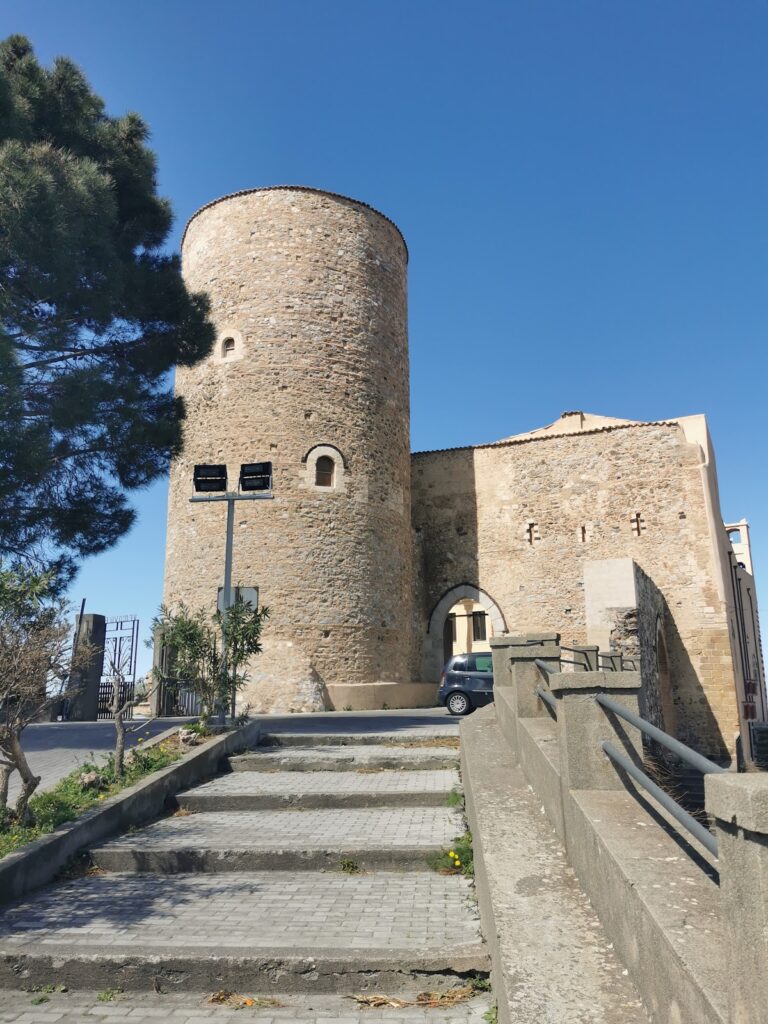
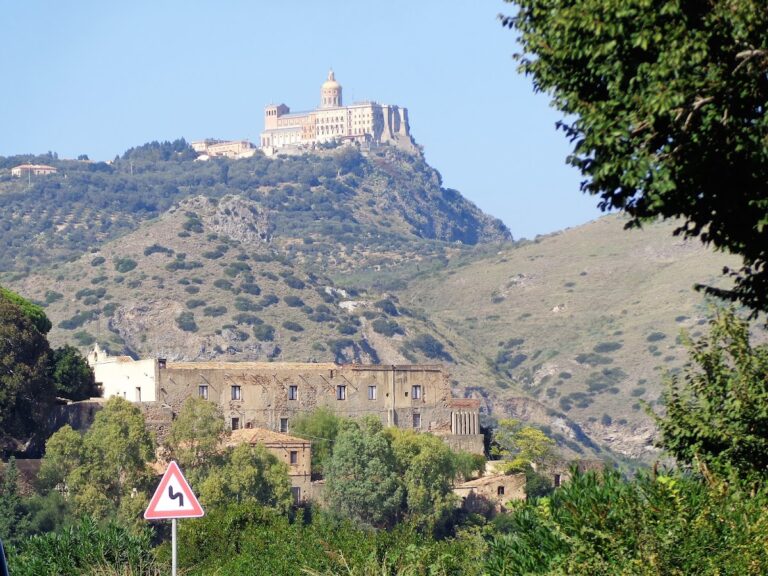
The surviving complex stands on the summit of a hill above the ancient settlement, a short distance from Castroreale’s present historic center. Its principal remains form a fortress with a roughly circular plan and additional defensive works. The central structure is a circular tower joined to buildings from different periods, reflecting the castle’s long development and changing uses. A description from 1558 called it a very large castle on a steep rocky outcrop, while the account from about 1750 emphasized its circular form and outer defenses.
Castle and Chapel
Keep
The main surviving feature is the mastio, or keep, also called the main tower or donjon. It consists of a circular tower connected to later buildings. One of these attached structures is designated for use as a youth hostel. The castle is currently usable, and the surviving tower and attached buildings preserve the central arrangement of the hilltop stronghold.
Church of the Candelora
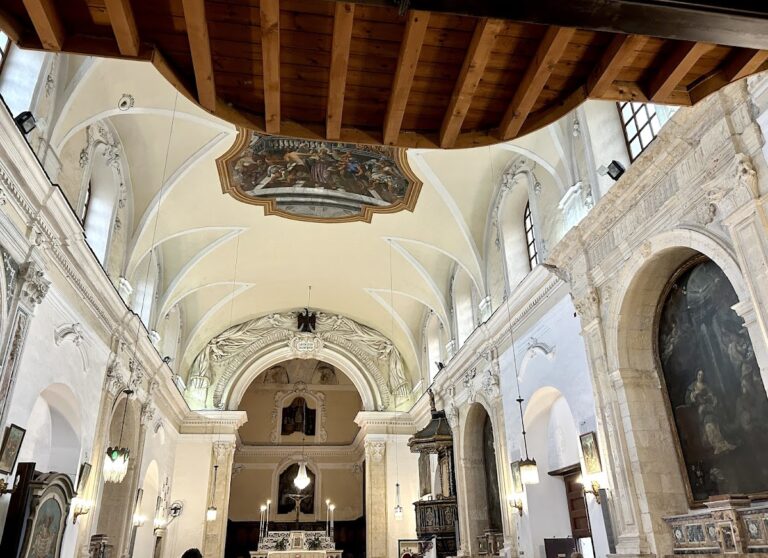
The adjacent Church of the Candelora is physically associated with the castle. During the Aragonese period it served as the palatine chapel, linking the fortified complex with the royal functions that shaped Castroreale’s development.
Nearby sites