Altsachsenheim: A Medieval Hilltop Castle in Germany


Site at a Glance
- Rating
- 4.1
- Popularity
- Very Low
- Country
- Germany
- Primary era
- Medieval
- Eras represented
- Medieval, Early Modern
- Civilizations
- Holy Roman Empire
- Site type
- Military
- Remains
- Castle
On this page8 sections
History
Altsachsenheim is a ruined medieval hilltop castle in Sachsenheim, Germany, probably built during the thirteenth century. Traditionally regarded as the ancestral seat of the Lords of Sachsenheim, it was first documented in 1240. The castle is also known as the Outer Castle, in contrast to Großsachsenheim’s moated Inner Castle, and was called Obermberg in 1787. The name Eyßenburg likewise derives from the meaning “Outer Castle.” Its association with the edelfrei, or free-noble, status reflects the high social standing attributed to the castle’s medieval lords.
Origins and Early Development
The traditional connection with the Lords of Sachsenheim is not the only interpretation of the castle’s origins. The State Office for Monument Preservation of Baden-Württemberg, the regional authority responsible for archaeological and monument-heritage investigation, considered construction by the related Lords of Remmingen more likely. This view is linked to archaeological evidence for an eleventh-century predecessor at Großsachsenheim Castle. The Herrenhof, or manor estate, in the abandoned settlement of Remmingen or Remmigheim may instead have been the original ancestral seat of the Sachsenheims. The family may have formed a branch of the Remmingen lineage, while another branch could have adopted the Sachsenheim name after acquiring the lordship.
Investigation carried out while the surviving structure was being secured identified three building phases dating approximately from 1250 to 1350, followed by another phase that cannot be dated more closely than the fourteenth to sixteenth centuries. The final phase may be the only one associated directly with the Lords of Sachsenheim. This sequence indicates that the castle developed through several stages rather than being completed in a single campaign.
Conflict, Ownership, and Decline
Altsachsenheim was drawn into the feud between the Sachsenheims and Württemberg during the Schlegler War, a late-medieval conflict involving Württemberg and the Schlegler alliance. Troops of Count Eberhard III of Württemberg destroyed many Sachsenheim properties, and evidence identified during monument investigations indicates that Altsachsenheim was also affected.
Around 1430, the castle passed to the Lords of Nippenburg. When the Lords of Sachsenheim became extinct, their remaining possessions passed to the House of Württemberg, the ruling dynasty of Württemberg, in 1561. The castle was already described as a ruin in 1685. Its location directly beside the boundary between Großsachsenheim and Untermberg may reflect the later acquisition of part of the former castle area by winegrowers from Untermberg.
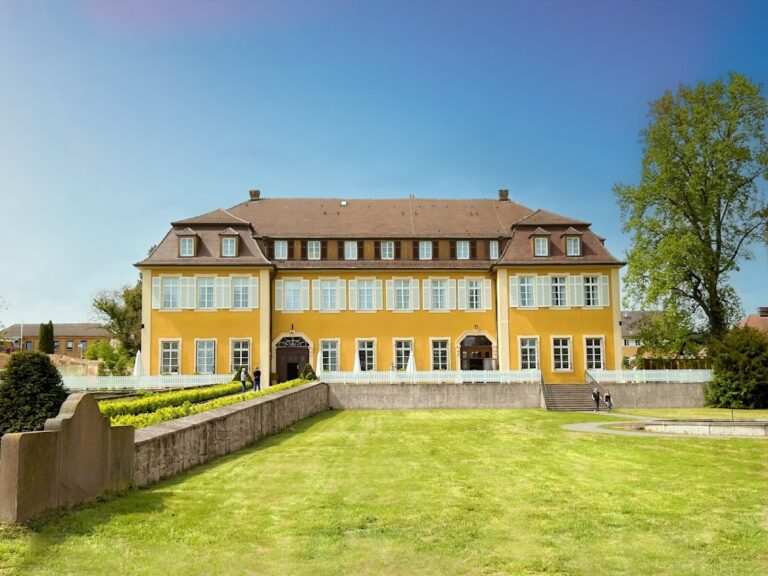
Egartenhof, about 50 metres north of the ruin, developed from an estate belonging to the castle. An inscription dates its manor house to 1571 and names Johann Rösslin, the Württemberg bailiff, as its builder. A large wine press beside the house may belong to the same period. These buildings represent a later estate associated with the former castle property.
Remains
Castle Structure and Setting
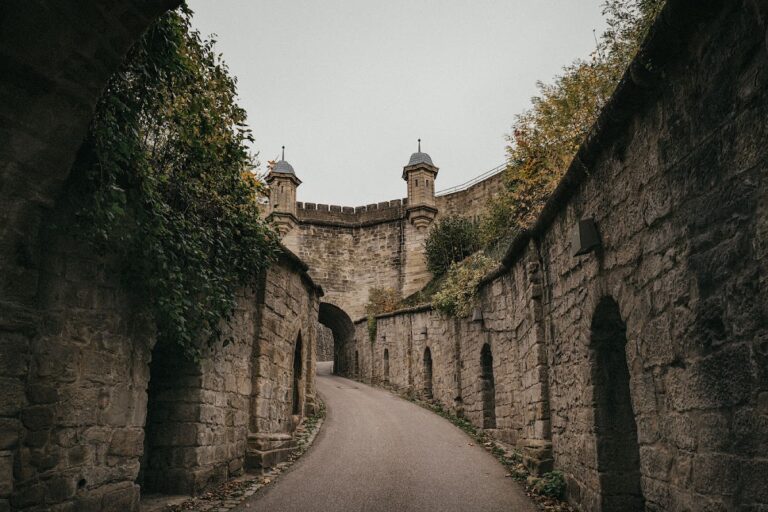
Altsachsenheim stands at the edge of a plateau above the Enz valley and the settlement of Untermberg, at about 230 metres above sea level. West of the castle, a steep hollow way descends from Egartenhof through a ravine towards Untermberg. The elevated position controlled movement through the valley and enabled the castle lords to collect tolls from raftsmen and carriers.
The inner castle has an almost square plan, measuring 30 metres from north to south and just under 28 metres from east to west. Its fortress-like massing resembles that of Dürrmenz Castle near Mühlacker. The surviving walls reach up to 14 metres in height and are generally about 3 metres thick, while those on the valley side measure approximately 2.4 metres. The north and west walls have no windows. Access is through the entrance into the inner castle, whose surviving fabric consists of the outer walls.
Corbel stones inside the ruin show that the former buildings rose to three storeys. One building stood along the western side, while others occupied the northeastern and southeastern corners. Their former positions can still be discerned, although no visible parts of these internal buildings survive beyond that evidence.
Associated Buildings and Tower
Egartenhof Manor and Wine Press
The manor house at Egartenhof stands approximately 50 metres north of Altsachsenheim. Its inscription gives the date 1571 and identifies Johann Rösslin, the Württemberg bailiff, as its builder. A large wine press building stands beside it and may have been constructed at the same time, linking the surviving estate buildings with the later use of land that had belonged to the castle.
The Türmle
The Türmle is a two-storey tower about one kilometre west of Altsachsenheim. Its portal bears the date 1574. The tower is unlikely to have been an outpost of the medieval castle. Instead, its date suggests that Johann Rösslin may have built or renovated it during the Württemberg period, when it probably served as an observation, security, and signalling post.
The tower is sometimes called Mäuseturm, a nickname probably connected with a toll on the nearby road, although the interpretation remains uncertain. An abandoned settlement of unclear extent is visible near the Türmle, where further buildings apparently once stood. The settlement’s history and relationship to the tower remain unresolved.