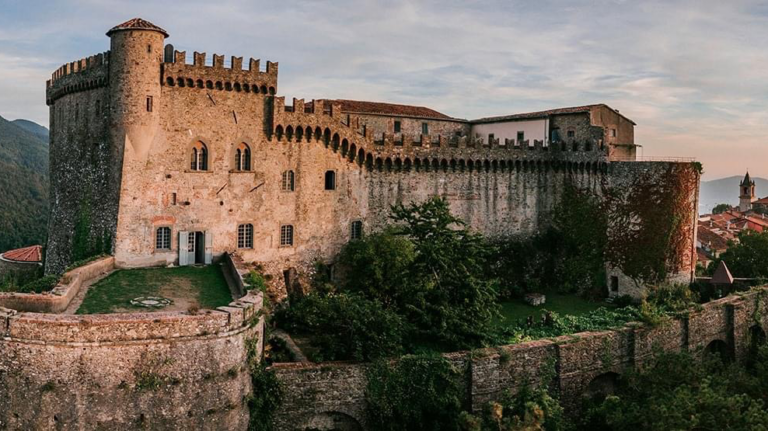
Fortezza della Brunella: Renaissance Fortress of Aulla, Italy


Site at a Glance
- Rating
- 4.3
- Popularity
- Low
- Country
- Italy
- Primary era
- Early Modern
- External website
- Open
- Eras represented
- Medieval, Early Modern
- Civilizations
- Holy Roman Empire
- Site type
- Military
- Remains
- Fort
On this page7 sections
History
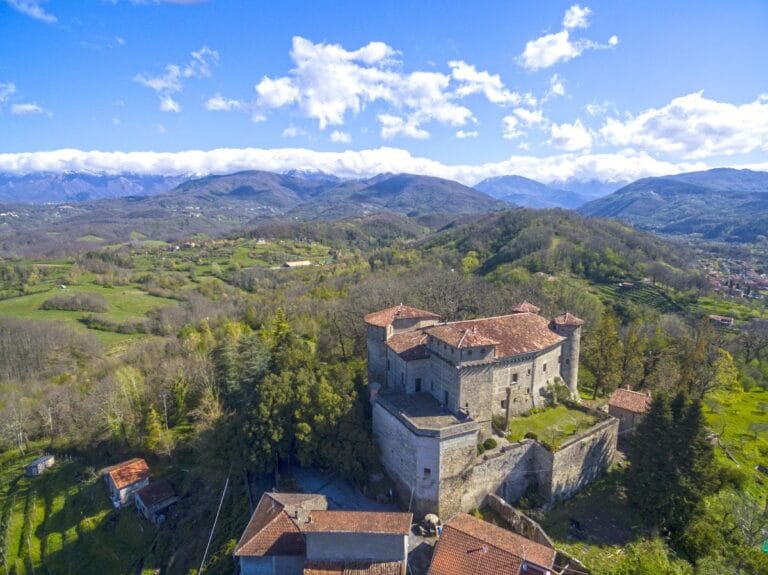
Fortezza della Brunella is a Renaissance fortification in Aulla, Italy, in the historic region of Lunigiana. Standing above the confluence of the Magra River and the Aulella stream, it occupied a strategic position overlooking the principal routes through the area and the approaches from the Apennine passes. Its name derives from the distinctive color of the rock on which it was built. The fortress is generally considered to have replaced an older medieval stronghold, although its exact construction date and original patron remain uncertain.
Origins and Renaissance Reconstruction
The only written reference to Brunella dates to 1553, when the fortress was already fully operational. Several possible origins have been proposed. Giovanni de’ Medici, also known as Giovanni dalle Bande Nere, acquired the fief from the Malaspina in 1522. Another interpretation places the commission in the late fifteenth century, under Jacopo Ambrogio Malaspina, Marquis of Aulla. A third possibility connects the work with Adamo Centurione, a Genoese businessman who purchased the fief in 1543. Military-architecture specialists have associated the design with Antonio da Sangallo the Elder, an Italian Renaissance architect known for military and civic buildings, but this attribution remains uncertain.
The fortress reflects the Renaissance period, when military architecture increasingly adapted to gunpowder artillery. Its defensive arrangements are associated with the alteration of an earlier fortification, including the demolition of medieval towers and the introduction of openings for cannon and firearms. Brunella belonged to the Centurione family until the beginning of the eighteenth century. The Centurione were a prominent Genoese family with territorial and political interests in Lunigiana.
Eighteenth-Century Conflicts
During the War of the Spanish Succession, an eighteenth-century European conflict caused by competing dynastic claims and alliances, Franco-Spanish forces occupied the fortress with the support of the Centurione family. In 1716, the Holy Roman Empire declared Luigi Centurione dispossessed of the Aulla fiefs, which were assigned to Alessandro Malaspina of Podenzana.
Brunella changed hands again during the War of the Polish Succession, another major European conflict involving rival dynasties and alliances. On 24 December 1733, Spanish troops commanded by the Neapolitan officer Francesco Eboli, Duke of Castropignano, captured the fortress after a three-week siege. A garrison serving the local feudal lords had defended it. Spain retained Brunella until 1737, when agreements between Charles VI, Holy Roman Emperor, and Philip V, king of Spain, led to its return to the Marquis of Podenzana.
From Military Stronghold to Museum
Around 1860, the complex was sold to private owners, ending its strategic military function. In 1920, it was resold to the British journalist Lina Duff Gordon and the painter Aubrey Waterfield, who converted the fortress into their residence. The Italian state acquired Brunella in 1977 and entrusted it to the Municipality of Aulla as the site of the Lunigiana Natural History Museum. The fortress is currently restored and remains associated with the municipal museum.
Remains
Defensive Enclosure
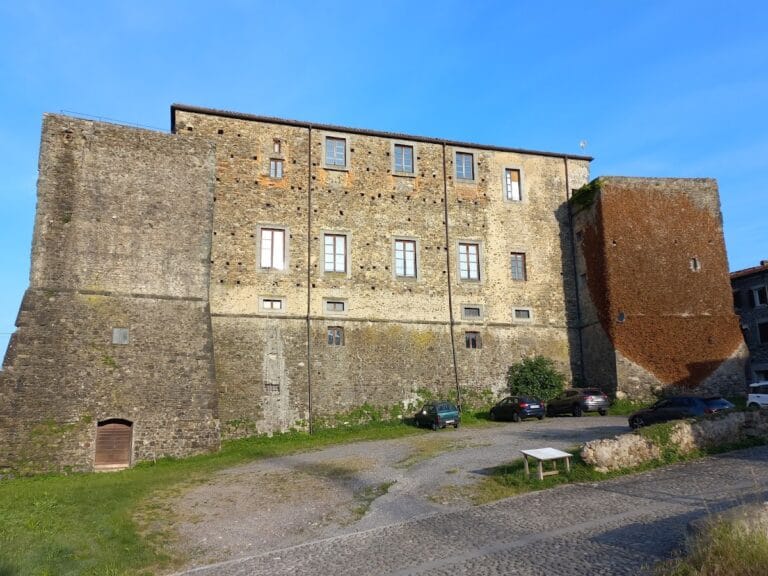
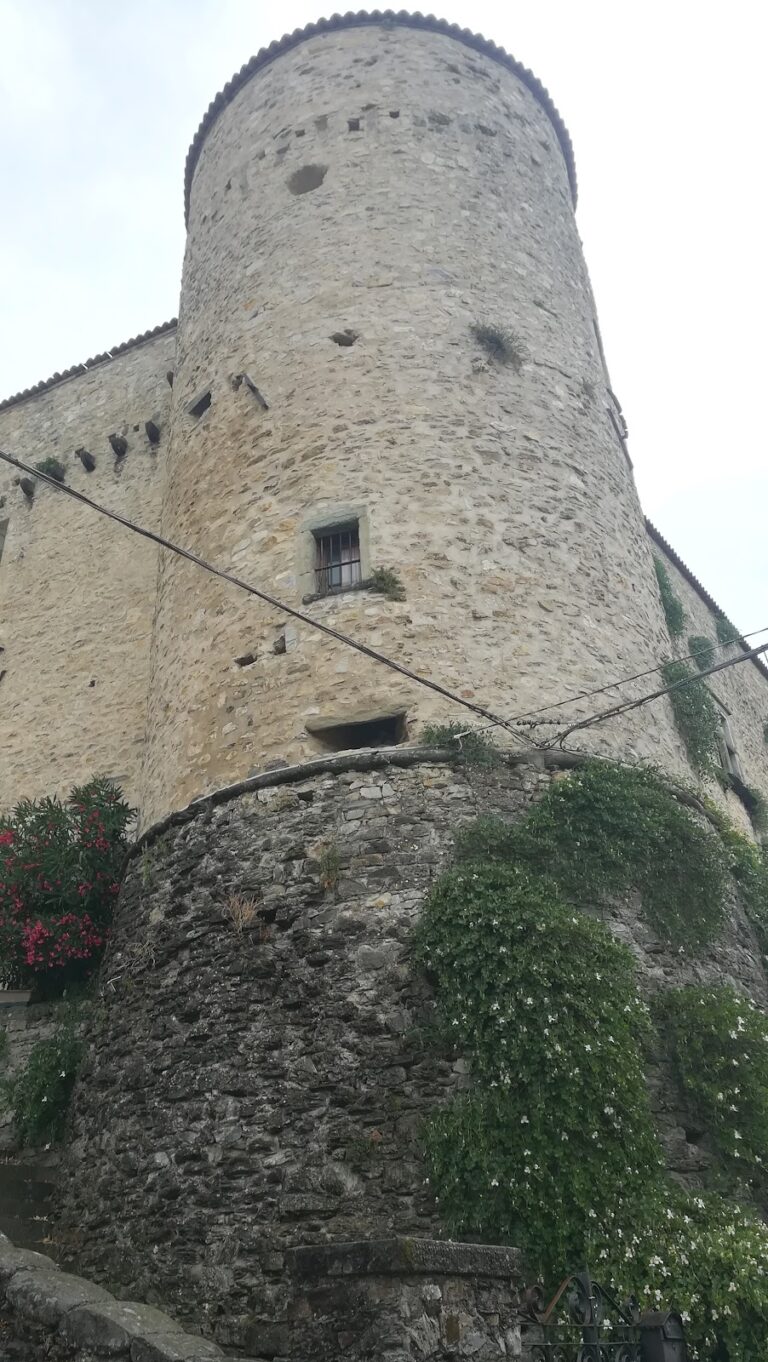
Brunella is a massive square-plan fortification set on the rocky hill above the waterways at Aulla. A deep moat surrounds the main defensive enclosure, whose exterior facing uses stone taken from the hill itself. This masonry appears to represent the renovation of an older stronghold. Four large rectangular towers occupy the corners, giving the complex its strongly regular defensive outline.
Firearms and Courtyard Access
The fortress preserves the physical consequences of sixteenth-century changes in warfare. Medieval towers were demolished as the defenses were adapted to firearms, while cannon embrasures and rifle loopholes were created in the enclosure. The inner courtyard was originally entered across a drawbridge. That arrangement was later altered when the drawbridge was replaced by a masonry bridge, which now forms part of the approach to the courtyard.
Nearby sites