Teufelsburg: A Territorial Castle Ruin in Saarland


Site at a Glance
- Rating
- 4.7
- Popularity
- Medium
- Country
- Germany
- Primary era
- Medieval
- External website
- Open
- Eras represented
- Medieval
- Civilizations
- Duchy of Lorraine, Holy Roman Empire
- Site type
- Military
- Remains
- Castle
On this page9 sections
History
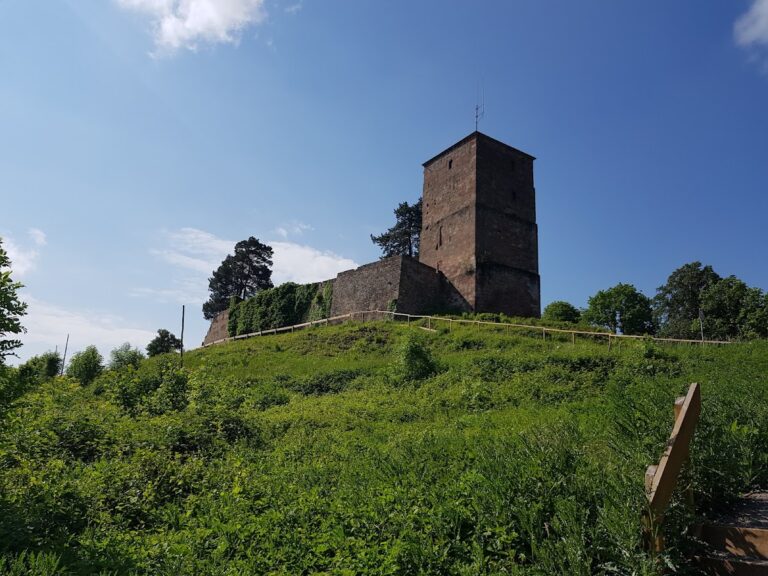
Teufelsburg is a castle ruin in Felsberg, Germany, built by Duke Johann I of Lorraine between 1354 and 1360. Known historically as Neu-Felsberg, Neufilsberg, and Neufelsberg, it served as a territorial castle of the Duchy of Lorraine, a historic principality whose duke exercised authority in the region between the French kingdom and the German lands.
Foundation and Lorraine rule
The castle was established after the destruction of Altenfelsberg Castle, an earlier fortress first mentioned in 1179. Altenfelsberg stood on the Hanseberg at St. Barbara, Wallerfangen, rather than at the later Teufelsburg site. Baldwin of Luxembourg, Elector and Archbishop of Trier, destroyed Altenfelsberg down to its foundations in 1341. The new fortress on the mountain spur was intended to secure and administer Lorraine territory.
The earliest recorded form of the new castle’s name is Neufilsberg, or Neu-Felsberg, in 1370. That year, Arnold von Filsberg, a grandson of Arnold von der Brücke, Lord of Siersburg and Felsberg, swore fealty to Duke Johann of Lorraine. He stated that he had received Neufelsberg and its dependencies from the duke, while agreeing that the fortress would remain permanently open to the duke and his heirs.
The Felsberg lordship
Arnold’s son Richard von Felsberg inherited the lordship. He appears as a bailiff of Germany in 1380 and 1386, an office involving administrative or judicial authority on behalf of a higher lord. After Richard’s death around 1388 to 1390, his widow Sophie von Mersch took control. The lordship later passed to the Hutzing family of Neuerburg, who also used the name Felsberg, and subsequently through Anna, heiress of Felsberg, to the von Pallant family.
Ruin and modern reconstruction
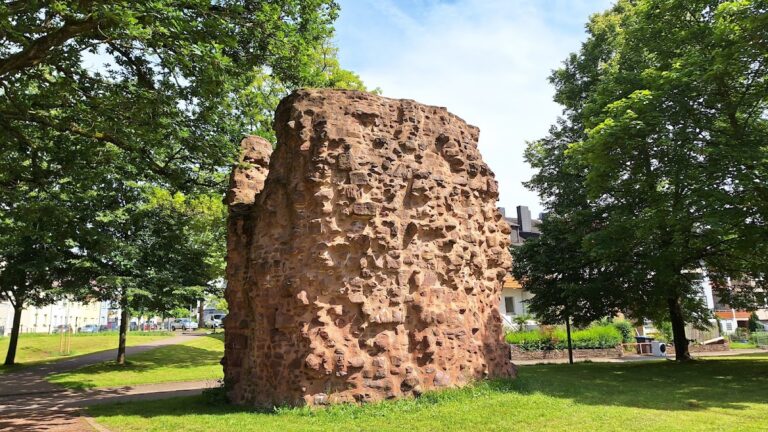
In 1680, French forces reused stone from the castle to build the fortified city of Saarlouis. By the final known reference in 1699, the castle was already in ruins and no longer inhabited. Its popular name, Teufelsburg, meaning “Devil’s Castle,” comes from a legend about a knight who made a pact with the devil and sold his soul before a duel. According to the tradition, his screams can still sometimes be heard as he enters Hell.
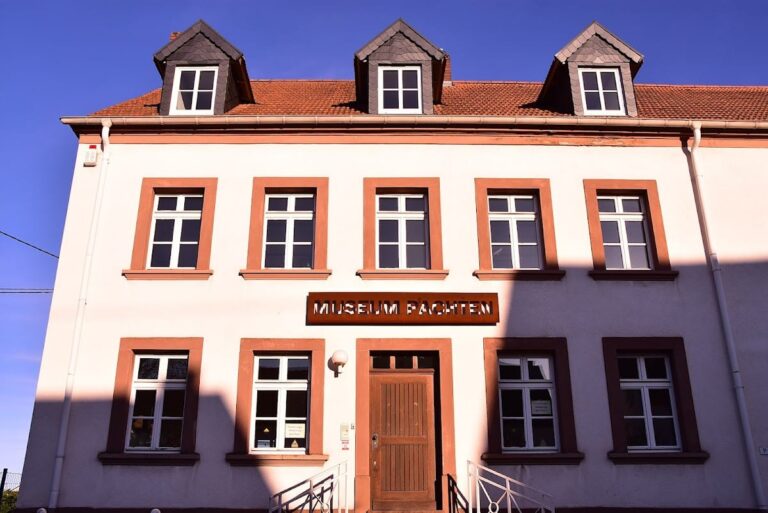
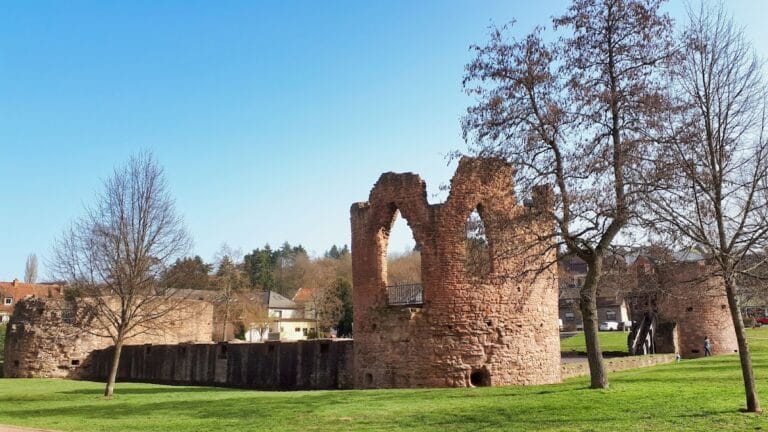
Bernd Arwed Richter’s complete survey of the grounds formed the basis for an initial reconstruction model. Excavation began in 1968, and the lower castle was rebuilt in its basic form from the surviving foundations. Restoration followed in 2009 and 2010. A small museum inside the castle now presents finds from the excavations, along with material connected with the sandstone quarries on the Schlossberg, including tools, household objects, fossils, and minerals from Felsberg.
Remains
Teufelsburg occupies a spur position at approximately 320 metres above sea level on a mountain spur northeast of the 353.7-metre Schlossberg. This type of spur castle used a projecting ridge and its surrounding slopes as part of its defensive setting. The site lies north of Felsberg and west of Saarlouis, at the edge of the middle Saartal, with views across the valley toward Saarlouis and the Hunsrück. Sandstone quarried at Felsberg supplied the building material.
Castle areas
Upper Castle
The upper castle, also called the fore-castle or Old Castle, occupied the side of the complex toward the mountain. Its stone was quarried in 1680, and this part of the castle was never restored. The upper area therefore survives through the recorded organization of the complex and the wider archaeological investigation rather than through reconstructed standing forms.
Lower Castle
The lower castle, or main castle, stood toward the valley. Excavation exposed its surviving foundations, which guided the reconstruction of its basic forms. The lower complex remains a ruin, but its principal layout has been rebuilt and restored. The archaeological finds recovered during excavation are presented in the small museum within the castle, where they help explain the material history of the site.
Quarry and natural-history displays
The museum also contains tools and household objects associated with the sandstone quarries on the Schlossberg. Fossils and minerals from Felsberg are displayed alongside them, linking the castle museum to the local stone-working landscape and the geological material used in the castle’s construction.
Nearby sites