Egeln Castle (Burg Egeln): A Medieval Water Castle in Germany


Site at a Glance
- Rating
- 4.4
- Popularity
- Low
- Country
- Germany
- Primary era
- Medieval
- External website
- Open
- Eras represented
- Medieval
- Civilizations
- Holy Roman Empire
- Site type
- Military
- Remains
- Castle
On this page10 sections
History
Egeln Castle, also known as Burg Egeln, is a medieval water castle in Germany near the town of Egeln in Saxony-Anhalt. Its origins reach back to the tenth century, when a castle protected a ford across the Bode and supported a settlement on important routes through the region. The site later became a noble residence, a possession of Magdeburg Cathedral, a military headquarters, and a state farm before being restored in part as a cultural complex.
Origins and the early settlement
Egeln was first mentioned in 941, when King Otto I, also called Otto the Great, granted Osteregulun, Westeregulun, and part of the Hakel Forest to Siegfried, the son of the frontier ruler Margrave Gero. After Siegfried died during a campaign against the Slavs, Gero founded Gernrode Abbey for his daughter-in-law Hathui. Egeln subsequently passed into the possession of the abbey.
The same document from 941 refers to a new castle that guarded a ford across the Bode. Military roads from Erfurt, Quedlinburg, and Goslar converged near the crossing before continuing toward Magdeburg, described as the first capital of the Holy Roman Empire. Craftsmen and merchants settled outside the castle, forming a market settlement used by travelers.
The original castle and its extensive defenses stood between two branches of the Bode and limited the settlement’s further growth. During the tenth or eleventh century, the Askanian rulers, members of a medieval German ruling dynasty, established a planned new town northeast of the river. This town had its own market and church, protected by a new castle.
Noble residence and town development
In 1250, the nobles of Hadmersleben conquered the castle, moved their principal residence there, and adopted the title Lords of Egeln. They strengthened the town with a substantial wall and granted it market and town rights. In 1259, at the request of Jutta of Blankenburg, the wife of Otto the Elder, they founded Marienstuhl Abbey on the grounds of the old castle, which by then stood outside the town gates.
After Count Curd of Hadmersleben zu Egeln died without male heirs in 1416, Egeln passed through the Counts of Barby to the cathedral chapter of Magdeburg Cathedral in 1418. A cathedral chapter was the body of clergy responsible for assisting in the administration of a cathedral and its properties. The chapter converted the castle into a palace and used it as a summer residence and table estate, meaning an estate whose revenues supported the household and representation of a high-ranking ecclesiastical lord.
The official appointed by the chapter as castellan or bailiff exercised administrative and judicial authority over the seven villages of the Egeln district. Under Archbishop Günther II of Schwarzburg, the complex was rebuilt in the Late Gothic period. The outer bailey was enlarged, and additional barns and stable buildings were added.
War, state ownership, and preservation
During the Thirty Years’ War, the major European conflict of 1618 to 1648 that combined religious, dynastic, and political struggles, the castle temporarily served as the headquarters of the Swedish army. It was also the residence of Field Marshal Johan Banér, one of Sweden’s principal commanders. After this period, the castle became a Prussian domain and was leased to officers whom the Prussian authorities considered deserving.
After 1945, the complex became a state-owned farm. Limited attention to the preservation of its historic buildings led to increasing deterioration. In 1987, the Egeln clockmaker Hans Grube persuaded the farm director to support the Water Castle Campaign. The campaign prevented a municipal council decision to fill the already silted-up moat completely with building rubble.
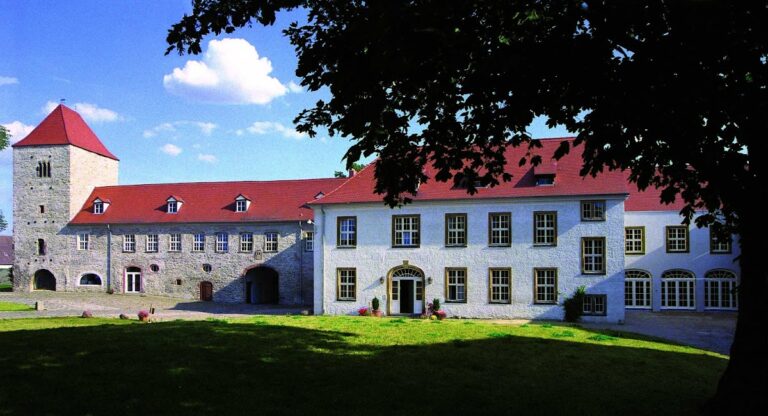
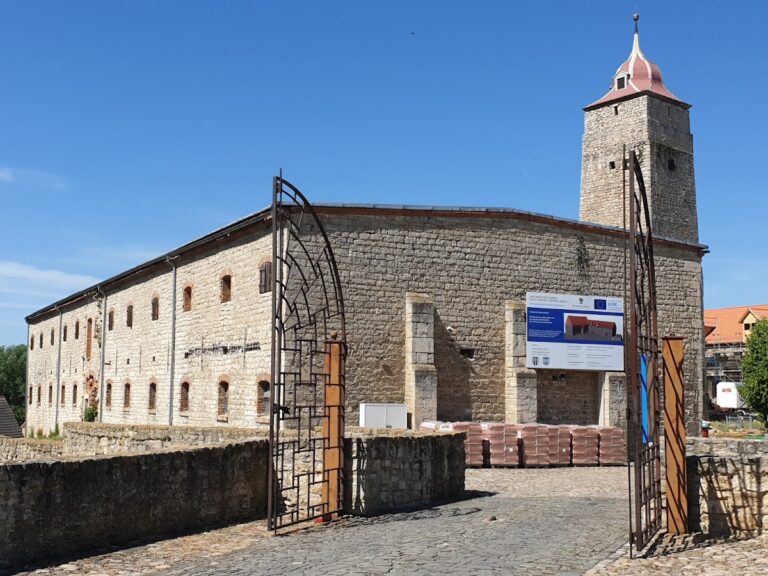
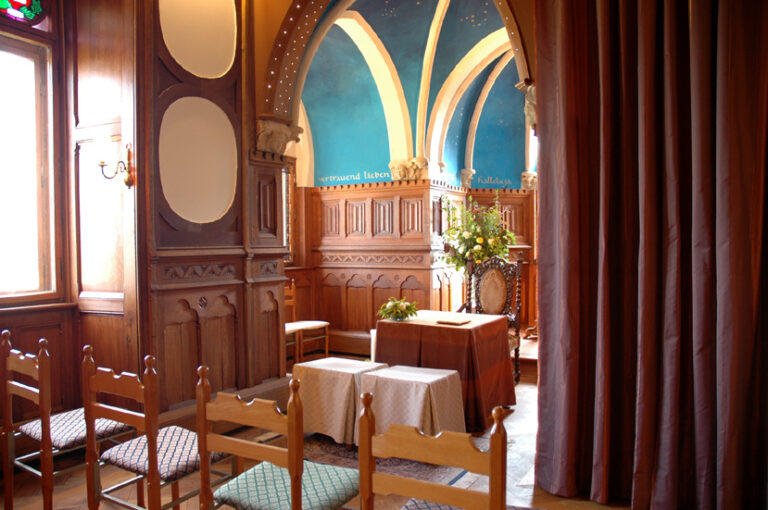
The keep and gatehouse were restored in 1993 and then housed the Egeln Museum of Prehistory, Early History, and Town History. In October 1995, the castle complex became the property of the town of Egeln, which planned to develop it as the town’s cultural center. The upper castle now supports a year-round program of cultural events, while the complex includes a museum, open-air stage, creative center, and cellar theater. Civil marriages take place in the museum foyer, celebrations use the Romanesque vault, and the palas has provided overnight accommodation since 2008.
Remains
Water setting and castle layout
Egeln Castle stands about 250 meters east of Egeln’s town center in the fertile lowland of the Egeln Basin, within the drainage system of the Bode. The terrain reaches approximately 75 meters above sea level. The castle is surrounded by a moat supplied by the Hundegraben, also called the Hunnengraben. This watercourse approaches from the northwest and drains through the Mühlgraben, which runs toward the east-southeast near Unseburg before reaching the Bode.
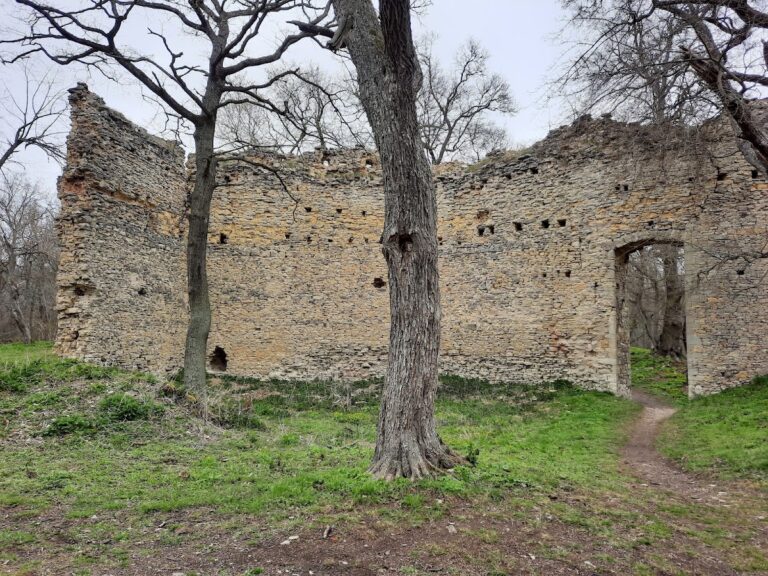
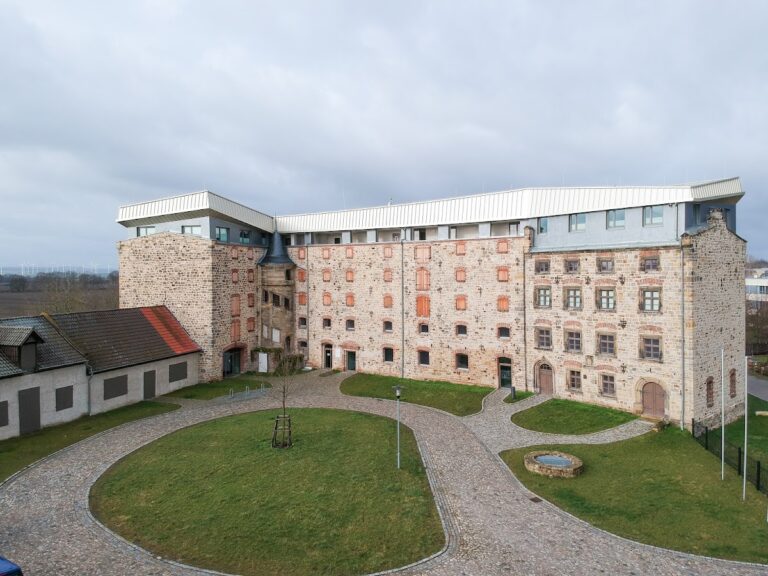
The historic complex is organized into an upper castle and an outer bailey. Its surviving elements include the keep, gatehouse, palas, barns, stables, and a Romanesque vaulted space. The outer bailey expanded during the Late Gothic rebuilding and received further agricultural and service buildings. The complex is only partly restored, leaving its surviving structures as evidence of the castle’s changing residential, administrative, and agricultural functions.
Fortified and residential buildings
Keep and gatehouse
The keep, the castle’s principal fortified tower, and the gatehouse form part of the restored entrance and defensive fabric. Both were restored in 1993 and now contain the Egeln Museum of Prehistory, Early History, and Town History. Their present museum use preserves the connection between the surviving buildings and the archaeological and urban history of Egeln.
Palas and Romanesque vault
The palas, the main residential and representational building of a medieval castle, belongs to the upper castle’s principal group of structures. Since 2008, it has included overnight accommodation. A Romanesque vaulted space within the complex is used for celebrations, preserving a substantial interior feature while giving it a continuing communal function.
Outer bailey buildings
The outer bailey contains barns and stable buildings added or enlarged during the Late Gothic reconstruction. These structures reflect the castle’s role as an estate as well as a fortified residence. The upper castle also contains an open-air stage, a creative center, and a cellar theater, while the museum occupies the restored keep and gatehouse.
Nearby sites