Castle Saunderson: A Ruined Gothic Revival Country House in Ireland


Site at a Glance
- Rating
- 4.6
- Popularity
- Low
- Country
- Ireland
- Primary era
- Modern
- External website
- Open
- Eras represented
- Medieval, Modern
- Civilizations
- British
- Site type
- Domestic
- Remains
- Castle
On this page8 sections
History
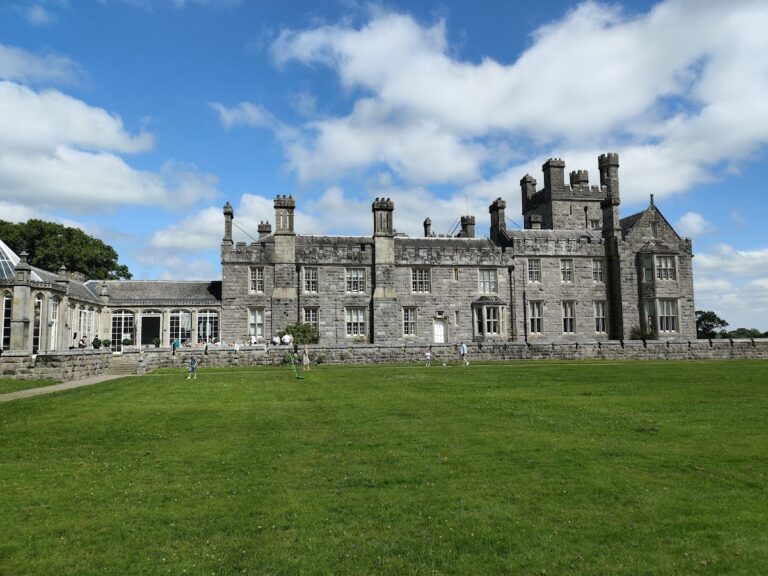
Castle Saunderson is a ruined country house in Ireland, near Belturbet in County Cavan, developed by the Saunderson family and incorporating an earlier Gaelic Irish castle. The present house belongs to the nineteenth-century Gothic Revival, a movement that revived medieval architectural forms, and dates from around 1840 after substantial remodelling in 1835. The estate was the former family seat of the Saundersons and later became the setting for an international scouting centre.
Breffni Castle and the Plantation of Ulster
The original castle belonged to the O’Reillys of Breffni, a Gaelic Irish ruling family associated with the kingdom of Breffni in the region of present-day County Cavan. Known as Breffni Castle from the fourteenth century, it may have had earlier origins. The Saunderson family acquired the property during the Plantation of Ulster, the seventeenth-century programme through which English and Scottish colonists received land in Ulster, including former Gaelic territories.
During the Irish uprising of 1641, the O’Reillys recaptured the castle and held it until 1653. In that year, the English army took the site and established a garrison there. The Saunderson family later returned to the property.
The Williamite period
Robert Sanderson, who had fought for William of Orange, inherited the castle from his father in 1676. William, later King William III of England, was the Protestant opponent of the Catholic King James II during the Williamite War. James II’s troops burned the castle in 1689.
Several months later, about 400 of James II’s soldiers were ambushed at the site while retreating from the Battle of Newtownbutler. The soldiers were driven towards the Finn River, where many drowned.
The nineteenth-century estate
The earlier castle was replaced or substantially transformed as the present country house developed in the nineteenth century. Edward James Saunderson was born at Castle Saunderson and became a leading Irish unionist politician, as well as a founder of the Ulster Unionist Party and a member of the Orange Order. The Orange Order, a Protestant fraternal organisation founded in Ireland, held events at the castle to celebrate the Twelfth, its annual commemoration associated with William of Orange’s victory.
The estate also witnessed the deaths of two notable guests or visitors. Major Frederick John Sandys Lindesay of Loughry and Tullyhogue died at the castle in 1877 while staying there. In 1879, the Hon. Barry Maxwell, eldest son and heir apparent of the 10th Baron Farnham, died in a cycling accident on the estate.
Sale, fire, and later use
Captain Alexander “Sandy” Saunderson, the last member of the family to own the castle, sold the property to a businessman in 1977. The purchaser intended to make it a residence, but this plan did not take place. The property later operated as a hotel and was damaged by fire in 1990, the third fire to affect the castle.
The castle and grounds were acquired in 1997 by the Catholic Boy Scouts of Ireland, which later became part of Scouting Ireland. Financial difficulties and the formation of Scouting Ireland delayed redevelopment and cast doubt on the proposed campsite. Support from the American Ireland Fund and Cavan County Council, followed by more than €3 million in European Union funding announced in 2008, allowed the project to proceed.
The Castle Saunderson International Scouting Centre opened in the grounds on 18 August 2012. President of Ireland Michael D. Higgins inaugurated the €3.7 million, European Union-funded centre, which serves as a Scouting Ireland facility and a World Scouting Centre. The centre participates in the Scouts’ Messengers of Peace programme and was also used by the Health Service Executive as a mass testing centre during the COVID-19 outbreak in Ireland.
In February 2015, Minister Heather Humphreys announced government approval for Waterways Ireland to restore a section of the Ulster Canal connecting the site with the Erne basin.
Remains
The ruined country house
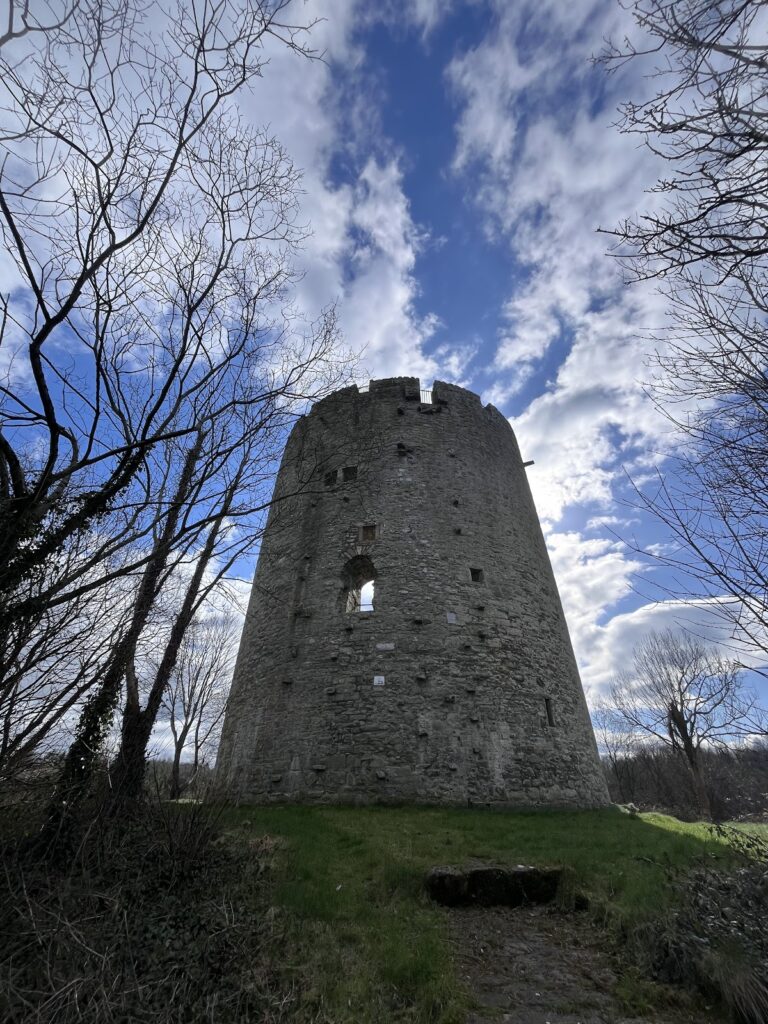
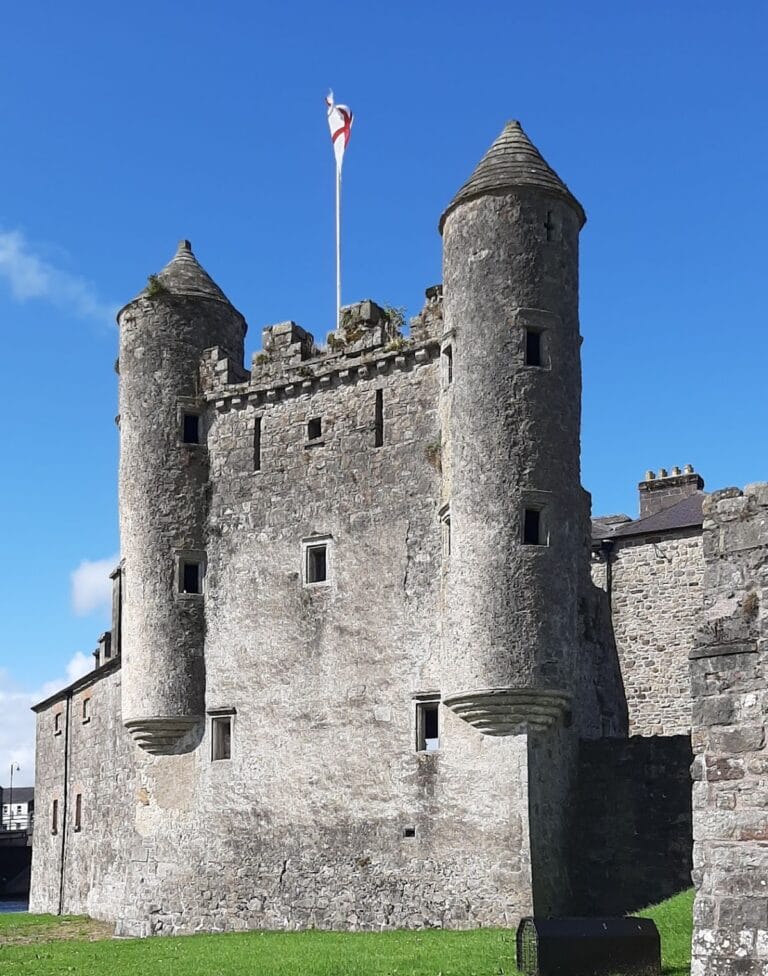
Castle Saunderson is a limestone Gothic Revival country house in a ruined state, incorporating the remains of an earlier fourteenth-century towerhouse. A towerhouse is a fortified stone residence, usually a tall and compact medieval building. The house was designed by George Sudden and developed by the Saunderson family. Its surviving fabric combines the later nineteenth-century country house with the earlier fortified structure.
The demesne and associated features
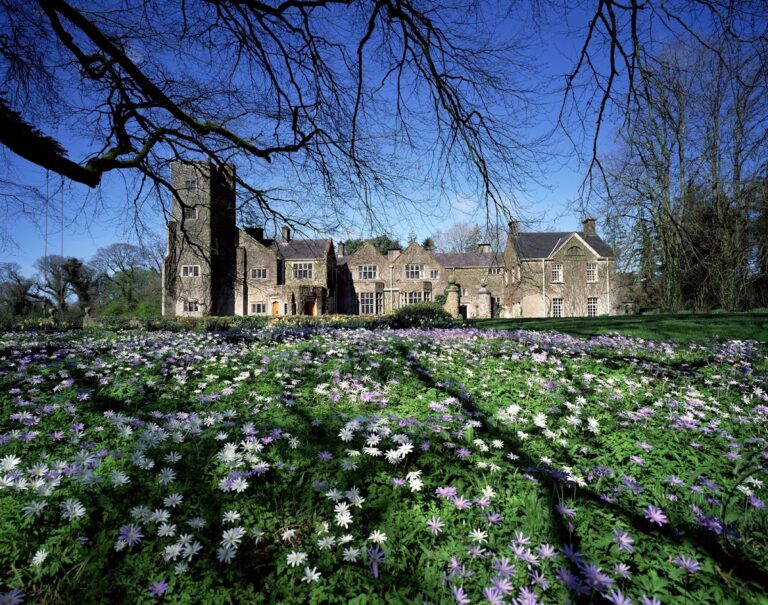
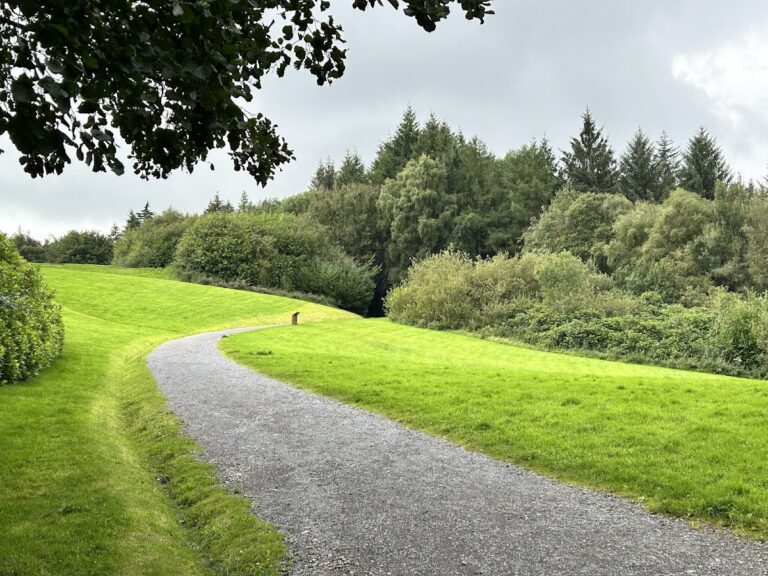
The Castle Saunderson Demesne, the managed estate surrounding the principal residence, covers approximately 102 to 103 acres, or 41 to 42 hectares. It has entrances in both County Fermanagh in Northern Ireland and County Cavan in the Republic of Ireland. The Finn River runs along the north-eastern edge of the demesne before entering a narrow channel of Upper Lough Erne.
The grounds contain a church with a crypt and a family graveyard associated with the original owning family. Part of the estate is occupied by the Castle Saunderson International Scouting Centre, whose indoor accommodation and campsites cover 34 acres, or 14 hectares.