Luttrellstown Castle: A Restored Castellated House in Ireland


Site at a Glance
- Rating
- 4.6
- Popularity
- Low
- Country
- Ireland
- Primary era
- Early Modern
- External website
- Open
- Eras represented
- Medieval, Early Modern, Modern
- Civilizations
- British, English, Irish
- Site type
- Domestic
- Remains
- Castle
On this page11 sections
History
Medieval Foundation and the Luttrell Estate
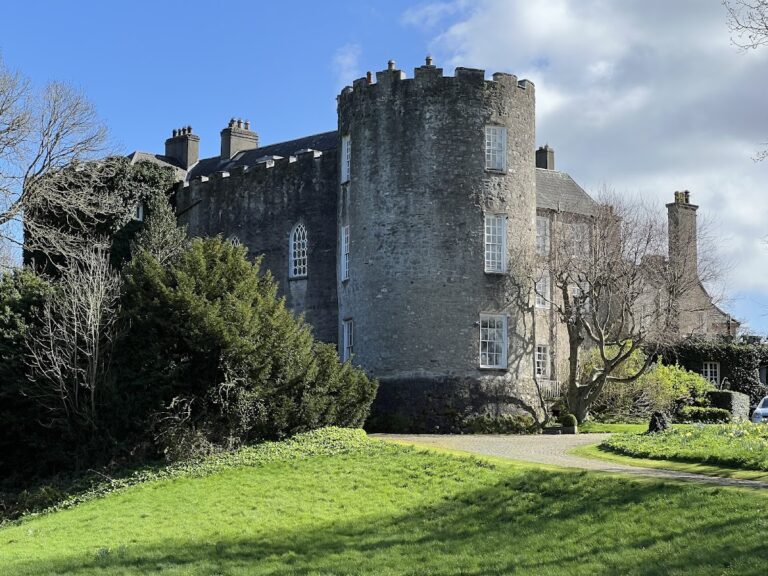
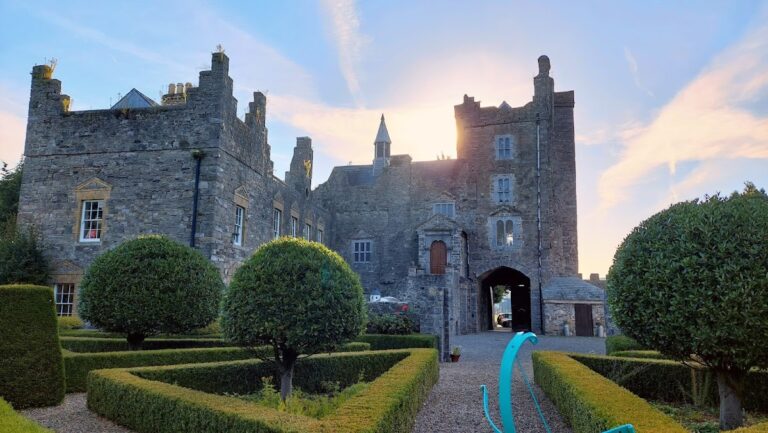
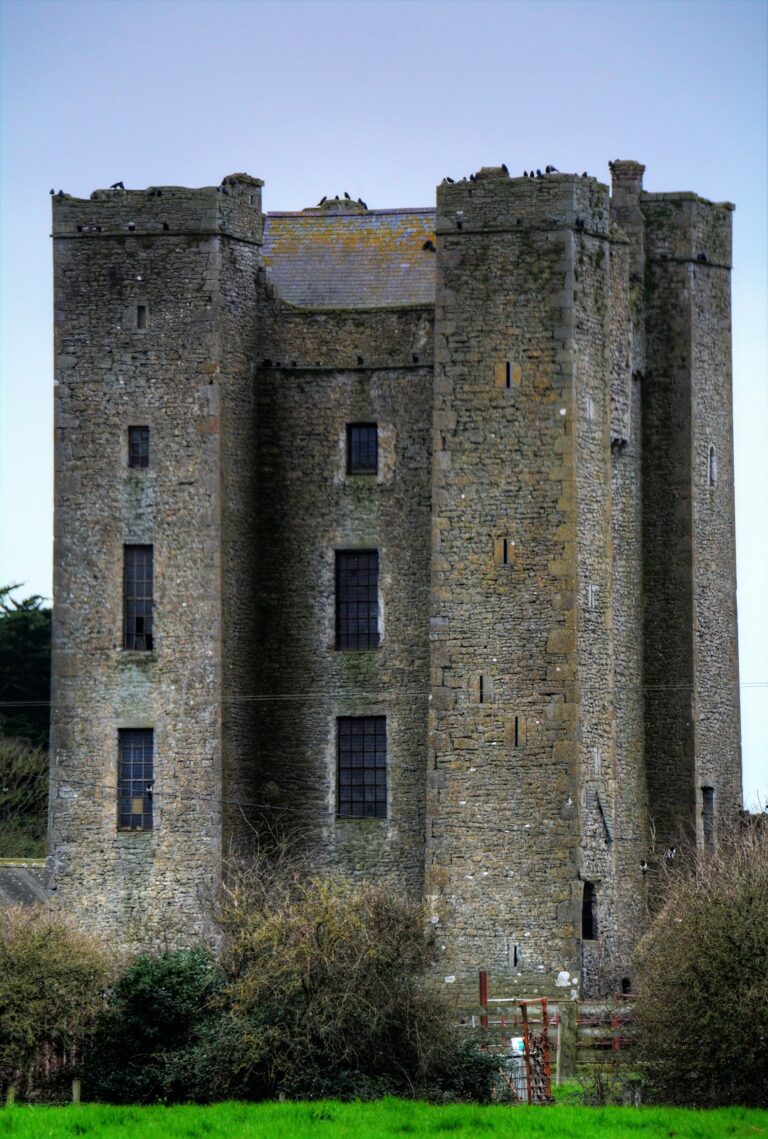
Luttrellstown Castle is a restored castellated house in Ireland, near Clonsilla in County Dublin. Built around 1420, it combines castle-like planning with Gothic and Georgian architectural elements. Its history began with the Luttrell family, who held the surrounding estate for several centuries.
Around 1210, King John of England granted the demesne, the principal landed estate around a country house, and adjoining lands to Sir Geoffrey de Luterel. He served the king on state missions to Ireland between 1204 and 1216. The family, related to the Luttrells of Dunster Castle in Somerset, had become among the largest landowners in the district by the seventeenth century.
Construction of the castle was begun by Sir Geoffrey Luttrell, the fifth Lord Luttrell, who was born around 1385. Other members of the family held important positions in Ireland. Robert Luttrell was treasurer of St Patrick’s Cathedral and served as Lord Chancellor of Ireland from 1235 to 1245. Sir Thomas Luttrell was Chief Justice of the Irish Common Pleas from 1534 to 1554 and took part in the dissolution of the monasteries. He also acquired the lands of St Mary’s Abbey at Coolmine.
War, Inheritance, and the Luttrell Name
The estate was drawn into the political and military conflicts of seventeenth-century Ireland. Colonel Henry Luttrell, an Anglo-Irish soldier, was suspected of betraying the Jacobite leader Patrick Sarsfield at the Battle of Aughrim in 1691. The Jacobites supported the Stuart claim to the British throne, while the Williamites supported William III. After the Siege of Limerick, Henry Luttrell transferred his regiment to the Williamite cause and received the forfeited estates of his elder brother, Simon Luttrell, including Luttrellstown. He was also appointed major general in the Dutch army before being assassinated in Dublin in October 1717.
Colonel Simon Luttrell later became the first Earl of Carhampton, an earl being a British and Irish noble title roughly equivalent to a continental count. He was an Irish nobleman, a Westminster politician, and Lord Lieutenant of County Dublin. His son, Henry Lawes Luttrell, the second Earl of Carhampton, served as a Member of Parliament and later as Adjutant General of Ireland. He became notorious for suppressing the Irish Rebellion of 1798.
White, Annaly, and Nineteenth-Century Changes
Henry Lawes Luttrell sold the estate at the beginning of the nineteenth century. His unpopularity was linked to the opening and desecration of Colonel Henry Luttrell’s grave, including the smashing of the skull. A Dublin newspaper also published a satirical report of Henry Lawes Luttrell’s death in 1811.
Publisher Luke White then acquired the castle and renamed it Woodlands in an attempt to remove the Luttrell name. The estate passed to his fourth son, who was created Lord Annaly. The third Lord Annaly later restored the name Luttrell Castle. Major building work associated with Henry Luttrell took place between 1787 and 1794, when the house was extended and remodelled. The work was completed around 1810, with stucco, a fine plaster or cement-based architectural coating, applied by Bartholomew Byrne in 1794.
Queen Victoria visited the estate in 1844 and again in 1900. During the later visit, she drank tea near the waterfall while travelling towards the Viceregal Lodge. Lord Annaly commemorated the occasion with an obelisk beside the waterfall.
From Private Estate to Resort
Lord Annaly sold the house to Major Hamilton in 1915. After Hamilton’s death in 1918, the property was left to his widow. Ernest Guinness, a member of the Guinness brewing family and a prominent Irish businessman, bought the estate in 1927 as a wedding gift for his daughter Aileen Guinness, who married Brinsley Sheridan Plunket. Under Aileen Plunket, the castle hosted hunt balls and other large social events.
The estate’s contents were sold at Christie’s in London in September 1983, when Aileen Plunkett sold the property. The estate was acquired by the Swiss consortium Primwest in 1983 and later by JP McManus and John Magnier in 2006. Aidan Brooks is also identified among its post-2006 owners. Major upgrading in 2007 improved the championship golf course and the alpine-style clubhouse. Luttrellstown currently functions as a five-star resort with a golf course and country club.
Remains
Castle and Demesne
Luttrellstown Castle is built in cut stone as a lowland castle and castellated house. Its surviving architectural character combines castle-like features with Gothic and Georgian traditions. The main house was extended and remodelled during the late eighteenth and early nineteenth centuries, with completion estimated around 1810. The remaining demesne covers about 560 acres, or 2.3 square kilometres, and originally encompassed the entire townland of Woodlands in the civil parish of Clonsilla.
Water Features and Memorials
Stream and Artificial Ponds
A stream rising near Pass-If-You-Can enters an aqueduct at Westmanstown, passes beneath the Royal Canal, and reaches the north-western corner of the demesne. Inside the estate walls, dams create a chain of artificial ponds. The stream leaves through the south-eastern corner, passes beneath the road near the gate lodge on the Strawberry Beds, and enters the River Liffey about 25 metres later.
Victoria Obelisk
The obelisk beside the waterfall commemorates Queen Victoria’s visit in 1900. It was made from six granite blocks obtained from the Dublin Mountains.
Golf Course and Clubhouse
The modern estate includes a golf course designed by Steel and Mackenzie and an alpine-style clubhouse. Works undertaken in 1985 and 1986 had G&T Crampton as the main contractor. The castle is listed as having 20 bedrooms.