Bérenguier’s Arches in Fréjus: A Roman Aqueduct Structure


Site at a Glance
- Rating
- 4.8
- Popularity
- Very Low
- Country
- France
- External website
- Open
- Eras represented
- Classical
- Civilizations
- Roman
- Site type
- Infrastructure
- Remains
- Aqueduct
History
Bérenguier’s arches are located in the municipality of Fréjus, France, and were constructed by the Romans as part of an aqueduct system supplying water to the ancient city. This aqueduct played a vital role in sustaining urban life by transporting water over long distances, demonstrating the engineering capabilities of Roman civilization in the region.
The aqueduct itself extended for approximately 42 kilometers, with Bérenguier’s arches representing a distinctive section where the water channel transitioned from an underground conduit to an elevated structure.
In modern times, the site underwent restoration beginning in 2015 under the supervision of the Direction of Archaeology and Heritage. This effort aimed to preserve the arches and integrate them into a larger conservation project focused on protecting the entire length of the aqueduct, much of which remains buried beneath the surface.
Remains
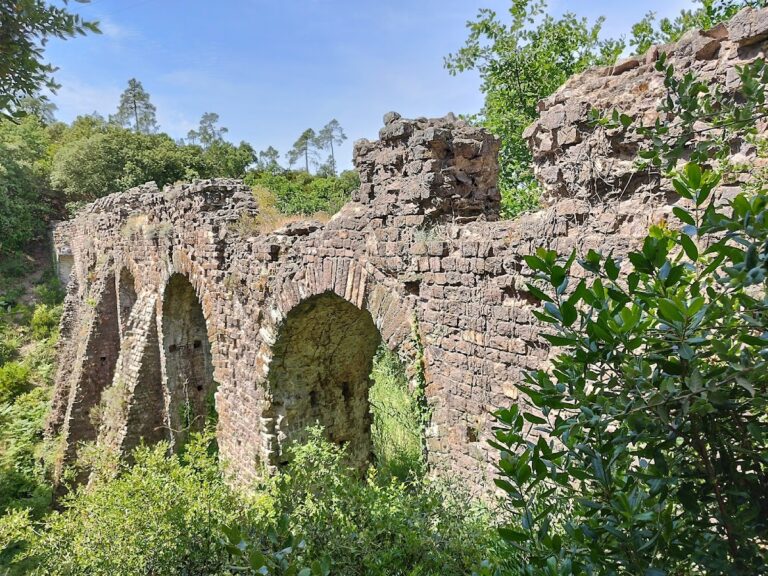
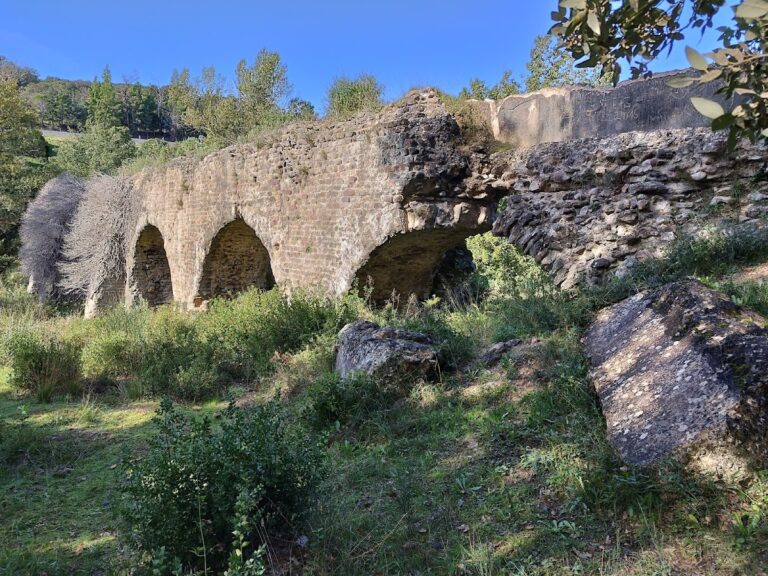
The remains at Bérenguier consist of a series of five arches constructed from gray sandstone, standing about five meters high. These arches form part of the Roman aqueduct and mark the point where the water channel emerges from its underground section to continue above ground. The use of local sandstone, sourced from nearby quarries, illustrates the Romans’ practical approach to material selection, ensuring durability and ease of construction.
The arches are situated in a cleared area within the Sainte-Brigitte neighborhood, nestled between the “Vert Estérel” and “Sainte Brigitte” housing developments. This location was once overgrown but has since been cleared to reveal the structure’s form. The arches remain in an excellent state of preservation, allowing a clear view of their original construction. Their simple, robust design lacks inscriptions or decorative elements, focusing purely on functional engineering.
The natural surroundings of the site enhance the visibility of the arches, particularly during dusk when the setting sun highlights their shape and texture. This setting provides a striking example of Roman architectural presence integrated into the landscape.