Castle of Taillebourg: A Medieval Stronghold in France
Site at a Glance
- Rating
- 4.2
- Popularity
- Low
- Country
- France
- Primary era
- Medieval
- Eras represented
- Medieval, Early Modern
- Civilizations
- French
- Site type
- Military
- Remains
- Castle
On this page8 sections
History
Castle of Taillebourg is a medieval stronghold in Taillebourg, France, overlooking the Charente valley. Its strategic position drew it into the Saintonge War, the Hundred Years’ War, and the Wars of Religion. A predecessor castle on the site sheltered Louis, the future King Louis VII of France, and Eleanor of Aquitaine on the night after their wedding in July 1137. Eleanor later became queen of both France and England, while Louis VII ruled France from 1137 to 1180.
Sieges and royal campaigns
Richard the Lionheart, King Richard I of England, captured Taillebourg in 1179 after a three-day siege. Geoffrey de Rancon held the castle, which was considered impregnable. Richard began his assault on 1 May and used trebuchets, large siege engines for hurling projectiles against fortifications. On 8 May, his forces burned the surrounding fields and vineyards to provoke a sortie. After defeating the defenders, they pursued them through the gate and devastated the town. The garrison soon surrendered because it depended on supplies from the town, and Geoffrey later gave up his castle at Pons.
Louis IX of France, later known as Saint Louis, used Taillebourg as his base while staying with Geoffrey IV de Rancon before the Battle of Taillebourg in 1242. That conflict pitted Louis IX against Henry III of England, who ruled from 1216 to 1272. The castle therefore remained connected to the military rivalry between the French and English crowns.
Rebuilding and noble residence
The fortress survived sieges during the Hundred Years’ War and the Wars of Religion. It was rebuilt after 1423 by Henri de Pluqualec and later became a favored residence of the Coëtivy family, a French noble house. Louise de Coëtivy brought Taillebourg as her dowry to Charles de La Trémoille in 1501. The site became a county during the fifteenth century, and its later history is preserved through the archives of the La Trémoille family. In 1451, King Charles VII arrested Jacques Cœur at Taillebourg. Marguerite de Valois, an illegitimate daughter of Charles VI, also grew up there.
Destruction and later preservation
The castle was captured and destroyed during the Fronde in 1652, a series of rebellions and civil conflicts in France between 1648 and 1653. Frédéric-Guillaume de La Trémoille, Duke of Talmont, began major reconstruction in 1714, with the principal rebuilding carried out between 1717 and 1739. During the French Revolution, which began in 1789 and led to the confiscation and sale of aristocratic property, the castle was sold in lots as national property. Neglect followed, and a fire damaged the complex in 1822 before the castle was destroyed.
Related remains were registered as historic monuments in 1991, while the fortifications received classification in 1995. The ruins were later converted into a public garden. The castle bell associated with the eighteenth-century rebuilding was moved after the Revolution to the church at Messac.
Remains
Rocky site and defenses
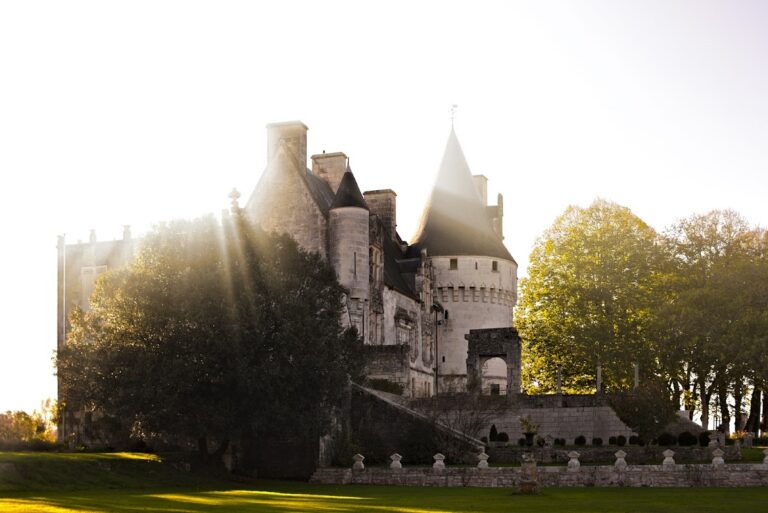
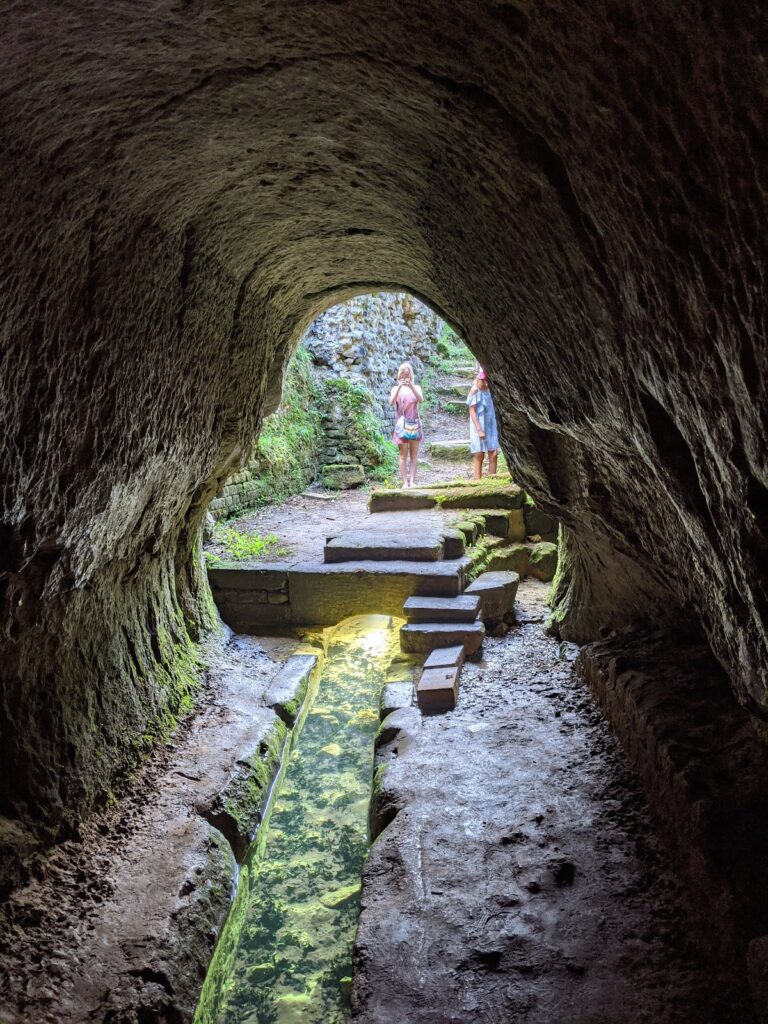
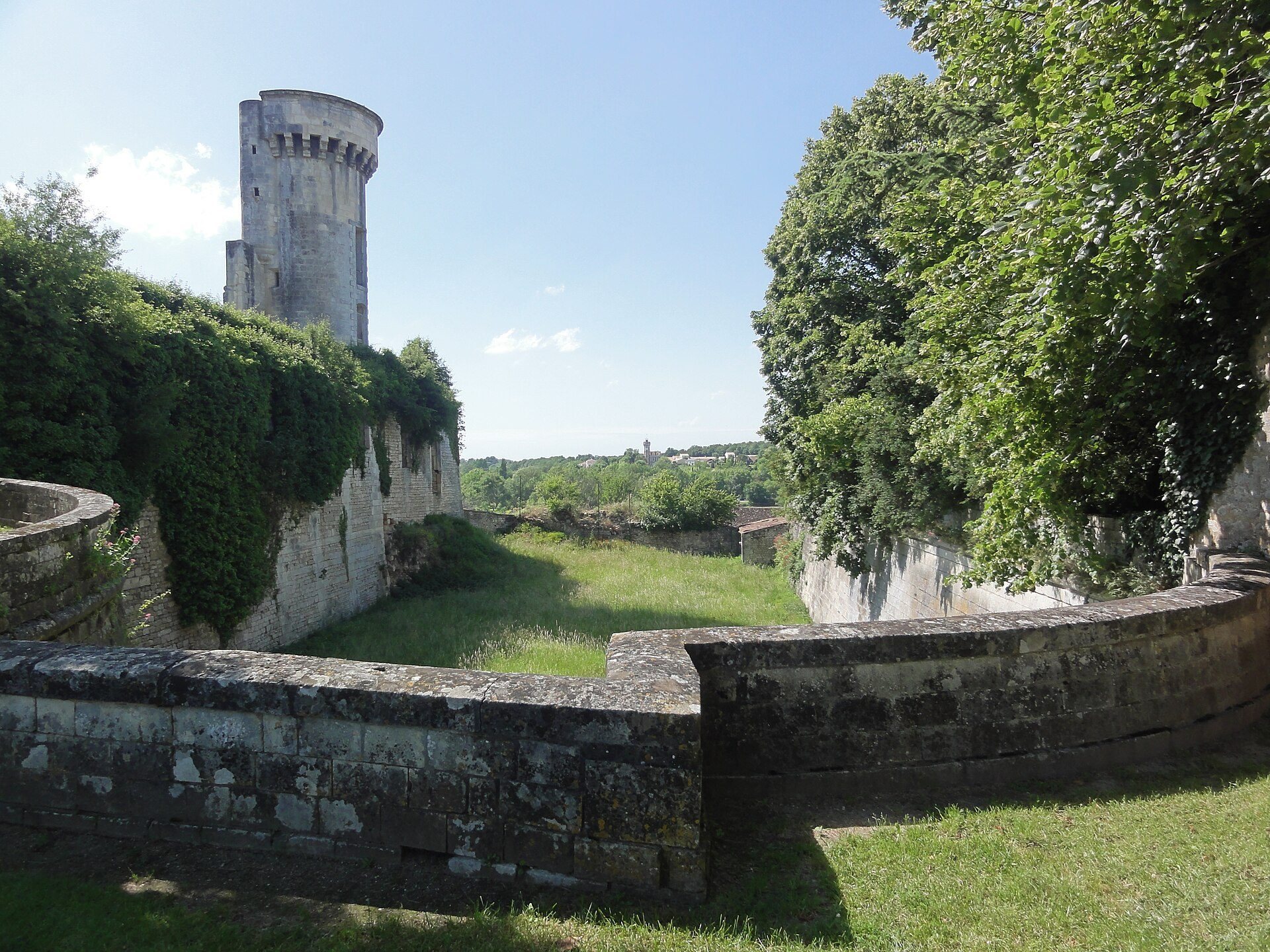
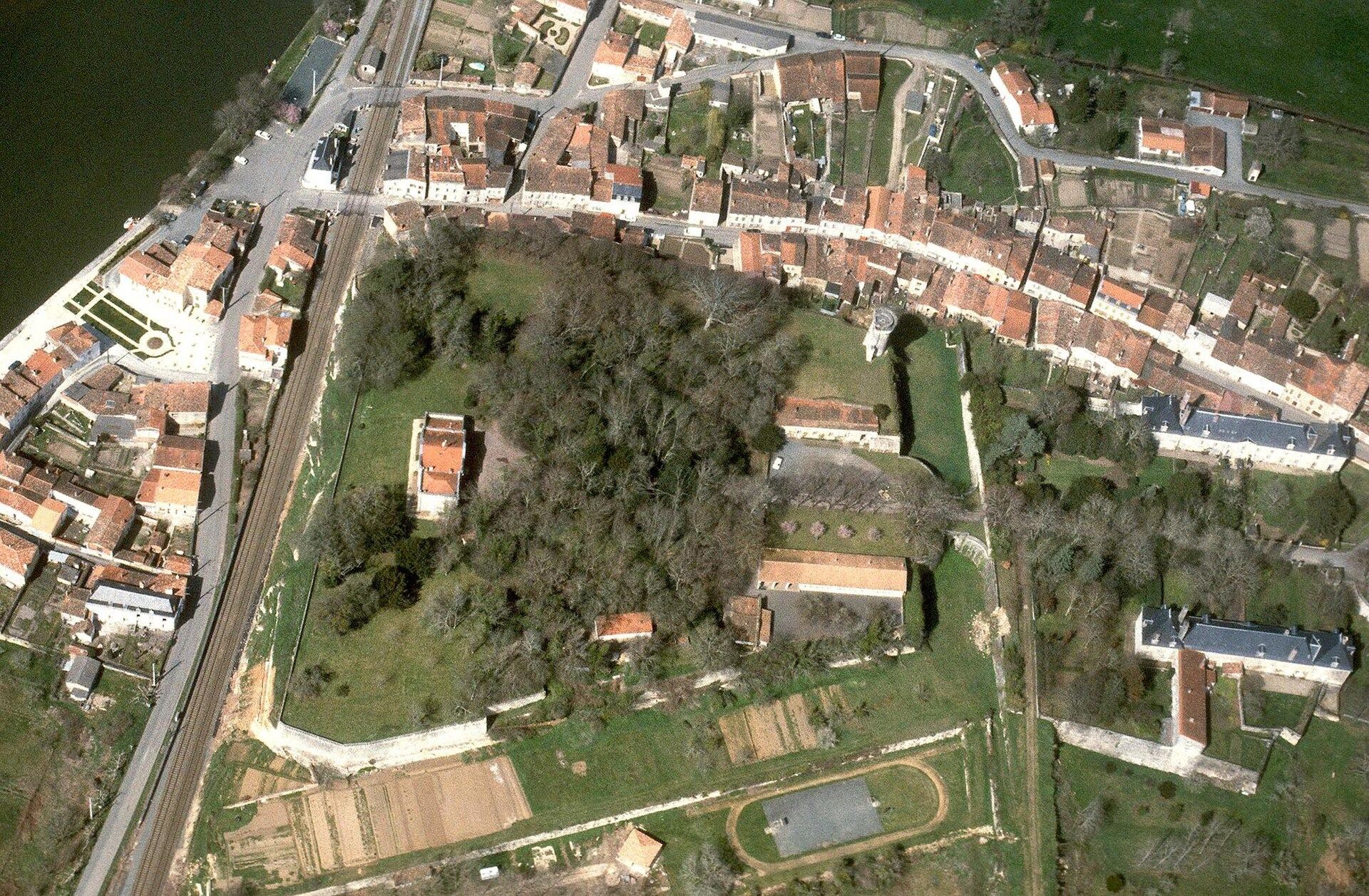
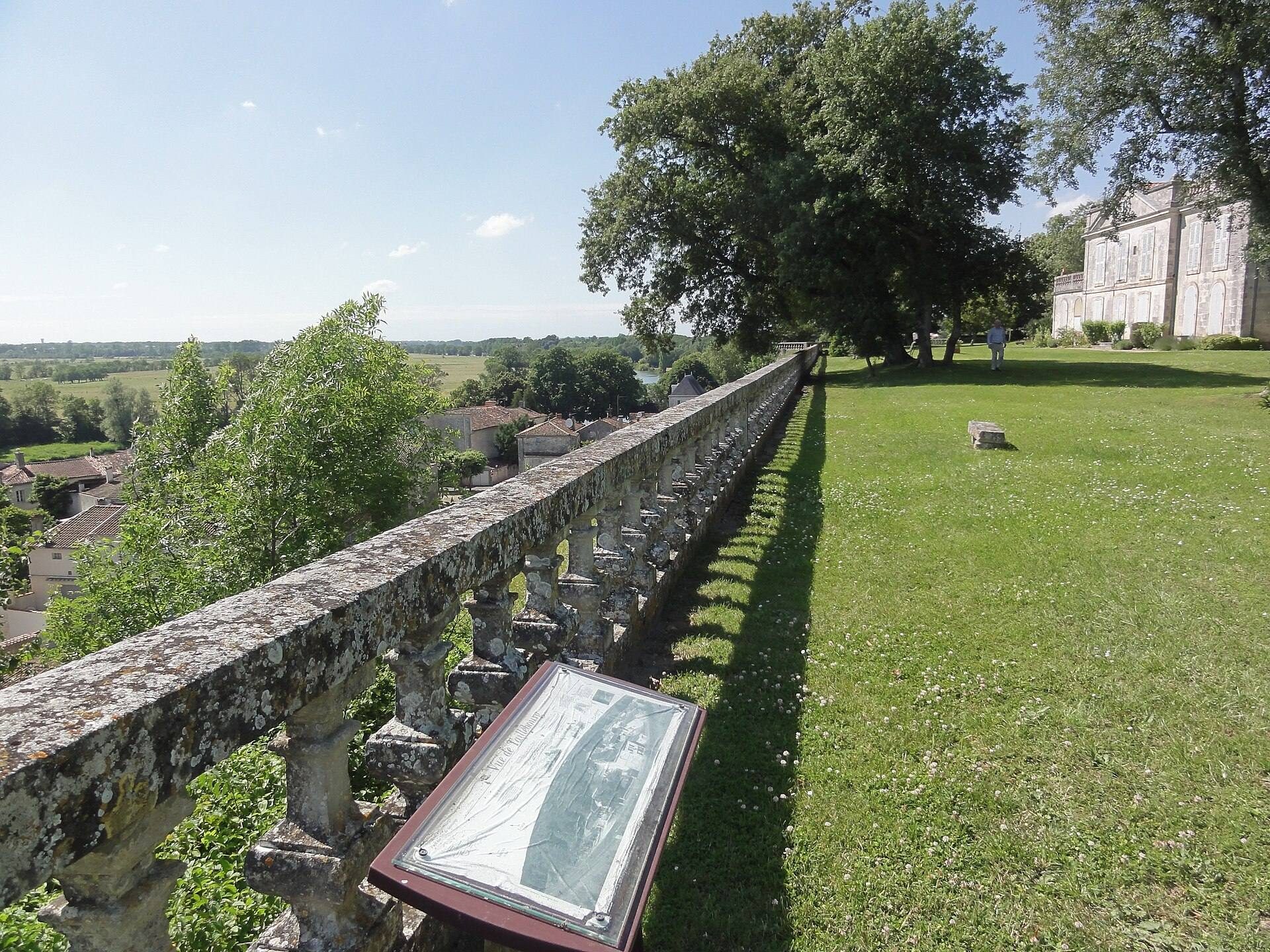
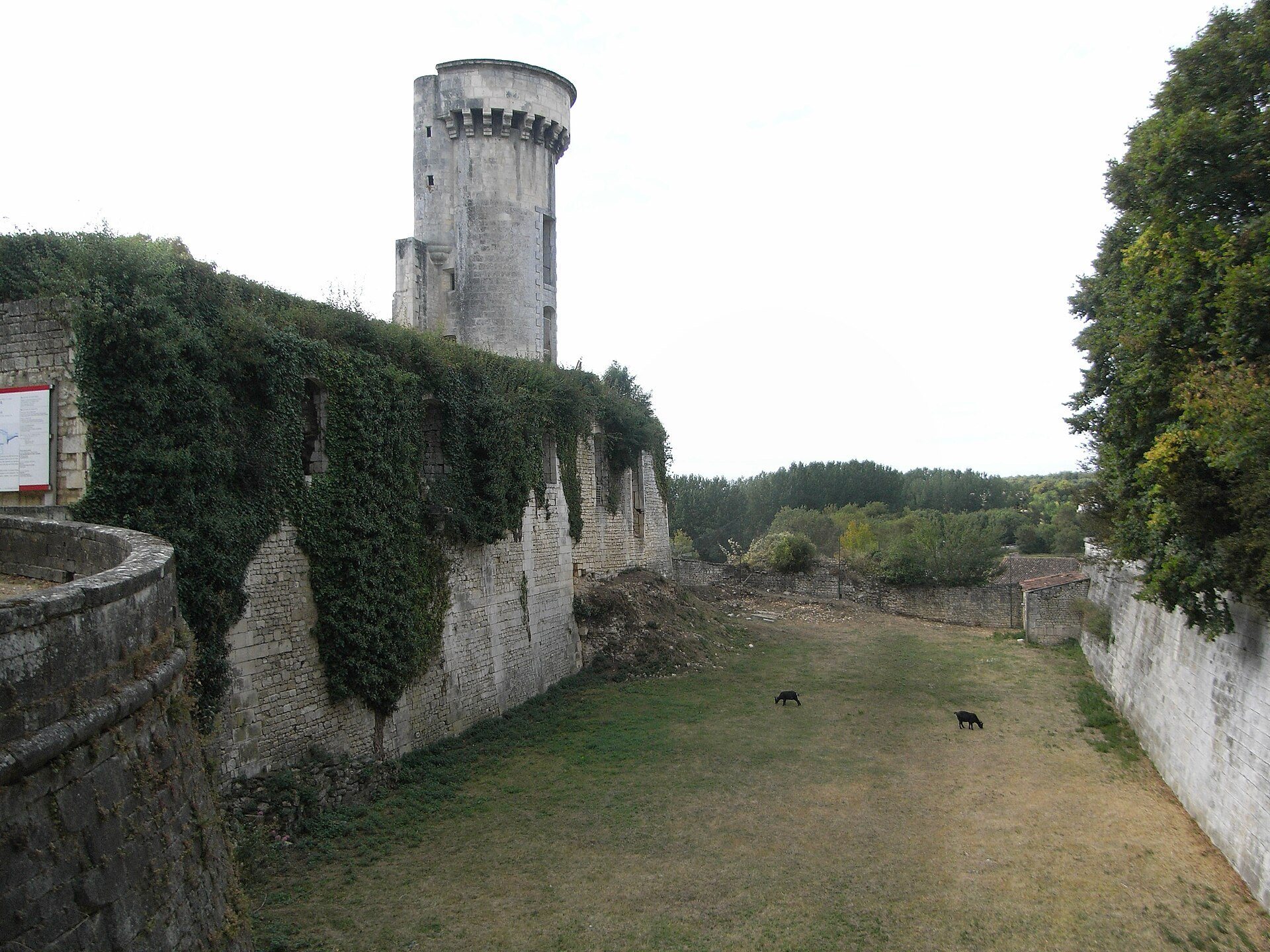
The castle stood on a rocky outcrop above the village of Taillebourg and the Charente valley. Sheer rock faces protected three sides, while a triple wall defended the fourth. The medieval remains include a tower, terraces, and underground rooms. Retaining walls, moats, and bridges form part of the surviving fortifications, preserving elements of the defensive arrangement around the stronghold.
Eighteenth-century buildings
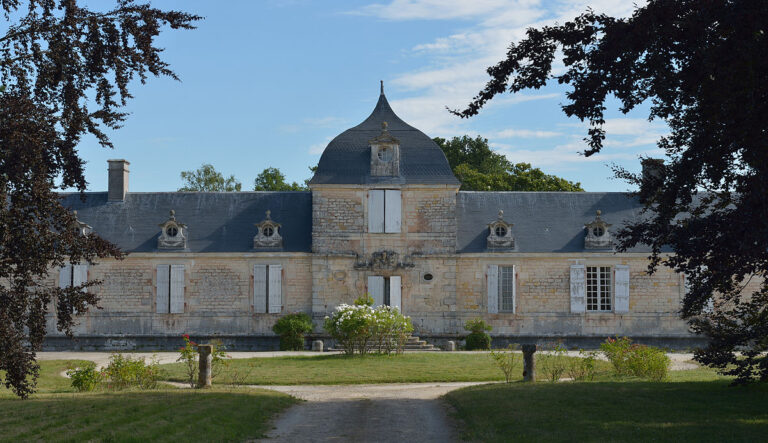
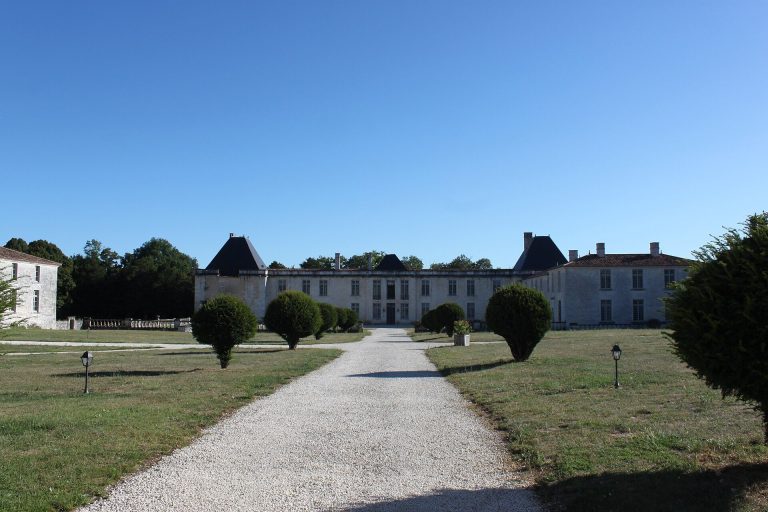
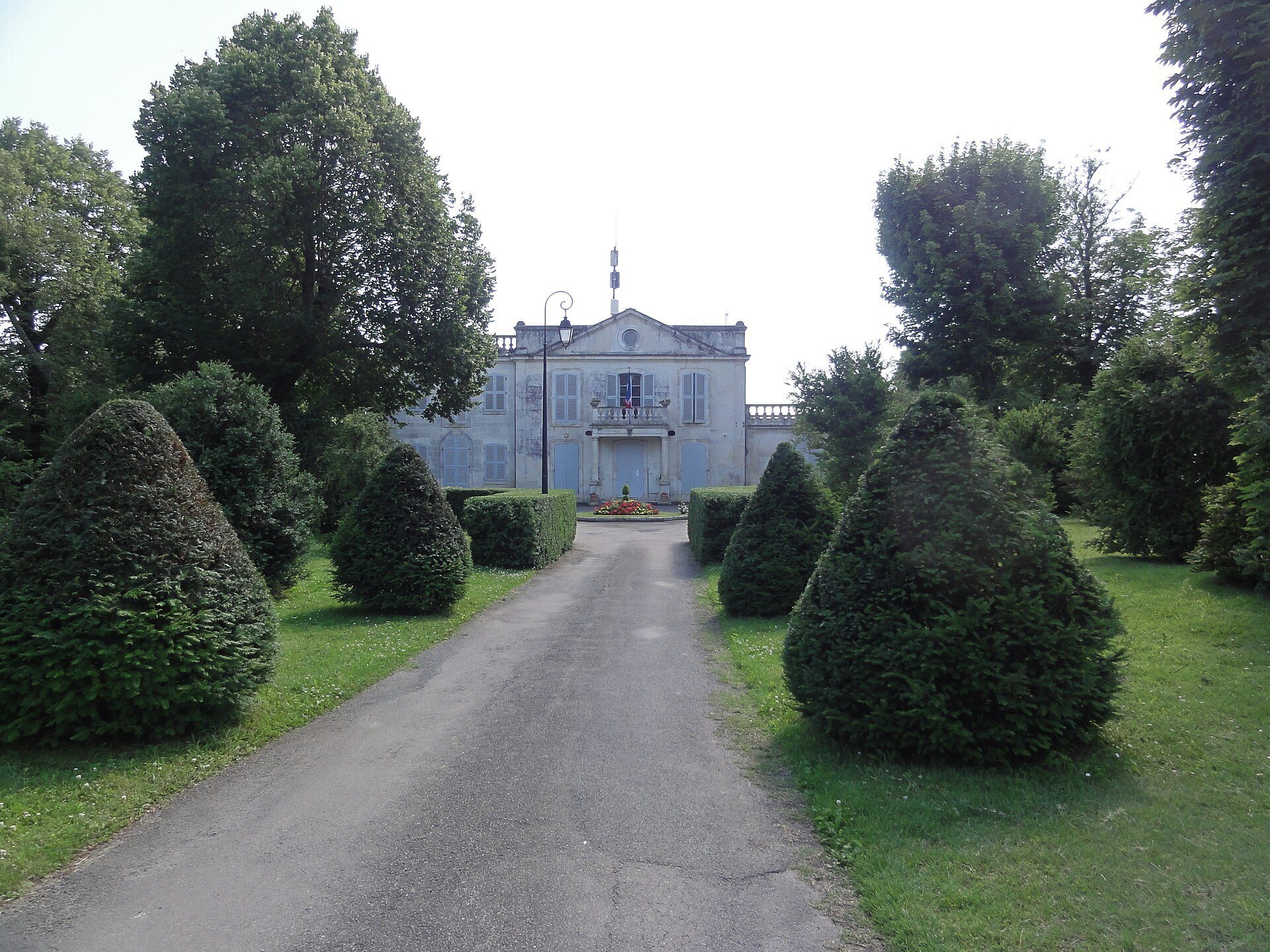
The eighteenth-century castle and its terrace formed a large U-shaped building flanked by two pavilions. These pavilions had slate roofs with mansard slopes, whose lower sections were steeply pitched. Two wings of the service buildings also survive and have been converted into private residences. Together, these structures represent the rebuilding begun under Frédéric-Guillaume de La Trémoille after the destruction of the seventeenth century.
Gardens and valley landscape
In 1714, the Duke of La Trémoille commissioned the gardener Le Nôtre to design a formal French garden on ground cleared during the reconstruction. This garden used ordered paths, terraces, clipped plants, and visual symmetry, while further gardens extended below the ramparts. A lime-tree avenue leads to a terrace planted with boxwood. Agrippa d’Aubigné, a French Protestant poet and chronicler, recorded that Henry IV considered the belvedere, an elevated viewpoint, the finest terrace in his kingdom.
The banks of the Charente are planted with poplars, willows, and alders. The surrounding meadows preserve traces of the Roman-period Saint-James causeway. The bell installed during the restoration carries an inscription identifying it as a clock bell given to the Castle of Taillebourg in 1732 by Frédéric-Guillaume de La Trémoille, Prince of Talmont, Count of Taillebourg, and lieutenant general of the king’s armies, together with his wife, Anne de Bouillon. Louis Brossard made the bell, which was later relocated to the church at Messac.