Termas Romanas, Toledo: A Roman Public Bath Complex


Site at a Glance
- Rating
- 4.1
- Popularity
- Medium
- Country
- Spain
- Primary era
- Classical
- External website
- Open
- Eras represented
- Classical
- Civilizations
- Roman
- Site type
- Sanitation
- Remains
- Baths
On this page6 sections
History
Termas Romanas, Toledo, in Spain, is a Roman public bathing complex built between the end of the 1st century and the middle of the 2nd century CE, when Toledo was known as Toletum. The baths formed part of the city’s system for supplying clean water and were built under the auspices of imperial power. Their scale, the size of the hot bathing room, and the planned use of marble and statues indicate a substantial public facility.
Roman Construction
The complex was built in two clearly different phases. Its construction required careful planning, both for the bathing rooms and for the infrastructure that brought water into Toletum. As large public bath establishments, Roman thermae could also serve social functions, placing the baths within the civic life of the Roman city.
Discovery in Toledo
The archaeological remains became known in 1986. Another section was discovered beneath a building during the same year, revealing that the complex extended across more than one part of the modern urban fabric.
Remains
Bathing Rooms and Infrastructure
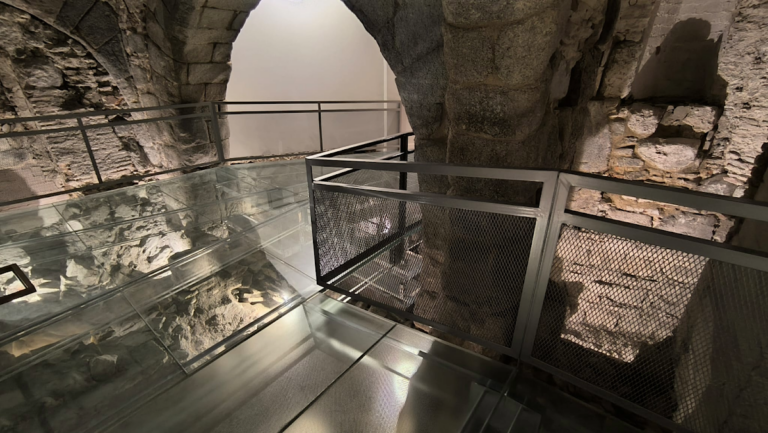
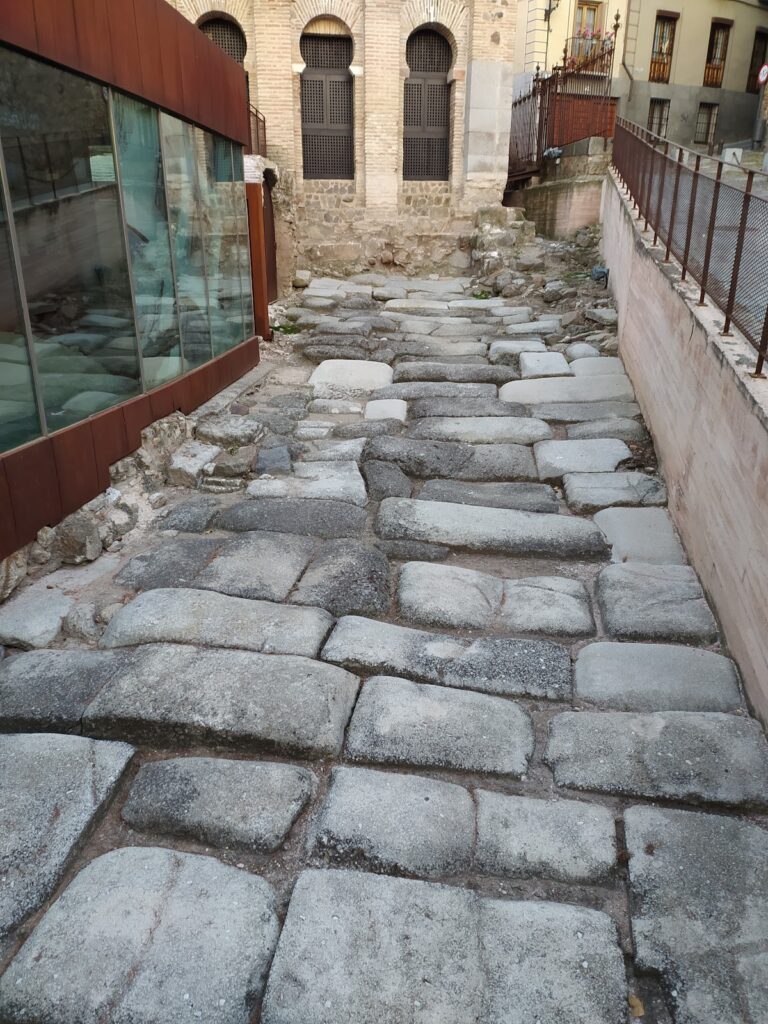
The surviving ruins lie at Amador de los Ríos Square, high above the Tagus River. They include a caldarium, the hot room of a Roman bathing complex, together with other bath infrastructure. The complex was carefully planned and decorated with marble and statues. One section lies beneath the former Oratorio de San Felipe de Neri, while another survives beneath a building. Some remains can currently be viewed beneath a shop.
Water Supply
In Roman times, water reached the city from one of the Tagus’s tributaries through an aqueduct, an engineered channel or structure for transporting water. The aqueduct was situated approximately 80 metres above the river, and the supply system also included large cisterns, or storage tanks. These elements formed part of the wider infrastructure associated with the baths and the water needs of Toletum.