Castillo de La Alberguería de Argañán: A Frontier Castle in Spain
Site at a Glance
- Rating
- 3.9
- Popularity
- Very Low
- Country
- Spain
- Primary era
- Medieval
- Eras represented
- Medieval
- Civilizations
- Crown of Castile
- Site type
- Military
- Remains
- Castle
On this page5 sections
History
Castillo de La Alberguería de Argañán is a ruined frontier castle in Spain, on the border with Portugal, probably constructed in the fourteenth century. Its position opposite Portugal’s Guarda district gave it both administrative importance and a defensive and surveillance role during centuries of tension between the two kingdoms.
Formation of the frontier
The political boundary developed after Portugal separated from the Castilian-Leonese realm. The Treaty of Zamora, a twelfth-century agreement associated with Portugal’s recognition as an independent kingdom, and the Treaty of Alcañices in 1297 helped establish the later Portugal–Castile frontier. Fortifications were subsequently built and maintained along this boundary for defense and observation.
The castle is thought to have existed by the fourteenth century and was probably built during that period, although little information survives from before the fifteenth century. At the end of the fourteenth century, King Enrique IV of Castile and León granted jurisdiction over the settlement to Alvar Pérez Osorio, the son-in-law of Esteban Pacheco, in recognition of Pacheco’s services. Alvar Pérez and María Pacheco are the earliest documented owners. During their association with the castle, its principal function was administrative, while its frontier location also supported military oversight.
Conflict with Portugal
After Enrique IV died in 1474, a Castilian succession conflict began in 1475, increasing pressure along the frontier as Portuguese interests in the crown became more active. Castilian militia was sent to the area, but Portuguese forces crossed the border and attacked the town in 1475 before being expelled. Portuguese incursions during this period brought extensive looting and destruction to the locality.
The castle was invaded several times in the seventeenth century. An incursion led by the governor of Portugal’s Beira region failed in 1643. Portuguese forces sacked the municipality and caused a fire in 1652, then captured the castle in 1660 after an operation involving 6,000 infantry and 800 cavalry. A further, apparently final, Portuguese siege attempt took place in 1664. In 1665, strong winds and heavy rain destroyed much of the frontier fortifications, also damaging Castillo de La Alberguería de Argañán.
Ruin and protection
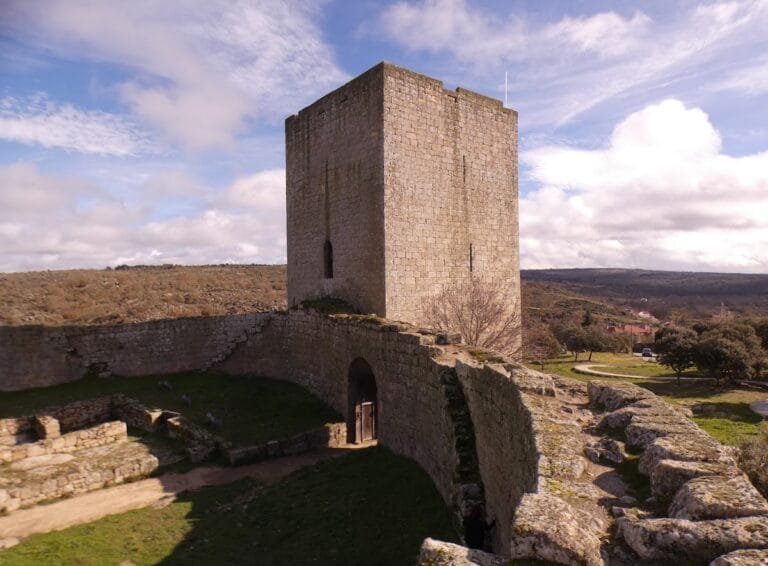
The frontier held strategic importance from the twelfth through the seventeenth century, but the castle is now ruined and abandoned. It was added to the Red List of Heritage on 23 June 2009, reflecting the condition and vulnerability of the monument.
Remains
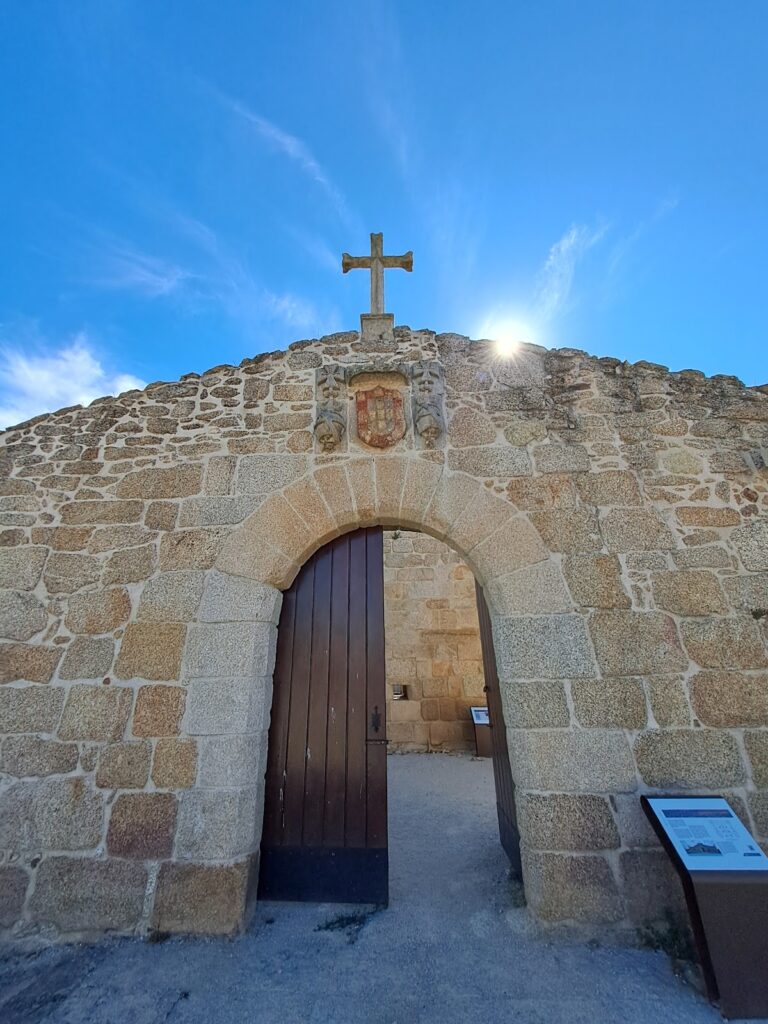
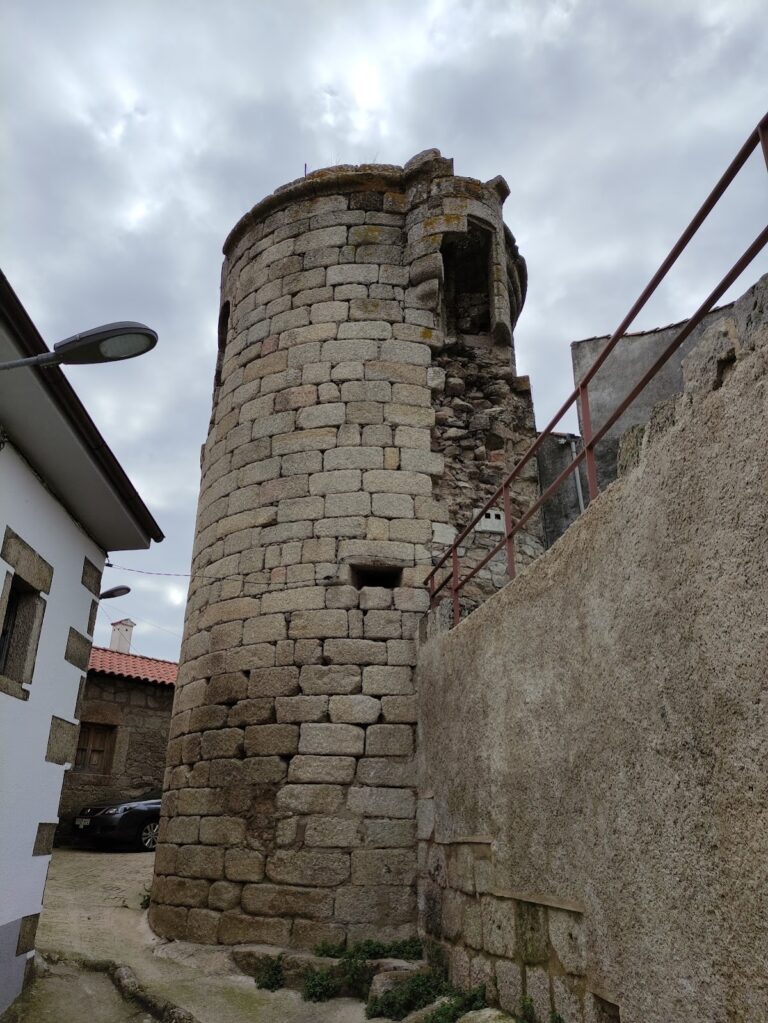
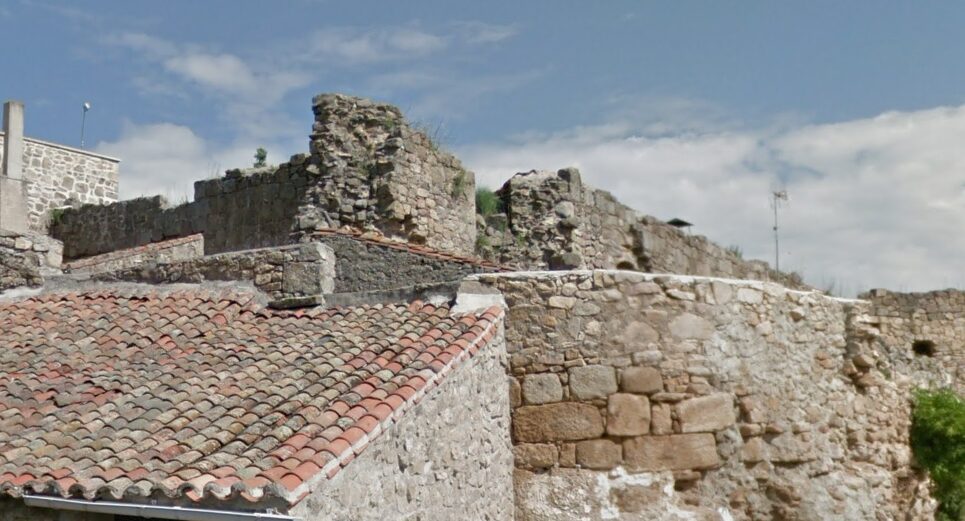
The surviving monument consists of a ruined frontier castle whose former spaces are partly incorporated into agricultural dependencies. Some dwellings also occupy areas that once belonged to the castle. These later uses form part of the present physical character of the site, alongside the remaining ruined fabric.
Nearby sites