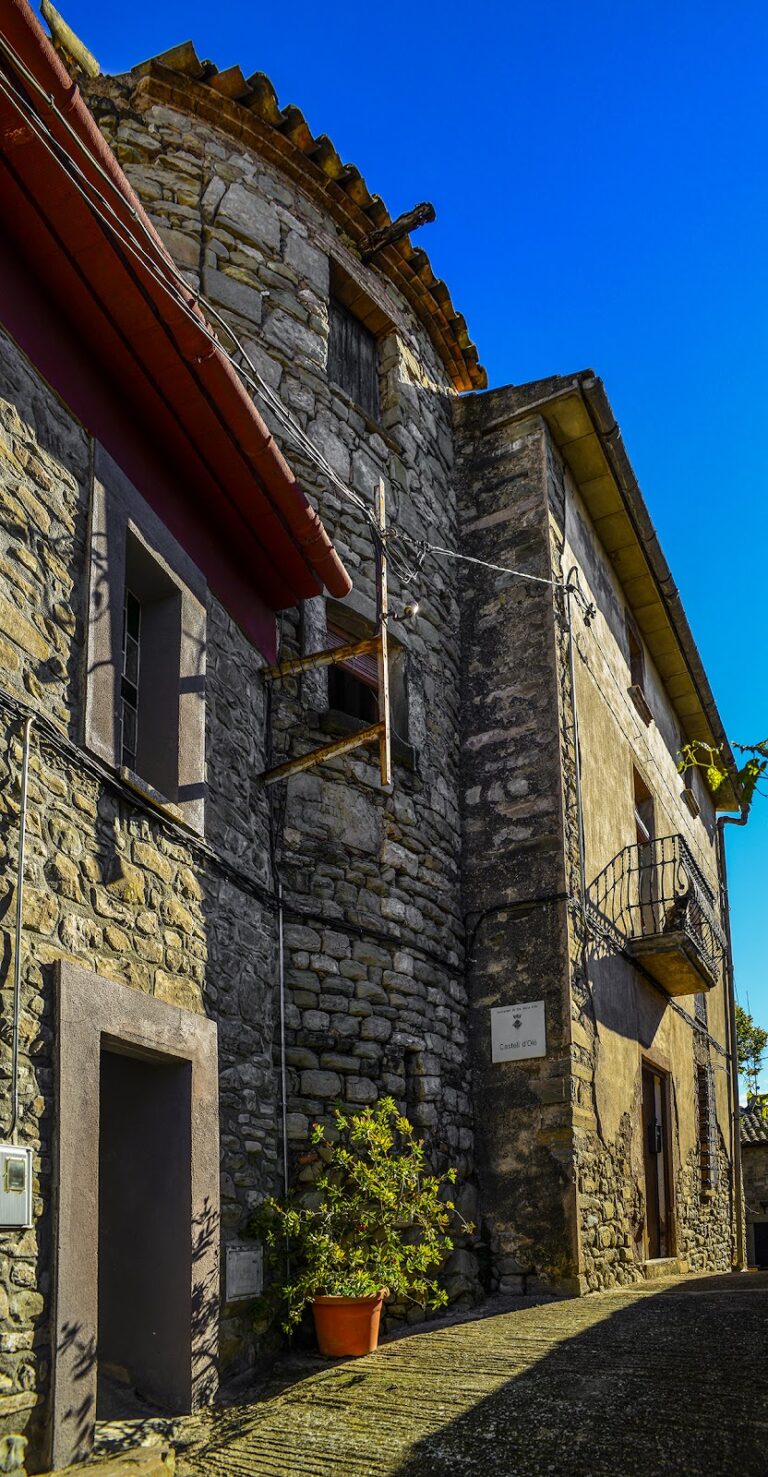
Castell de Sallent: A Romanesque Castle in Catalonia

Site at a Glance
- Rating
- 4.5
- Popularity
- Very Low
- Country
- Spain
- Primary era
- Medieval
- External website
- Open
- Eras represented
- Medieval
- Civilizations
- Crown of Aragon
- Site type
- Military
- Remains
- Castle
On this page8 sections
History
Castell de Sallent is a Romanesque castle in Spain that exercised jurisdiction over a defined territorial district. Its first written mention dates from 995, and a document from 1023 names it as the kastrum quod dicunt Sallent. The castle occupied a place within the political and territorial organization of medieval Catalonia.
Comital and noble lordship
In 1023, Countess Ermessendis, widow of Count Ramon Borrell and a member of the ruling house of Barcelona, pledged the castle to Bernat Sendred, son of Sendred of Gurb. Castell de Sallent and its territory then remained with the Gurb-Queralt family until 1209. By 1032, the castle lay within the County of Manresa, while a Sallent lineage was associated with its castlania, the office and jurisdiction of a castellan. The castle also depended on the Gurb-Queralt family and the counts of Barcelona.
On 22 September 1209, Berenguer III of Queralt and his wife returned Castell de Sallent and the holding of Sant Ponç to King Peter the Catholic, a king of the Crown of Aragon. In 1246, King James the Conqueror transferred the castle by exchange to the Bishop of Vic. The bishop acquired the rights held by the castellan Pere de Santa Coloma in 1253, and episcopal lordship continued until seigneurial domains were abolished in 1812. The Calders, Talamanca, and Santa Coloma families are also recorded as feudatories.
Later medieval references and heritage status
A record from 1358 refers to 42 households “in the castle of Sallent.” The wording evidently concerned the town, which stood some distance from the fortress. During the Catalan Generalitat’s war against King John II, Sallent was mentioned as a meeting place for local peasants and people from nearby farmsteads, although the castle itself was not mentioned.
Castell de Sallent has been a Cultural Asset of National Interest as a historic monument since 22 April 1949. It is also registered as a Spanish cultural asset under the same heritage reference.
Remains
Castle enclosures
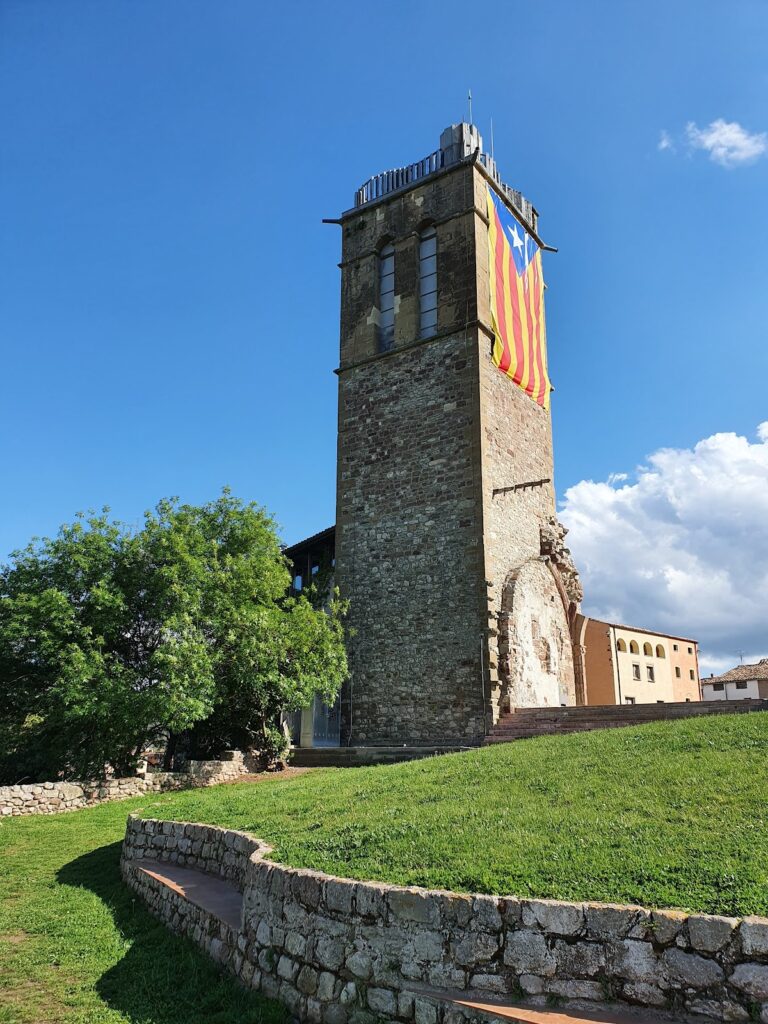
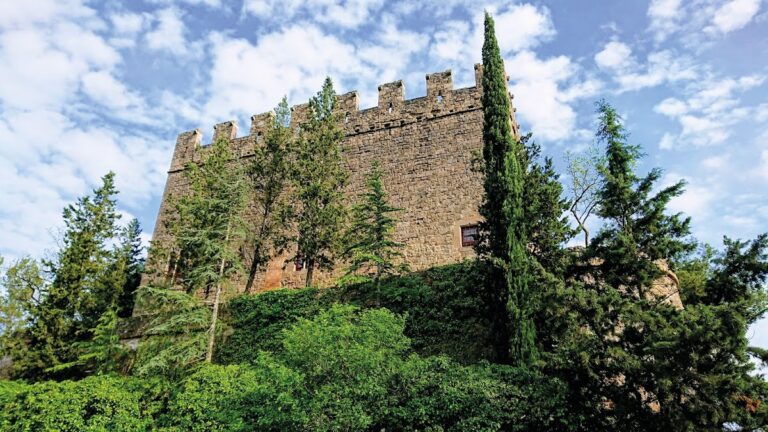
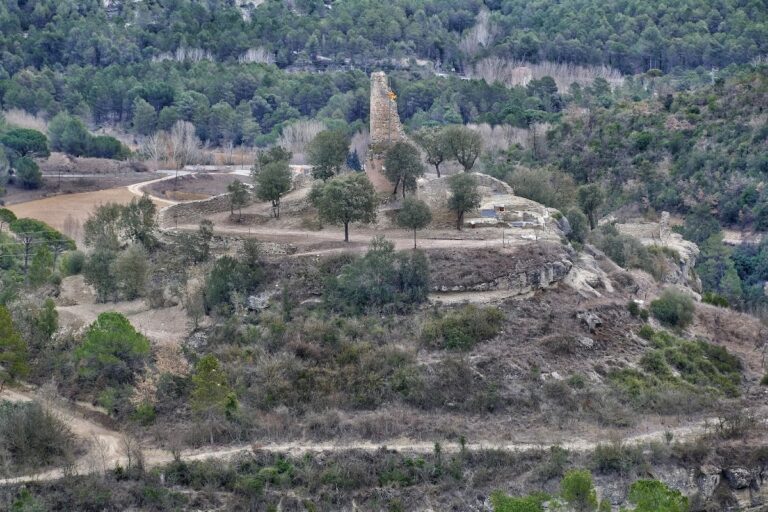
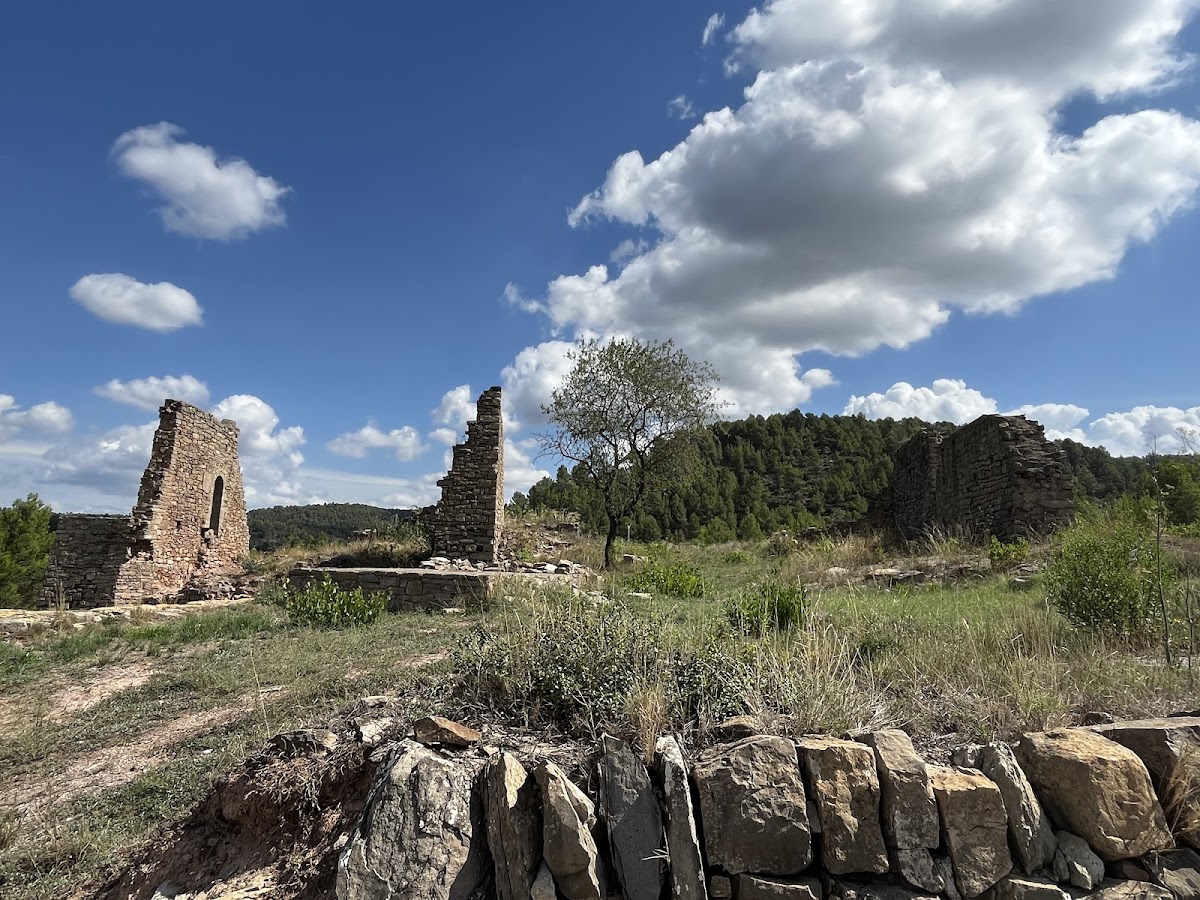
The ruined Romanesque fortification stands on the small hill of Sant Sebastià, south of Sallent. The surviving fabric includes sections of the enclosure walls and half-round towers. Part of the upper enclosure remains on the summit, together with a section of the lower enclosure wall.
The lower enclosure was strengthened with square-plan towers projecting from the wall. Four of these towers can be distinguished, and their form belongs to a fourteenth-century remodeling of the castle. The surviving walls and towers preserve the division between the upper and lower defensive areas.
Romanesque churches
Sant Esteve
The reconstructed church of Sant Esteve stands near the castle ruins. Its position forms part of the group of historic structures surrounding the remains of Castell de Sallent.
Sant Sebastià
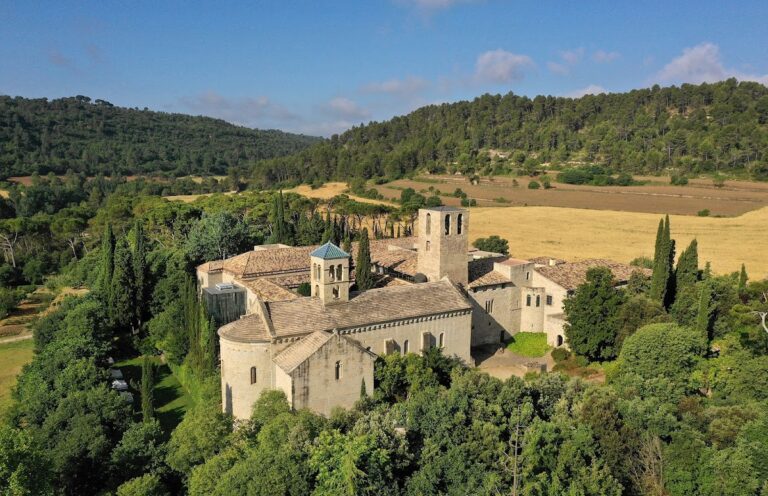
The former parish church of Sant Sebastià stands close to the fortress. It is a large Romanesque rotunda, meaning a circular church or principal circular space, and is described as the largest Romanesque rotunda in Catalonia. The building has one semicircular apse, a projecting rounded end of the church, and two smaller semicircular apses.
A semicircular niche is cut into the wall beside the northern subsidiary apse. All three apses carry arcaded decoration beneath the roof eaves, while windows with double splayed openings occupy the central parts of the apse structures.