Zamek w Zabrzeży: A Medieval Castle in Poland
Site at a Glance
- Rating
- 3.4
- Popularity
- Very Low
- Country
- Poland
- Primary era
- Medieval
- Eras represented
- Medieval
- Civilizations
- Kingdom of Poland
- Site type
- Military
- Remains
- Castle
On this page6 sections
History
Zamek w Zabrzeży was a medieval knights’ castle in Poland, built on Babia Góra near the village of Zabrzeż during the thirteenth century. It formed part of the group of Dunajec castles that guarded the medieval trade route from the Kingdom of Poland toward Upper Hungary through the Dunajec and Poprad valleys.
Earlier Settlement and Medieval Development
The summit had been occupied before the castle was built by a fortified settlement associated with the Lusatian culture, a prehistoric Central European culture of the Late Bronze Age and Early Iron Age. A small defensive castle was established on the hill in the thirteenth century, although its precise foundation date is unknown.
The first surviving documentary reference to Zabrzeż dates from 1312. In that year, Anna, superior of the Poor Clares’ monastery at Stary Sącz, restored the village headman’s office to Klemens, son of Swarcon. The Poor Clares are the contemplative women’s branch of the Franciscan tradition. Klemens had received the office from Saint Kinga, the thirteenth-century Polish-Hungarian princess and wife of Bolesław the Chaste, duke of Kraków and senior duke of Poland.
In 1358, Konstancja, another superior of the Stary Sącz Poor Clares, sold Zabrzeż’s village headman’s office for ten grzywnas to the brothers Paweł, Piotr, and Jan, along with the hamlet of Boczów. A grzywna was a medieval unit of weight and monetary value. Because a village headman could be a nobleman, the castle may have housed knights who held this office in Zabrzeż, although that interpretation remains unproven.
Destruction and Later Interpretation
The date and circumstances of the castle’s destruction are unknown. Archaeological work on the summit found traces of a fire that affected wooden structures. Residents interviewed in the 1960s and 1970s recalled that fragments of the castle walls could still be seen on Babia Góra before the First World War. One proposed identification connects the castle with Lemiesz, a castle mentioned in the fourteenth-century Life of Saint Kinga, but this association remains uncertain.
Remains
Babia Góra Castle
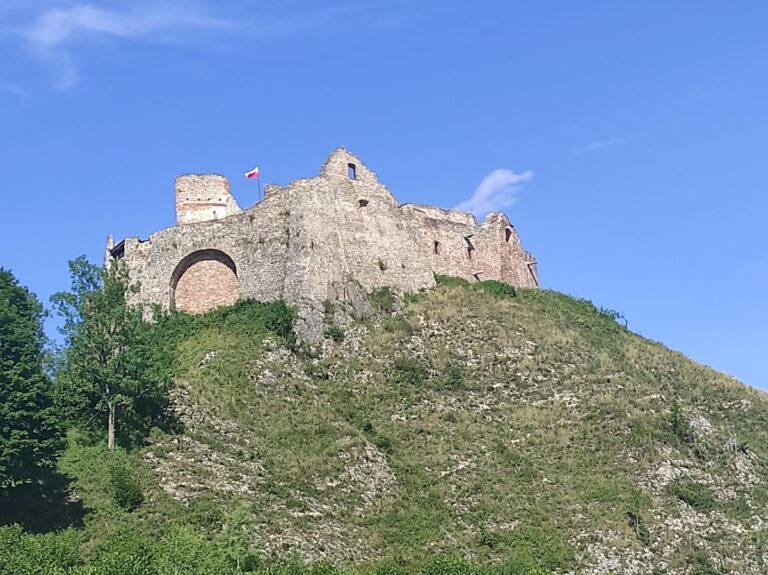
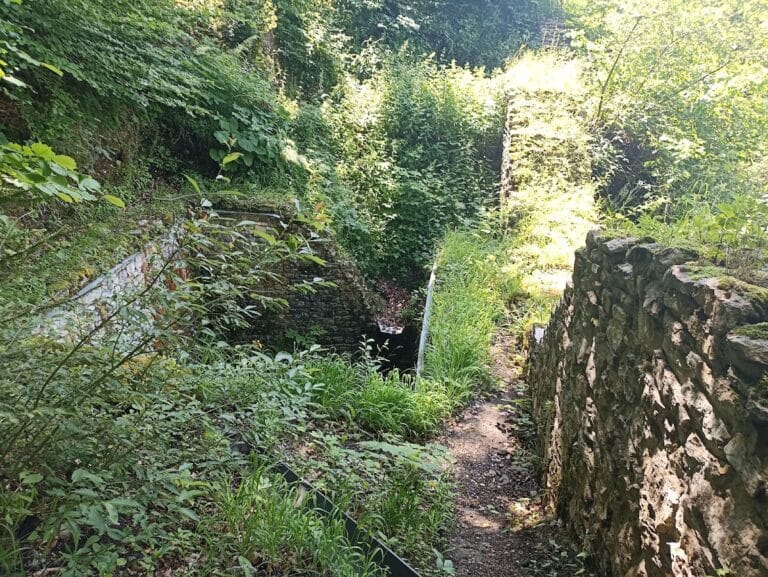
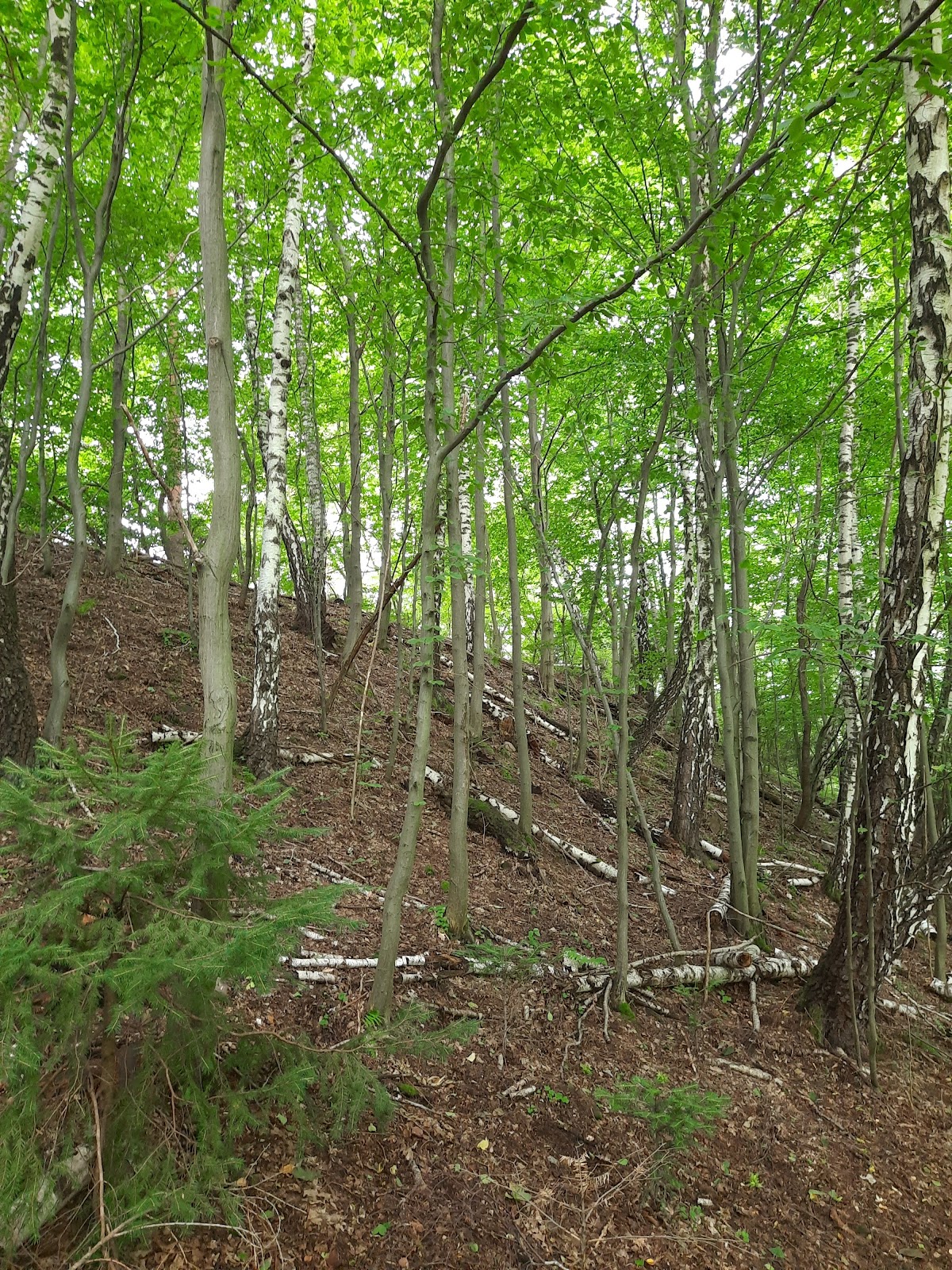
The castle occupied the summit of Babia Góra on the left bank of the Kamienica River, close to its confluence with the Dunajec. The summit rises 84 metres above the surrounding valley in the Beskid mountain region, near the transition between the Gorce and Island Beskids. The enclosure was circular and measured approximately 30 metres across. A stone wall, reaching up to 3.5 metres in thickness, surrounded it, while a deep dry ditch provided an additional defensive boundary. Excavations also revealed traces of burned wooden construction. Only limited remains survive, including the ditch and traces associated with the former walls.
Boczów Defensive Installation
At Boczów, a hamlet within Zabrzeż, remnants of a separate defensive installation remain on the Czubań promontory extending into the Dunajec valley. Its layout included a courtyard or enclosed central area approximately 8 metres in diameter. A ditch separated this area from the mountain slope. The date of its construction is unknown.