Bottreaux Castle: A Ruined Motte-and-Bailey Castle in Boscastle, United Kingdom


Site at a Glance
- Rating
- 4.1
- Popularity
- Very Low
- Country
- United Kingdom
- Primary era
- Medieval
- Eras represented
- Medieval
- Civilizations
- English
- Site type
- Military
- Remains
- Castle
On this page7 sections
History
Twelfth-century foundation
Bottreaux Castle is a ruined motte-and-bailey castle in Boscastle, United Kingdom, probably built between 1154 and 1189 during the reign of Henry II. Sir William des Bottreaux was associated with its construction. A motte-and-bailey castle combined a raised defensive mound with an adjoining enclosed area used for defence and residence. Although attributed to the twelfth century, Bottreaux Castle does not appear in surviving records until the thirteenth century.
The castle belonged to the Bottreaux family, whose members were later ennobled by Edward III as Barons Botreaux. Through marriage, the property passed first to Lord Hungerford and later to the Earl of Huntingdon.
Decline of the castle
The last member of the Bottreaux family died in 1462, after which the castle soon fell into decay. By 1478, William Worcester described it only as a manor house. When the antiquary John Leyland visited in 1538, he believed that the castle had probably already been demolished. He considered the ruins unworthy of the name “castle” and noted that local people called the site “the Courte.”
By around 1600, the site was remembered as having contained a prison for both men and women. Its varied prison rooms were associated with the exercise of extensive jurisdiction. By 1769, Bottreaux Castle was in ruins.
Survey and protection
A survey by Maclaughlan in 1852 recorded visible walls and found that only about half of the motte could still be seen. The site was designated a Scheduled Monument on 22 April 1974, giving it legal protection as an archaeological and historic site in England. It is now a public park.
Remains
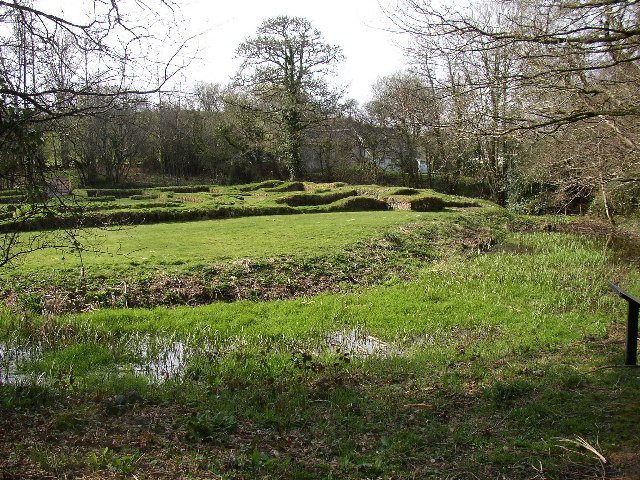
The surviving remains are earthworks forming the site of a ruined motte-and-bailey castle. Bottreaux Castle occupies a steep spur overlooking the River Jordan in Boscastle, near a harbor on the North Sea and beside the market town. The raised motte formed the principal elevated part of the castle, while the adjoining bailey was the enclosed area associated with defensive and residential use.
Castle earthworks
The earthworks include the remains of the motte, of which approximately half was visible in 1852. Walls were also visible during that survey. These surviving features preserve the basic archaeological form of the castle, although the site is now a ruin within a public park.
War memorial
A war memorial stands on the castle site, forming part of the present physical character of the former castle grounds.