Castell Bryn Gwyn: A Prehistoric Enclosure on Anglesey


Site at a Glance
- Rating
- 3.8
- Popularity
- Very Low
- Country
- United Kingdom
- Primary era
- Stone Age
- External website
- Open
- Eras represented
- Stone Age, Iron Age, Classical
- Civilizations
- Celtic, Roman
- Site type
- Religious
- Remains
- Sanctuary
On this page6 sections
History
Castell Bryn Gwyn is a prehistoric enclosure in the United Kingdom, on the Isle of Anglesey west of Brynsiencyn. Its earliest bank and ditch date to the end of the Neolithic period, around 2500–2000 BC, when communities used farming, pottery, and polished stone tools and built monuments such as henges. The site’s original purpose is uncertain, although it may have served as a religious sanctuary.
Neolithic origins
Later Neolithic pottery indicates that the enclosure continued to be used during the Neolithic period. Its circular bank and ditch may have formed a henge, a prehistoric monument associated with ceremonial or religious activity.
Iron Age and Roman alterations
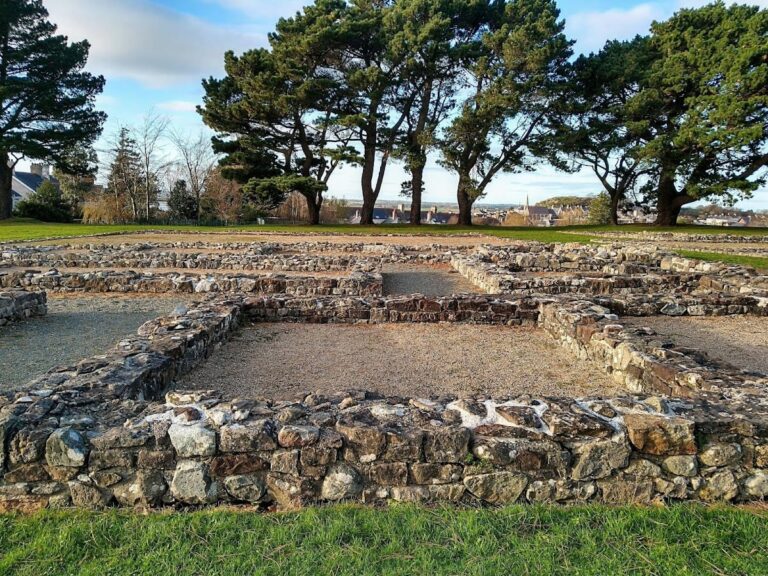
During the Iron Age, a wall was constructed around the existing earthwork. The wall was rebuilt during the Roman period, an era of Roman rule and influence in Britain, and was rebuilt again at a later date. Cadw, the Welsh government service responsible for protecting and conserving Wales’s historic environment, maintains the site. Since 2024, Cadw has officially spelled the name Castell Bryngwyn. The name Castell Bryn Gwyn is translated as “White Hill Castle.”
Remains
Circular enclosure
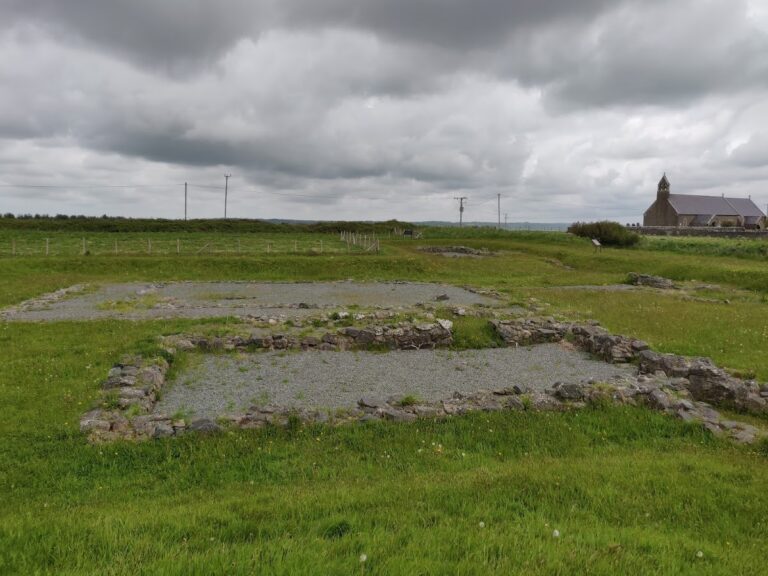
The monument is a circular enclosure made from a clay-and-gravel bank covered with grass. The bank remains approximately 1.5 metres high and is supported and protected on its outer side by stone retaining walls, known as revetments. These walls enclose a level area about 54 metres in diameter, while the enclosure is also described as approximately 64 metres wide.
Setting and archaeological evidence
Castell Bryn Gwyn stands at approximately 13 metres above sea level in predominantly grassland on relatively level terrain, with hillier ground to the southeast. Neolithic pottery and the surviving bank-and-ditch earthwork provide physical evidence for the monument’s early use and its later development as an enclosed prehistoric site.