Irslingen Castle: An Urslingen Ancestral Castle Ruin in Germany


Site at a Glance
- Rating
- 4.3
- Popularity
- Very Low
- Country
- Germany
- Primary era
- Medieval
- Eras represented
- Medieval
- Civilizations
- Holy Roman Empire
- Site type
- Military
- Remains
- Castle
On this page5 sections
History
The Urslingen dynasty
Irslingen Castle, also known as Urslingen, is a medieval castle ruin in Germany near Epfendorf. The Lords of Urslingen probably built it as their ancestral seat, and it is first mentioned in 1178, although its construction predates that reference.
The family rose through the Hohenstaufen, a medieval German ruling dynasty whose emperors and kings governed the Holy Roman Empire. Konrad of Urslingen entered their imperial administration and was elevated to Duke of Spoleto. He also temporarily served as imperial regent of Sicily, acting in the emperor’s name.
Imperial service and decline
After the death of Emperor Henry VI in 1197, Konrad lost the Duchy of Spoleto to the papal curia, the pope’s central governing administration. He nevertheless left his sons a hereditary claim to the duchy.
During the Fifth Crusade, the campaign fought from 1217 to 1221 chiefly against Egypt, Rainald of Urslingen served as the emperor’s representative in Italy and Sicily. In 1230, alleged irregularities in financial administration brought his imprisonment and the loss of imperial favor. The Urslingens were allowed to leave Sicily freely in 1233, but their property was confiscated. Rainald remained in the Papal States, while part of the family returned to Swabia.
The family retained its ducal title as its territorial possessions contracted. Württemberg held the ancestral castle by 1327. Reinold VI, the last Duke of Urslingen, was left with only Schiltach among the family’s acquisitions and sold it to Württemberg in 1381. A later chronicler portrayed him as a poor and morally ruined “beggar duke.”
Irslingen Castle had already been destroyed by the sixteenth century. The ruin is associated with the municipality of Dietingen in the Rottweil district of Baden-Württemberg.
Remains
Hilltop setting and surviving walls
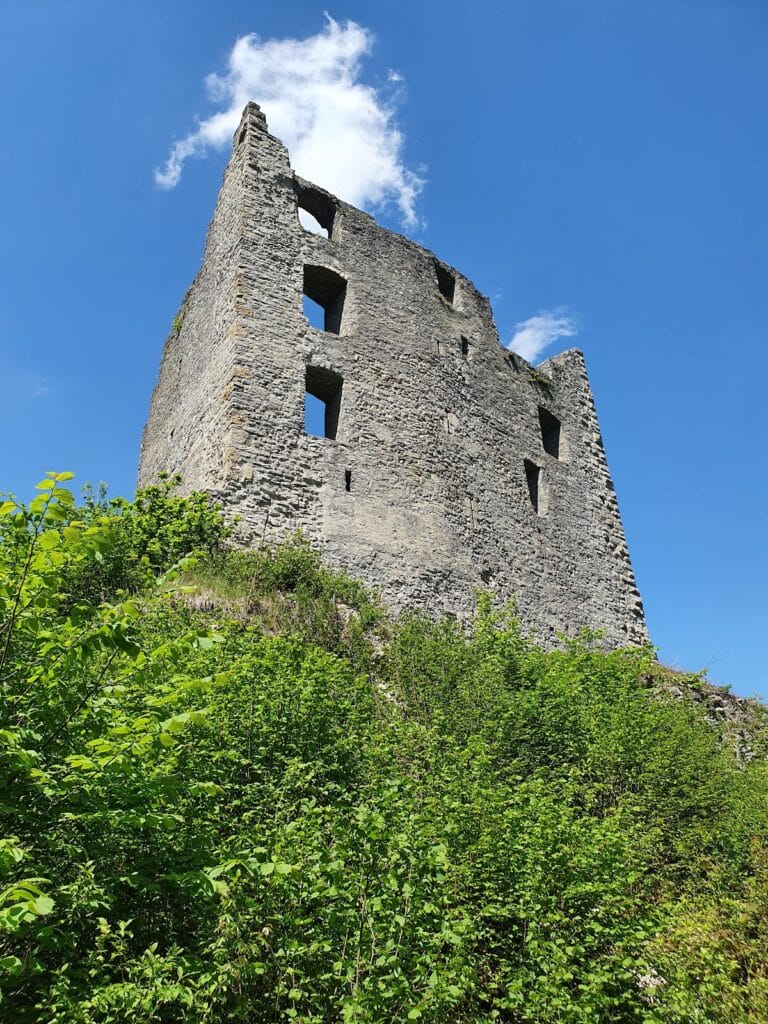
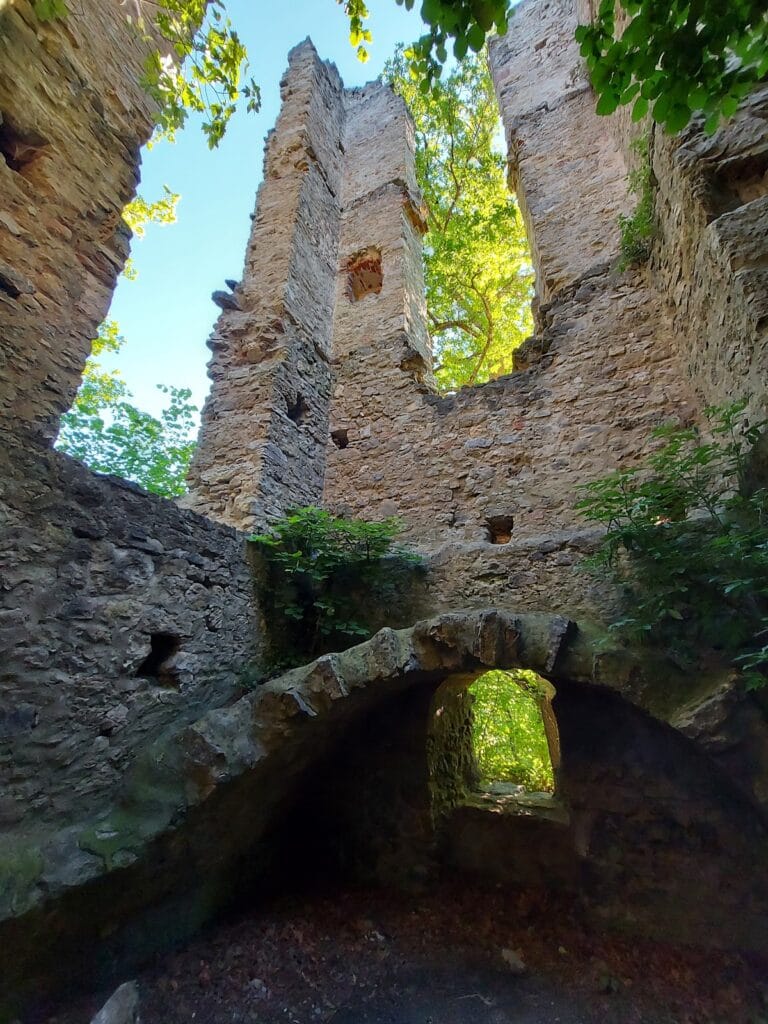
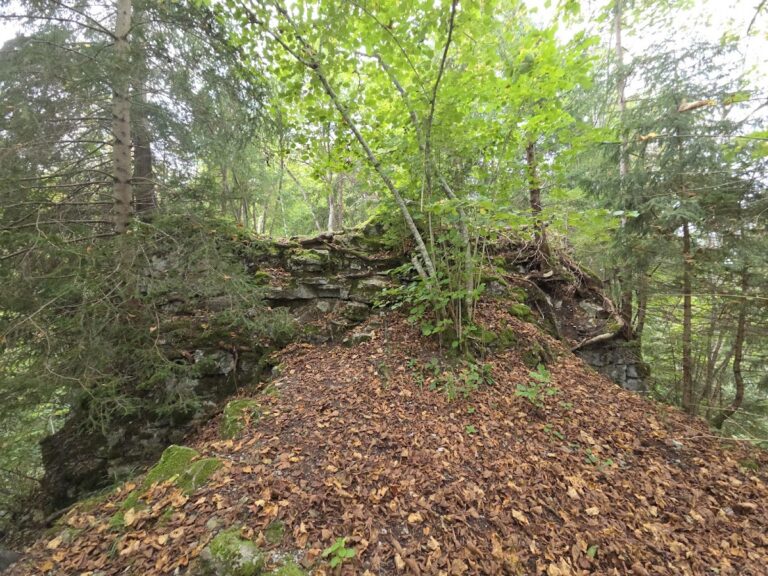
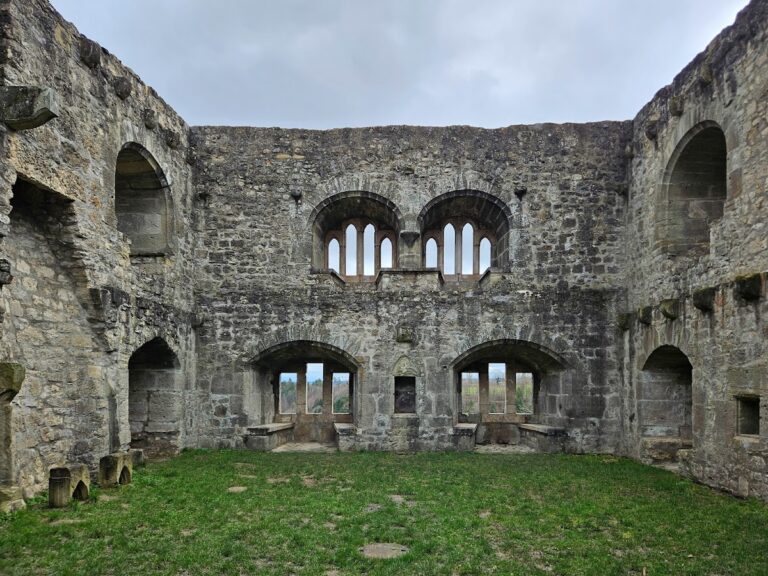
The castle occupied a hill rising to 530 metres above a river meander of the Schlichem. The site lies near the Schlichem Gorge and the Butschhof within the Schlichemtal nature reserve. The former hilltop complex survives as wall remains, preserving a physical trace of the Urslingens’ ancestral seat after the castle’s destruction.