Kirkoswald Castle: A Fortified Manor House in Cumbria
Site at a Glance
- Rating
- 4
- Popularity
- Very Low
- Country
- United Kingdom
- Primary era
- Medieval
- External website
- Open
- Eras represented
- Medieval
- Civilizations
- English
- Site type
- Military
- Remains
- Castle
On this page6 sections
History
Medieval development
Kirkoswald Castle is a fortified manor house in England, southeast of the village of Kirkoswald in Cumbria. King John granted Hugh de Morvile a royal licence to crenellate the manor house in 1201, allowing it to be fortified with battlements. The site was destroyed by the Scots in 1314 and rebuilt three years later, in 1317.
In 1485, the castle was greatly enlarged and a moat was added. These changes transformed the earlier fortified manor house into a more substantial complex, although the surviving remains now represent only part of its historic buildings.
Dacre ownership and later dismantling
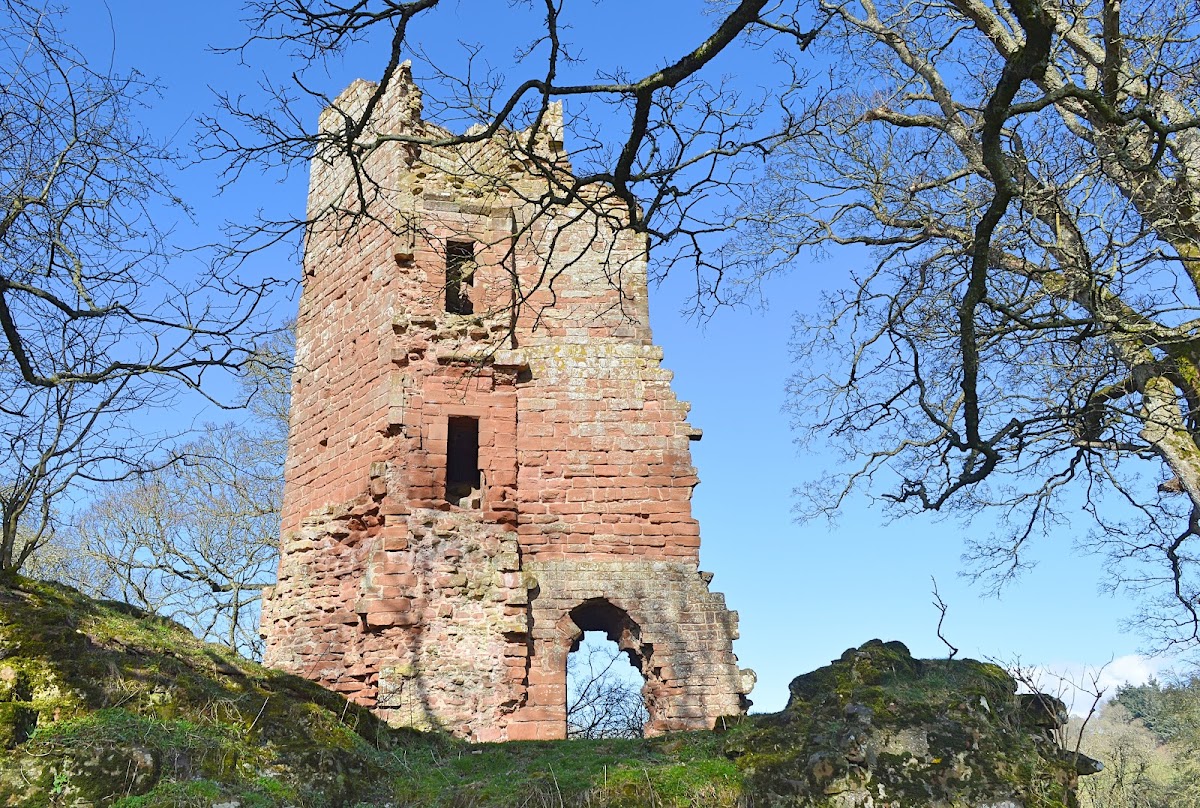
After the death of Thomas Dacre, 2nd Baron Dacre, in 1525, valuable interior features were transferred from Kirkoswald Castle to Naworth Castle. These included stained glass, wood panelling, and beamed ceilings. The castle was dismantled between 1610 and 1688, leaving the partially standing ruins and elements of the moated site.
Modern heritage protection
Kirkoswald Castle was first listed on 27 December 1967. Its ruins are a Grade II listed building in the National Heritage List for England, while the ruins and moated site are also protected as a Scheduled Monument.
Remains
Surviving fabric and setting
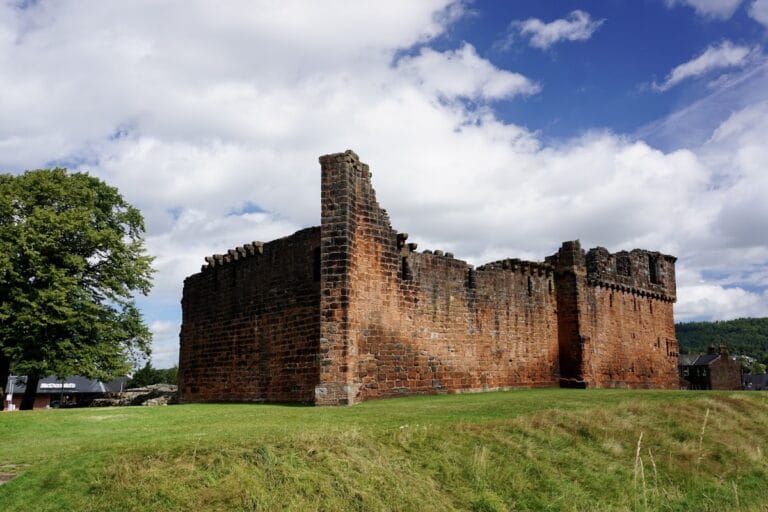
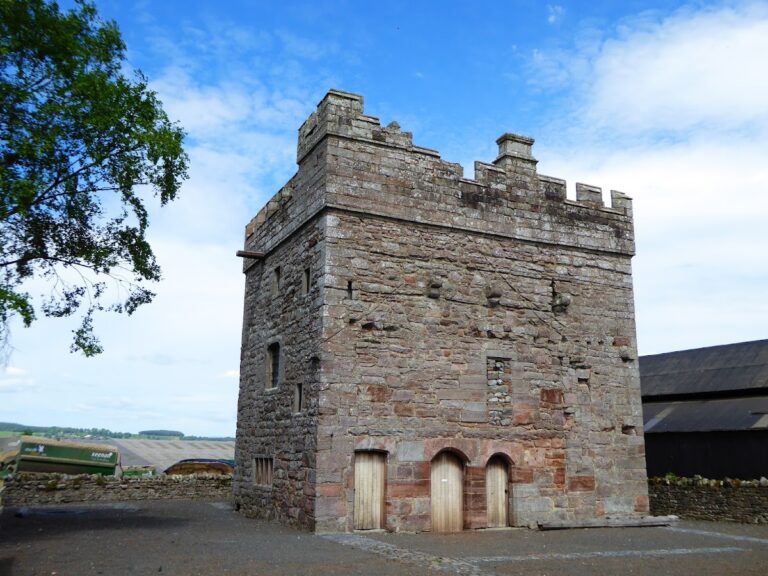
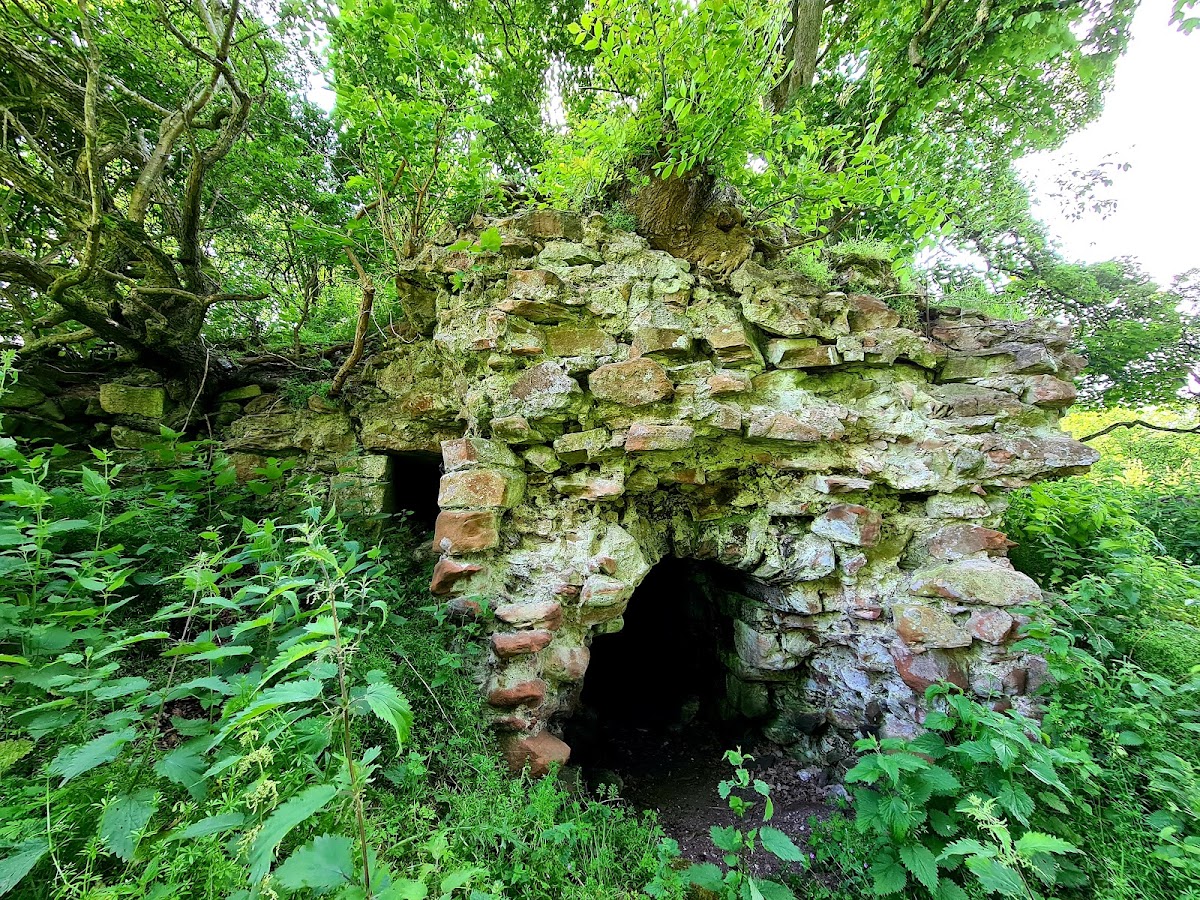
Kirkoswald Castle was built from Penrith red sandstone and is partially standing. The visible remains include the moat, some buildings, and a tower. The site lies on farmland at about 103 metres above sea level. Grassland predominates around the castle, with generally flat terrain to the southwest and hillier ground to the northeast. Together, the surviving tower, buildings, and moat show the principal elements of the fortified manor house and its later enlarged enclosure.