Dalden Tower: A Medieval Manor House and Pele Tower in County Durham
Site at a Glance
- Rating
- 3.7
- Popularity
- Very Low
- Country
- United Kingdom
- Primary era
- Medieval
- External website
- Open
- Eras represented
- Medieval, Early Modern
- Civilizations
- English
- Site type
- Domestic
- Remains
- Manor House
On this page7 sections
History
Dalden Tower is a ruined medieval manor complex in Dalton-le-Dale, United Kingdom, begun by the Escolland family during the 12th century. The site later developed into an estate with a chapel, a substantial hall range, and a fortified pele tower, reflecting successive phases of medieval and early modern use.
Medieval foundation and development
The Escolland family established the site in the 12th century. Around 1320, Sir Jordan de Dalden, a medieval knight, built a chapel there. The title “Sir” was a medieval honorific used for knights and certain other men of elevated status.
By 1376 at the latest, the estate had passed to the Bowes family. They constructed the surviving late-14th-century buildings, including the hall. During the 16th century, a pele tower was added. Such towers combined residential use with defence, particularly in areas exposed to raids or local conflict.
Later ownership and decline
In 1615, the estate passed to the Collingwood family and later came into the possession of the Milbank family. Dalden Tower had fallen into disrepair by the 17th century. Much of its stone was then removed and reused in Dalden Hall.
Dalden Hall collapsed in the early 1960s and was demolished in 1967. A section of surviving wall at Dalden Tower contains fabric dating from the 17th to the early 18th century, long after the site had been abandoned. Excavations in 1965–66 and 1985–89 located parts of the hall range below ground and identified the position of the former moat. Dalden Tower has been a Grade II* listed building since 1950 and a scheduled monument since 1968. A Grade II* listing recognises a building of more than special interest, while a scheduled monument is a nationally protected archaeological or historic site in England.
Remains
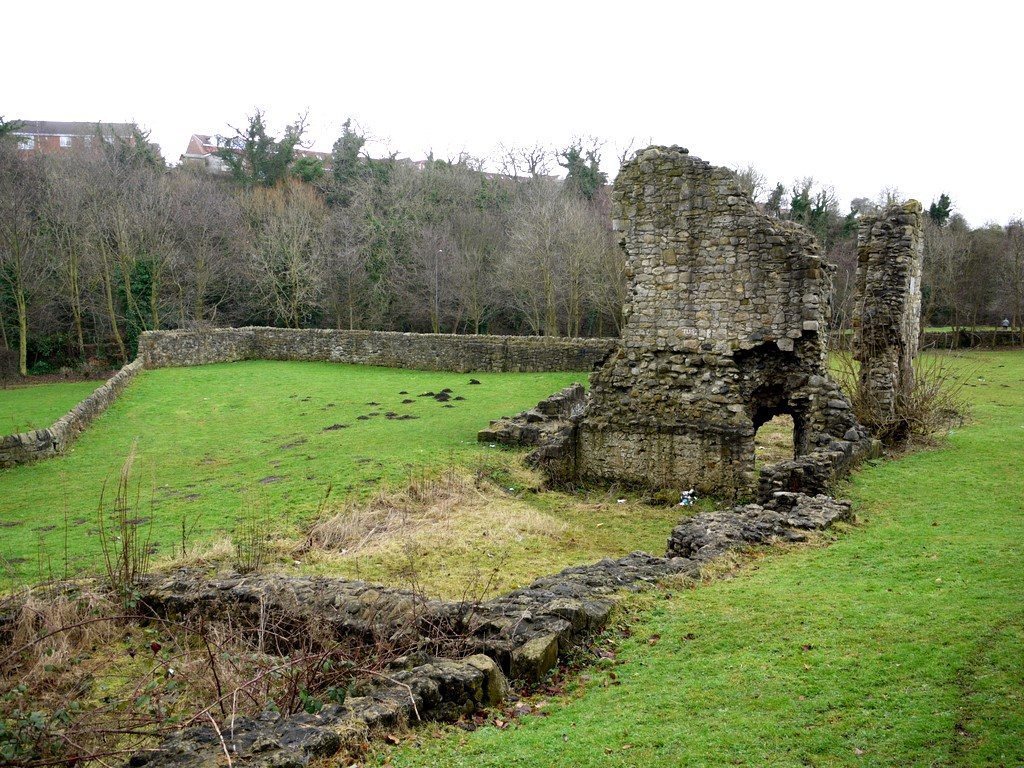
The surviving remains are ruinous and built of limestone and sandstone. The former complex comprised a manor house, chapel, late-14th-century hall range, and 16th-century pele tower. Archaeological excavation has also established the position of the moat and traced parts of the hall range beneath the ground.
Architectural and archaeological remains
Hall range and moat
Parts of the late-14th-century hall range survive below ground. The hall formed part of the structures built under the Bowes family after they acquired the estate. Excavations in 1965–66 and 1985–89 located sections of this range and identified the line of the former moat, helping to establish the extent and arrangement of the medieval complex.
Surviving wall
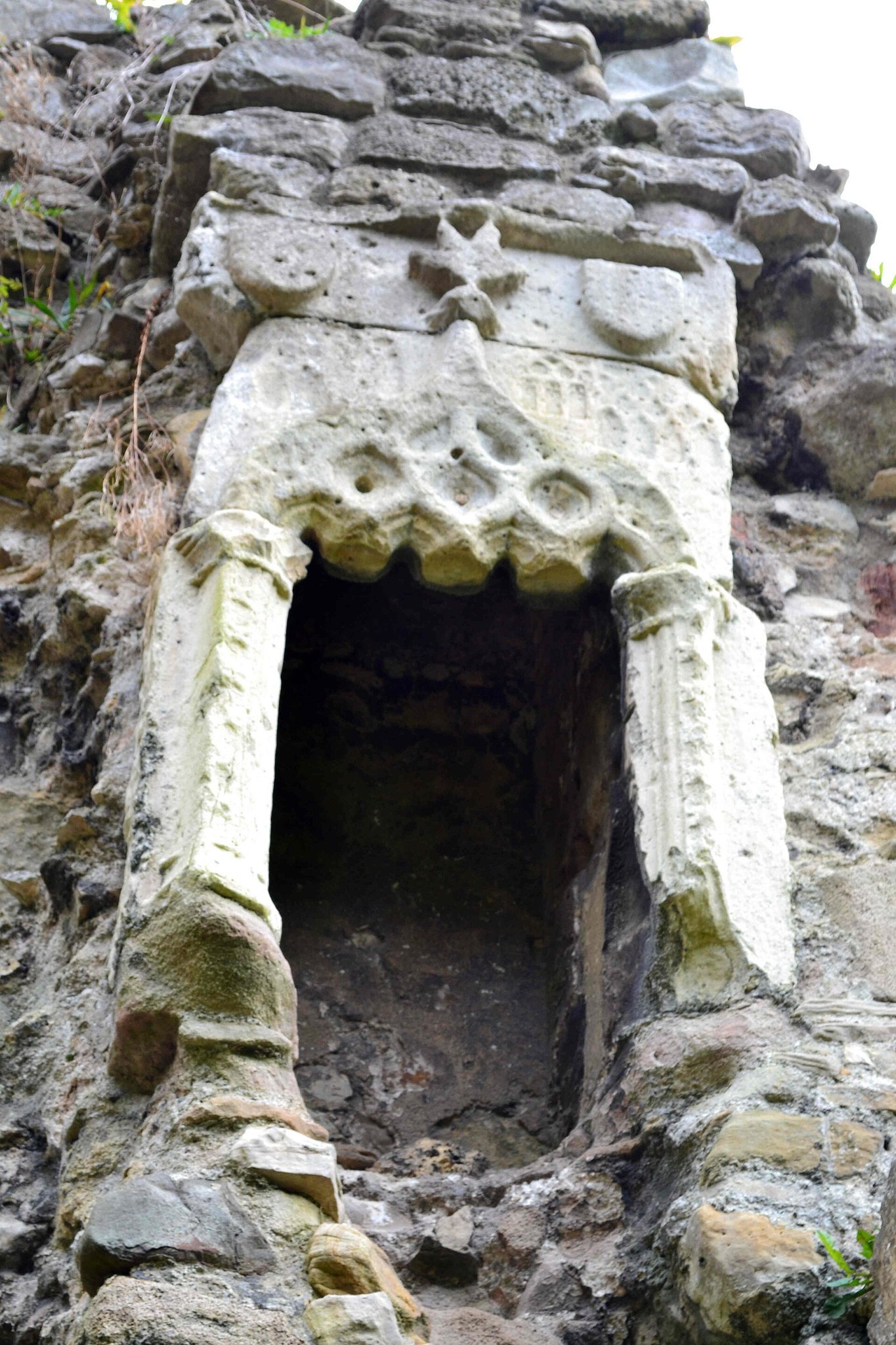
A surviving wall includes limestone and sandstone fabric dating from the 17th to the early 18th century. It belongs to a later phase of the site’s physical history, after Dalden Tower had been abandoned and its earlier stonework was being reused in Dalden Hall.