Lumley Castle: A Fourteenth-Century Castle and Historic Residence in County Durham



Site at a Glance
- Rating
- 4.5
- Popularity
- Medium
- Country
- United Kingdom
- Primary era
- Medieval
- External website
- Open
- Eras represented
- Medieval, Early Modern
- Civilizations
- British, English
- Site type
- Military
- Remains
- Castle
On this page11 sections
History
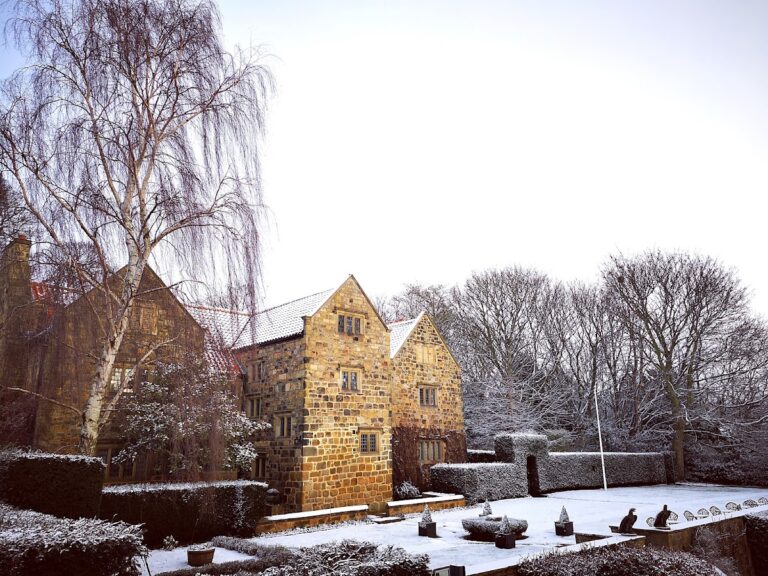
Lumley Castle is a fourteenth-century castle in the United Kingdom at Chester-le-Street in County Durham. Sir Ralph Lumley created it in 1389 by converting his family manor house into a fortified residence after returning from wars in Scotland. The castle became the seat of the Lumley family and later remained associated with the Earls of Scarbrough.
The Lumley family and royal politics
Sir Ralph Lumley later became involved in a plot to overthrow Henry IV, who was king of England from 1399 to 1413. He was imprisoned and eventually executed, while his lands, including Lumley Castle, were forfeited to the Earl of Somerset. Ownership returned to the Lumley family in 1421, when the castle passed to Ralph’s grandson, Thomas Lumley.
John Lumley, 1st Baron Lumley, later altered important parts of the building. His changes included enlarging the windows to bring more light into the interior and installing a new fireplace in the great hall. He also added a black-and-white marble basin used for ritual handwashing, decorated with a pelican, the crest of the Lumley coat of arms.
Royal visit and Georgian changes
In 1603, James VI and I stopped briefly at Lumley Castle while travelling from Newcastle upon Tyne to Durham. He was the Scottish king James VI who became king of England that year, bringing the Scottish and English crowns under one ruler. The king did not spend the night at Lumley Castle, but continued to Durham Castle later the same day.
Later Georgian alterations included work associated with the library. This work is sometimes attributed to Sir John Vanbrugh, an English architect and dramatist associated with major late-seventeenth- and early-eighteenth-century Baroque buildings, although the attribution remains uncertain because no documents establish his involvement.
Episcopal and university use
During the nineteenth century, Lumley Castle became the residence of the Bishop of Durham after Bishop William Van Mildert gave Durham Castle to the newly founded University of Durham. The building subsequently became a hall of residence for University College, Durham.
University College students, known as Castlemen, spent their first year at Lumley Castle and their later years at Durham Castle. The castle was sold in the 1960s to help finance the Moatside residential halls in central Durham, enabling students to live on one campus. The connection with the college continues to be commemorated by the biennial Lumley Run.
Modern ownership and memory
Lumley Castle remains in the possession of Lord Scarbrough. In 1976, its management was transferred to No Ordinary Hotels, which converted the building into a hotel. The castle is a Grade I listed building, a designation used in England for structures of exceptional historic or architectural interest. The sundial west of the castle has separate Grade II status, a category for buildings of special interest warranting every effort to preserve them. The castle was designated on 4 June 1952, and the sundial on 23 February 1987.
A medieval legend called The Lily of Lumley tells of a woman named Lily Lumley, supposedly an earlier wife of Ralph Lumley. According to the story, two priests threw her into a well after she rejected the Catholic faith, and her ghost later emerged from the well to haunt the castle. Lily does not appear in the Lumley family pedigrees, while the historical Ralph Lumley was married to Eleanor Neville. Alleged paranormal activity was reported by visiting cricketers in 2000 and 2005, including members of the 2005 Australian touring team and India’s captain Sourav Ganguly.
Remains
Lumley Castle is a quadrangular castle, meaning that its fortified residence is arranged around an enclosed courtyard, with defensive buildings or walls forming the outer sides. It stands in a valley beside Lumley Park Burn, a tributary of the River Wear. The surrounding ground is relatively level to the southeast and hilly to the northwest. The building now contains 73 hotel rooms and remains associated with the Earl of Scarbrough’s property.
Interior spaces and later adaptations
Great hall and lavabo
The great hall retains the memory of John Lumley, 1st Baron Lumley’s alterations. He enlarged its windows to admit more light and installed a new fireplace. His additions also included a black-and-white marble lavabo, a basin for ritual handwashing, decorated with a pelican that served as the crest of the Lumley coat of arms.
Library and Black Knight Restaurant
The library associated with the Georgian alterations now functions as the Black Knight Restaurant. Its connection with the later phase of the castle reflects the building’s adaptation from a noble and episcopal residence to a modern hotel.
Former chapel and King James Suite
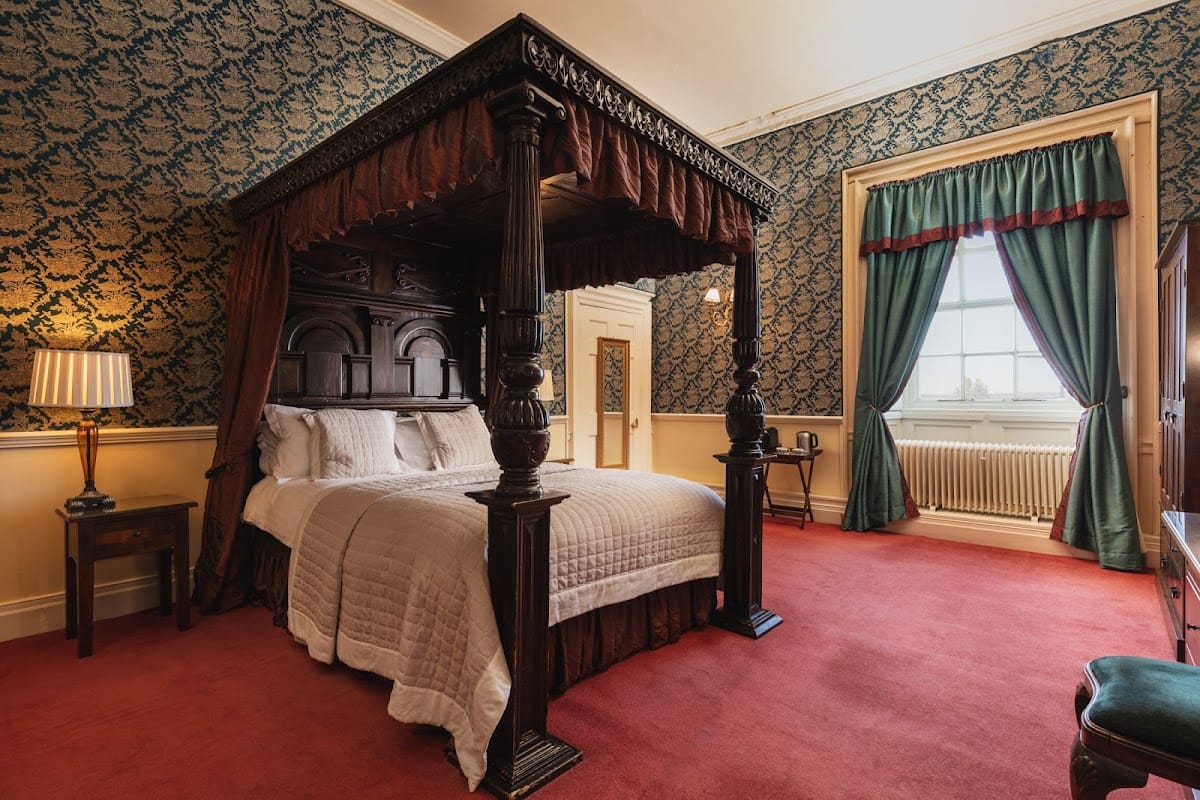
The hotel’s King James Suite occupies a former chapel. Its name commemorates James VI and I’s visit in 1603, although the king did not stay overnight in the room. The chapel therefore survives as a named part of the building’s present arrangement while retaining an association with the royal visit.
Grounds and associated features
A sundial stands 20 metres west of the castle. The well associated with the Lily of Lumley legend is located in the castle grounds, linking a physical feature of the site with the later tradition surrounding Lily Lumley.