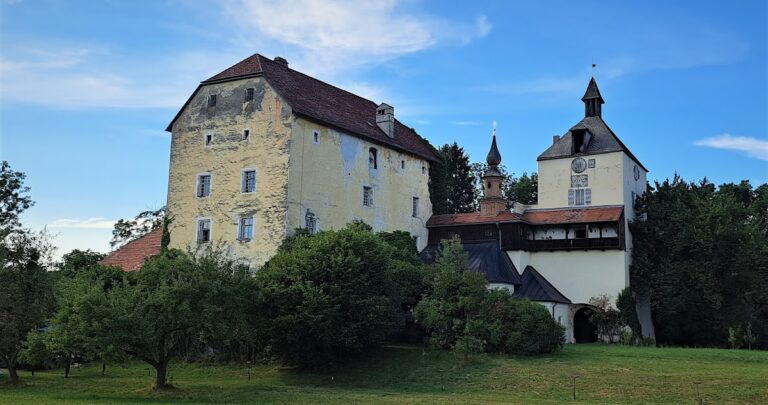
Schloss Wildshut: A Medieval Castle and Former Court Seat in Austria

Site at a Glance
- Rating
- 4.8
- Popularity
- Very Low
- Country
- Austria
- Primary era
- Early Modern
- External website
- Open
- Eras represented
- Medieval, Early Modern
- Civilizations
- Duchy of Bavaria
- Site type
- Military
- Remains
- Castle
On this page8 sections
History
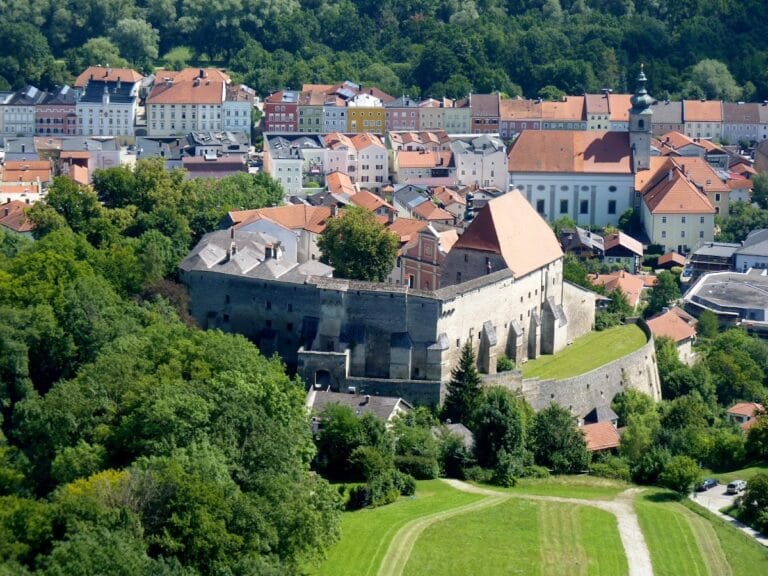
Schloss Wildshut is a medieval castle in Austria, in the municipality of St. Pantaleon in Upper Austria. Its history reaches back to 930, and a castle known as castrum Hutte was recorded in 1115 together with its lord, Albert de Hutte. By 1387, when the Lords of Wylczhut were first mentioned, a castle already stood on the present site.
Medieval border castle
The castle served as a hunting lodge for the Bavarian dukes and occupied a border position between the Duchy of Bavaria and the Archbishopric of Salzburg. These were major territorial powers in the region during the medieval and early modern periods. In 1402, Schloss Wildshut became the seat of the Weilhart regional court, a territorial court, which was granted as a fief to the Nussdorfer family.
Bavarian administration and later courts
Around 1500, the Bavarian dukes reclaimed the castle and ordered several alterations. Stewards then administered the property and its jurisdiction. Hans Offenheimer held the office from 1500 to 1521, followed by David Aigl, who remained steward until 1548. During the seventeenth century, the residential conditions had deteriorated so far that stewards were allowed to manage the office from their own castles.
Wilhelm Krausmann was the first Austrian steward, recorded in 1729. The owner at that time was Hans Pokorny, a judge and German novelist. After the Innviertel, a historic region of present-day Upper Austria, was transferred from Bavaria to Austria in 1779, an independent Wildshut regional court was established in the castle. From 1810 to 1816, it was subordinate to the Salzburg regional court at Laufen, after which it again became independent.
District court and modern ownership
Schloss Wildshut continued to serve as the seat of the Wildshut district court until the court closed in 2002. The Republic of Austria then sold the castle to Georg Florens Traugott, who commissioned an extensive renovation. The privately owned building now combines residential use with use as an event venue.
Remains
Setting and defenses
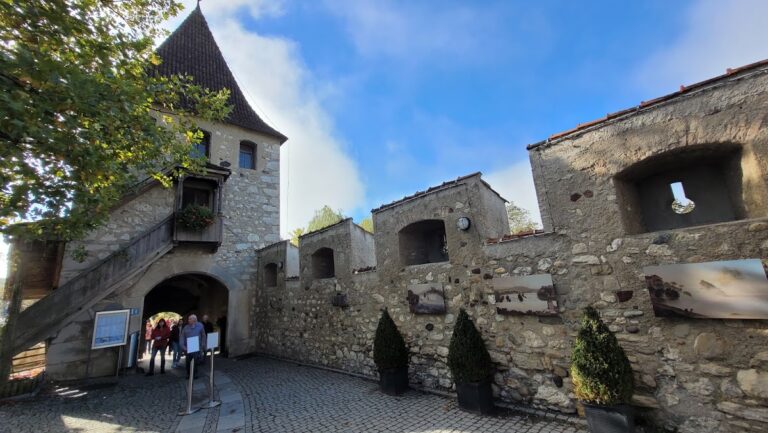
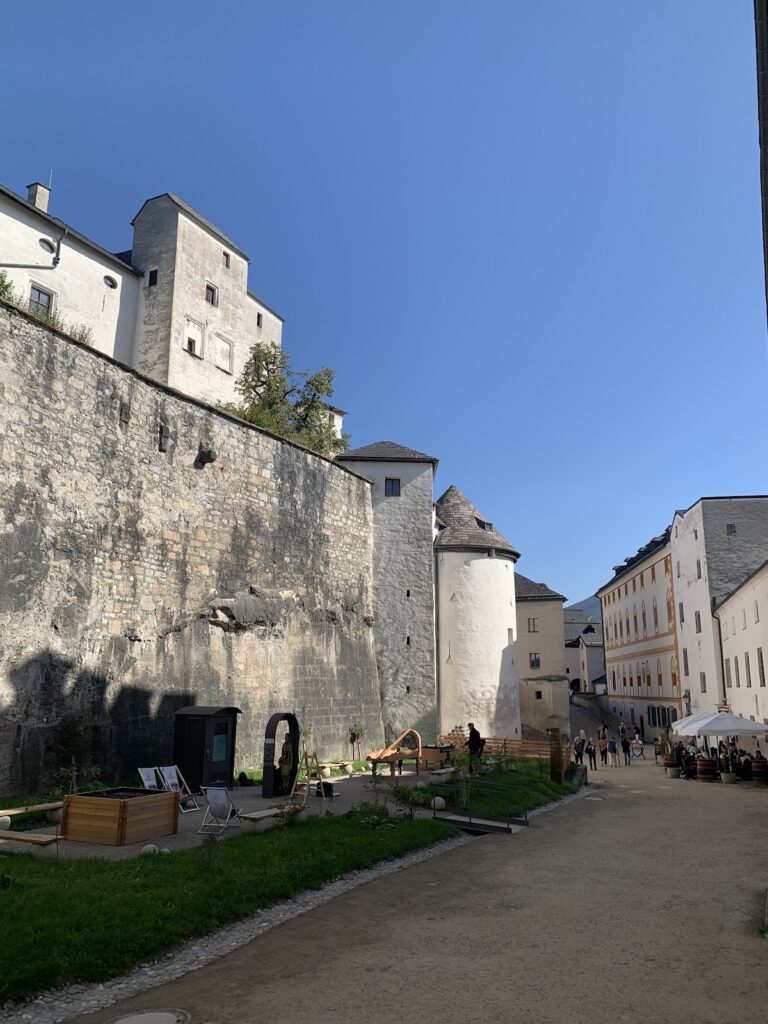
The castle stands on a river terrace above a steep drop toward the Salzach. A surrounding ring wall, probably already in place when the castle was first recorded, added to its protection. Although the building is medieval, its present fortified appearance was formed mainly during the sixteenth century. A chapel was built onto the defensive wall, and two principal construction phases can still be distinguished within the castle.
Courtyard and interior features
A lined well in the courtyard reaches 150 metres below the castle. The well was restored to working order during the renovation after 2002. The chapel contains the Maria Hilf altar painting, dating from the middle of the nineteenth century. A sundial in the courtyard records the years of important renovations, while additional works of art were installed during the restoration.
Surviving furnishings and renovation materials
Long use as a district court, together with repeated restoration and renovation, has left little of the original interior furnishings. A tiled stove dated 1683, formerly transferred to the Upper Austrian Landesmuseum in Linz, is displayed again in the castle’s concert hall. During the post-2002 renovation, shell-limestone slabs previously used at Linz railway station were laid on the floors of the first upper floor.