Castillo Castro Ferraz: A Medieval Frontier Fortress in Spain


Site at a Glance
- Rating
- 4.4
- Popularity
- Very Low
- Country
- Spain
- Primary era
- Medieval
- Eras represented
- Medieval
- Civilizations
- Almohad
- Site type
- Military
- Remains
- Castle
On this page7 sections
History
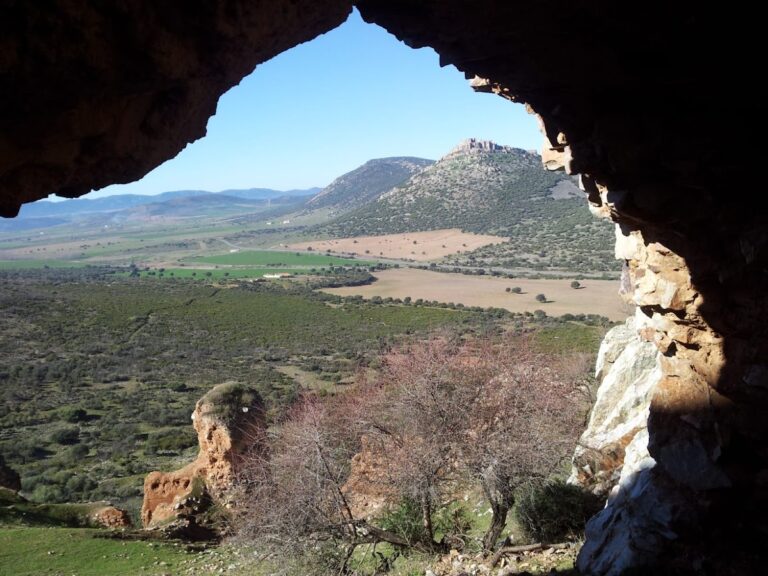
Castillo Castro Ferraz, also known as Castillo del Ferral or Castro Ferral, is a ruined medieval frontier fortress in Spain, set in Sierra Morena at the Muradal or La Losa Pass. The site occupied a historic route between Andalusia and La Mancha, and Arabic chronicles called it Hisn el ‘Iqáb. Its early construction date is uncertain, although the oldest earthen section may predate the Almohad period.
Christian Conquest and Muslim Recovery
The first recorded historical reference to the castle dates to 1169, when the Order of Calatrava conquered it. This was a Christian military-religious order involved in frontier warfare during the Christian reconquest of medieval Iberia. Muslim forces later recovered the fortress.
The Las Navas de Tolosa Confusion
Castillo Castro Ferraz has often been confused with the fortress of Las Navas de Tolosa, although the two were different fortifications. The confusion may be linked to the abandonment of this castle by its Almohad defenders shortly before the Christian advance and the Battle of Las Navas de Tolosa. The Almohads were a Muslim dynasty and religious movement that ruled much of North Africa and parts of Iberia during the twelfth and thirteenth centuries.
Protection as Heritage
The castle received protected-monument status under a decree of 22 April 1949. It was later listed as an Asset of Cultural Interest in Spain, the country’s legal designation for protected cultural heritage, with a declaration dated 22 June 1993.
Remains
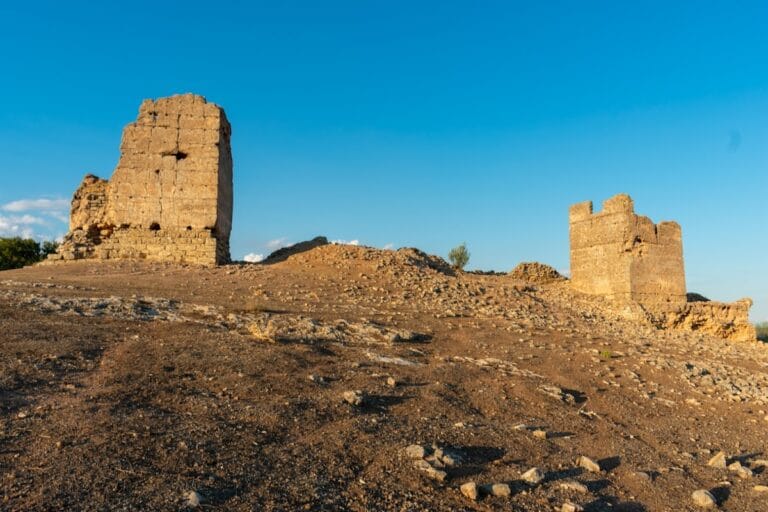
The site survives as a complex archaeological ruin. Its fortifications were built using earth, rammed earth, and rubble masonry, a method that uses irregular stones set in mortar. The remains are now in a ruined condition, with walls and towers preserved mainly along the western and southwestern sides.
Fortification Remains
The central core of the wall was made from lime and sand and measures approximately 1.65 metres in width. The oldest part is the earthen section of the fortification, whose date remains uncertain and may precede the Almohad period. These surviving earth, rammed-earth, and rubble-masonry elements form the principal visible remains of the castle.
Water Storage
Slight traces of a cistern remain at the site. A cistern is a constructed reservoir used to collect and store water.