Château de Montbron (Charente): A Medieval Castle in France

Site at a Glance
- Rating
- 4.1
- Popularity
- Very Low
- Country
- France
- Primary era
- Medieval
- Eras represented
- Medieval, Early Modern
- Civilizations
- French
- Site type
- Military
- Remains
- Castle
On this page11 sections
History
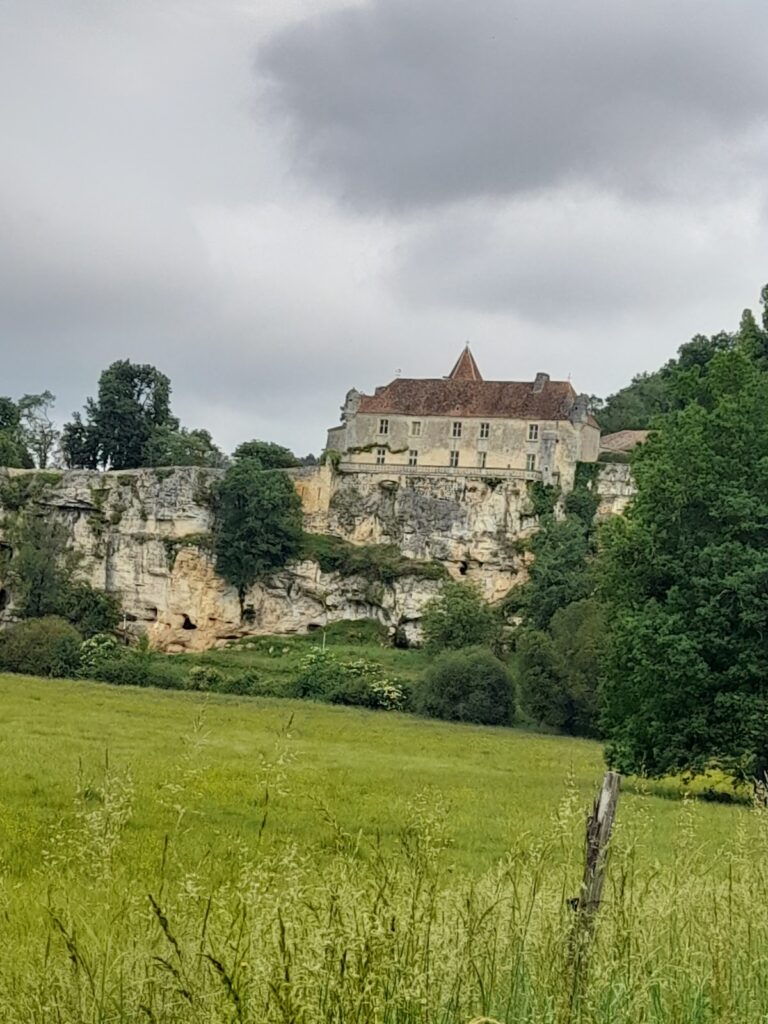
Château de Montbron, also known locally as the Vieux Château, is a medieval castle in Montbron, France, whose construction is broadly dated from the eleventh to the fifteenth century. Its history reaches back to a diploma issued by Charles the Bald, the ninth-century Carolingian king of West Francia, in 852. The name is derived from Mons Berulphi, and the castle was established before the twelfth century.
Medieval destruction and rebuilding
In the fifteenth century, King Charles VII ordered the ancient castle and its original rectangular keep to be razed as a sign of infamy. Charles VII ruled France during a period of conflict and political consolidation in the later Middle Ages. Marguerite de Rohan, Countess of Angoulême and wife of John, Count of Angoulême, subsequently ordered the castle to be rebuilt. Parts of that reconstructed complex survive, including a keep in the Romanesque style, an architectural tradition that developed in western Europe before Gothic architecture became widespread.
Changes of lordship
In 1558, Jacquette de Montberon, the last representative of the elder branch of the Montberon family, married André de Bourdeille and brought him the lordship. The property later passed to Louise de Savoie, Countess of Angoulême and mother of François I, king of France.
In 1624, the heirs of Henri de Luxembourg sold the County of Montbron to the Loménie family. The family retained Montbron and the County of Brienne until the end of the seventeenth century. Étienne Chérade acquired the county in 1699. His grandson, Adrien-Alexandre-Étienne Chérade de Montbron, received letters patent in December 1766 elevating his lordship of Montbron to a county. Letters patent were formal sovereign documents granting or confirming a title or legal status. The French Revolution later dispossessed him.
Heritage protection
The château was listed as a historic monument in 1985. In French heritage terminology, this listing provides inscription protection. The two painted fireplaces from the seventeenth century received the stronger classification designation in the same year.
Remains
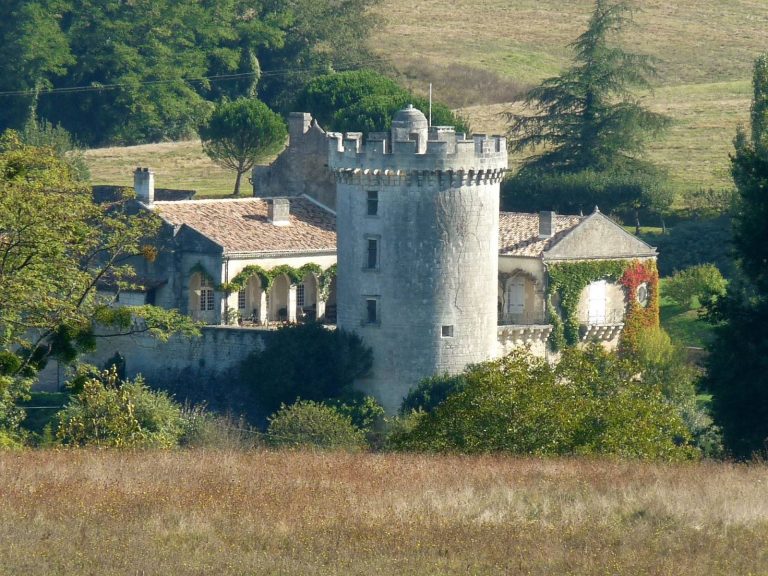
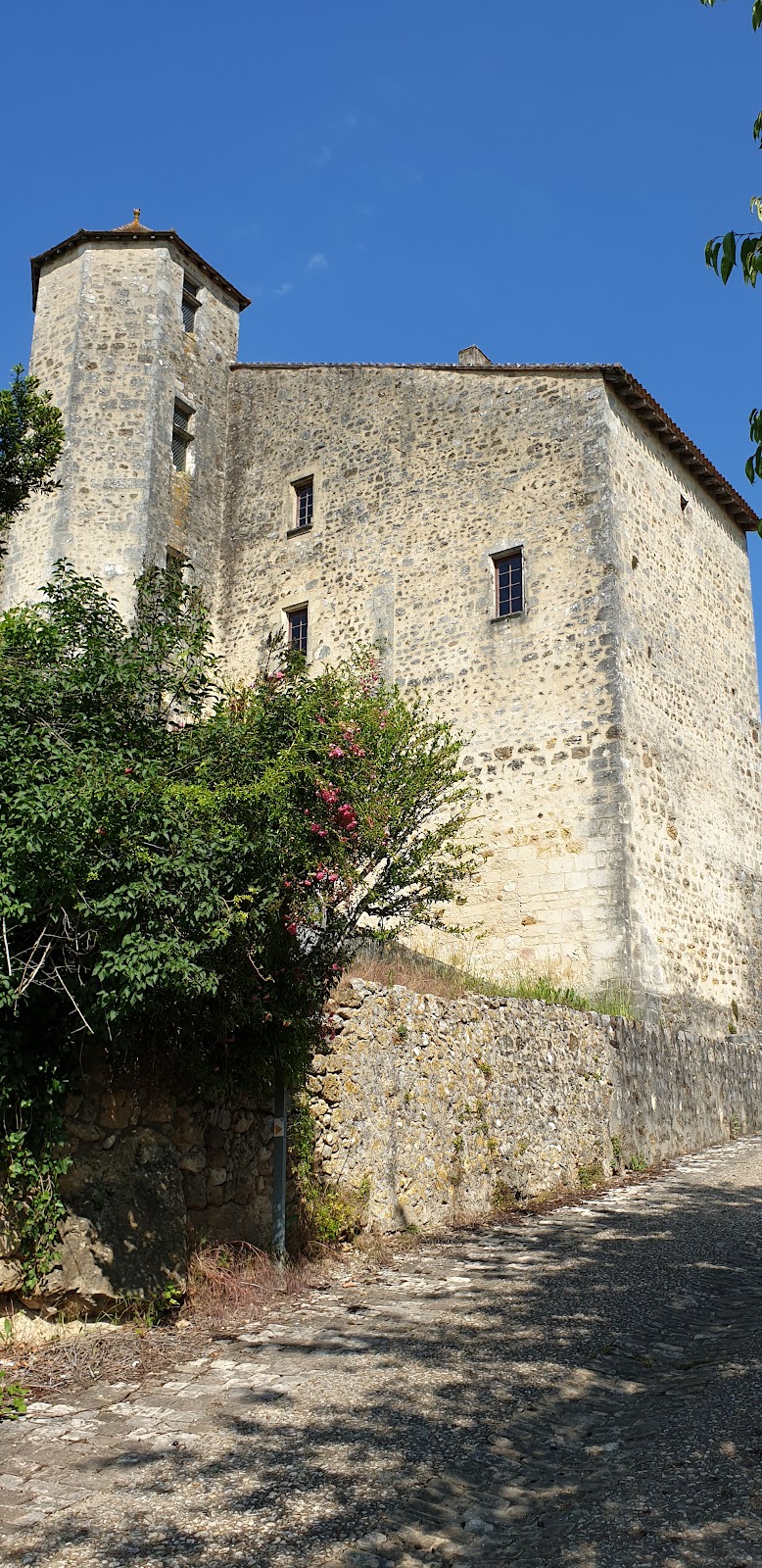
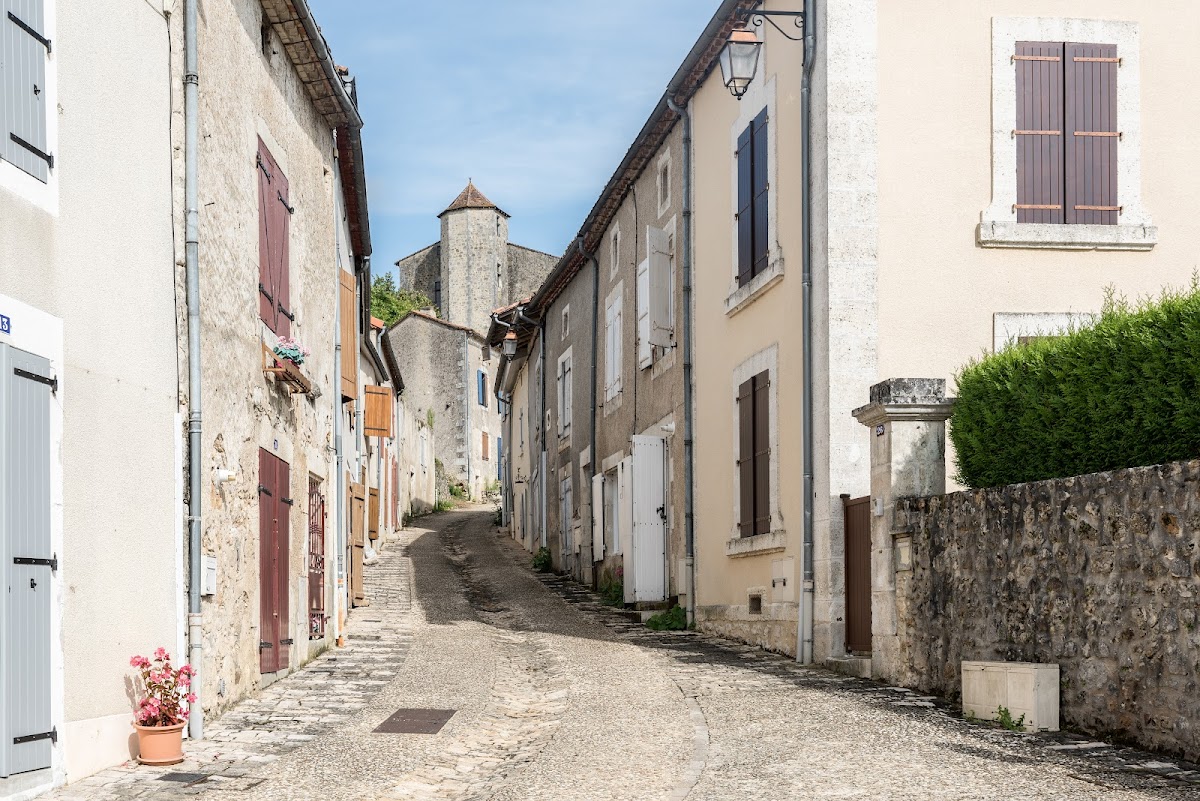
The surviving castle complex is represented chiefly by a polygonal turret and a Romanesque-style keep. Drawings show a building with a single-pitched roof, while the surviving elements preserve evidence of both the medieval rebuilding and later seventeenth-century alterations.
Surviving structures
Polygonal turret
A polygonal turret forms one of the principal surviving parts of the château. It belongs to the fragmentary castle complex that remains after the destruction and rebuilding of the medieval stronghold.
Romanesque-style keep
The surviving keep is in the Romanesque style and represents part of the complex rebuilt after the original rectangular keep was razed in the fifteenth century. Rectangular windows were inserted into it during the seventeenth century. Drawings indicate a single-pitched roof on the building.
Seventeenth-century interiors
Heraldic frieze
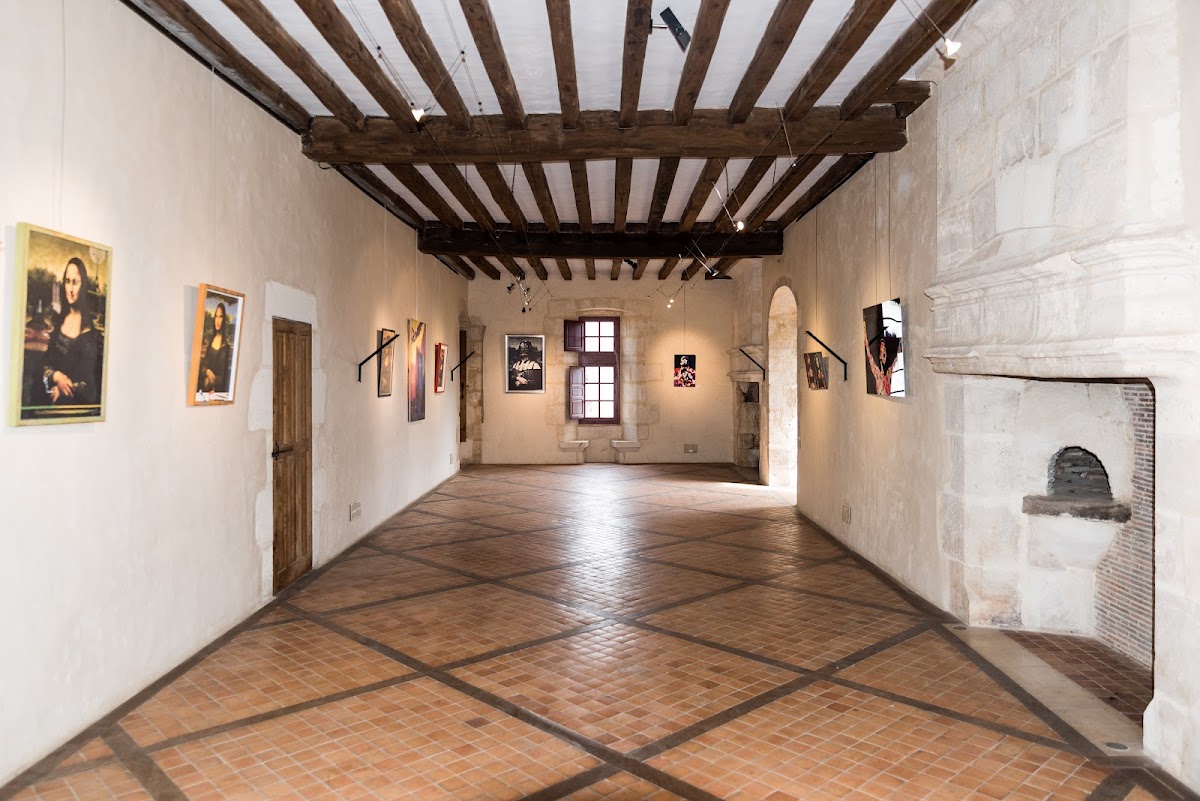
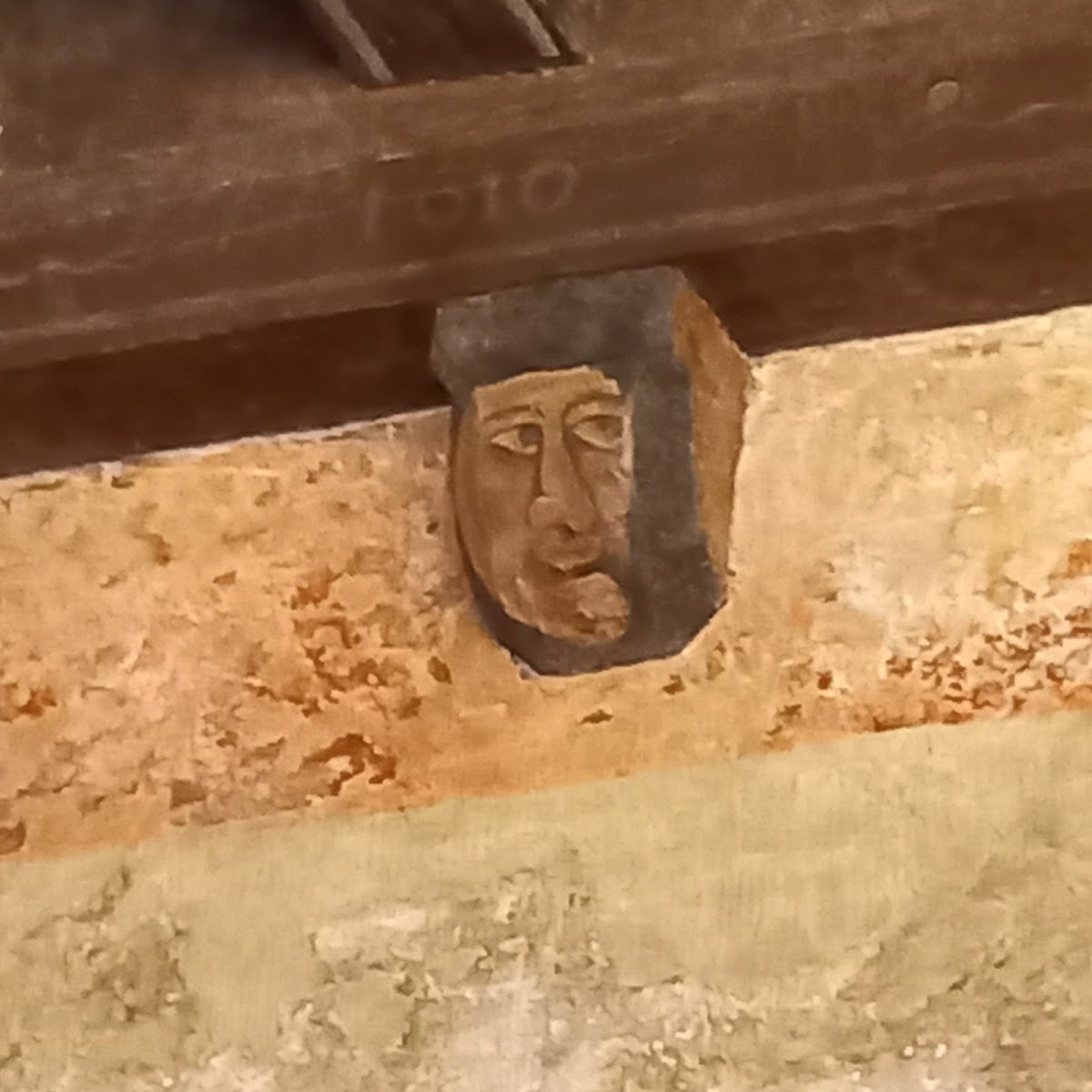
On the first floor, the great hall contains a heraldic frieze dated 1610. It consists of approximately fifty painted coats of arms, providing a substantial decorative feature within the surviving interior.
Painted fireplaces
Two painted fireplaces dating from the seventeenth century are located on the first floor. Both were classified as historic monuments in 1985.