Coeffin Castle: A Medieval Fortress on Lismore


Site at a Glance
- Rating
- 4.7
- Popularity
- Very Low
- Country
- United Kingdom
- Primary era
- Medieval
- External website
- Open
- Eras represented
- Medieval
- Civilizations
- Kingdom of Scotland
- Site type
- Military
- Remains
- Castle
On this page7 sections
History
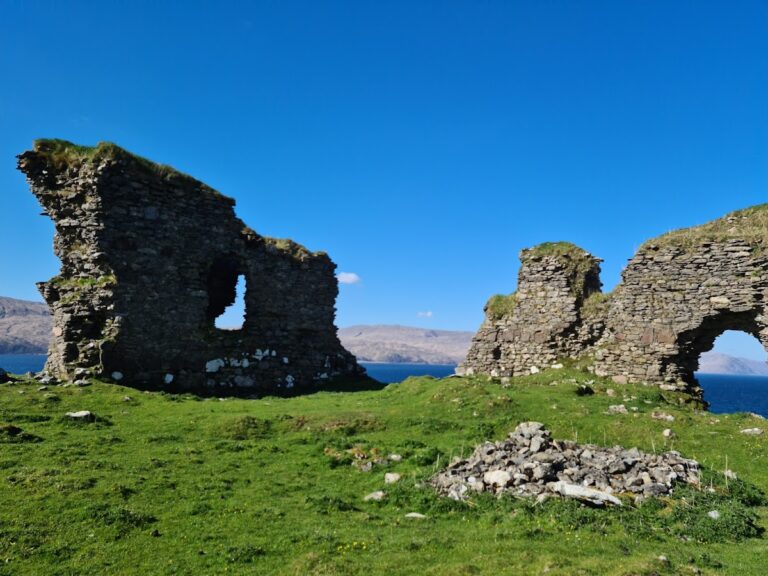
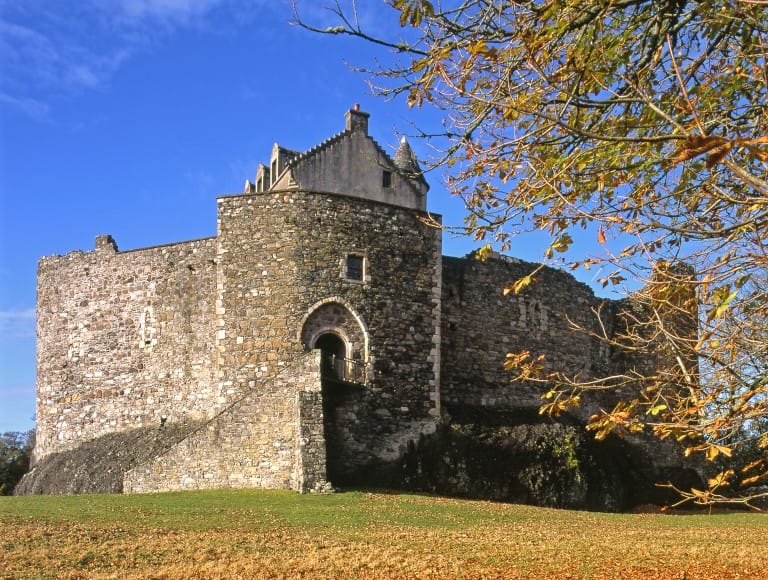
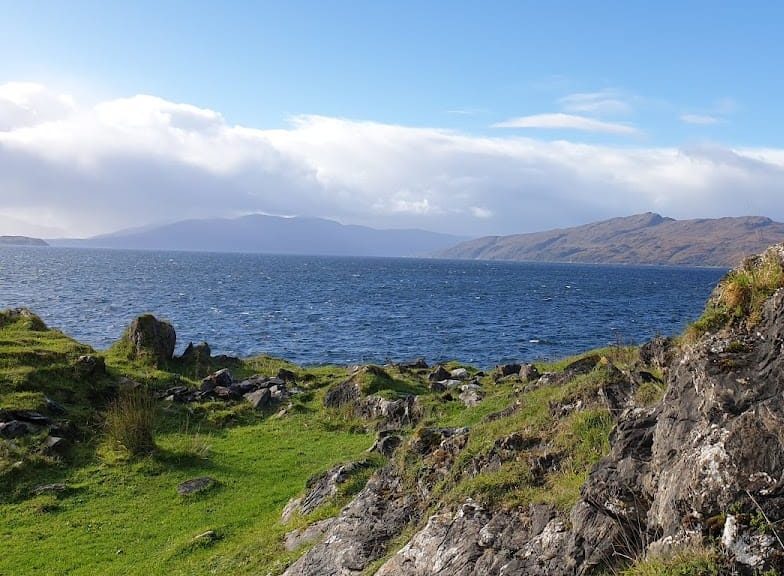
Coeffin is a ruined medieval castle on Lismore in Scotland, built over an earlier Viking fortress and probably constructed in the thirteenth century under the MacDougalls of Lorn, a medieval lordly clan centred in western Scotland. The castle stands on a promontory on Lismore’s north-west coast, opposite Glensanda and its former Viking settlement.
Viking and MacDougall origins
The name Coeffin is traditionally connected with Caifen, who is described as a Danish or Viking prince. A related legend says that Caifen’s sister haunted the castle until her remains were taken to Norway and buried beside her lover. The later castle formed part of Lismore’s importance within the MacDougall lordship. The island was also the location of St Moluag’s Cathedral, the seat of the Bishop of Argyll.
Later medieval history
The earliest written evidence for Coeffin Castle dates from 1469–1470, when Colin Campbell, 1st Earl of Argyll, granted it to Sir Colin Campbell of Glenorchy. The castle was probably no longer occupied after the medieval period.
Protection and interpretation
Coeffin Castle became a scheduled monument, a legally protected archaeological or historic site, on 16 April 1964. It was classified as a Category B listed building on 20 July 1971, a Scottish designation for a building of regional or more than local importance.
Remains
The surviving castle consists of an oblong hall-house, a fortified residence organized around a principal hall, together with an irregularly shaped bailey, an enclosed defensive or service area adjoining the main structure. The hall is an irregular rectangle measuring 20.3 by 10.4 metres, with walls between 2.1 and 2.4 metres thick. Most of the bailey was built later than the hall, and an external stair probably linked the entrance in the north-east wall to this enclosed area.
Hall and bailey
The hall-house forms the principal surviving residential and defensive structure. Its substantial masonry walls survive as ruins, while the later bailey preserves the broader arrangement around it. A second doorway on the south-west side gave access to the sea, adding a maritime connection to the castle’s layout.
Coastal and surrounding features
A tidal fish trap of unknown date lies in a small bay south-east of the castle. This fixed installation used the falling tide to retain or catch fish. North-east of Coeffin are the remains of a stone-walled fort, adding another defensive feature to the archaeological landscape around the castle.
The Ordnance Gazetteer of Scotland described a place called Castle Rachal in the same general location in 1892. It identified the remains as a very ancient Scandinavian fortification on Lismore’s north-west side and described the ruin as dilapidated and covered in ivy.