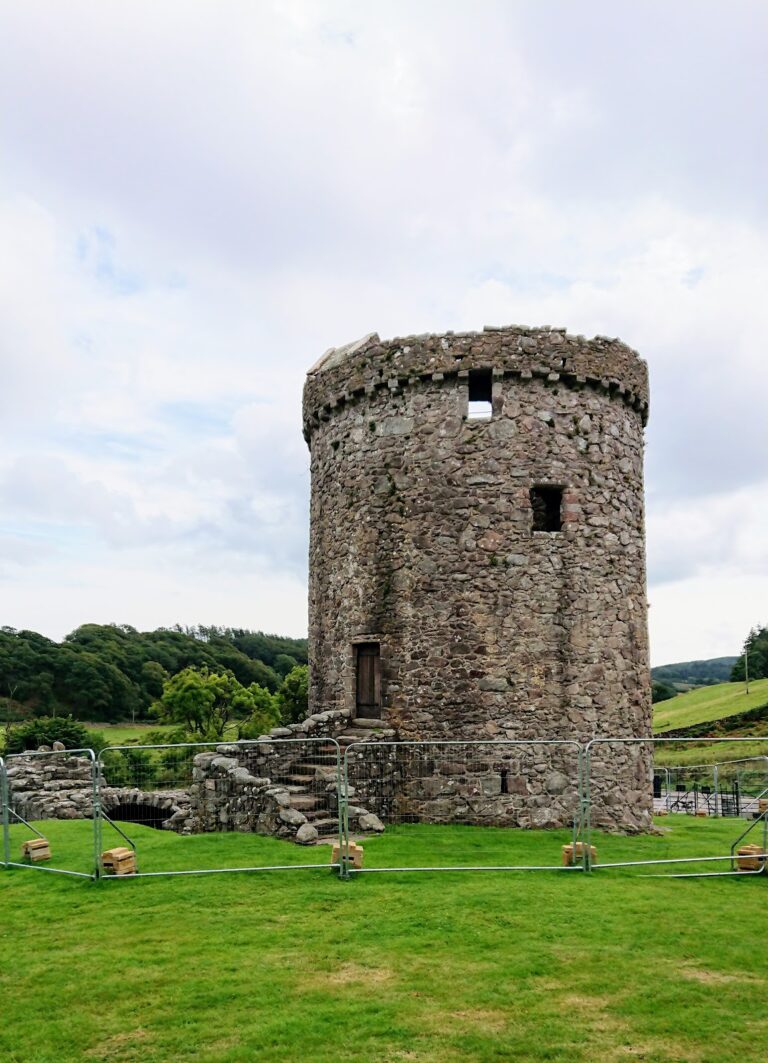
Workington Hall: Fortified Tower House and Curwen Family Seat


Site at a Glance
- Rating
- 4.3
- Popularity
- Very Low
- Country
- United Kingdom
- Primary era
- Medieval
- Eras represented
- Medieval, Early Modern
- Civilizations
- English
- Site type
- Domestic
- Remains
- Castle
On this page8 sections
History
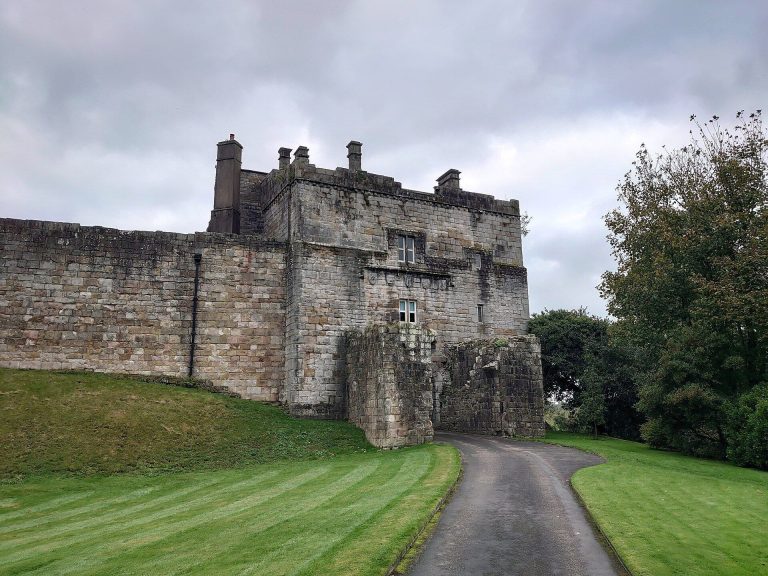
Workington Hall is a ruined historic house in Workington, United Kingdom, in the northeastern outskirts of the town. Its present form originated around 1404 as a fortified tower house, a residence organized around a substantial defensive tower, and the site later became the long-standing home of the Curwen family. The building is now a Grade I listed building and a scheduled monument.
Medieval origins
The site had a defensive peel tower by 1362. Peel towers were small fortified buildings used for protection and refuge in the border regions of northern England and southern Scotland. Around 1404, the present house was established as a fortified tower house, creating the medieval foundation of Workington Hall.
Mary, Queen of Scots at Workington
Workington Hall became associated with a major episode in the troubled career of Mary, Queen of Scots, the sixteenth-century Scottish monarch Mary Stuart. In 1568, after the defeat of her forces at the Battle of Langside and her loss of power in Scotland, Mary fled across the Solway Firth disguised as an ordinary woman.
She was received at Workington Hall as an honoured guest because Lord Herries, the Scottish nobleman travelling with her, knew the Curwen family. Mary wrote a letter from the hall to Elizabeth I, the reigning English queen. After spending a day at Cockermouth, she was escorted to Carlisle Castle on 18 May. She was 25 years old.
Eighteenth-century enlargement
John Carr, an English architect known for country houses and other eighteenth-century buildings, added to the house during the 1780s. At approximately the same time, the landscape designer Thomas White laid out gardens around Workington Hall.
The Curwen family and later ownership
John Christian Curwen inherited the hall from Eldred Curwen in 1790 and adopted the Curwen name. He was lord of the manor from 1783 to 1828. His parliamentary career included representing Carlisle from 1786 to 1812 and from 1816 to 1820, followed by representing Cumberland from 1820 to 1828. During his lordship, Workington underwent major economic and social change.
The hall remained the Curwen family home until 1929, when it passed through marriage to the Chance family. At the beginning of the Second World War, the War Office requisitioned the building for military use. A serious fire occurred while troops were billeted there.
After the war, the family transferred Workington Hall to Workington Borough Council for conversion into a town hall, but the conversion was never completed. The building was designated a Grade I listed building on 6 June 1951 and is also protected as a scheduled monument.
Remains
Workington Hall survives as a ruined medieval-style house on the northeastern outskirts of Workington. Its physical development reflects the earlier defensive use of the site, the fortified residence established around 1404, and the enlargement and garden planning undertaken in the 1780s.
Medieval defensive core
The earliest identified structure is the peel tower built in 1362. It was a small fortified tower intended to provide protection during periods of local conflict. The present building originated around 1404 as a fortified tower house, preserving the site’s medieval defensive purpose within a residential form.
Eighteenth-century additions and gardens
John Carr’s additions during the 1780s enlarged the medieval-style house. Around the same period, Thomas White planned and laid out gardens around it. These later works form part of the surviving historical development of the hall, which now stands in ruined condition.