Château de Castelnau-Pégayrols: A Medieval Fortress in France
Site at a Glance
- Rating
- 4.6
- Popularity
- Very Low
- Country
- France
- Primary era
- Medieval
- Eras represented
- Medieval, Early Modern
- Civilizations
- French
- Site type
- Military
- Remains
- Castle
On this page10 sections
History
Château de Castelnau-Pégayrols is a historic château in France, founded by the Lévézou family and first attested in the eleventh century. It was reconstructed at the end of the twelfth century, when its lower vaulted rooms were built. The fortress later became the centre of successive noble administrations and military conflicts in Rouergue.
From the Lévézou family to the Arpajons
A judicial duel held on 3 May 1289 led to the château passing to the Arpajon family. The Arpajons controlled Castelnau from 1289 until about 1758. Their rule included alternating periods of peace and trouble, notably during the Hundred Years’ War, the prolonged conflict between the English and French crowns from the fourteenth to the fifteenth century.
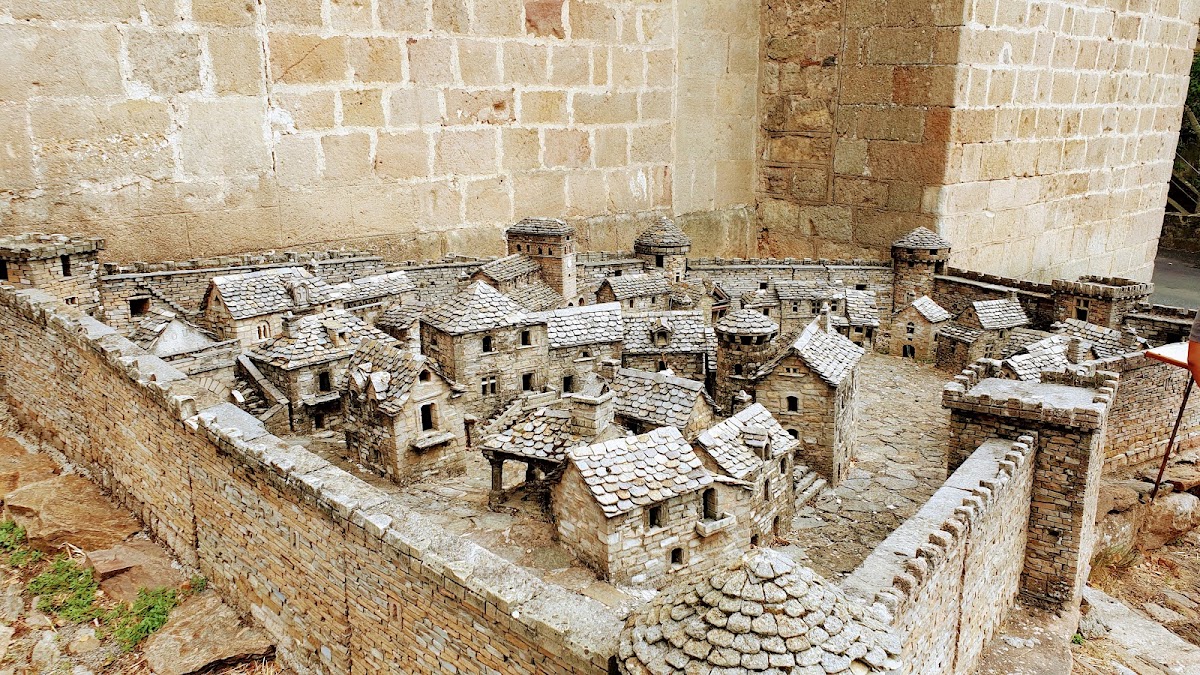
Following the Treaty of Brétigny in 1360, which temporarily transferred extensive French territories to England, Castelnau experienced English occupation. After the war, Castelnau and the wider Rouergue entered a period of relative prosperity, and the settlement was enclosed by ramparts.
The Wars of Religion
The ramparts were reused during the Wars of Religion, the sixteenth- and early seventeenth-century conflicts between Catholics and Protestants in France, which lasted here from 1556 to 1632. The Arpajons of Castelnau became military leaders of the Protestant party, while nearby Millau was one of its most active strongholds.
The Pégayrolles marquisate
Around 1758, Etienne-Hippolyte Julien de Pégayrolles became the owner of the château. He was president of the Toulouse Parliament from 1753 and Baron of Saint-Beauzély. In November 1759, Louis XV, king of France from 1715 to 1774, issued letters creating the Marquisate of Pégayrolles for him by joining Castelnau and Saint-Beauzély.
Unlike the Arpajons, Etienne-Hippolyte lived at Castelnau and modernized the château between 1760 and 1780. He became known as a fervent defender of the Toulouse Parliament during the Maupéou reforms, judicial and governmental changes introduced under Louis XV in the early 1770s that affected France’s parlements, or high provincial courts.
His son, Louis-Hippolyte, became the second Marquis of Pégueirolles and president of the Toulouse Parliament in 1784. He appeared in Toulouse in 1789 and firmly joined the counter-revolutionary camp before dying in prison in 1794. Saint-Beauzély was sold as national property, an estate confiscated and sold by the revolutionary state. The family’s male line soon became extinct, although the descendants of Louis-Hippolyte’s younger brother Henri-Hyacinthe continued the marquisate.
Château de Castelnau-Pégayrols was listed as a French historic monument in 1975.
Remains
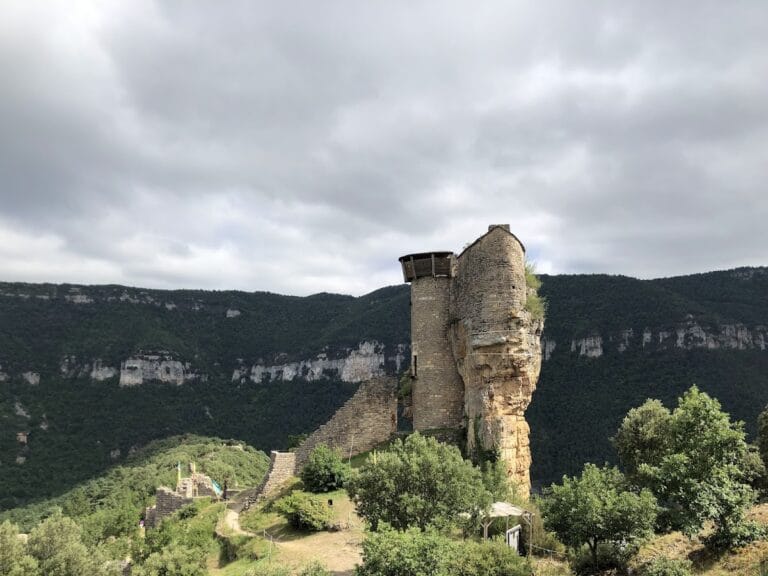
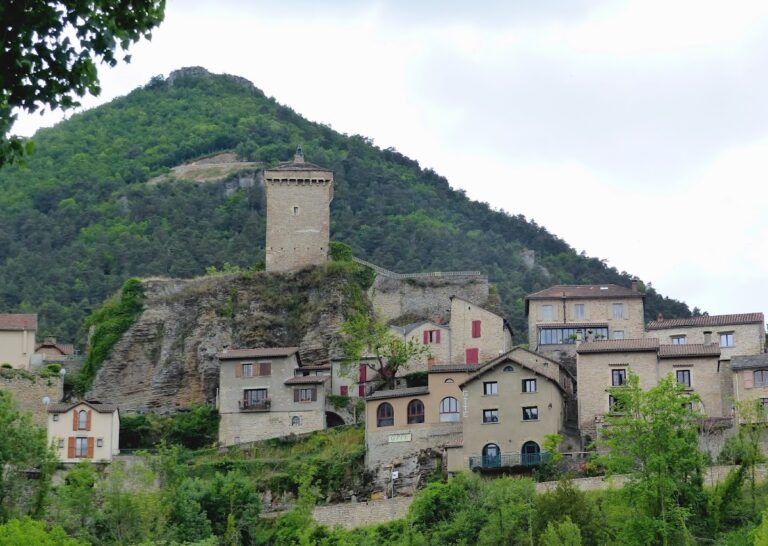
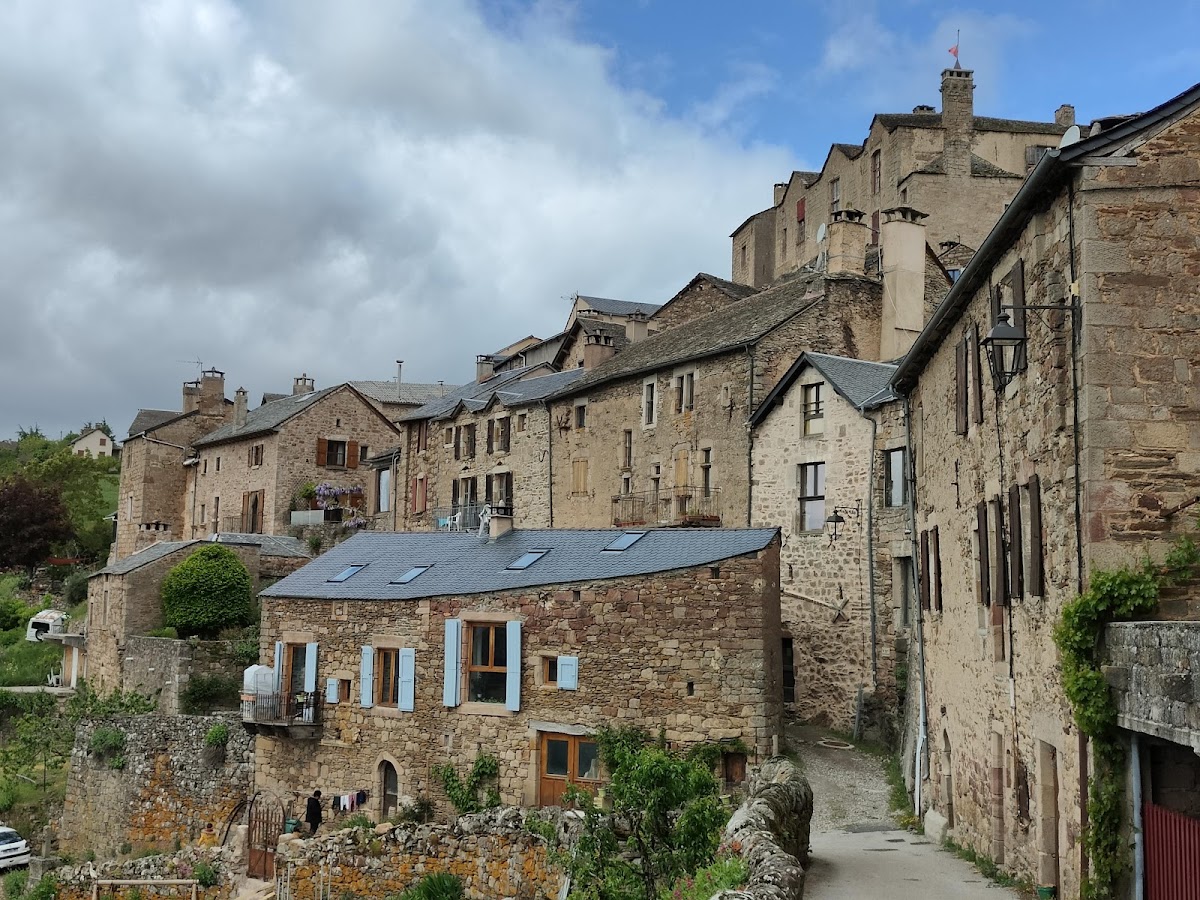
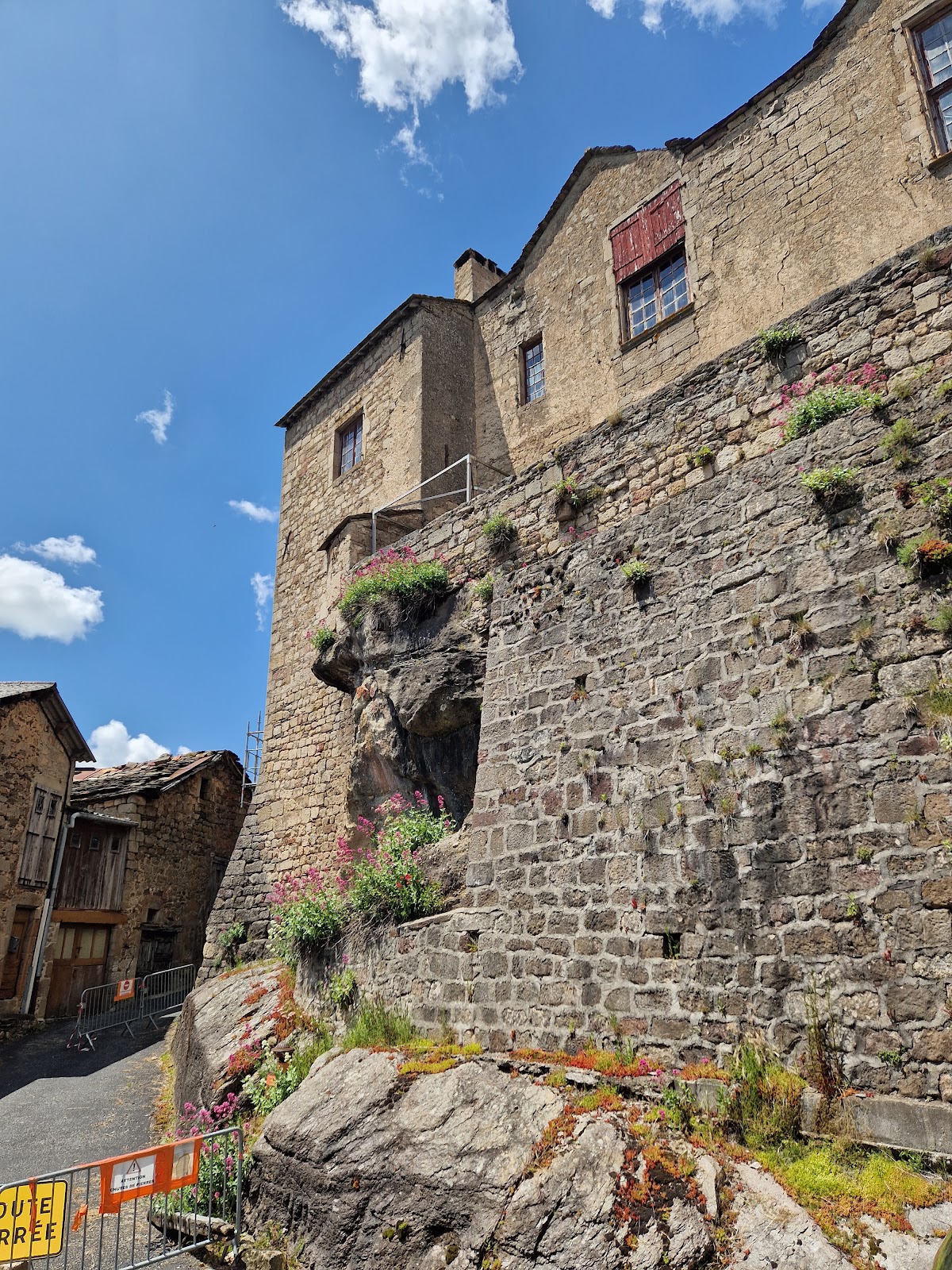
The château has a generally trapezoidal plan and occupies the dominant position above the village, which is grouped around its walls. Its buildings combine the heavily fortified south side, angled wings with a fortress-like appearance, and later residential alterations. The park also contains the central section of Castelnau’s medieval hydraulic system.
The fortified medieval buildings
South principal building
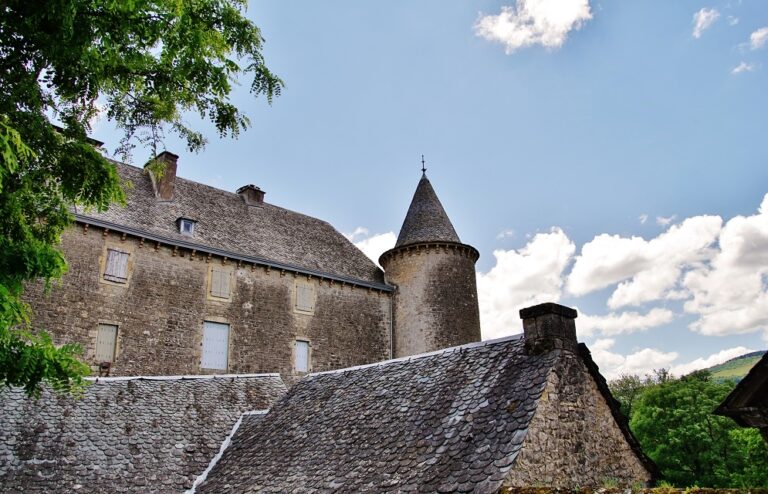
The principal building on the south side is the oldest and most heavily fortified part of the château. Square towers stand at both corners, including the former keep at the southwest. Large rooms with barrel-vaulted ceilings occupy the building, while small openings face the terrace overlooking the village. From the terrace, the view extends across the Muse valley and the Causses toward the Cévennes and the Montagne Noire.
Angled wings and curtain wall
Two wings arranged at an angle probably date from the fifteenth century and retain a fortress-like appearance. The western wing forms a curtain wall between the former keep to the south and the tower known as the kitchen tower, which flanks it at the northwest. On the other side, a large rectangular wing, probably later in date, extends along the southern facade and is reinforced by a tower at the southeast.
Eighteenth-century interiors
On the first floor, the rooms have groin-vaulted ceilings and stucco decoration. Three large mullioned windows admit southern light. A stairwell was installed at the centre of the principal building during the eighteenth century. Its monumental entrance has a curvilinear pediment bearing a coat of arms, reflecting the changes made when Etienne-Hippolyte Julien de Pégayrolles modernized the residence.
Medieval hydraulic system
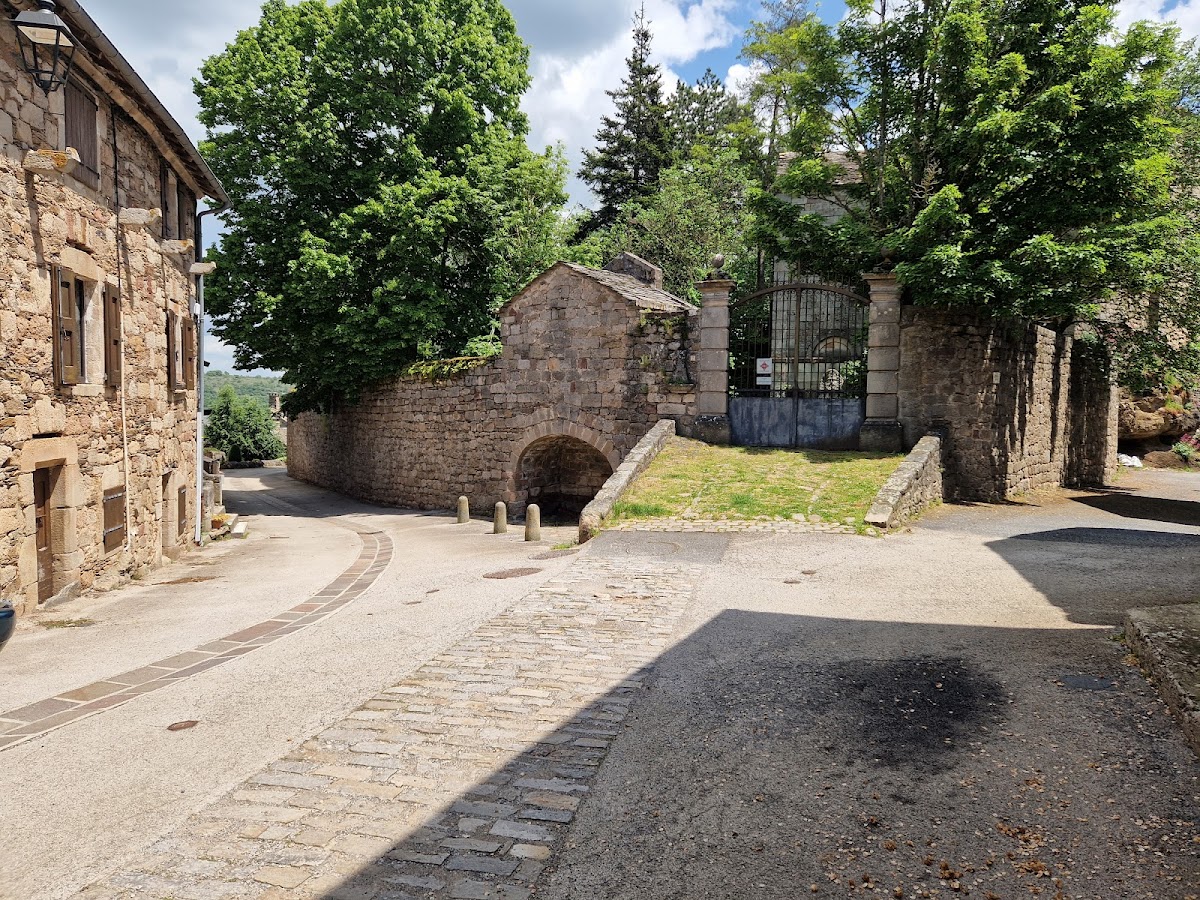
The park preserves the central section of Castelnau’s medieval hydraulic system, forming part of the château’s surviving archaeological and structural context.