Castle of Cavriana: A Historic Fortification and Gonzaga Residence in Italy


Site at a Glance
- Rating
- 4.5
- Popularity
- Low
- Country
- Italy
- Primary era
- Medieval
- Eras represented
- Medieval
- Civilizations
- Holy Roman Empire
- Site type
- Military
- Remains
- Castle
On this page7 sections
History
The Castle of Cavriana in Cavriana, Italy, was a military fortification probably founded in the eleventh century, although its construction is also dated to the thirteenth century. Built to defend the settlement, it later became one of the most important fortifications in the Mantuan area.
Medieval fortification
During the fourteenth century, the castle came under repeated attack by the Visconti, the ruling dynasty of Milan. Its strategic position made it part of the military pressure placed on fortifications in the Mantuan territory.
The Gonzaga residence
Francesco I Gonzaga, identified as the castle’s first owner, enlarged the complex and spent long periods there while seeking refuge from the plague. He died at the castle in 1407. Under the marquis Ludovico Gonzaga, the architect Giovanni da Padova was commissioned to strengthen its defenses and transform it into an important residence. Andrea Mantegna, a leading Renaissance painter at the Gonzaga court, and Luca Fancelli, a Renaissance architect and sculptor, were involved in its embellishment.
Isabella d’Este, the prominent Renaissance noblewoman and patron of the arts, lived at Cavriana for extended periods while her husband, the marquis Francesco II Gonzaga, was away from Mantua. The castle also witnessed the deaths of other members of the Gonzaga family. Eleonora de’ Medici, wife of Vincenzo I Gonzaga, died there on 9 September 1611, followed by Carlo Gonzaga, second son of Carlo I, eighth duke of Mantua, on 14 August 1631.
Demolition and preservation
The castle was partly demolished at the beginning of the seventeenth century. Around 1770, during Austrian rule, when the Habsburg monarchy controlled the territory, it was almost completely demolished. Its building material was reused in the construction of Villa Mirra, a historic villa in Cavriana.
Part of the castle was restored and consolidated in 2004. The Municipality of Cavriana now owns the site, which is recognized as Italian national heritage.
Remains
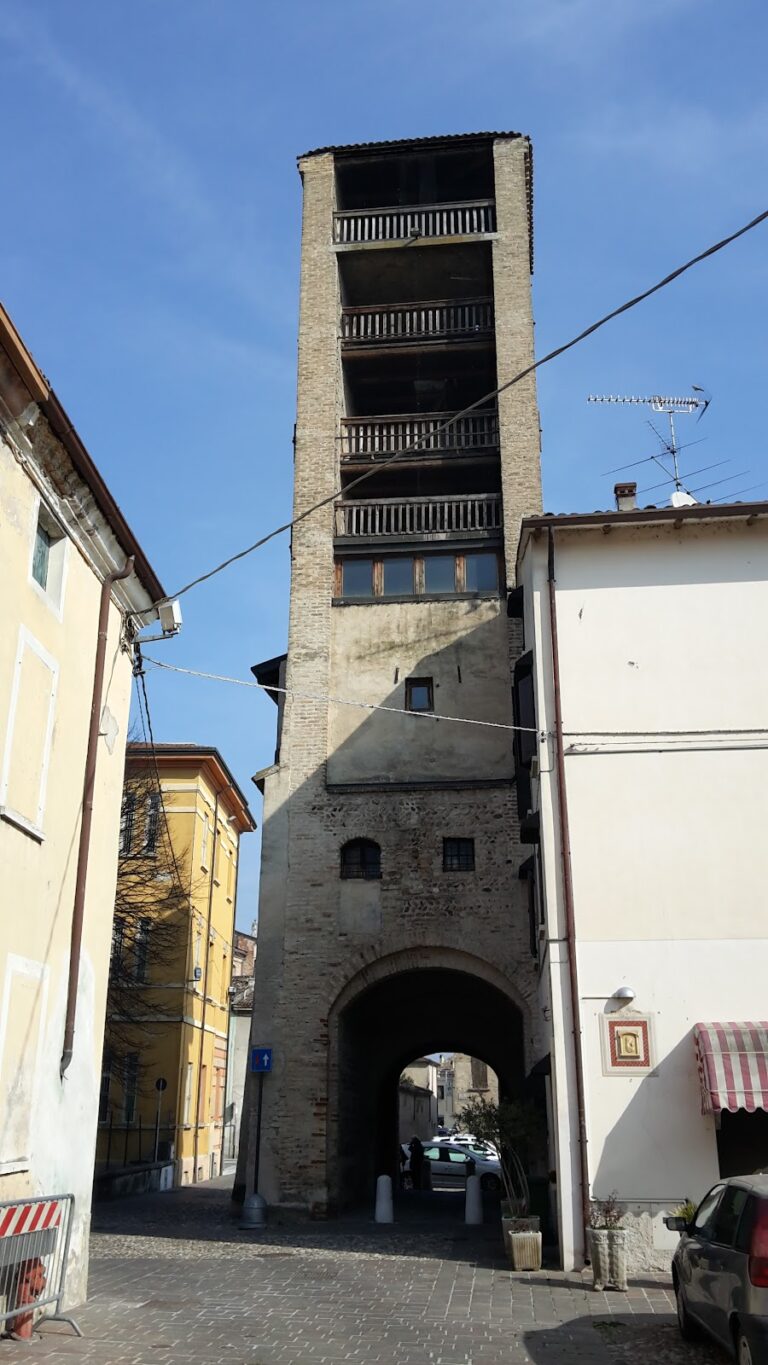
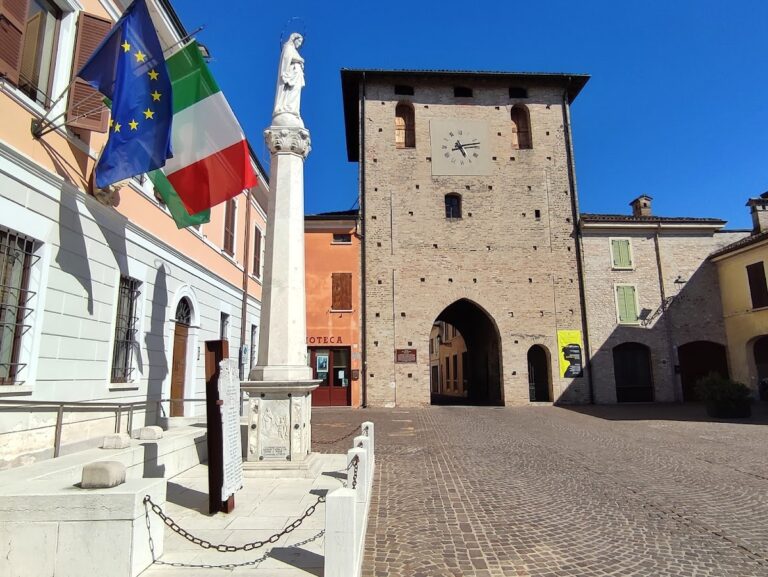
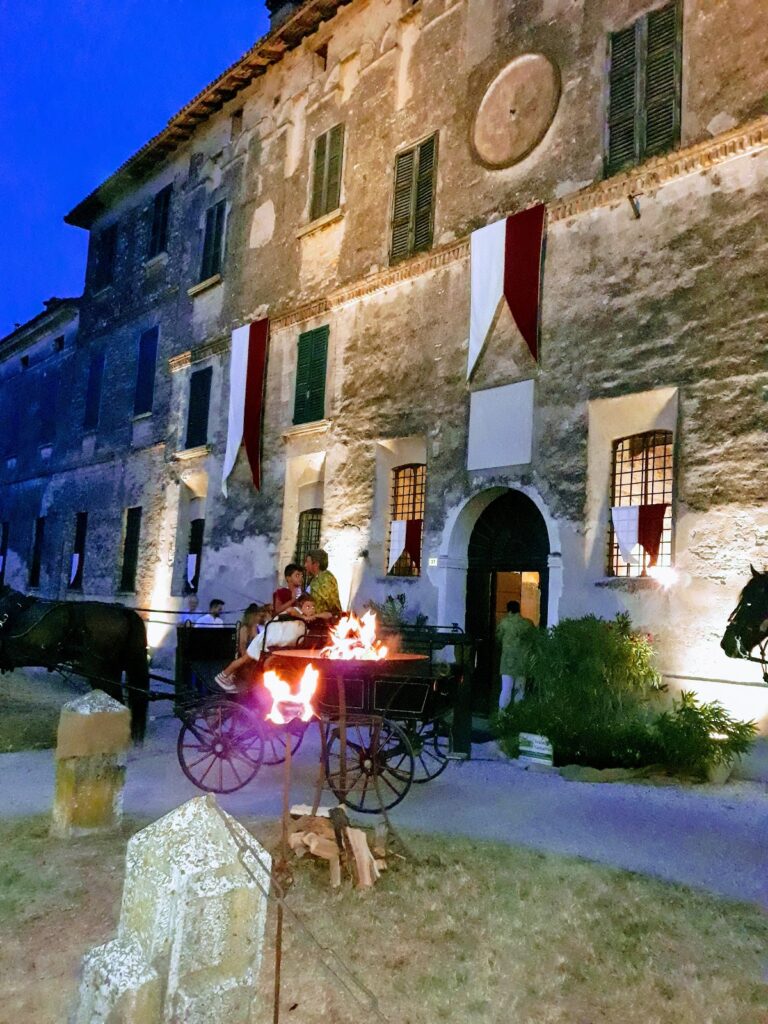
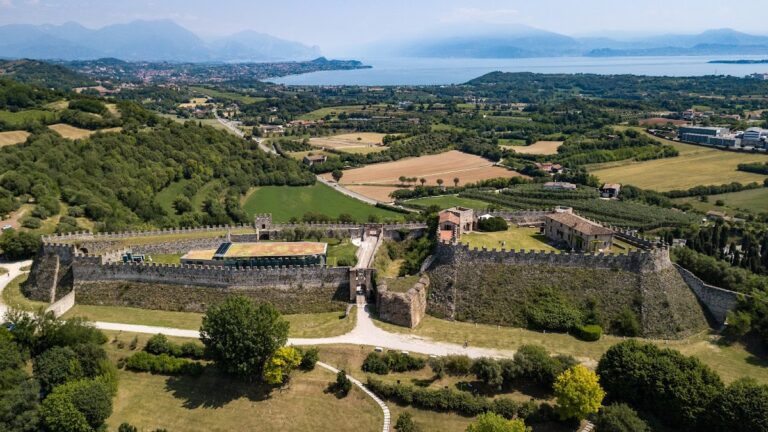
The Castle of Cavriana stood on the hill above the settlement and was built as a fortified enclosure with four corner towers. Pebbles and bricks formed its construction. The surviving structure is in ruins and preserves part of the enclosing walls together with one tower.
Enclosing walls
Sections of the perimeter walls remain as fragments of the castle’s defensive enclosure. Their pebble-and-brick construction reflects the materials used throughout the fortification, while the 2004 work stabilized and consolidated part of the surviving fabric.
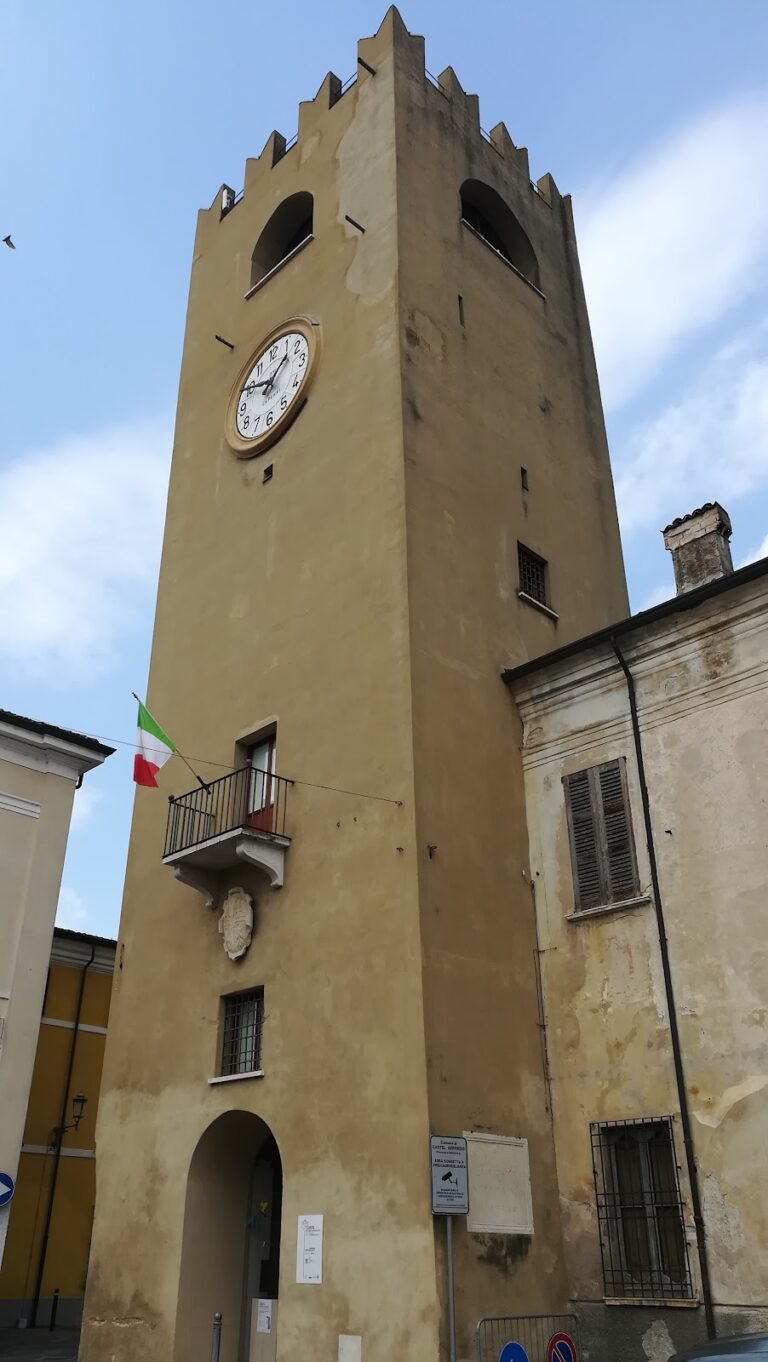
Converted tower
One of the original towers survives and was later converted into a bell tower. Its present form records both the castle’s medieval defensive layout and the subsequent reuse of part of the structure.