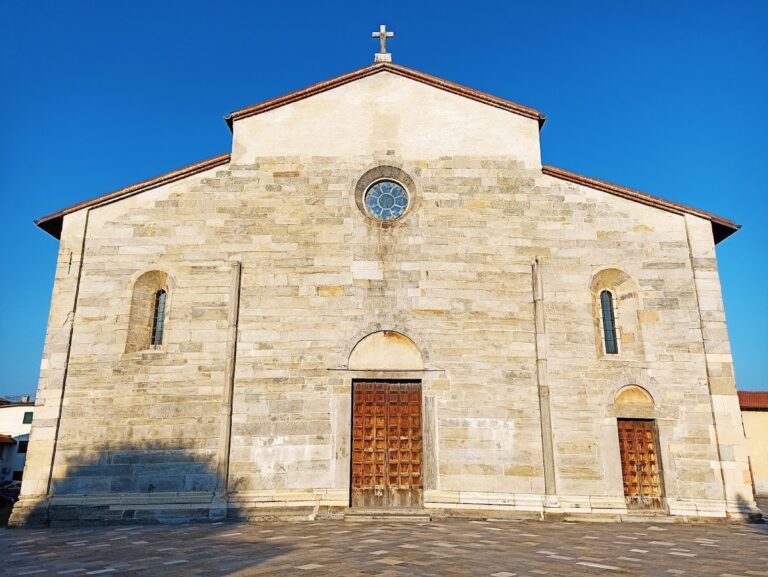
Orino Castle: A Medieval Fortress Overlooking the Valcuvia Valley



Site at a Glance
- Rating
- 4.3
- Popularity
- Low
- Country
- Italy
- Primary era
- Medieval
- External website
- Open
- Eras represented
- Medieval, Modern
- Civilizations
- Lombard
- Site type
- Military
- Remains
- Castle
On this page8 sections
History
Orino Castle is a medieval fortress in Italy, northeast of Orino, built and maintained to defend and monitor the Valcuvia valley. The date of its earliest fortified nucleus remains uncertain. It has been tentatively placed either in the third or fourth century BC or in the late imperial period, when the site may have served as an observation point and visual communication post in frontier defense.
Medieval Fortress and Regional Conflicts
The first certain records of the fortress appear in the acts of the parish church of San Lorenzo in Cuvio, dated March 1176. The stronghold was probably refortified during the Lombard period. Control may have rested with the Besozzi, lords of the Valcuvia, or with the Cotta family. In 1450, Francesco Sforza, founder of the Sforza dynasty and Duke of Milan, granted the Valcuvia parish territory as a fief to the Cotta family.
During the thirteenth-century conflicts between the Guelphs and Ghibellines, rival political factions broadly associated with papal and imperial authority, Orino Castle served as a military strongpoint. The Ghibelline Visconti, Milan’s ruling dynasty, eventually emerged victorious in the regional struggle. The fortress was remodeled during the fifteenth century, when the Rocchetta in the inner courtyard is thought to have been constructed.
Loss of Strategic Role and Restoration
After the formation of the unified Duchy of Milan, the frontier shifted to the Alpine watershed, reducing the fortress’s strategic value. It gradually fell into disrepair. Swiss troops occupied the castle during their invasion of 1512 and temporarily incorporated it into Swiss territory. Milanese forces commanded by Captain Mondragon expelled them from the valley after the Battle of Marignano in 1515.
Once the valley was definitively assigned to the Duchy of Milan, then under Spanish control, the fortress was dismantled. At the beginning of the twentieth century, its owner Mario Sangalli restored the complex and partly rebuilt it almost from scratch. The castle remains privately owned and is designated Italian national heritage.
Local Tradition
Local tradition calls the fortress the “Roca di Arian.” According to the legend, Arians, Christians who rejected the doctrine that the Son was fully equal and eternal with God the Father, took refuge in the area after Bishop Saint Ambrose condemned their beliefs as heresy. They supposedly occupied the fortress until Milanese troops captured the Fort of Varese in AD 389.
The same tradition says that the Arians were driven away by the Milanese army and by an apparition of Saint Lawrence surrounded by flames. The place associated with the apparition was consequently called San Lorenzo.
Remains
Fortified Enclosure
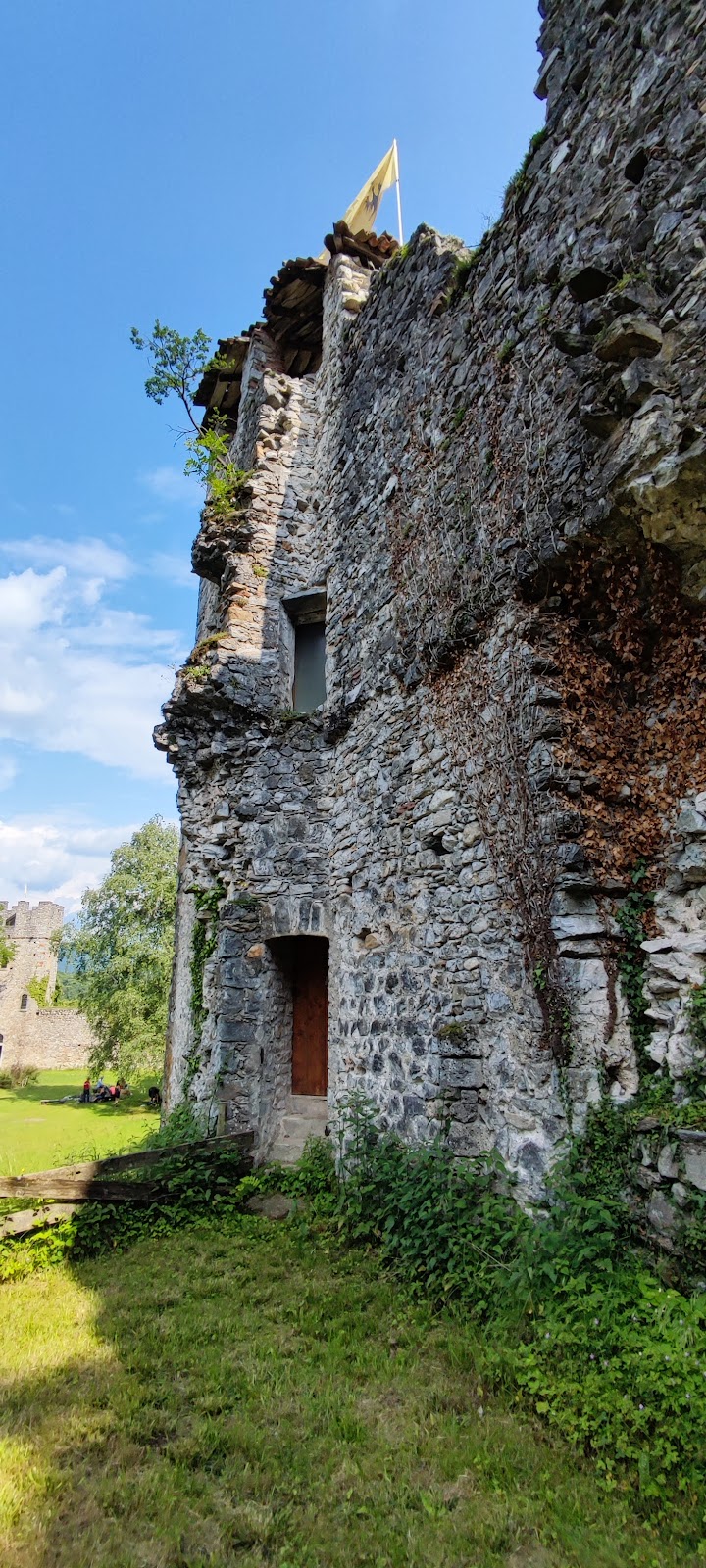
Orino Castle stands at about 540 metres above sea level on a rocky spur northeast of Orino. Woodland surrounds the complex, while the elevated spur provides extensive visibility across the Valcuvia valley. The surviving fortress follows a quadrangular plan, with a substantial perimeter wall and defensive towers enclosing the site.
Courtyard and Cistern
A large internal courtyard occupies the centre of the enclosure and contains a cistern. The Rocchetta stands in the courtyard’s northwest corner. It is completely ruinous and includes a tower at its southwest corner, preserving the position of this inner fortified structure within the wider complex.
Entrance and Perimeter Towers
The battlements above the principal entrance largely belong to the early-twentieth-century restoration. Much of the tower at the northeast corner and the intermediate tower interrupting the northern perimeter wall also derives from that rebuilding. These restored elements form part of the present appearance of the quadrangular enclosure alongside its older surviving fabric.