Castillo de Taibilla: A Medieval Frontier Fortress in Spain


Site at a Glance
- Rating
- 4.4
- Popularity
- Low
- Country
- Spain
- Primary era
- Medieval
- Eras represented
- Medieval
- Civilizations
- Crown of Castile, Crusader, Order of Santiago
- Site type
- Military
- Remains
- Castle
On this page6 sections
History
Castillo de Taibilla is a medieval fortress in Spain, located in the municipality of Nerpio in Albacete. It was mentioned in twelfth-century texts as the fortress of Tayviella, placing it within the long history of frontier fortifications in the region.
The Santiago frontier
From 1242 until the conquest of Granada in 1492, the Order of Santiago controlled the fortress. This medieval military-religious order held territory and defended Christian frontiers in the Iberian Peninsula. From Castillo de Taibilla, it was responsible for controlling the neighboring Kingdom of Granada, the last Muslim-ruled kingdom in Iberia before its conquest by the Catholic Monarchs in 1492.
Protection and rehabilitation
The ruins were placed under general state protection through a decree dated 22 April 1949 and published on 5 May. The measure extended protection to all castles in Spain, regardless of their condition. It was signed by Francisco Franco, Spain’s dictator from 1939 to 1975, and José Ibáñez Martín, then Minister of National Education. The keep has recently been rehabilitated.
Remains
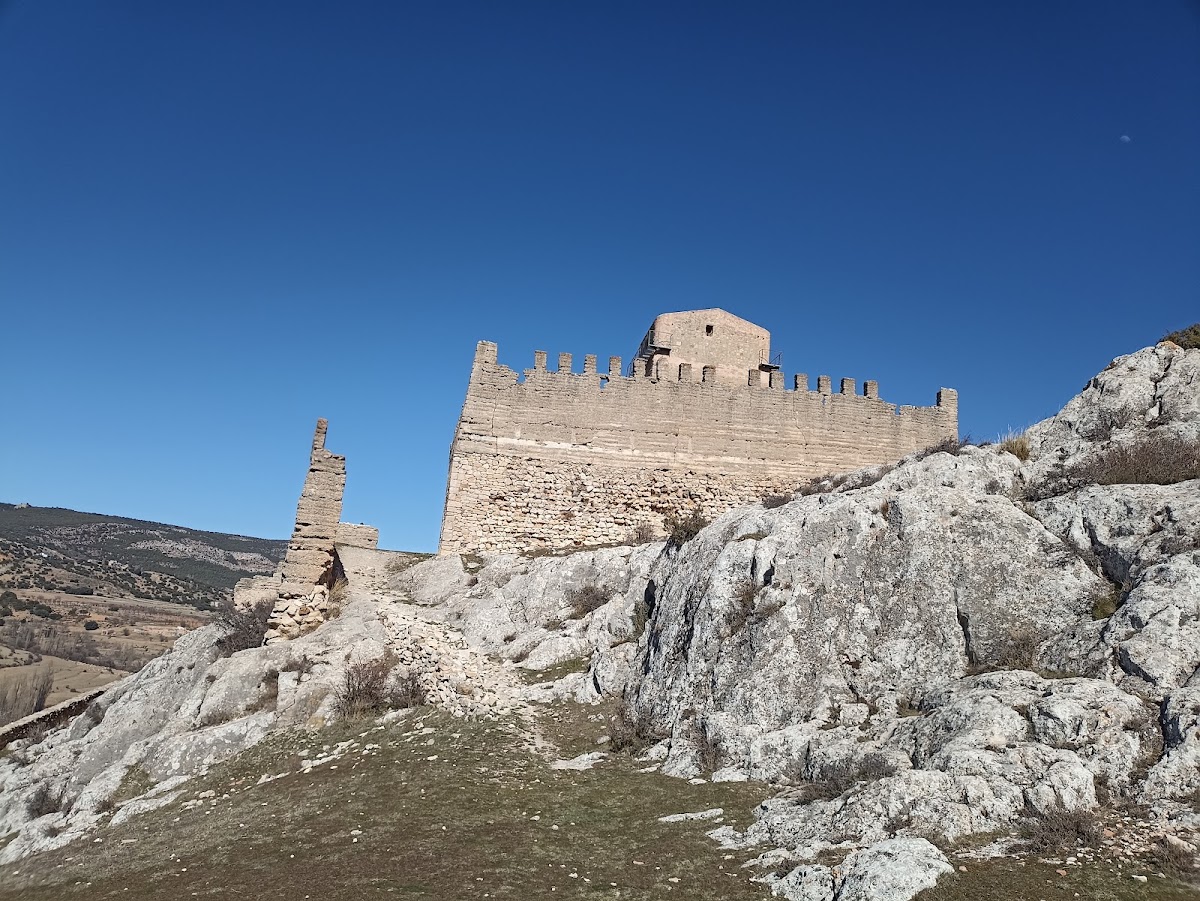
Castillo de Taibilla stands at approximately 1,200 meters above sea level on a rocky escarpment above the Taibilla River. Its surviving defenses occupy the castle hill, while a fortified house at the foot of the hill controlled passage to the fortress.
Approach and outer defenses
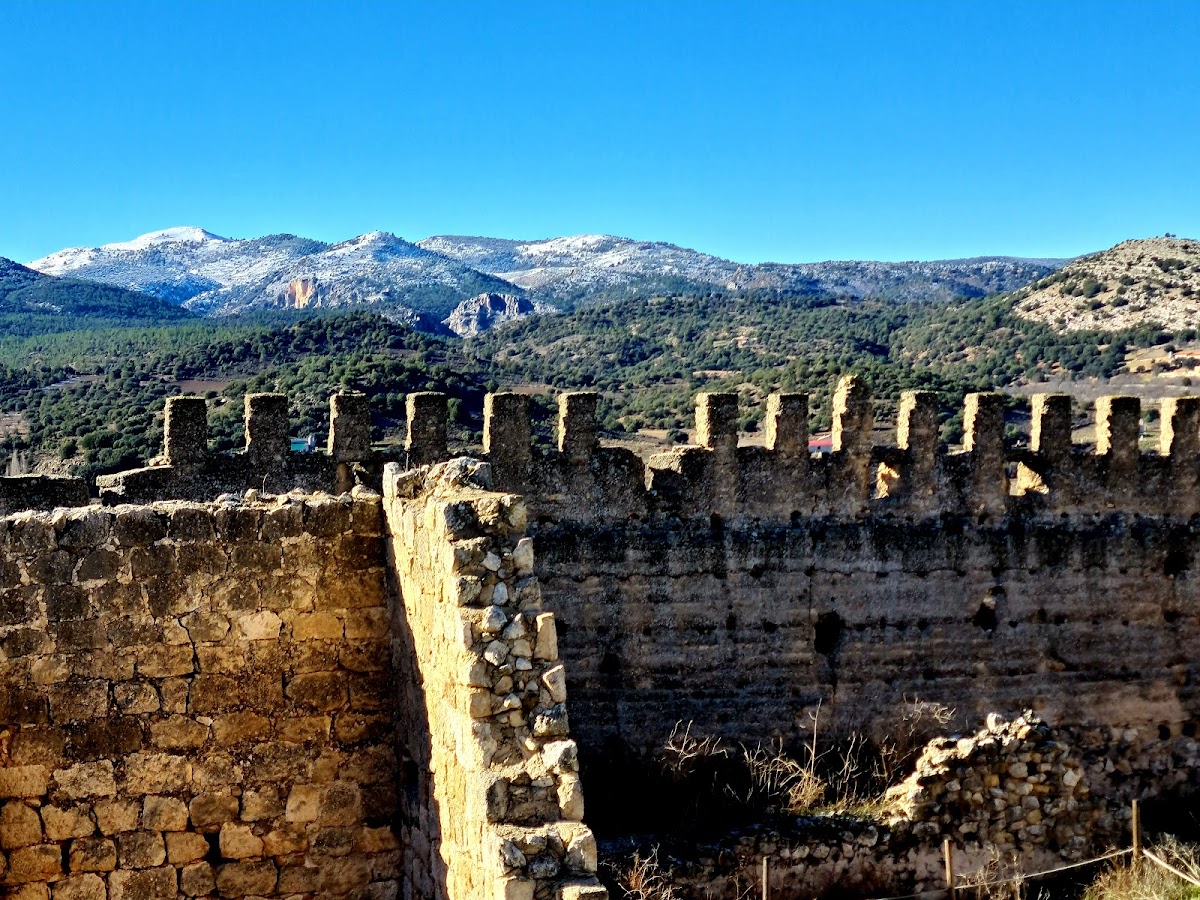
The fortified house is Arab in origin and has since been remodeled as an inhabited manor house. On the southern and western sides of the hill, the outer defensive wall retains a wall-walk, a passage along the top of a defensive wall, together with crenellations and arrow slits. These surviving elements show how the outer perimeter was organized for movement and defense.
The keep
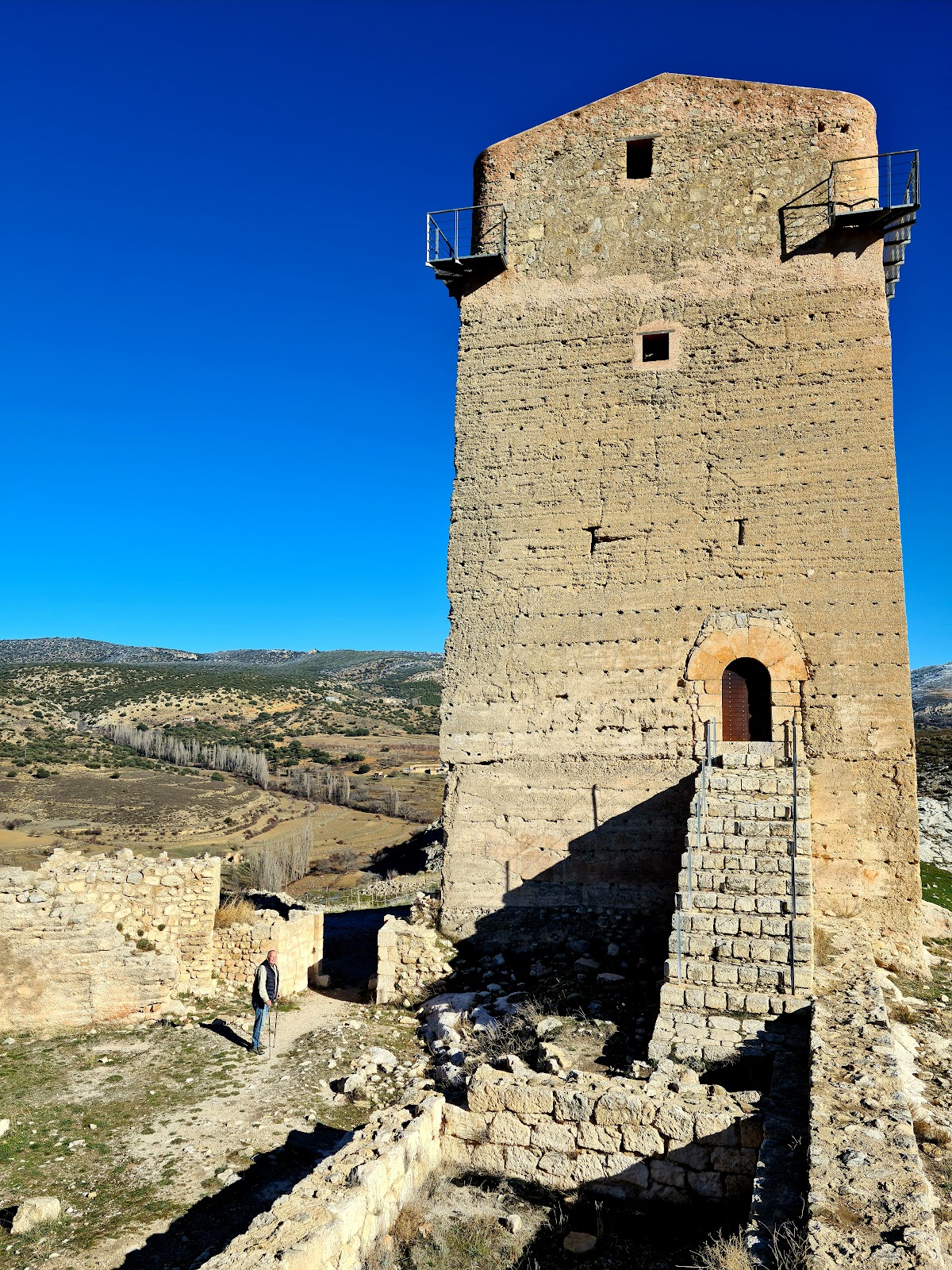
The keep, the principal fortified tower of a castle, is the most notable surviving feature. It originally contained four interior floors. Its lower section includes a cistern, a tank designed to collect and store rainwater. The keep has been rehabilitated, preserving the central tower as the main architectural focus of the ruins.