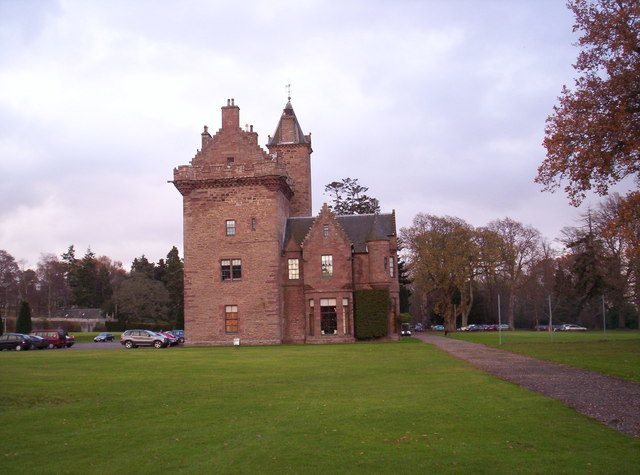
Red Castle, Angus: A Ruined Fortified House on the Scottish Coast


Site at a Glance
- Rating
- 4.5
- Popularity
- Low
- Country
- United Kingdom
- Primary era
- Medieval
- External website
- Open
- Eras represented
- Medieval
- Civilizations
- Kingdom of Scotland
- Site type
- Military
- Remains
- Castle
On this page8 sections
History
Red Castle, Angus is a ruined fortified house on the coast of Scotland in the United Kingdom, built for King William the Lion in the late twelfth century. Its first purpose was to repel Viking attacks on Lunan Bay, although William also used it as a residence during hunting expeditions. The castle stood about 6.4 kilometres south-southwest of Montrose, commanding high ground above the North Sea coast.
Royal foundation and medieval ownership
In 1194, William granted the castle and the surrounding lands at Inverkeilor, about two kilometres to its east, to Walter de Berkeley, the Great Chamberlain, a senior royal officer responsible for aspects of the monarch’s household administration and finances. After Walter’s death, the property passed through his heiress by marriage to Ingram de Balliol, who rebuilt the castle. The estate remained with the Balliol family for two generations. Around 1305, it passed to Henry de Fishburn, the son of Constance de Balliol, after her childless grandson Ingram died.
Robert the Bruce, king of Scots from 1306 to 1329, confiscated the property during a redistribution of lands and granted the castle to the Earl of Ross in 1328. Medieval deeds from 1286 call the castle rubeum castrum, meaning “red castle.” The name referred to the burnished red sandstone used in the building and associated with the local area.
The siege of 1579
In 1579, James Gray, the son of Patrick Gray, 4th Lord Gray, married Lady Elizabeth Beaton, who owned the castle, and became infatuated with her daughter. After Elizabeth expelled him, James Gray, his brother Andrew of Dunninald, and John Ogilvy of Kynnody besieged Red Castle for two years. They eventually forced the inhabitants out by setting the castle on fire.
James VI, then king of Scotland, ordered John Erskine of Dun and his son Robert to bring siege engines and relieve the castle. The townspeople of Dundee were also to assist. On 28 February, a royal messenger travelled from Stirling Castle to proclaim at the market crosses of Dundee, Forfar, Montrose, and Arbroath that men aged sixteen to sixty were required to help end the siege. The proclamation ordered James Gray and John Ogilvy to withdraw under threat of treason.
John Erskine was instructed to make an inventory of the castle’s goods and to provide safe conduct for John Stewart of Baldynneis, Elizabeth Beaton’s son and a poet, so that he could appear before the king. In March 1582, Andrew Gray received a pardon for burning the castle and its yards, among other offences. In 1590, 12,000 gold crowns may have been landed in a creek near Red Castle to support the Catholic cause in Scotland.
Decline and protection
After these events, Red Castle declined. It remained partly roofed until 1770 but never again served as a noble residence. Its last inhabitant was James Rait, the minister of Inverkeilor. The surviving ruins are protected as a Scheduled Monument, a legally protected archaeological or historic site of national importance, with the designation recorded on 2 October 1970.
Remains
Setting and enclosure
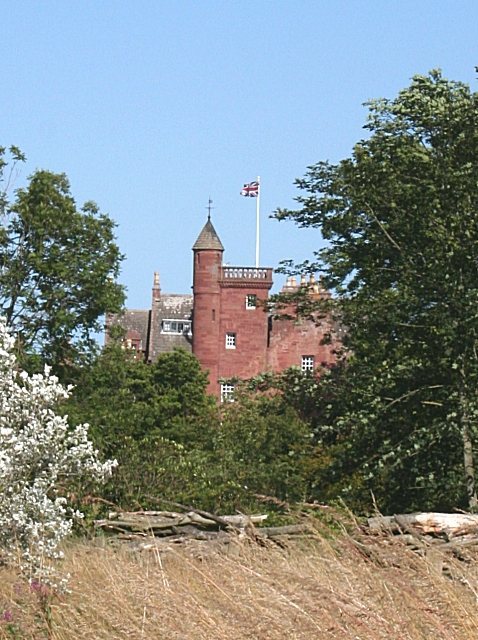
Red Castle occupies the edge of high ground above Lunan Bay. Lunan Water reaches the coast immediately to the north, with the hamlet of Lunan beyond it. The surviving medieval defensive layout includes the eastern curtain wall, an enclosing defensive wall about two metres thick. The wider enclosing area, or enceinte, may date from the thirteenth century.
Tower house
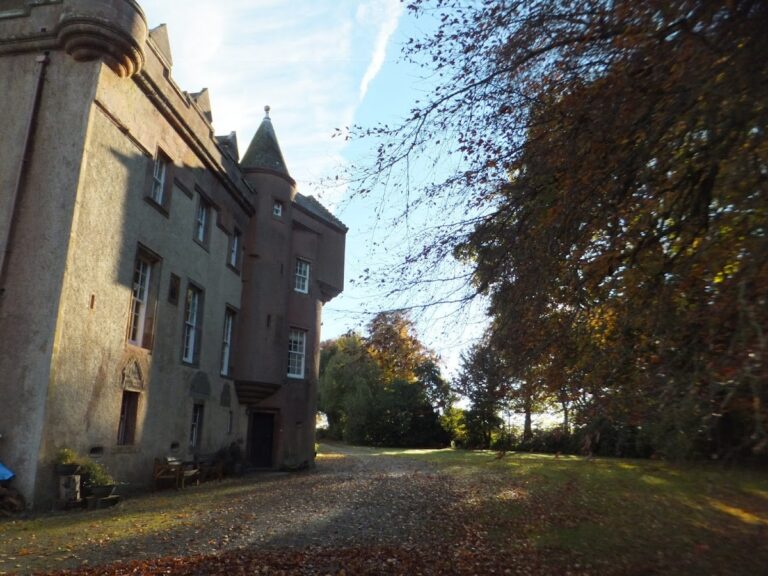
The principal surviving structure is part of a rectangular fifteenth-century tower or keep. Built in red sandstone, including the burnished stone associated with the castle’s name, it is classified as a tower house and now survives as a ruin. The tower stands in a particularly precarious condition on the hill above Lunan Bay, and in 1999 it was described as being in imminent danger of collapse.
Archaeological deposits
A midden, an archaeological deposit formed from accumulated refuse, lies below the castle. Its continual erosion has exposed numerous artefacts, which are now held by Montrose Museum. Together with the surviving masonry, these finds provide material evidence for occupation at the site.