Château de Hac: A Fifteenth-Century Breton Château in France


Site at a Glance
- Rating
- 4.6
- Popularity
- Low
- Country
- France
- Primary era
- Medieval
- External website
- Open
- Eras represented
- Medieval
- Civilizations
- Duchy of Brittany
- Site type
- Domestic
- Remains
- Castle
On this page7 sections
History
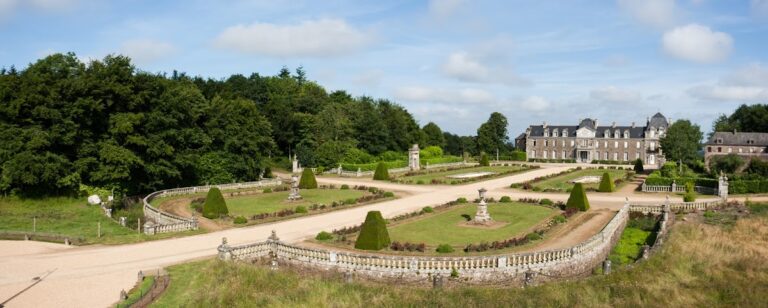
Château de Hac is a fifteenth-century château in France, in the commune of Le Quiou south of Dinan in Brittany. It belongs to the architectural tradition of the Breton duchy’s fifteenth-century golden age and became the center of an important agricultural estate.
Origins during the Hundred Years’ War
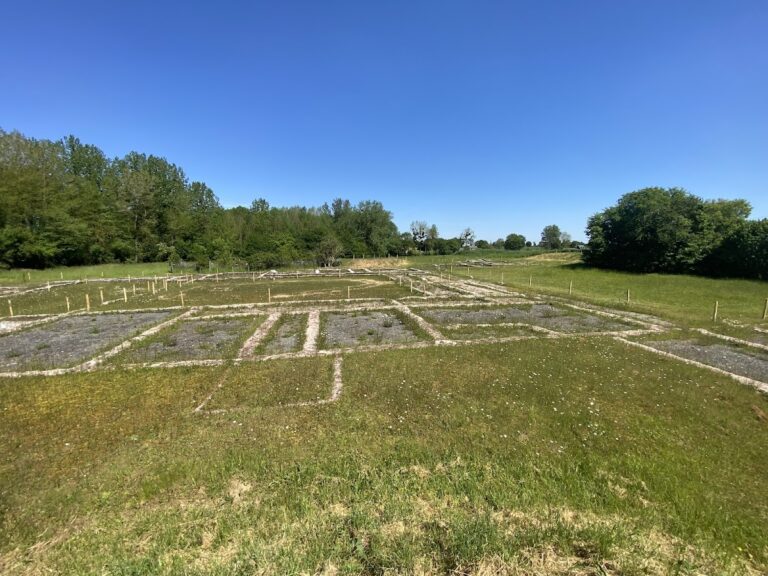
During the Hundred Years’ War, the prolonged conflicts chiefly between England and France that also affected Brittany, Guillaume de Saint-André built a manor on the site in the 1380s or 1390s. Guillaume was a diplomat serving John IV, Duke of Brittany. The foundations of this earlier residence survive within the later history of the estate.
After Guillaume de Saint-André died, Arthur de Richemont, a Breton nobleman of the ducal family who later became Duke Arthur III of Brittany, granted the domain to the Bintin family. The Bintin heiress subsequently married Jean Hingant, a powerful chamberlain of John V, Duke of Brittany.
The Hingant château
Jean Hingant built the present château between 1440 and 1448. His ownership ended in 1450 after he became closely implicated in the murder of Gilles de Bretagne, a member of the Breton ducal family who was strangled in captivity. The property then passed to the Tournemine family.
Later ownership and conservation
The château was sold in 1686 and again in 1770, when it passed to Reslou de la Tisonnaye, who later became mayor of Dinan. Its roof framework was restored in 1684. Restoration began in the 1930s, followed by work under the historic-monuments authorities that rehabilitated the building. The facades were restored in 2010, and interior work conserved the old painted decoration while consolidating the floors.
Château de Hac was classified as a French historic monument in September 1993, a protection that represents the higher level of France’s two historic-monuments designations. The surrounding area was added to the historic-monument register in February 2012. A study and diagnostic assessment of the paintings and furnishings took place in 1997.
Remains
Building and materials
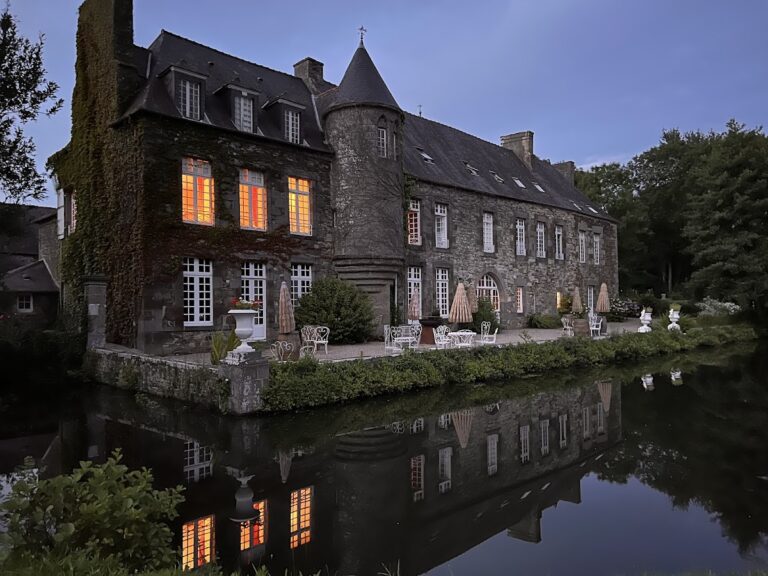
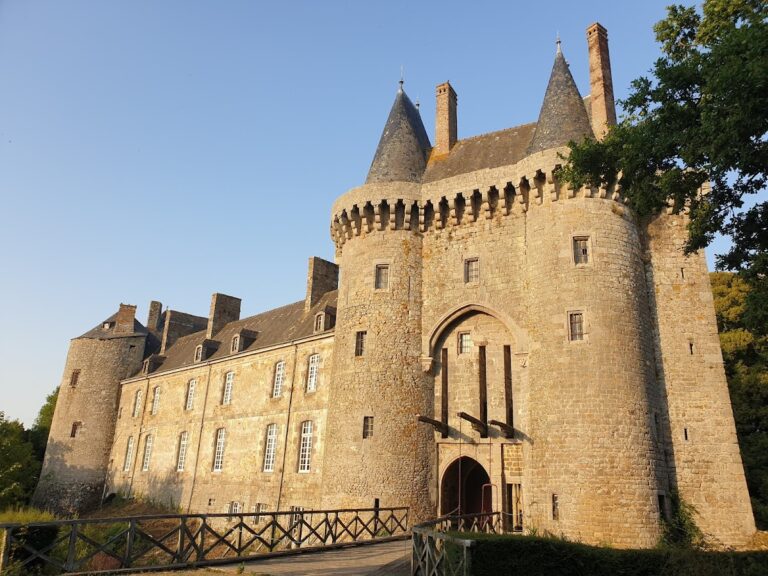
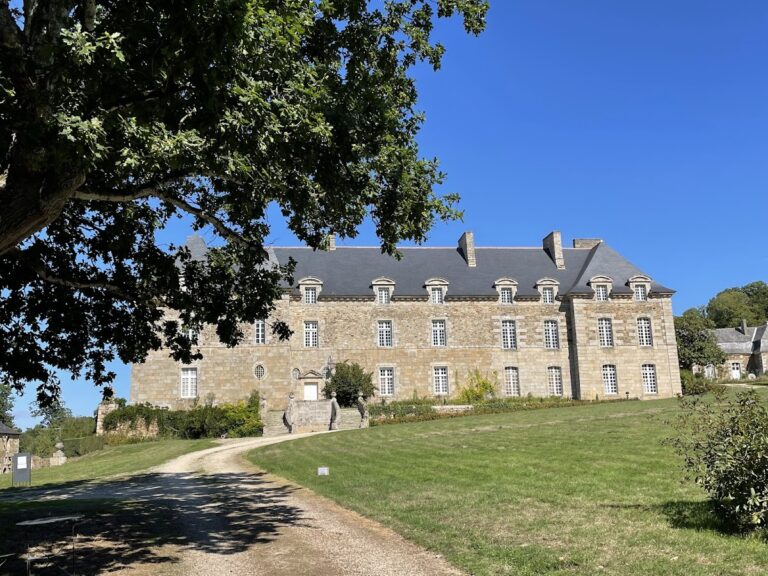
The château consists of two residential blocks from different periods. The eastern block is earlier, while the other was built for Jean Hingant between 1440 and 1448. The building is made from dressed limestone quarried from falun formations. Falun is a consolidated, shell-rich limestone formed from marine sediments and used as a building material in parts of western France.
Six turrets flank the château, including four with unequal diameters. The building has undergone very little alteration over the centuries, allowing the relationship between its two residential blocks and its defensive-looking towers to remain legible. The roof framework retains the results of its restoration in 1684.
Interiors and restored details
The interior covers 699 square metres. Conservation work included stabilizing the floors and preserving old painted decoration. The restoration and improvements were overseen by a chief architect of historic monuments.
The 2010 work on the facades reinstated the window joinery and brought attention to the stained-glass windows. These interventions form part of the continuing conservation of the château’s architectural fabric and interior finishes.