Castle Boncompagni – Viscogliosi: A Fortified Palace in Isola del Liri


Site at a Glance
- Rating
- 4.5
- Popularity
- Low
- Country
- Italy
- Primary era
- Medieval
- External website
- Open
- Eras represented
- Medieval, Early Modern
- Civilizations
- Kingdom of Naples
- Site type
- Domestic
- Remains
- Castle
On this page6 sections
History
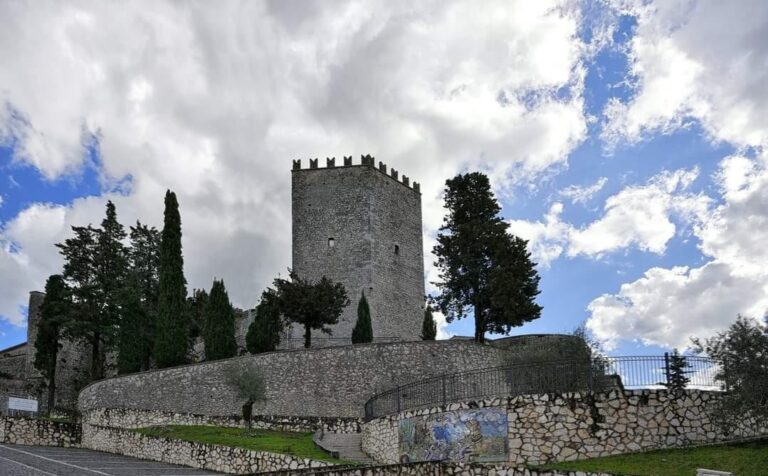
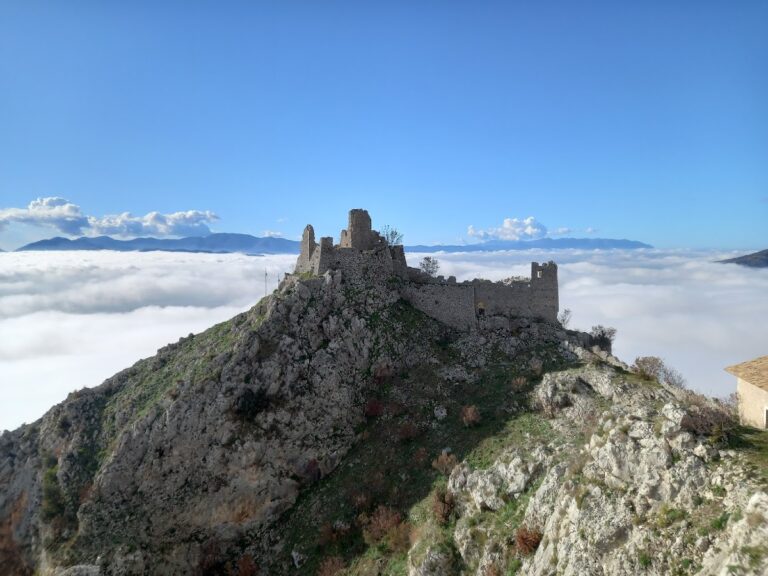
Castle Boncompagni – Viscogliosi is a fortified historic palace in Isola del Liri, Italy, developed by successive Italian ruling families from the early medieval period through the seventeenth century. Its origins probably lay in a tower, while the surviving complex combines medieval and Renaissance characteristics with the later form of a lordly residence. Beside the Liri River, it protected the Sora plain and served as the town’s first defensive bulwark.
Medieval origins
The earliest fortified installation is believed to have been a tower. The first recorded reference to a castle at Isola del Liri dates to 1100, when a papal bull, a formal document issued by a pope, from Pope Paschal II referred to the site as castellum insulae, meaning “castle of the island.” The document was addressed to Goffrido, bishop of Sora, and the fortification was probably held directly by the Diocese of Sora.
Ducal residence and political center
When the Della Rovere family became dukes of Sora, the castle entered the ducal domain. It then functioned as a ducal residence and as the principal seat of the political activities of the lords of Sora in the Liri Valley. In 1496, the Cantelmo and Della Rovere families used the castle to organize resistance against the Aragonese, the ruling dynasty and political forces associated with the Crown of Aragon in southern Italy. Their preparations supported Charles VIII, king of France, in an attempted reconquest of the Kingdom of Naples, with assistance from the local clergy.
The Boncompagni family later acquired ownership rights to the castle. During the seventeenth century, Costanza Sforza, a noblewoman of the Sforza family, directed its transformation from a military complex into a lordly residence. The work introduced biblical-themed frescoes, bas-reliefs showing the communities belonging to the Duchy of Sora, and a park. The castle is designated a national monument of Italy and has been restored.
Remains
Fortified palace and river setting
Built mainly of masonry and stone, the complex preserves the character of a fortified historic palace. Its construction history extends from the ninth to the seventeenth century, combining the defensive elements associated with its earlier role with the more residential arrangement created during its later transformation. The castle stands beside the historic center of Isola del Liri, where the Liri River divides into two branches and forms an island. The two branches produce the approximately 30-meter-high Cascata Grande and the Cascata del Valcatoio.
Seventeenth-century decorative features
The residential phase is represented by biblical-inspired frescoes, bas-reliefs depicting the municipalities of the Duchy of Sora, and the park created during the seventeenth-century remodelling. These features belong to the change in function from a primarily military complex to a lordly residence, while the earlier fortified installation, probably a tower, remains the starting point for understanding the site’s physical development.