Castillo de Hornos: A Medieval Fortress in Spain


Site at a Glance
- Rating
- 4.3
- Popularity
- Low
- Country
- Spain
- Primary era
- Medieval
- Eras represented
- Medieval
- Civilizations
- Crown of Castile, Crusader, Order of Santiago
- Site type
- Military
- Remains
- Castle
On this page7 sections
History
Castillo de Hornos is a medieval fortress in Spain, built during the thirteenth century as part of the frontier fortification system of the Sierra de Segura. Its construction is also placed broadly between the thirteenth and fourteenth centuries. The castle helped shelter the local population and formed part of a defensive network shaped by the contested conditions of the region from the twelfth to the fourteenth century.
A frontier fortress
Castillo de Hornos, together with Castillo de Segura de la Sierra, was considered one of the strongest fortresses in the Sierra de Segura. It received warning signals sent from the Towers of Bujarcaiz and Bujaraiza Castle in the upper Guadalquivir valley, linking it to a wider system of observation and communication.
The fortress may have been built over an earlier Muslim stronghold. Medieval chronicles from al-Andalus, the name used for Muslim-ruled territories in the Iberian Peninsula, refer to a place called Hisn Furnus in the area. The castle’s cistern is also earlier than the medieval construction, supporting the possibility of an earlier occupation on the hill.
Christian rule and later descriptions
In 1239, Ferdinand III, the Castilian and Leonese king whose reign included major territorial expansion in southern Iberia, formalized the castle’s possession by the master of the Order of Santiago. This medieval military-religious order held and defended territories in Iberia.
Later descriptions help trace the fortress’s condition and organization. Francisco de León included it in a historical account, while a survey connected with Philip II’s systematic descriptions of Spanish territories and fortifications examined the castle in 1575.
Ruins, rehabilitation, and new use
By the twentieth century, the castle had been reduced almost entirely to ruins. The Directorate General of Fine Arts began rehabilitation in the early 1970s under a project by the architect Luis Berges, but the work was interrupted. Complete rehabilitation began in 2006 and concluded in 2011.
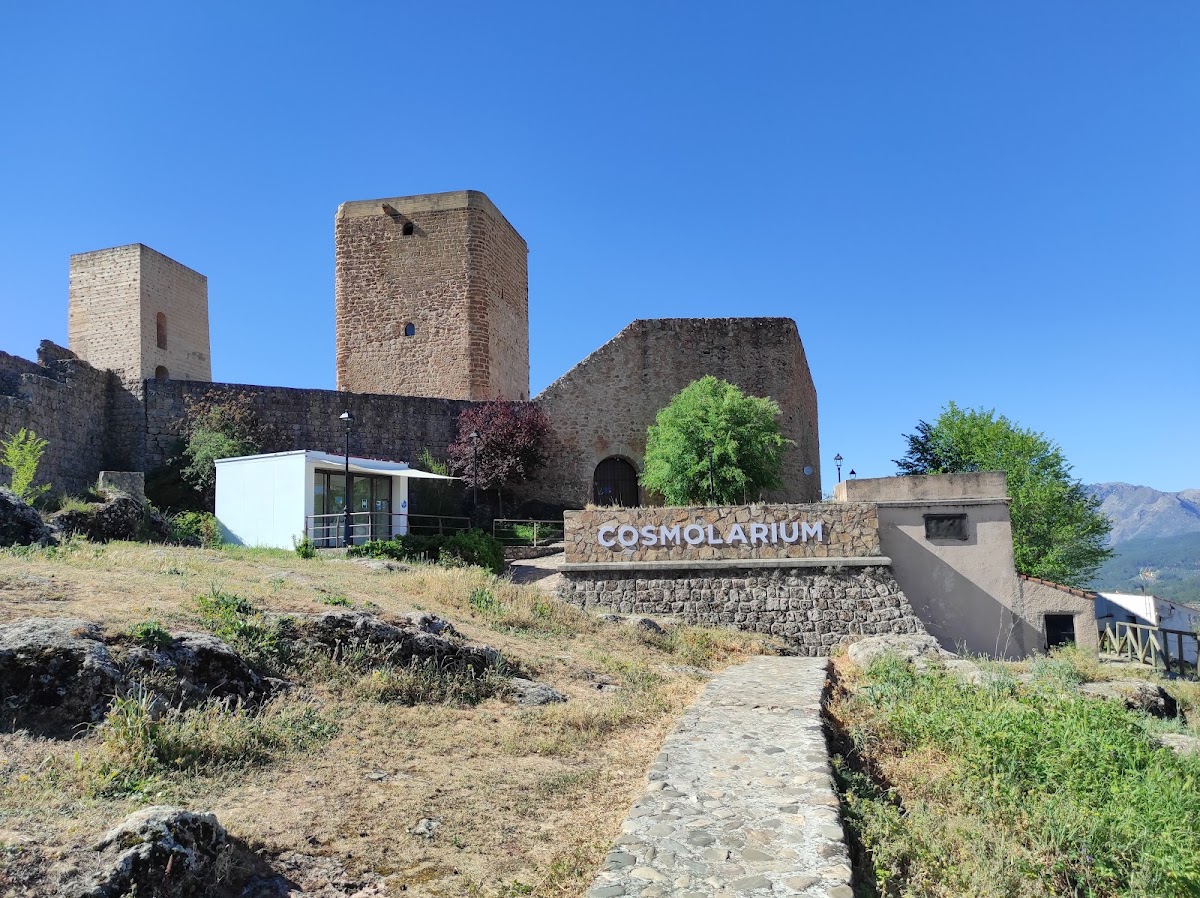
Since 2012, the restored castle has housed the Cosmolarium, a museum and astronomical observation center. The idea was proposed by Manuel Toharia, director of the City of Arts and Sciences in Valencia, who regarded the site as suitable because of the purity and darkness of its skies. Castillo de Hornos is protected as a Spanish Property of Cultural Interest, an official heritage designation for sites recognized for historical, archaeological, architectural, or cultural importance.
Remains
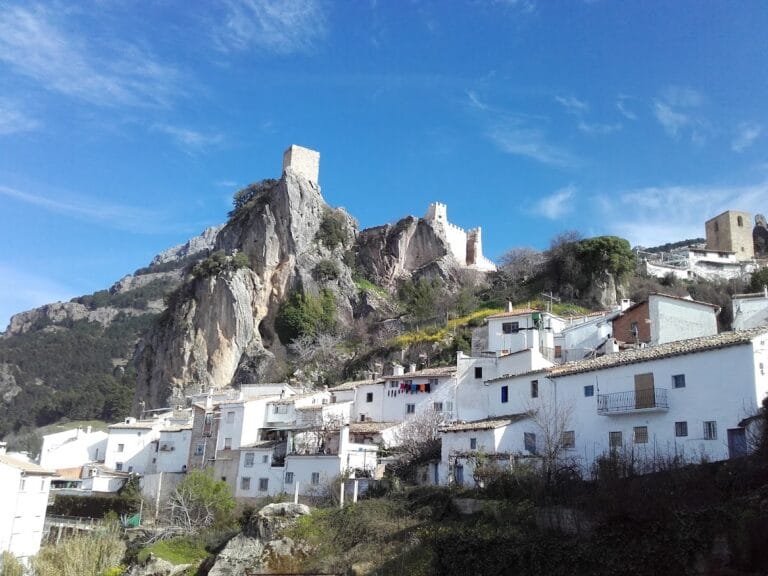
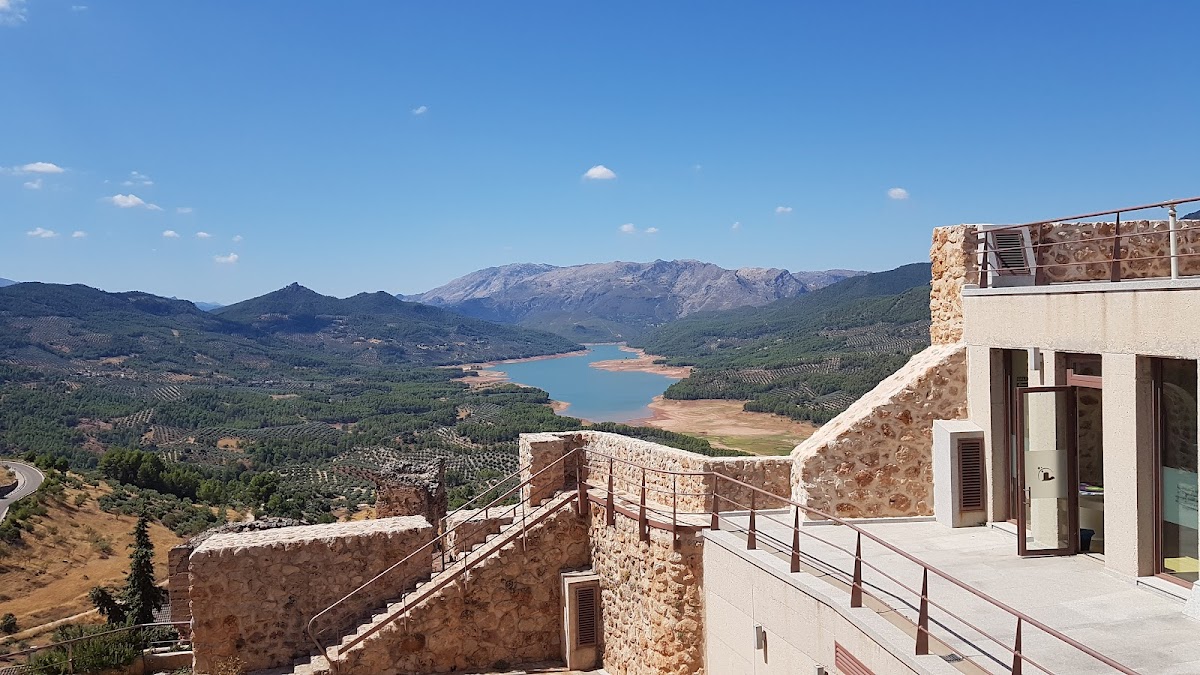
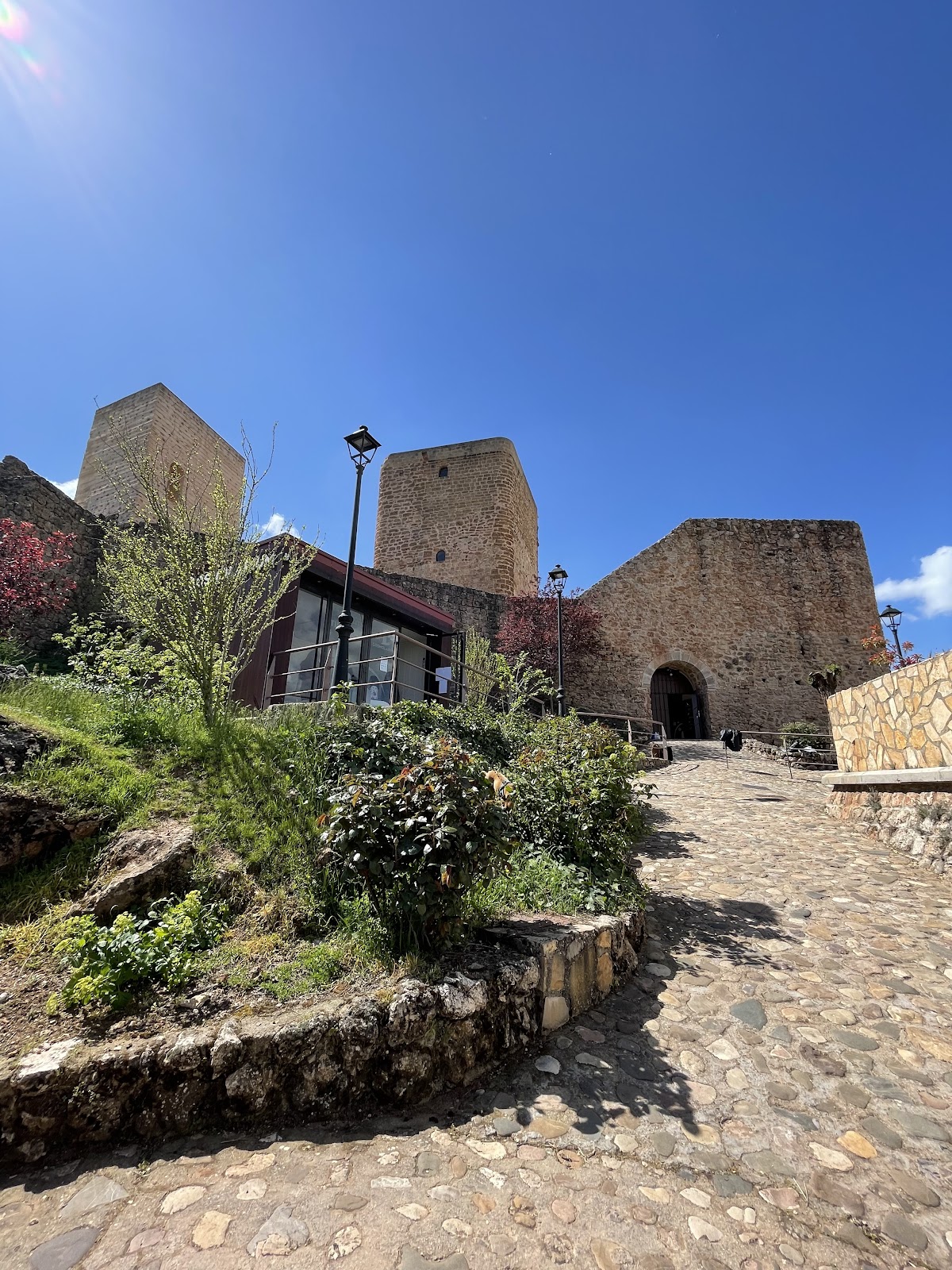
The castle occupies the highest part of the rocky hill on which the village of Hornos stands. Its principal enclosure had an approximately trapezoidal plan and was built throughout with small rubble masonry. The arrangement centered on a keep attached to the northwestern curtain wall, with three towers aligned with it. Two northern towers stood outside the main enclosure and were joined to it by an enclosing wall.
The keep
The keep has a square plan, with each side measuring 8.60 metres. Its rounded corners are a feature associated with buildings connected to the Order of Santiago. Inside, the tower contains a cistern and, in its upper part, two rooms placed one above the other and supported by vaults.
The astronomical observatory
The terrace of the uppermost floor contains a small observatory used for astronomical observation. Its present function forms part of the Cosmolarium established within the rehabilitated castle.