Kirchschlag Castle Ruin: A Medieval Hilltop Fortress in Austria

Site at a Glance
- Rating
- 4.7
- Popularity
- Low
- Country
- Austria
- Primary era
- Medieval
- External website
- Open
- Eras represented
- Medieval, Early Modern
- Civilizations
- Duchy of Austria, Habsburg, Holy Roman Empire
- Site type
- Military
- Remains
- Castle
On this page9 sections
History
Kirchschlag Castle Ruin is a medieval hilltop fortress in Austria, built in the twelfth century on Schlossberg to protect the recently established town and its surrounding area from Hungarian attacks. The castle formed part of the eastern frontier defenses and was linked with the settlement by a surrounding wall.
Foundation and Medieval Struggles
In 1180, the Styrian nobleman Herrand von Wildon began constructing the original castle. Through a marriage within his family, the local lordship passed to the Kuenringer in 1240. After the Babenberg dynasty, the medieval ruling house of Austria before the Habsburgs, became extinct in 1246, King Béla IV of Hungary and King Ottokar II of Bohemia fought over its inheritance. Béla’s victory in 1252 brought Kirchschlag under Hungarian control, but the Kuenringer recovered it in 1260.
The Pottendorfer family acquired the settlement in 1287. During the revolt against Duke Friedrich the Handsome, ducal forces partly destroyed the castle as a reprisal. The Pottendorfers lost the fief but regained it ten years later. Between 1320 and 1325, they built an entirely new castle on the ruins of the earlier fortress. This later complex forms the core of the present ruin, while the twelfth-century buildings no longer survive above ground.
Later Owners and Frontier Defense
After the Pottendorfer line died out in 1488, the castle changed hands several times. In 1502, the town and castle passed to the Pucheimer family of Upper Austria. Under Andreas von Pucheim, major construction work took place between 1538 and 1544. The castle later began to deteriorate during the time of Erasmus von Pucheim, and Christoph IV von Pucheim ordered restoration between 1580 and 1582.
Kirchschlag Castle resisted attacks during the Ottoman-era conflicts of 1529, 1532, and 1683. It also withstood the Haiduks in 1605, the forces of the Transylvanian prince and anti-Habsburg leader Gábor Bethlen in 1621, and the Kuruc in 1703. The fortress provided refuge for the local population, although its undefended outer buildings suffered serious damage during the campaigns of 1529 and 1532.
Decline and Modern Ownership
In 1651 and 1652, during the final construction work at the castle, Hans Christoph III von Pucheim built a mansion on the town’s main square and moved his residence there. The building is now the town hall. In 1657, Count Miklós IV Pálffy became lord of the town and castle. The Pálffy family, a prominent Hungarian noble family elevated to princely rank in 1807, likewise did not move into Kirchschlag Castle, choosing the better-preserved Krumbach Castle instead. The castle’s decline therefore continued.
The castle was still in good condition in 1672, but it was in poorer condition by 1683, and substantial deterioration had reappeared by the middle of the eighteenth century. The Pálffy family retained Kirchschlag until the Revolution and War of Independence of 1848 and 1849. After 1848, the estate passed through several private owners. It was transferred to the local cooperative market in 1905 and to the municipality in 1974 through a land exchange.
The ruin has received partial restoration and is maintained in reasonably good condition. It is a listed object in Austria and provides the setting for an annual three-day Advent market before Christmas.
Remains
Castle Complex and Approach
Hilltop Fortress
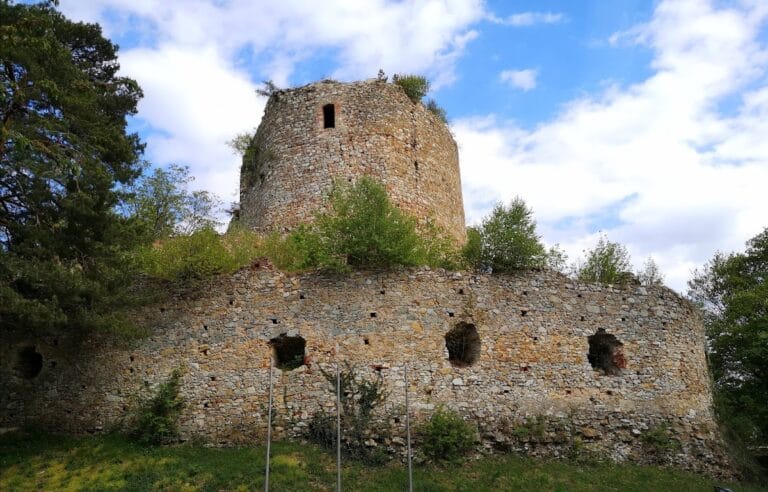
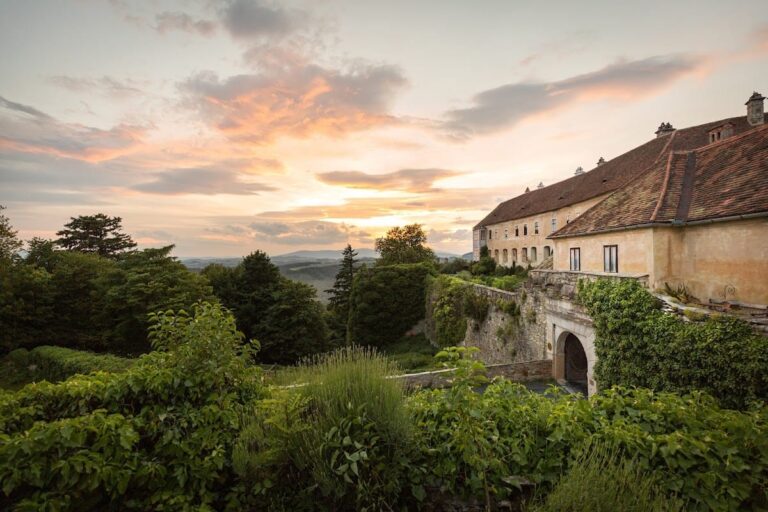
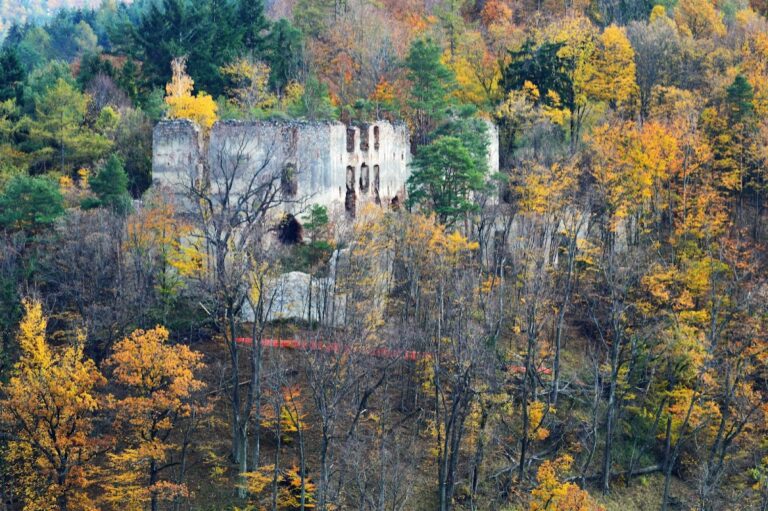
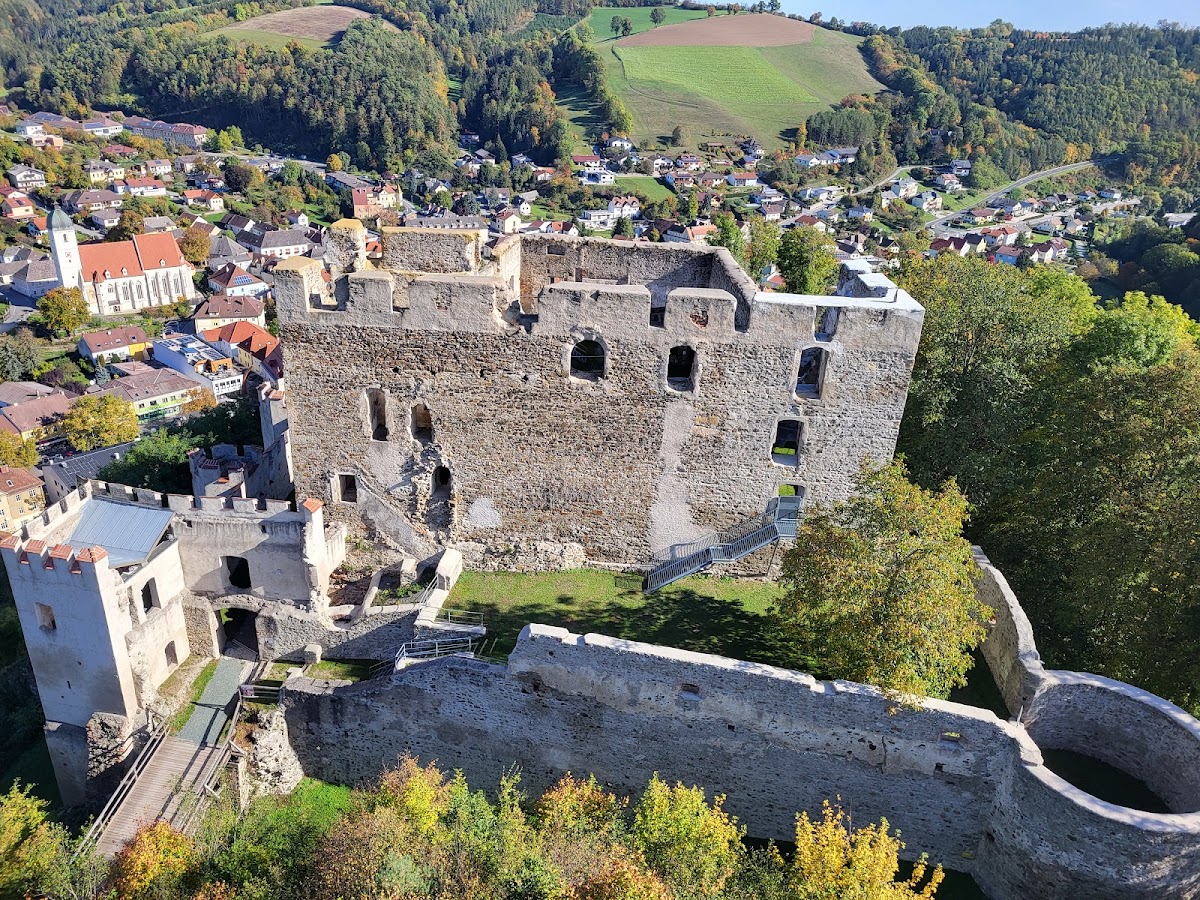
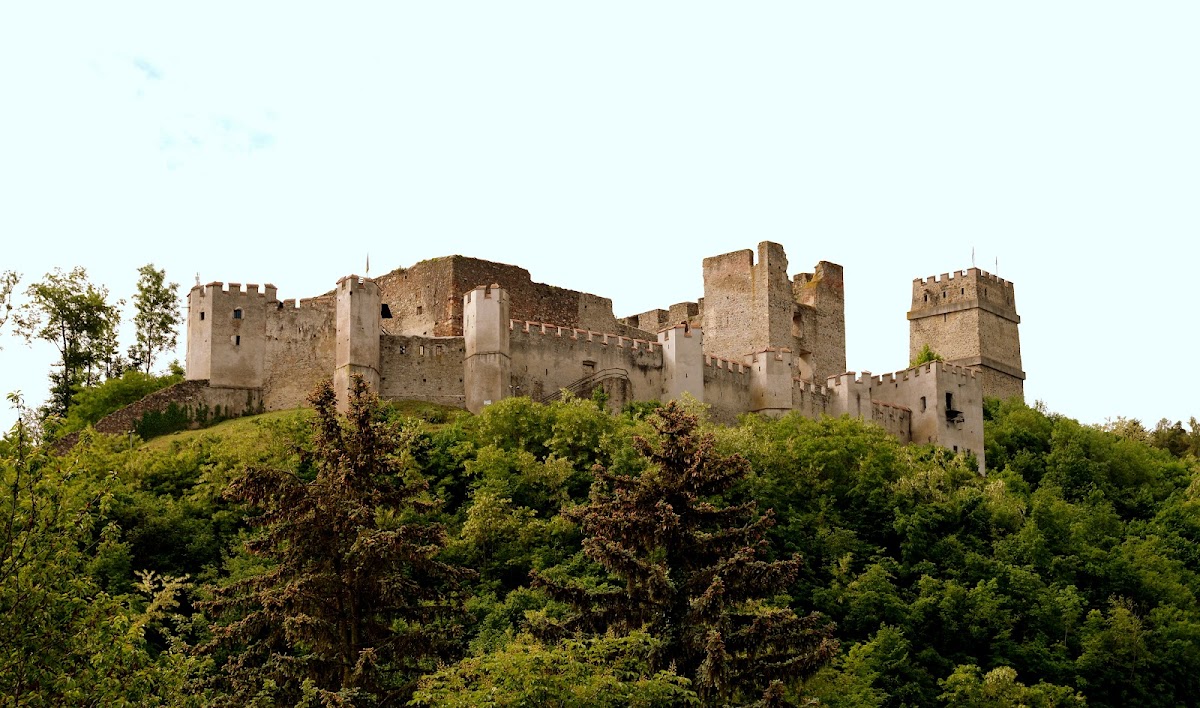
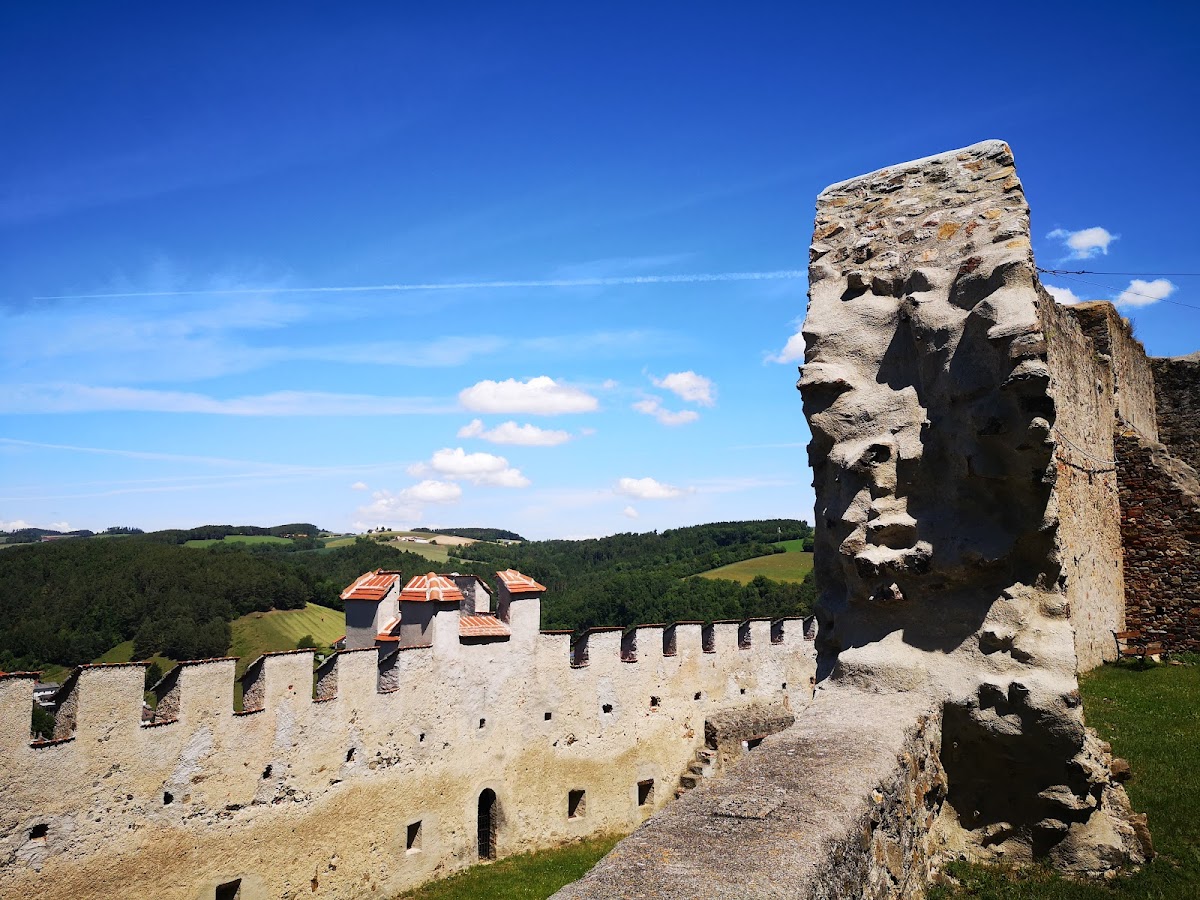
The ruin stands on Schlossberg at approximately 480 metres above sea level, about 80 metres above the surrounding terrain and south of the main road through Kirchschlag in the Buckligen Welt. Its visible core belongs to the castle built by the Pottendorfers between 1320 and 1325. The complex survives as a ruin with sections of wall fabric and the interior face of a castle wall still visible. A ring wall once connected the fortress with the settlement.
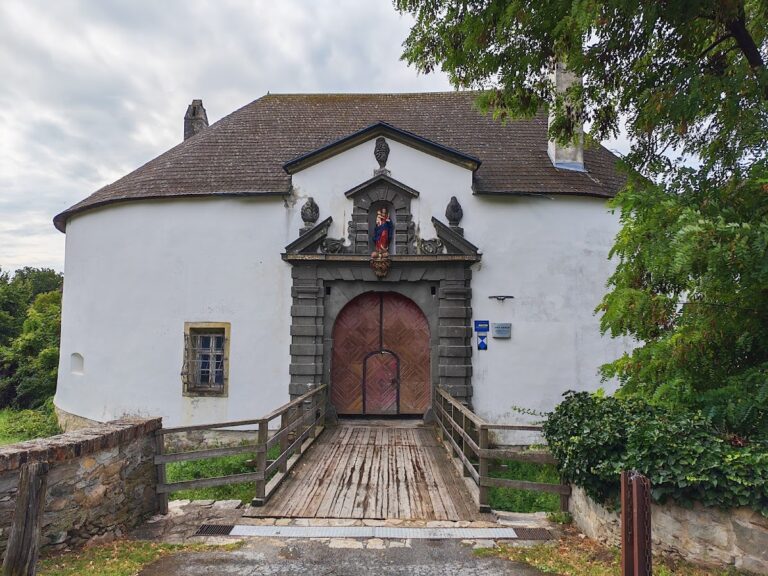
Entrance and Wooden Bridge
The entrance area includes a wooden bridge leading toward the lookout tower. It provides access to the surviving castle complex, where the entrance and the interior side of the enclosing wall remain identifiable within the ruin.
Feuerturm Lookout Tower
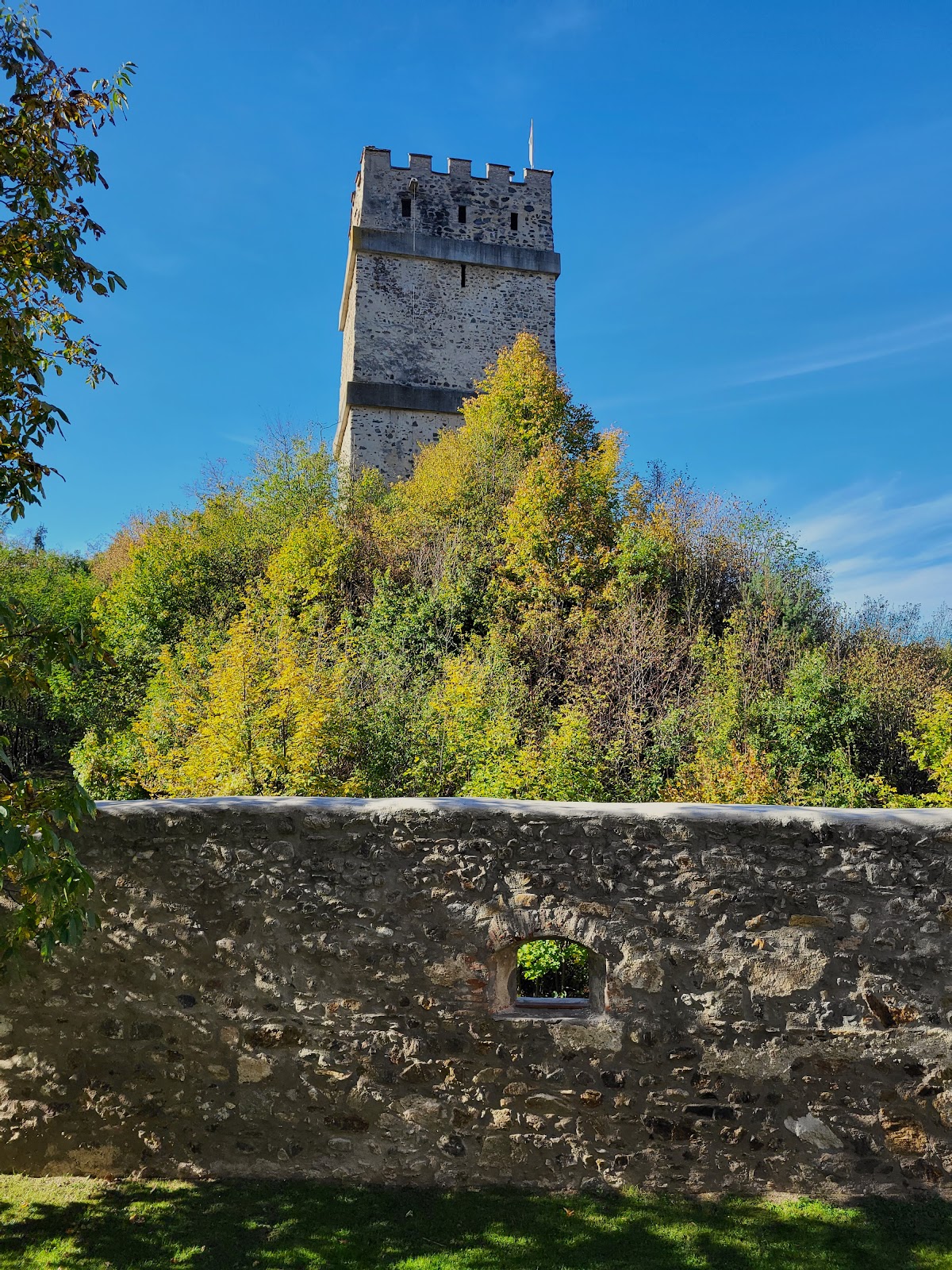
The 22-metre-high bergfried, or principal fortified tower, is known as the Feuerturm. It stands separately about 50 metres southwest of the castle entrance and serves as a lookout tower. Its summit provides a view over almost the entire castle.