Castle of Jumilla: A Medieval Fortress in Spain


Site at a Glance
- Rating
- 4.4
- Popularity
- Low
- Country
- Spain
- Primary era
- Medieval
- External website
- Open
- Eras represented
- Bronze Age, Iron Age, Classical, Medieval
- Civilizations
- Crown of Castile, Iberian, Roman, Umayyad
- Site type
- Military
- Remains
- Castle
On this page9 sections
History
Castle of Jumilla is a medieval fortress in Spain, built and reshaped through Iberian, Roman, Arab, and Christian phases on a hill above the town. Its construction history extends from the twelfth to the fifteenth century, while the fortress took substantially its present form in 1461 under the Marquis of Villena. The site is protected as an Asset of Cultural Interest, a formal heritage designation within Spain’s cultural-heritage system.
Prehistoric, Iberian, and Roman occupation
The hill was occupied successively from Prehistory. Its earliest fortifications are attributed to the Bronze Age, followed by an Iron Age Iberian settlement that developed into a large fortified community. Roman forces later took possession of the hill and strengthened its defenses. Their presence is represented by first-century sigillata, a fine Roman ceramic ware with a smooth or glossy red surface.
Arab fortress and Christian transition
In April 713, Arab forces passing through Jumilla during their conquest of the Iberian Peninsula began constructing a fortress over the earlier Roman ruins. Arab settlement in the town continued for approximately five centuries. In 1243, the Treaty of Alcaraz brought Jumilla, then part of the taifa of Murcia, into the Crown of Castile as a protectorate. A taifa was an independent or semi-independent Muslim principality in medieval Iberia.
After the conquest, Alfonso X, the thirteenth-century king of Castile and León known as Alfonso X the Wise, gave the town an image of the Virgin of Grace. A hermitage was later built over the former Arab mosque, linking the hilltop’s religious history to its earlier Islamic use. The hermitage is now ruined.
Castilian and Valencian rule
In 1294, the Kingdom of Murcia passed to the Crown of Aragon. The 1304 Sentence of Torrellas then assigned Jumilla to the Kingdom of Valencia. During the War of the Two Peters, a conflict between Castile and the Crown of Aragon, Pedro I of Castile conquered the castle for the Castilian crown on 27 April 1358.
After the reconquest, Pedro I granted Jumilla the privileges of a Carta Puebla and the town’s present coat of arms, which is based on that battle. A Carta Puebla was a medieval charter setting out legal privileges and obligations for a town or its settlers.
The fifteenth-century fortress
In 1461, the Marquis of Villena, a fifteenth-century noble title-holder in the Crown of Castile, had the fortress erected substantially in its present form. This rebuilding created the principal medieval complex that survives today, while incorporating earlier Arab and Roman phases.
Remains
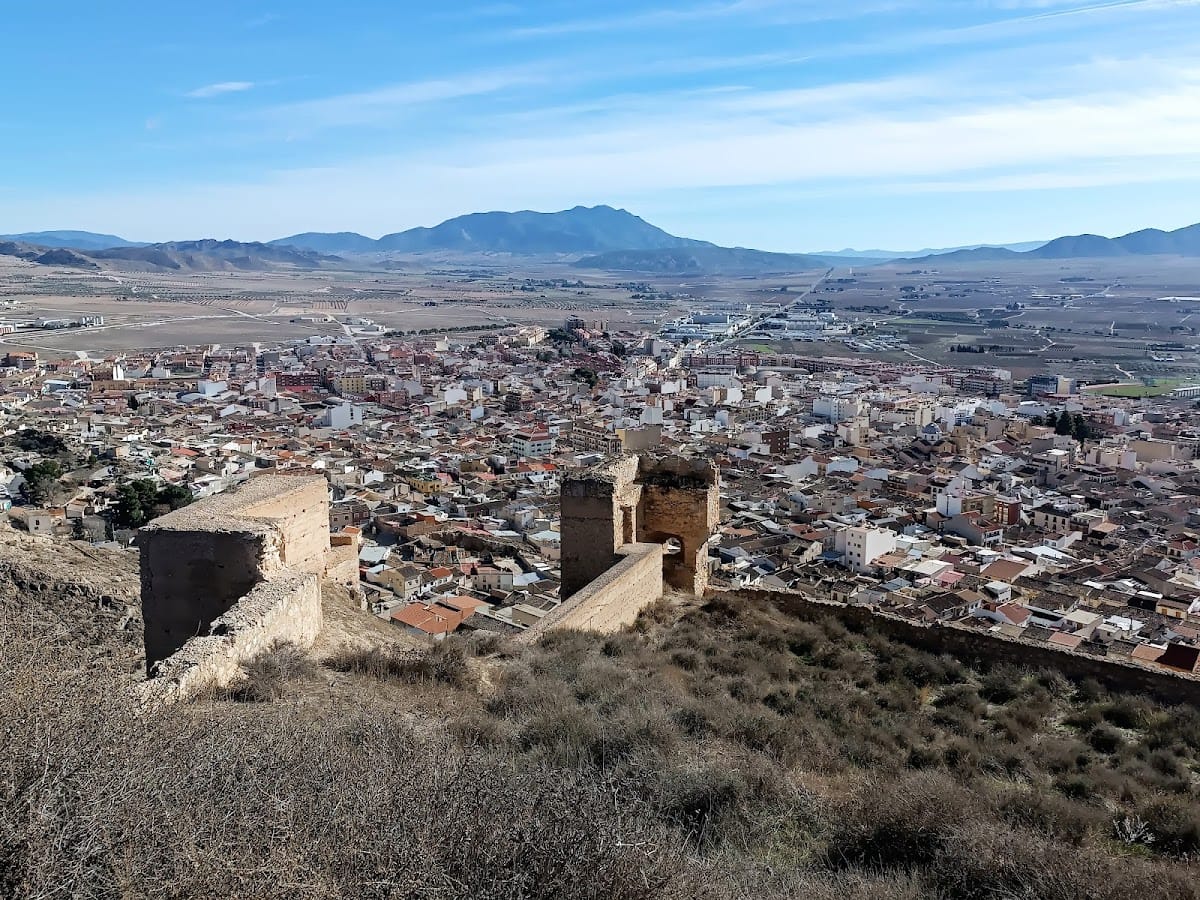
The Castle of Jumilla occupies a hill approximately 626 metres above sea level. The terrain is hilly toward the southeast and flat toward the northwest, while the surrounding land slopes southward into a landscape dominated by open scrubland. The surviving complex is principally medieval and combines Arab and Christian construction with earlier Roman defensive work.
Earlier defensive remains
Part of the Roman defensive wall remains preserved within the hilltop complex. This surviving wall belongs to the phase in which Roman occupants strengthened the earlier fortified position. First-century sigillata pottery is also associated with the Roman occupation and provides archaeological evidence for activity on the hill during that period.
Fifteenth-century fortress
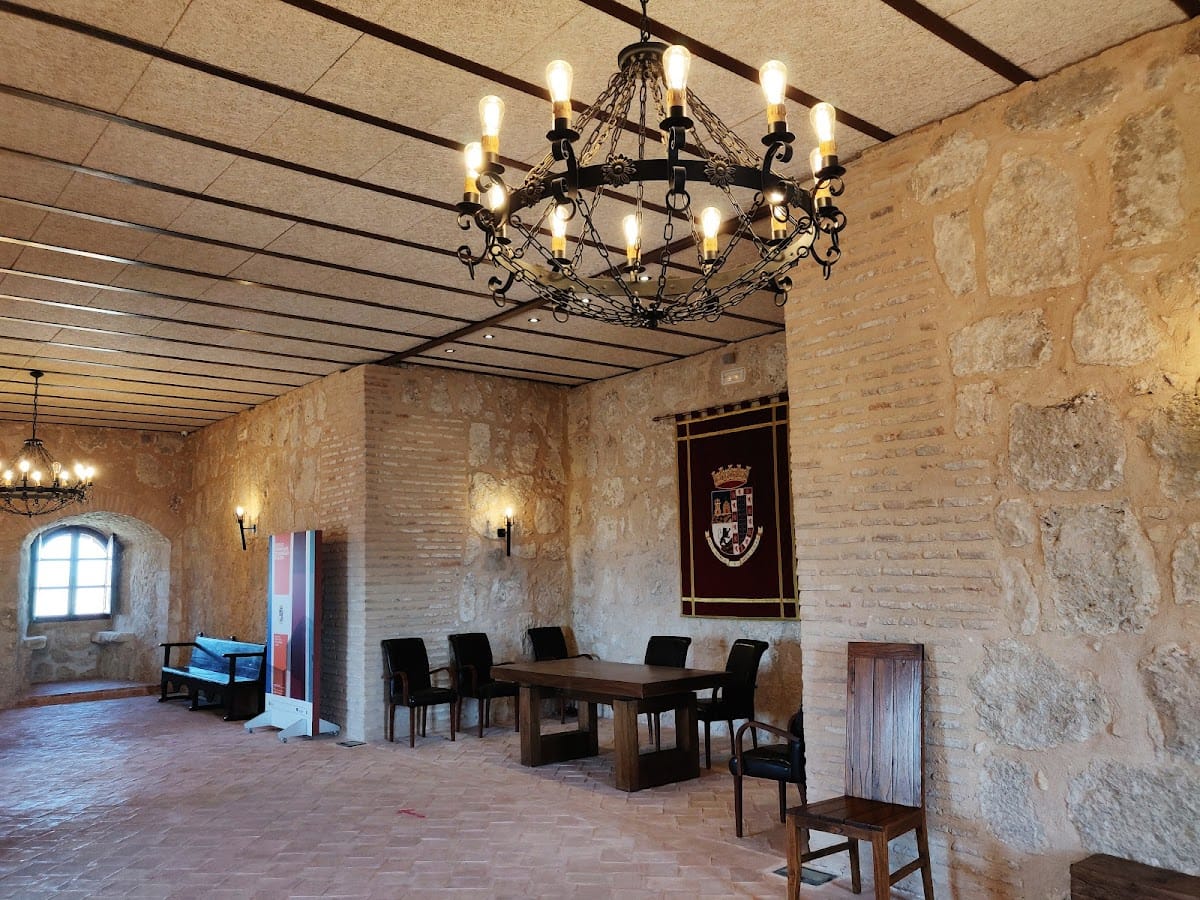
The fortress rebuilt in 1461 has three floors, a basement, and a terrace. It bears the coat of arms of the Marquis of Villena. These elements belong to the substantial fifteenth-century reconstruction, which gives the castle much of its present architectural character while retaining the accumulated history of the hilltop.
Religious remains
The ruined hermitage stands over the former Arab mosque and preserves the site’s later Christian religious association. Its position reflects the conversion of an earlier Islamic place of worship into a Christian setting after the Castilian conquest.


