Castello Nipozzano: A Medieval Castle in Tuscany
Site at a Glance
- Rating
- 4.7
- Popularity
- Low
- Country
- Italy
- Primary era
- Medieval
- External website
- Open
- Eras represented
- Medieval, Early Modern
- Civilizations
- Republic of Florence
- Site type
- Domestic
- Remains
- Castle
On this page7 sections
History
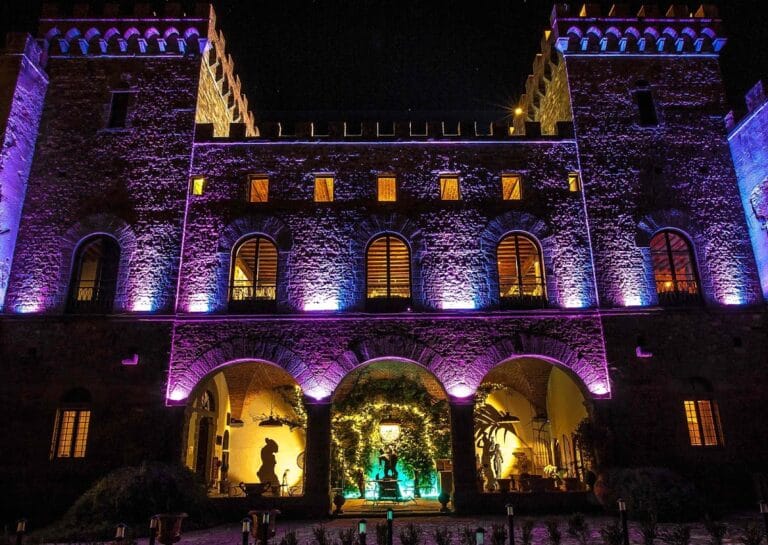
Castello Nipozzano is a medieval castle in Italy, in the municipality of Pelago near Florence, whose fortified settlement originated in the first half of the eleventh century. Its position above the valleys below gave it control over routes that included the ancient Roman road Cassia Vetus, which connected the area around Arezzo with Florence.
Guidi lordship and ecclesiastical ownership
The castle was already identified as a fortified site surrounded by ditches when Count Guido Guerra acquired a quarter of two portions of the hill in 1062. The Counts Guidi were a powerful medieval comital family whose lordships included fortified sites in Tuscany and the northern Apennines. Imperial diplomas confirmed their control in 1164, 1191, and 1220, with the latter two associated with the Holy Roman Emperors Henry VI and Frederick II. Their lordship had almost certainly ended before 1225, when Nipozzano was not included in the division of Guido Guerra’s territorial possessions among his five sons.
Nipozzano then passed to the Da Quona family, who held it as vassals, and subsequently to San Fedele at Strumi, an abbey in the Casentino region. In 1218, the abbot leased the abbey’s lands, houses, and vineyards at Nipozzano to the Adimari family for five years, using the concession to repay a debt. The lease was renewed in 1275. In 1283, the monks permanently surrendered Nipozzano to Bindo de’ Cerchi of the Florentine Cerchi family in exchange for lands closer to Florence.
Florentine and Albizzi control
The Republic of Florence acquired Nipozzano in the early fourteenth century and maintained its own castellan there. Letters from 1312 refer to the castellan’s duty to monitor the passage of Henry VII of Luxembourg’s army from Arezzo toward Florence. Henry VII was a later Holy Roman Emperor whose forces intended to besiege the city.
The castle later returned from the Cerchi, who were involved in Florence’s political struggles, to their allies the Albizzi family. Under the Albizzi, especially toward the end of the fourteenth century, Nipozzano became a country residence and a meeting place for artists and writers. The Albizzi were eventually defeated by their rivals, the Medici. The residence continued to receive additions and embellishments through the beginning of the seventeenth century.
Frescobaldi ownership and wartime destruction
Vittorio degli Albizzi introduced new viticultural methods in the nearby Pomino area of Rufina. After his death without children in 1877, the property passed to his sister Leonia degli Albizzi, who was married to Angelo Frescobaldi. Castello Nipozzano remains in the Frescobaldi family and is used as a private residence.
In 1944, during the Second World War, German army engineers detonated mines at the castle. The explosion brought down the central keep onto the church of San Niccolò, which stood within the fortifications. The church was rebuilt after the war, while the castle has since been renovated. Popular tradition interprets the name Nipozzano as meaning “without a well,” linking it to the area’s scarcity of water and its favourable conditions for growing vines. In 1833, the parish of San Niccolò at Nipozzano had 351 inhabitants.
Remains
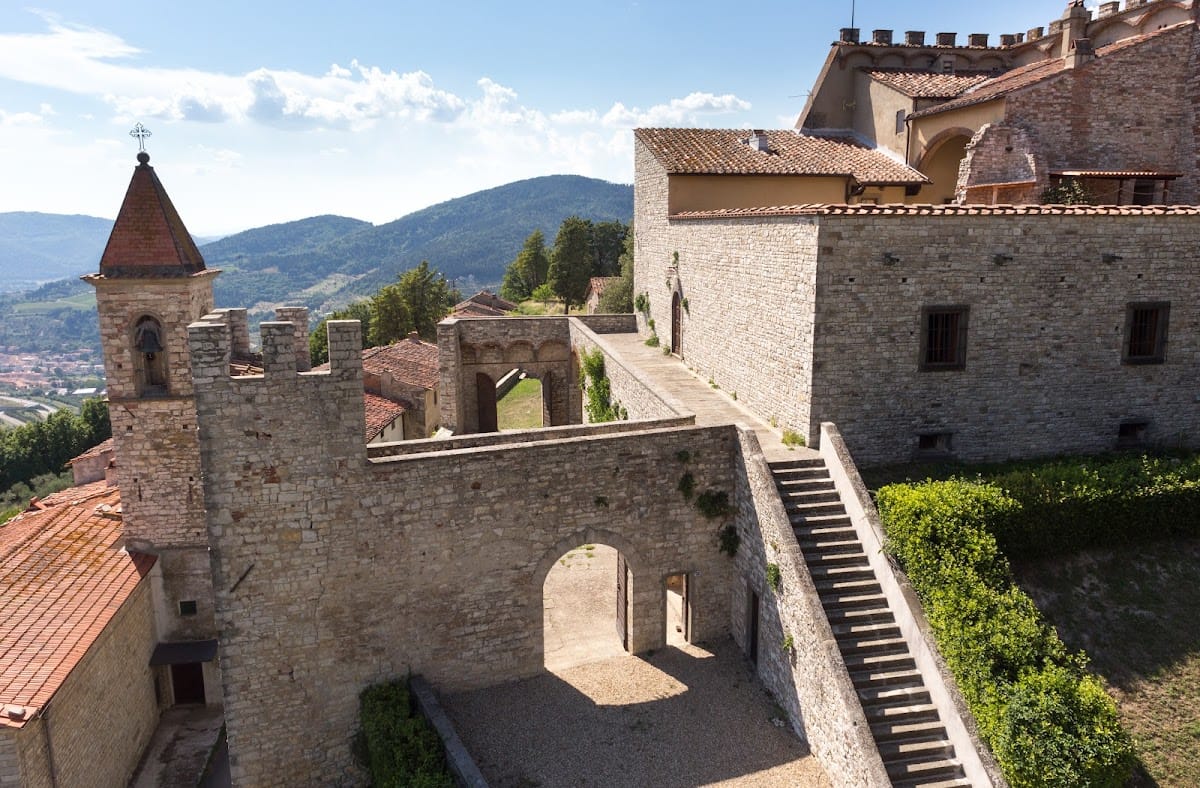
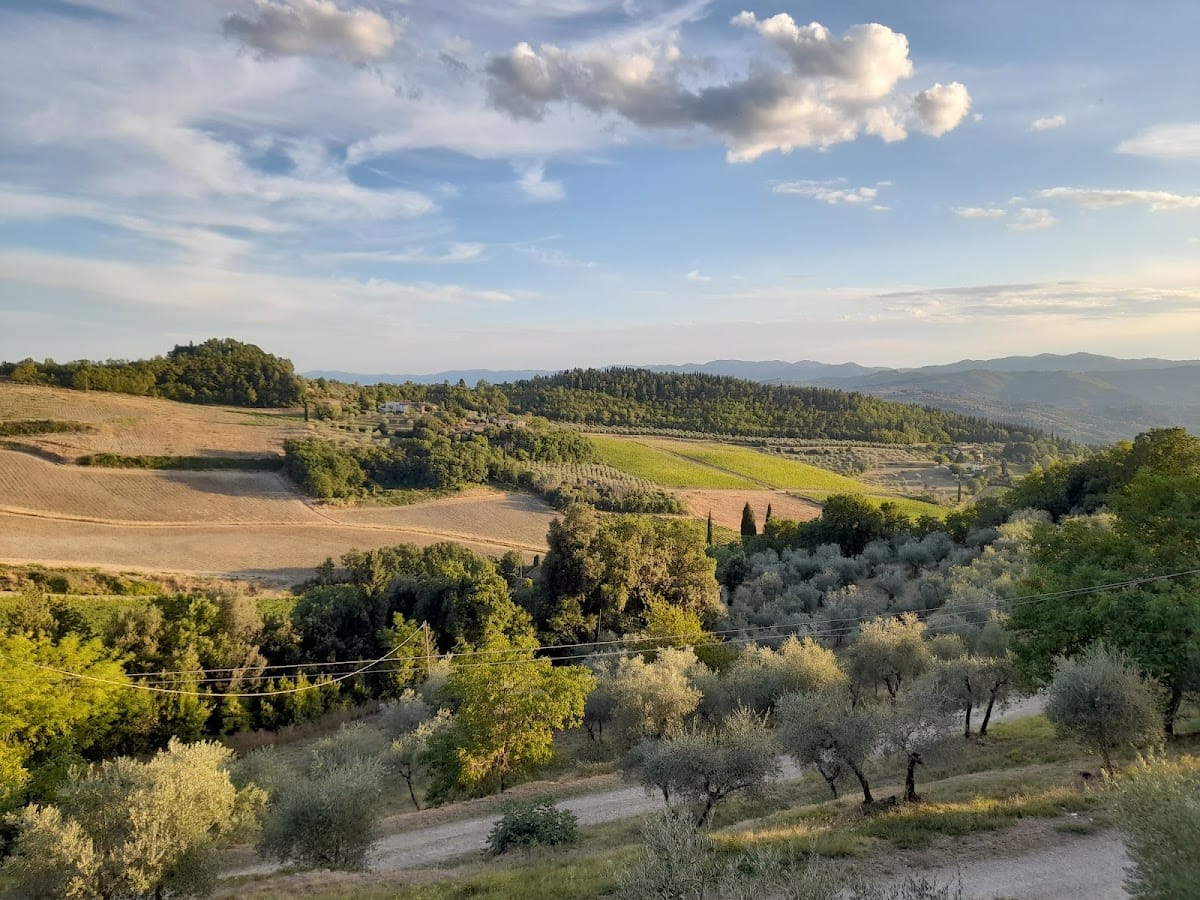
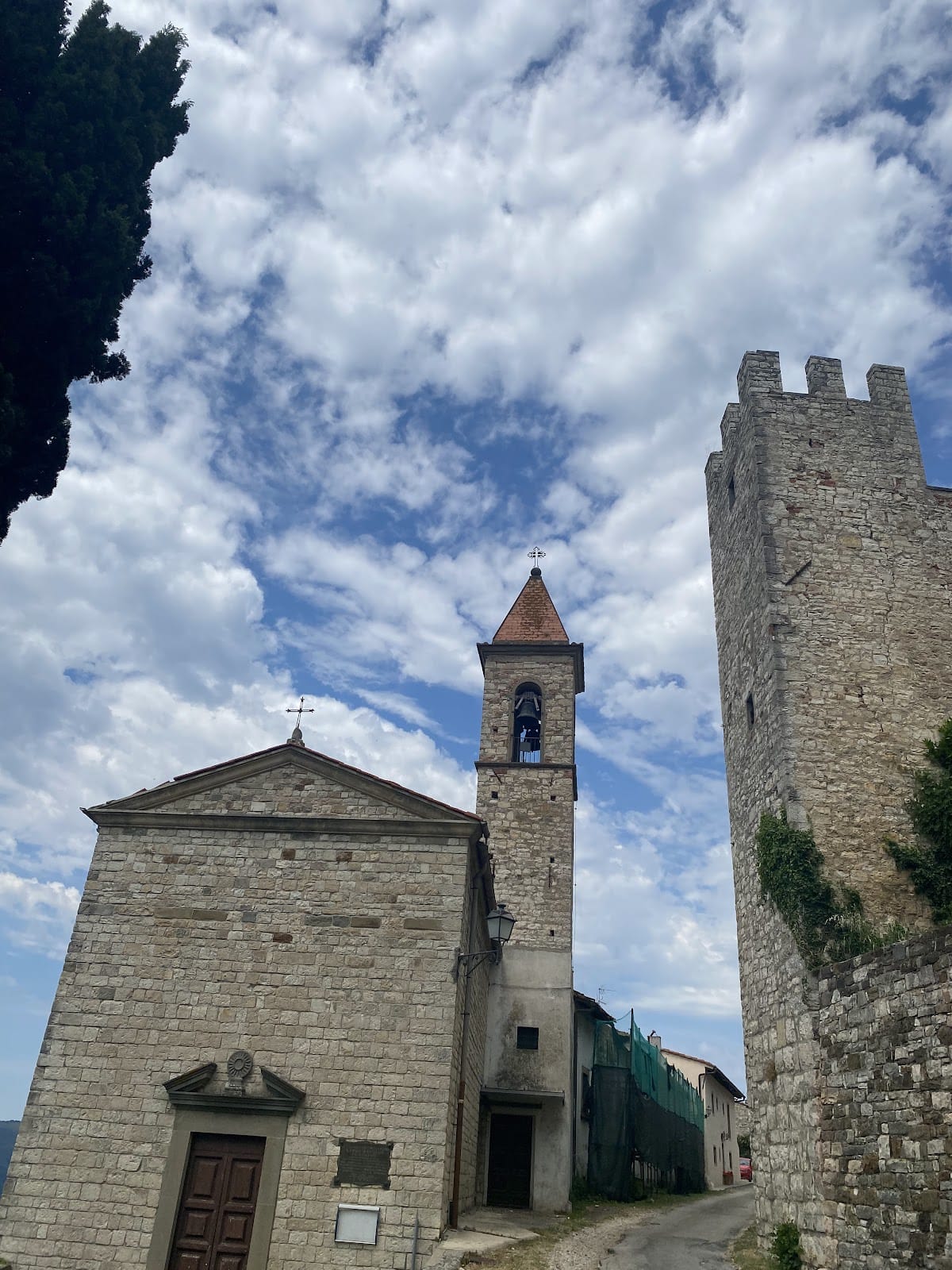
Castello Nipozzano occupies the summit of a hill at approximately 350 metres above sea level, overlooking San Francesco and Pontassieve near the confluence of the Sieve and Arno rivers. The medieval settlement is arranged around a dominant cassero, the principal fortified keep or stronghold, with an arms courtyard below it and other buildings extending along the access road. Two circuits of walls once enclosed the castle and settlement, including the church of San Niccolò. Houses now cover the outer circuit.
Keep and residential buildings
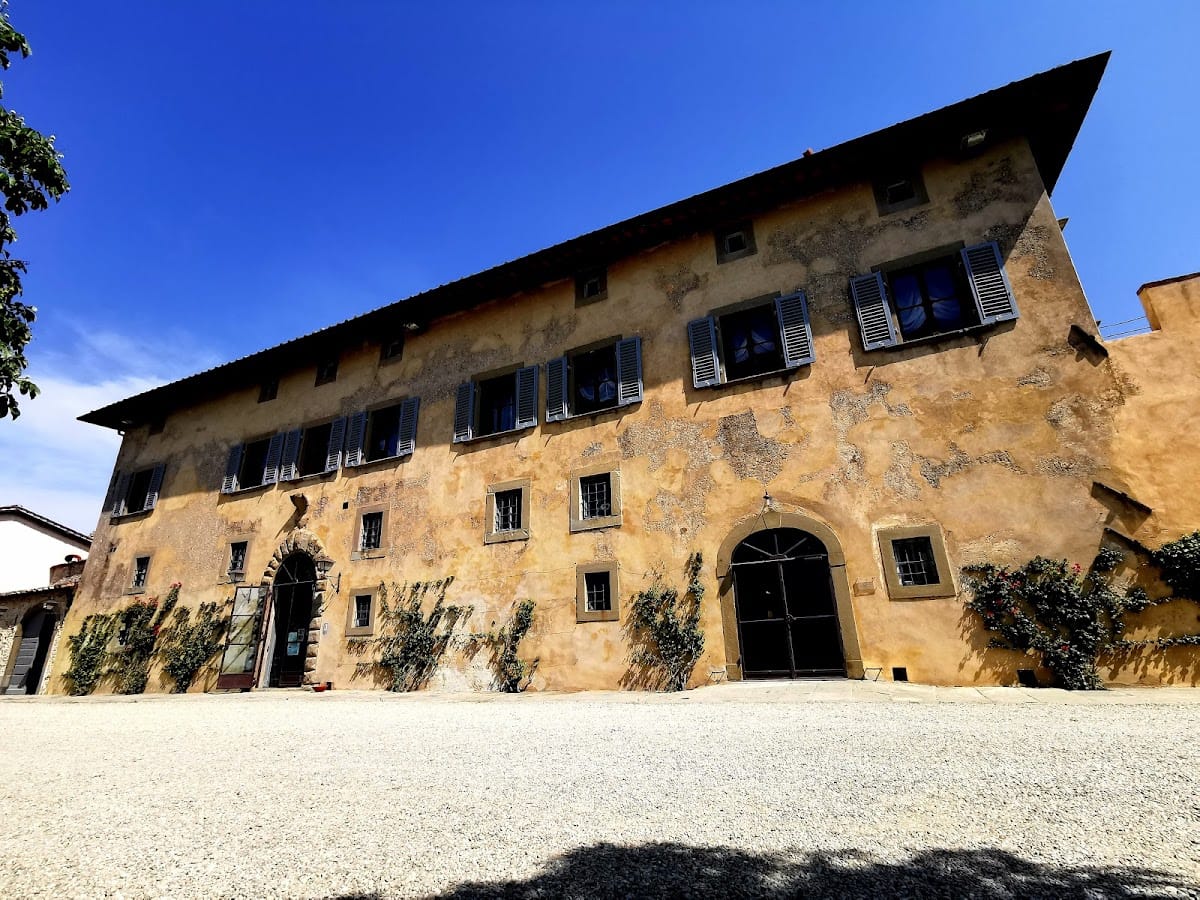
The castle was formerly dominated by a massive quadrilateral cassero, recorded from 1371. A tall tower rose above the central keep, but the tower and keep were destroyed when German mines exploded in 1944. Several architectural elements of the country residence commissioned by the Albizzi survive from the fifteenth century, and the complex was embellished further through the beginning of the seventeenth century. The renovated castle is now used as a private residence.
Church of San Niccolò
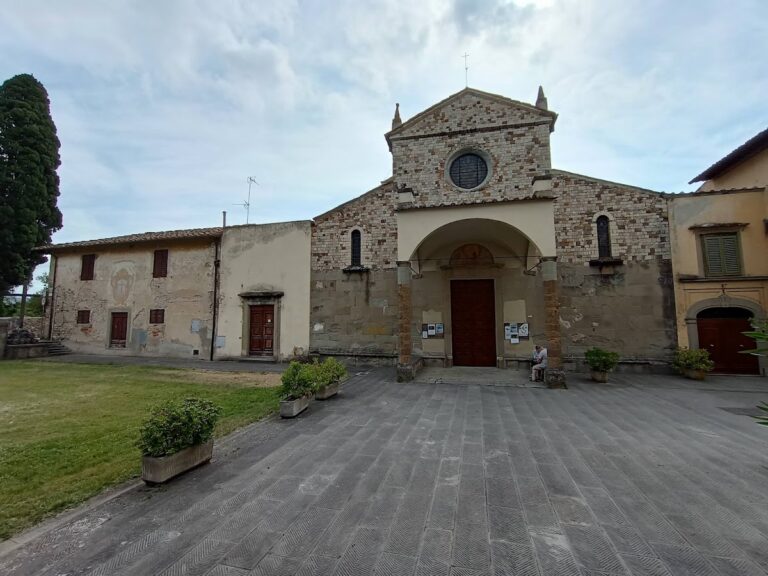
The church of San Niccolò stood within the defensive circuits beneath the cassero. When the keep collapsed onto it during the wartime explosion, the church was reconstructed in the postwar period. Its position within the fortified settlement preserves the close physical connection between the religious building and the castle’s central stronghold.