Alconchel Castle: A Frontier Fortress in Spain

Site at a Glance
- Rating
- 4.3
- Popularity
- Low
- Country
- Spain
- Primary era
- Medieval
- External website
- Open
- Eras represented
- Medieval, Early Modern
- Civilizations
- Kingdom of León, Order of Alcántara, Portuguese
- Site type
- Military
- Remains
- Castle
On this page7 sections
History
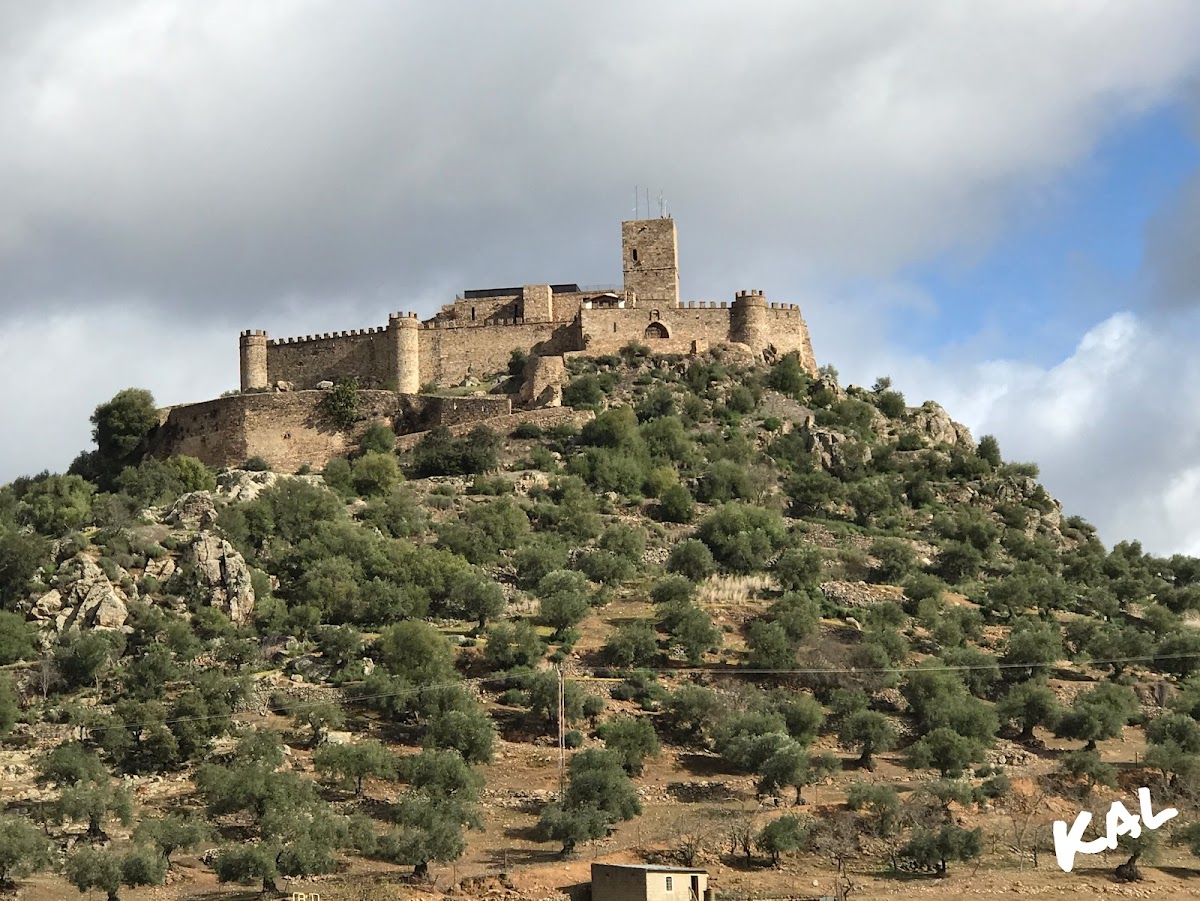
Alconchel Castle, also known as Castillo de Miraflores, is a twelfth-century Christian frontier fortress in Alconchel, Spain. Built on a high hill near Portugal, it controlled an important border zone and provided wide views across the surrounding terrain.
Earlier occupation and Christian conquest
The hill may have been used before the Roman period, although the nature of that activity remains uncertain. Cyclopean elements in the foundations, Roman funerary stones found on the lower slope, column fragments, and Visigothic coins point to activity across several earlier periods. A Muslim fortress also occupied the hill, and the place-name preserves an indication of that phase. The standing fortress belongs to the later Christian occupation.
In 1145, the fortress was Portuguese. The Kingdom of León conquered it soon afterward, and Alfonso I of Portugal, a twelfth-century king associated with the expansion of Portuguese control during the Christian reconquest of Iberia, is credited with taking it back in 1166.
Military orders and frontier warfare
Fernando III of Castile and León granted the castle to the Order of the Temple in 1264, shortly before his conquest of Seville. The Templars, a medieval military-religious order, held it until their suppression in 1312. It then passed to the Order of Alcántara, a Spanish military-religious order that acquired former Templar possessions in Iberia.
Major changes took place during the fourteenth century and again in the second half of the sixteenth century. Under Gutierre de Sotomayor, master, or head, of the Order of Alcántara, the fortress gained additional defensive enclosures and fortifications suited to artillery and other heavy weapons. As a stronghold on the Portuguese frontier, it was involved in numerous conflicts between Portuguese and Spanish armies during the sixteenth century.
Later ownership and preservation
From 1690 until the nineteenth century, the castle belonged to the marquisate of San Juan de Piedras Albas and Bélgida. Spain designated it an Asset of Cultural Interest in 1933. Its internal spaces have since been adapted for hospitality use, while the fortress remains in a poor state of conservation.
Remains
Defensive enclosures
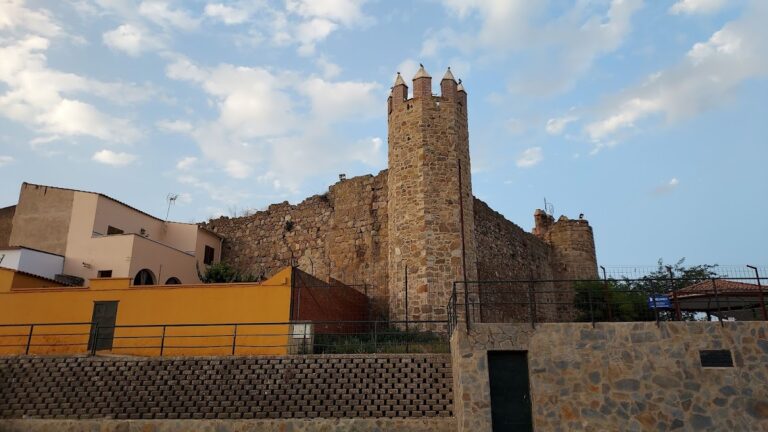
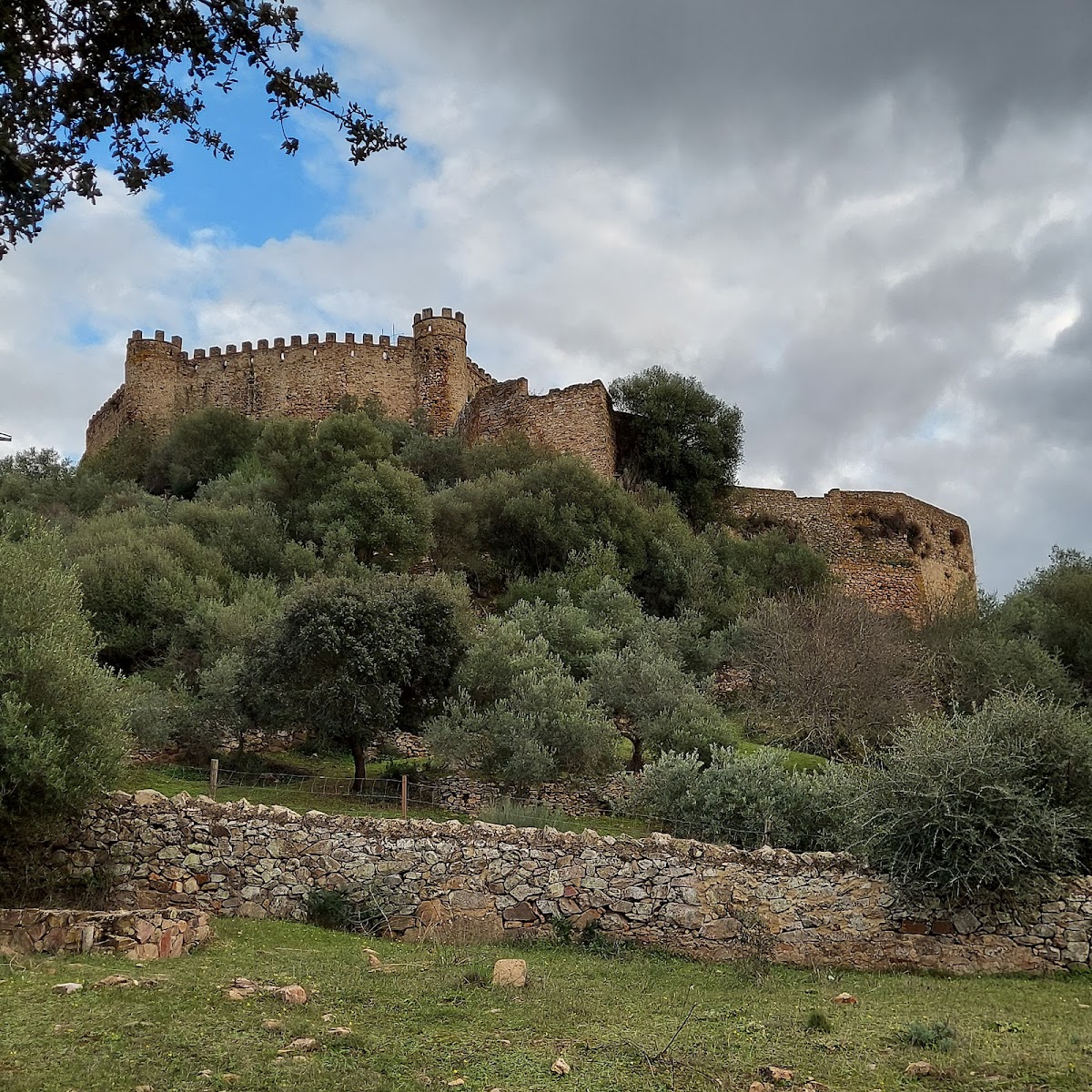
Alconchel Castle stands at approximately 355 metres above sea level on the summit of Miraflores Hill, an elongated ridge near a small stream that flows into the Guadiana River. The depression created by the stream formed a natural defensive feature. Built from rough stone masonry, brick, and stone, the fortress follows the ridge and its contour lines. Several enclosures form an almost concentric plan, with stronger defensive points where the terrain created vulnerability.
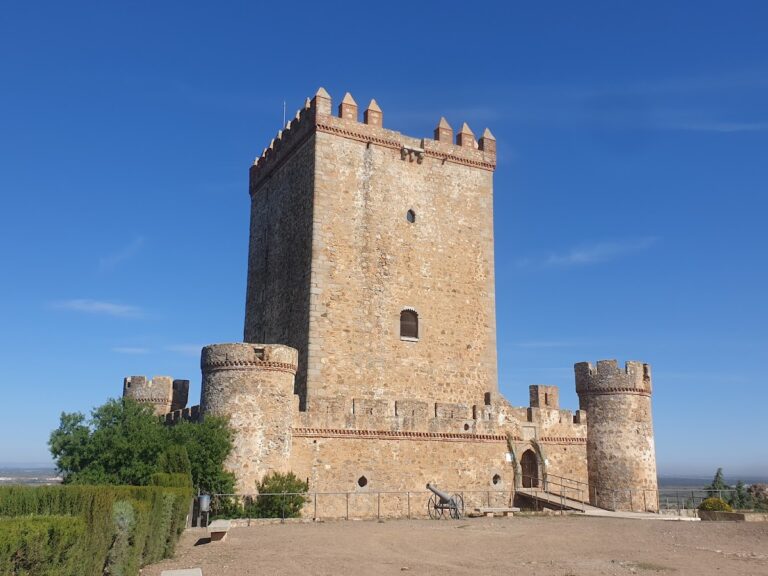
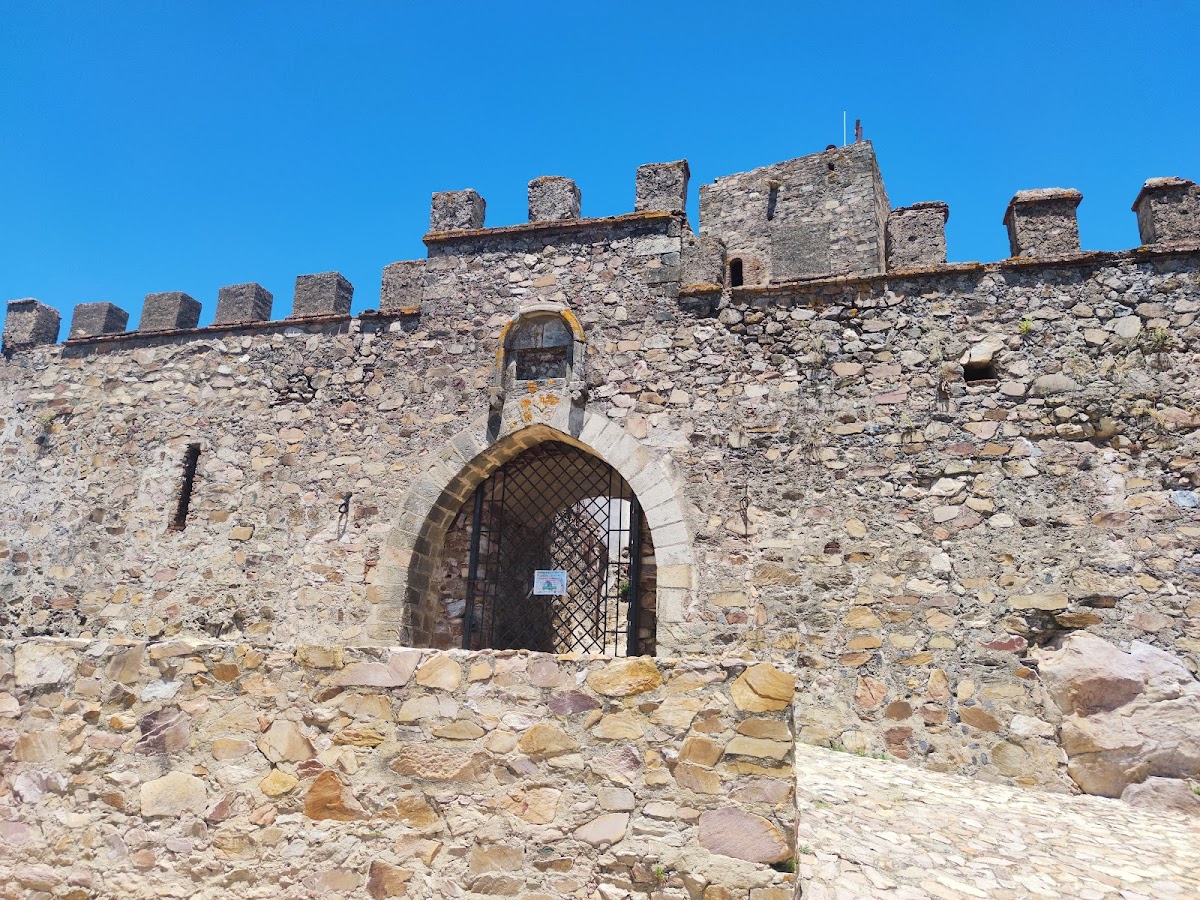
The main body occupies the highest part of the promontory and is entered through a Gothic gateway flanked by cylindrical towers that rise above the adjoining curtain walls. Its battlemented enclosure has loopholes in the wall-walks, the protected passages along the tops of defensive walls, and cylindrical corner turrets. Brick moulding arranged in courses runs beneath the merlons, the raised sections between battlement openings, and is doubled on the towers.
Inner enclosure and keep
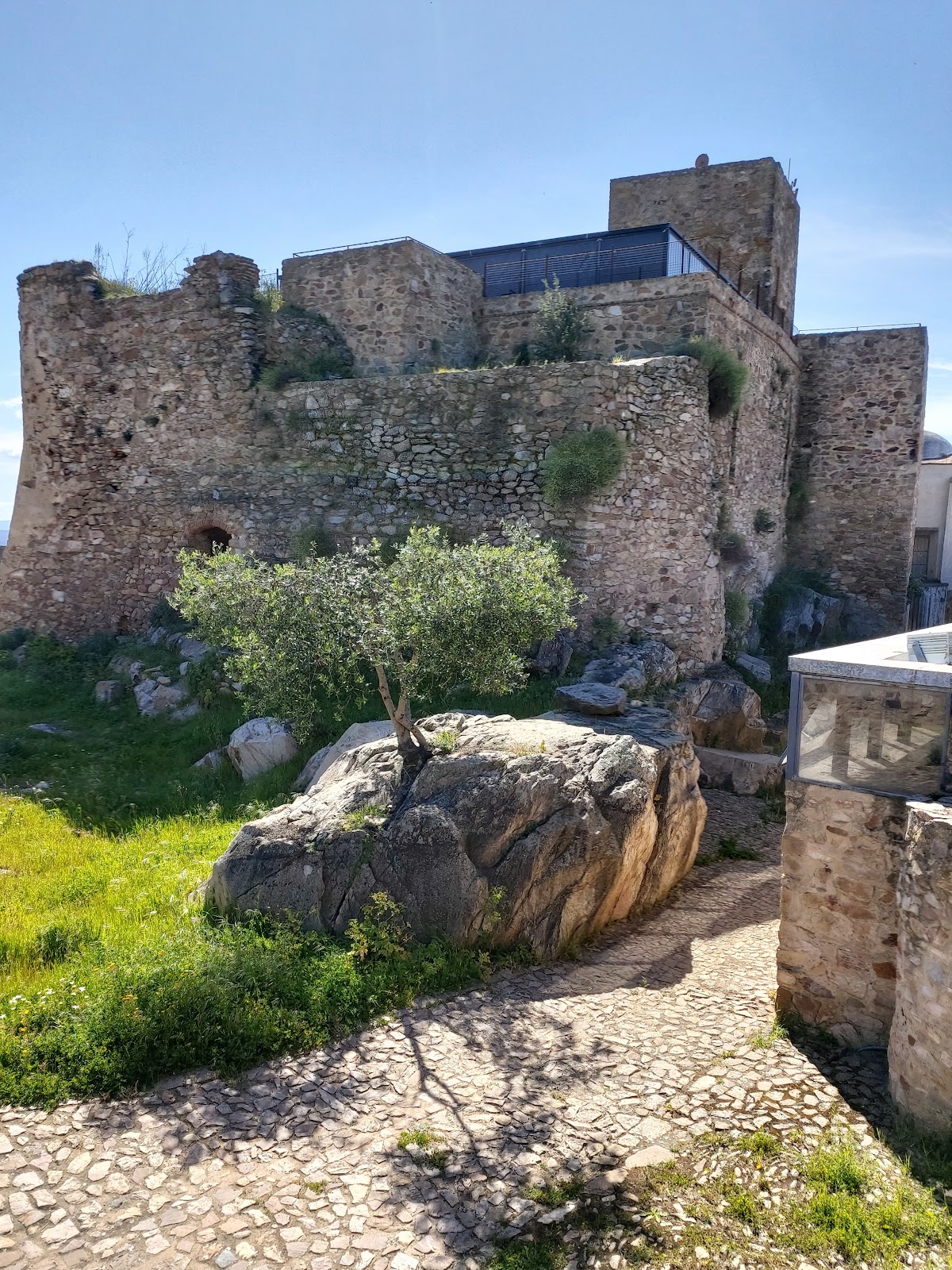
A further enclosure occupies the summit of the complex and contains the keep and residential rooms. The keep stands at the centre of its courtyard. It has a square plan and three storeys, visually divided by cornices, and rises above the surrounding fortifications. Its former battlements no longer survive, while arrow slits and other window-like openings in its sides overlook the surrounding terrain.
The keep has two entrances. The principal doorway has a pointed arch enclosed by an alfiz, a rectangular frame around an arch, which formerly held the owners’ coat of arms. A smaller, simpler doorway stands on the opposite side.