Alton Castle: A Gothic Revival Castle and Youth Centre in England




Site at a Glance
- Rating
- 4.4
- Popularity
- Low
- Country
- United Kingdom
- Primary era
- Modern
- External website
- Open
- Eras represented
- Medieval, Modern
- Civilizations
- British, English
- Site type
- Domestic
- Remains
- Castle
On this page11 sections
History
Medieval origins and reconstruction
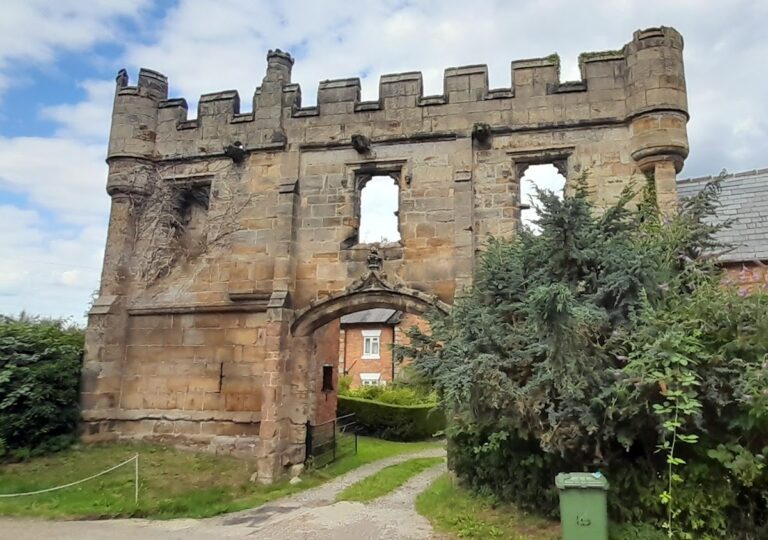
Alton Castle is a historic castle in the United Kingdom, above the River Churnet in the village of Alton, Staffordshire. The site was fortified in timber from Saxon times, while the stone castle was founded in the twelfth century by Bertram III de Verdun on the rocky height above the river. Medieval records used several forms of the name, including Alton, Alverton, and Aulton.
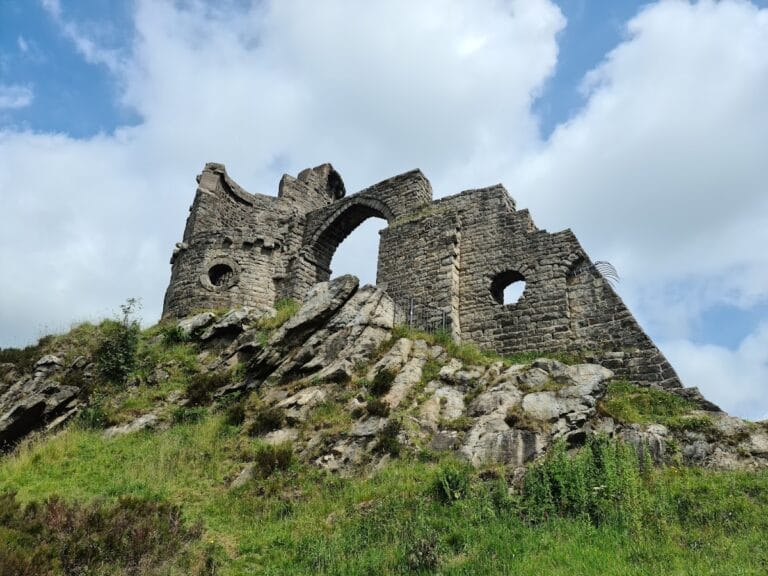
The medieval castle gained a gatehouse in the early fourteenth century and was substantially reconstructed during the fifteenth century. In 1442, it came into the possession of the Earls of Shrewsbury. The castle was later damaged during the English Civil War, a conflict fought in the seventeenth century between supporters of the monarchy and Parliament.
The Gothic Revival rebuilding
From the beginning of the nineteenth century, the Shrewsbury family lived at nearby Alton Towers, and by the middle of that century Alton Castle was largely ruinous. John Talbot, 16th Earl of Shrewsbury, then commissioned Augustus Pugin, a leading English Gothic Revival architect, to replace much of the medieval structure. Gothic Revival was a nineteenth-century movement that deliberately revived medieval architectural forms. The new masonry castle or country house was constructed in 1847, after most of the twelfth-century ruins had been demolished.
The intended purpose of the rebuilding is uncertain. It may have been planned for the Earl’s cousin and eventual successor, Bertram Talbot, 17th Earl of Shrewsbury, or as a dower house, a residence traditionally provided for a widow. Near the end of construction, the Earl proposed turning the building into a home for priests, but Pugin strongly opposed that use.
Pugin also redeveloped the surrounding Castle Hill. The scheme included a church, a replica medieval hospital, a guildhall, and a presbytery, a residence for clergy. Dedicated to Saint John the Baptist, the group provided a church and hospital for poor parishioners, while the church also served as a school for local poor children.
Religious and charitable use
The Sisters of Mercy, a Catholic congregation devoted to education and assistance for the poor, took over the Castle Hill complex in 1855. The presbytery became their convent. Alton Castle remained a private residence until 1919, when the Sisters purchased it and adapted it as an extension to their boarding school.
The school closed in 1989, after which the castle stood unused. The Archdiocese of Birmingham purchased it in 1995, and it opened in September 1996 as a Catholic youth retreat centre. It now operates as a charitable youth centre, mainly serving school groups as well as youth organisations and charities working with children with disabilities. Since 1967, the castle has been a Grade I listed building and a scheduled monument. These designations provide statutory protection in England for buildings and archaeological sites of exceptional architectural or historic interest.
Remains
The castle and medieval fabric
Gothic Revival castle
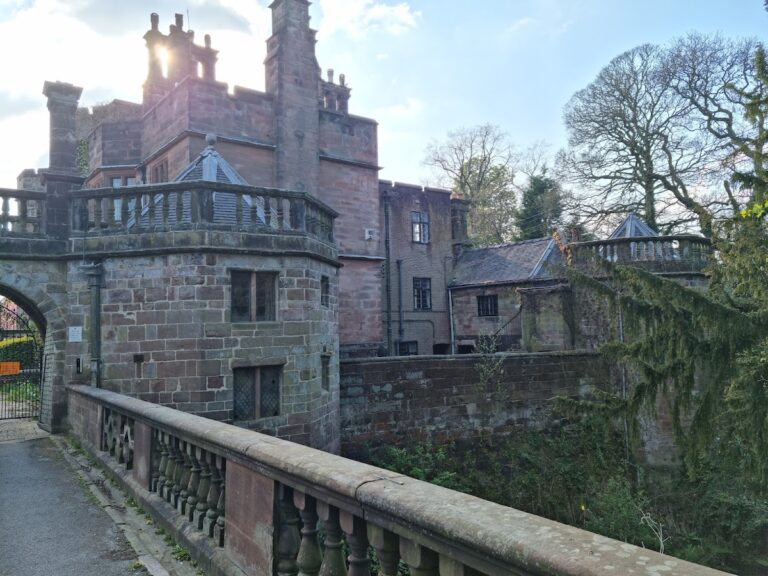
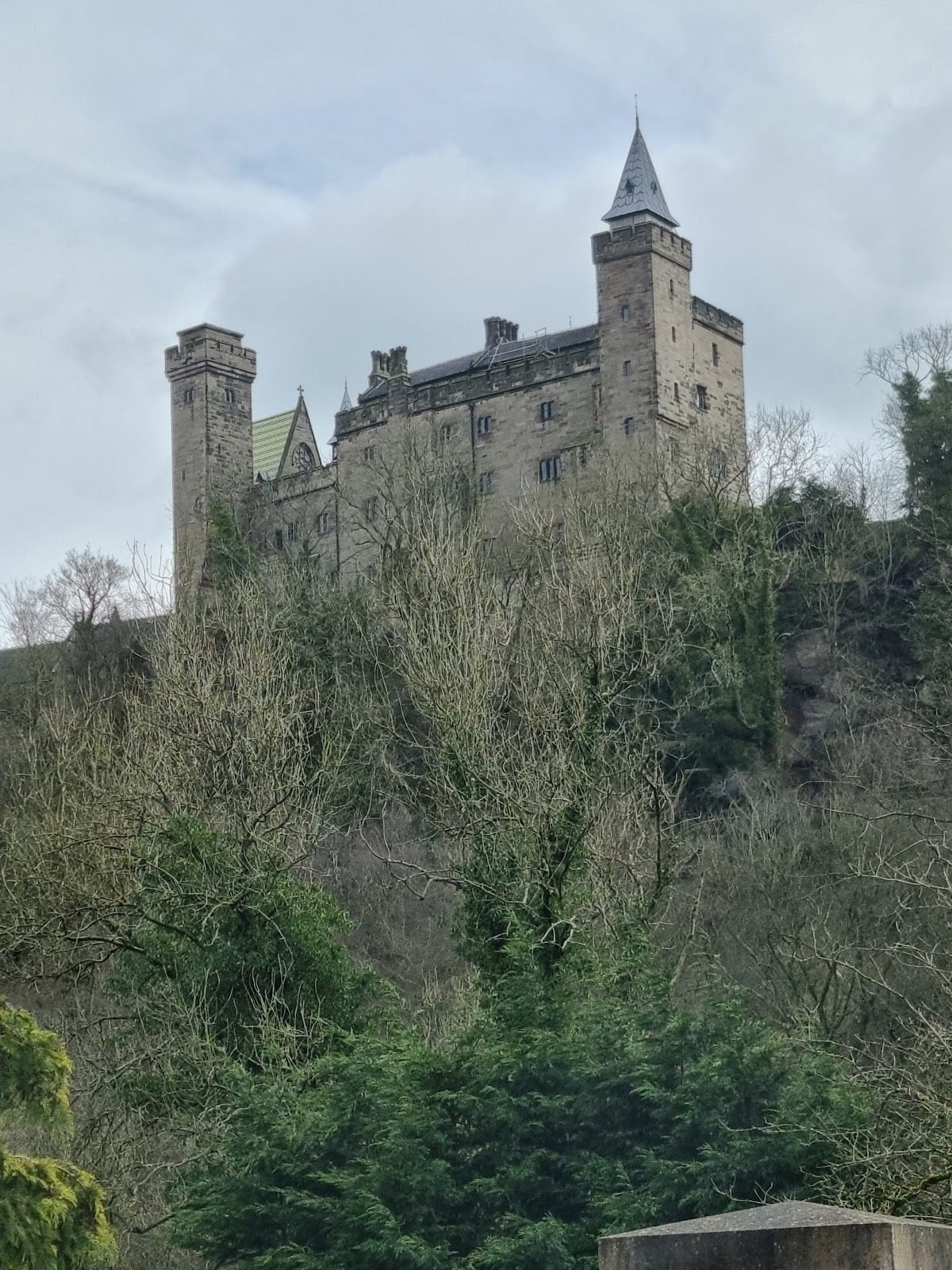
The present Alton Castle is a mid-nineteenth-century Gothic Revival masonry building on a rocky precipice overlooking the River Churnet and the Churnet Valley. Designed by Augustus Pugin, it was made to evoke the appearance of a medieval castle. Its construction in 1847 replaced most of the surviving twelfth-century ruins, so the visible building primarily represents the nineteenth-century phase rather than the original stone castle.
Medieval remains
The earlier castle occupied the same elevated rocky site. Its documented medieval features included a gatehouse added in the early fourteenth century, while the major fifteenth-century reconstruction altered the earlier stone buildings. These phases form the architectural background to the later Gothic Revival structure.
Castle Hill buildings
Church, hospital, and guildhall
The redevelopment of Castle Hill formed a group of buildings associated with parish charity and education. It included a church dedicated to Saint John the Baptist, a replica medieval hospital for poor parishioners, and a guildhall. The church also accommodated a school for local poor children.
Presbytery and convent
The presbytery was built as a clergy residence and was later converted into a convent for the Sisters of Mercy. Together with the church, hospital, guildhall, and castle, it remains part of the nineteenth-century architectural composition created around Castle Hill.