Potocki Castle in Zator: A Ducal Castle and Neo-Gothic Palace



Site at a Glance
- Rating
- 4
- Popularity
- Very Low
- Country
- Poland
- Primary era
- Early Modern
- External website
- Open
- Eras represented
- Early Modern, Modern
- Civilizations
- Habsburg, Polish–Lithuanian Commonwealth
- Site type
- Domestic
- Remains
- Palace
On this page7 sections
History
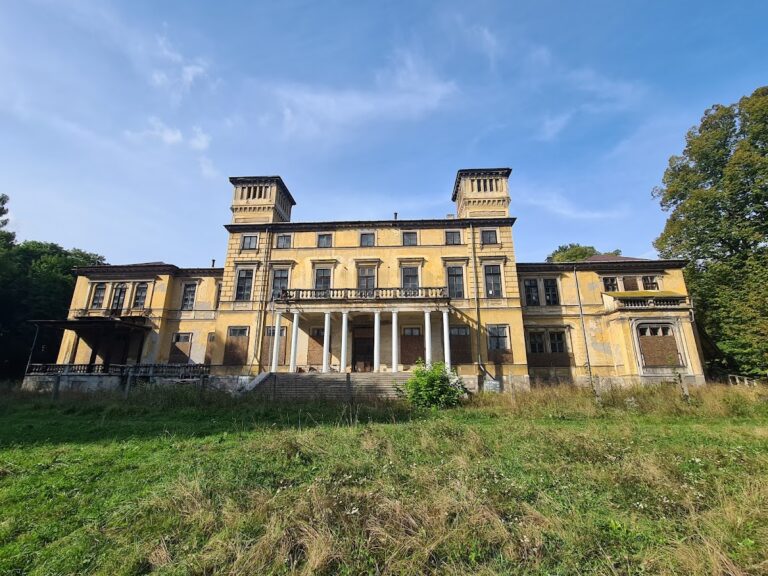
Potocki Castle in Zator is a palace in Poland that originated as a defensive ducal castle in the fourteenth century. It became the residence of the dukes of Zator, members of the Piast dynasty, a medieval ruling family associated with Poland and the Silesian principalities, and later served as the seat of royal starosts, officials who administered royal territories and estates.
The ducal castle and the Polish crown
The Duchy of Zator was a small Silesian-Polish principality ruled by its own Piast dukes. In 1445, a limestone castle was built on the site as the principal residence of Duke Wacław. His brothers helped finance its construction or expansion. The castle was mentioned during the division of the duchy in 1477, when it was probably still a relatively modest building. During the fifteenth century, it developed further as the seat of the ruling family.
In 1494, King John I Albert of Poland purchased the Duchy of Zator and its castle for 80,000 Hungarian gold florins. The former ducal residence consequently entered the sphere of the Polish crown. During the second half of the sixteenth century, the castle lay within the Silesian County of the Krakow Voivodeship.
From medieval castle to aristocratic palace
Probably in the late sixteenth or early seventeenth century, a new palace was built near the medieval stone castle. The older building had become obsolete and was apparently dismantled so that its materials could be reused. The later residence therefore represented a change in both the site’s appearance and its function, replacing the earlier defensive complex with a palace intended for aristocratic occupation.
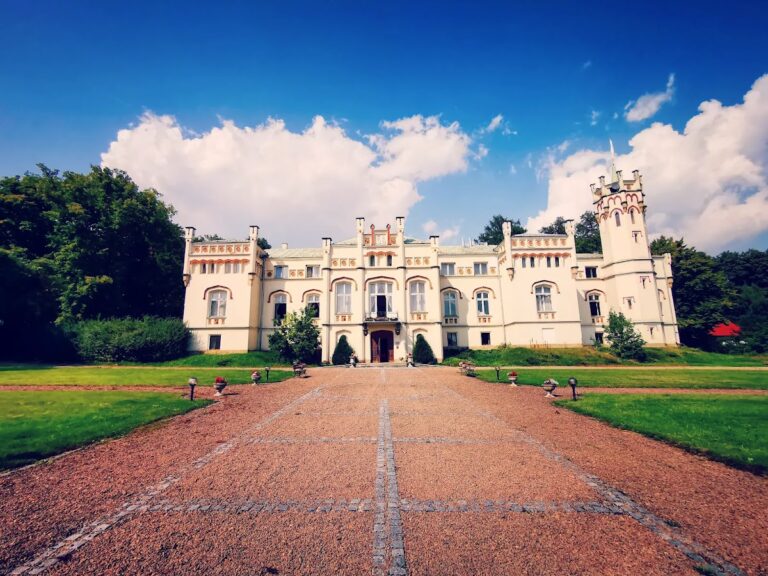
The palace was purchased by the Dunin family in 1778 and was partly rebuilt, including the addition of a second storey. Ownership of the palace and the Zator estates later passed among the Poniatowski, Tyszkiewicz, Wąsowicz, and Potocki families. In 1836, Anna Potocka Wąsowicz, born Tyszkiewicz, commissioned Franciszek Maria Lanci to remodel the building. Lanci was a nineteenth-century architect known for aristocratic residences in historicist styles. He transformed the palace into a Romantic Neo-Gothic residence, a nineteenth-century revival style that reinterpreted medieval Gothic forms for aristocratic homes.
State use and family recovery
In 1945, the authorities of postwar People’s Poland took the palace from its lawful owners. From 1946, the building housed the Institute of Zootechnics and later the Fisheries Experimental Station. A thorough restoration followed between 1964 and 1973. After an inheritance case, the Potocki family recovered the castle in early 2013.
The building is entered in the heritage register of the Lesser Poland Voivodeship under registrations 371, dated 17 May 1947, A-397, dated 2 December 1972, and A-300/78, dated 20 April 1978.
Remains
Medieval castle
The medieval castle was built of limestone on an oval plan and stood on an escarpment above a river. It was positioned a dozen or so metres from the present palace. Archaeological excavations indicate that the castle was expanded in the fifteenth century with a new building containing a basement. This addition may have accompanied the adaptation of the earlier stronghold as the residence of a new Duke of Zator.
Romantic Neo-Gothic palace
The later palace stands at a distance of a dozen or so metres from the medieval castle and has a rectangular plan. It is a brick building designed as a Romantic Neo-Gothic residence. The ground floor contains richly decorated rooms known as the Hunting Room, Golden Room, Fern Room, and Ivy Room. The surviving palace preserves the physical distinction between the later aristocratic residence and the earlier limestone castle that occupied the site.