Château de Saint-Beauzély: A Medieval Fortified Castle in France



Site at a Glance
- Rating
- 4.4
- Popularity
- Very Low
- Country
- France
- Primary era
- Early Modern
- Eras represented
- Medieval, Early Modern
- Civilizations
- French
- Site type
- Military
- Remains
- Castle
On this page9 sections
History
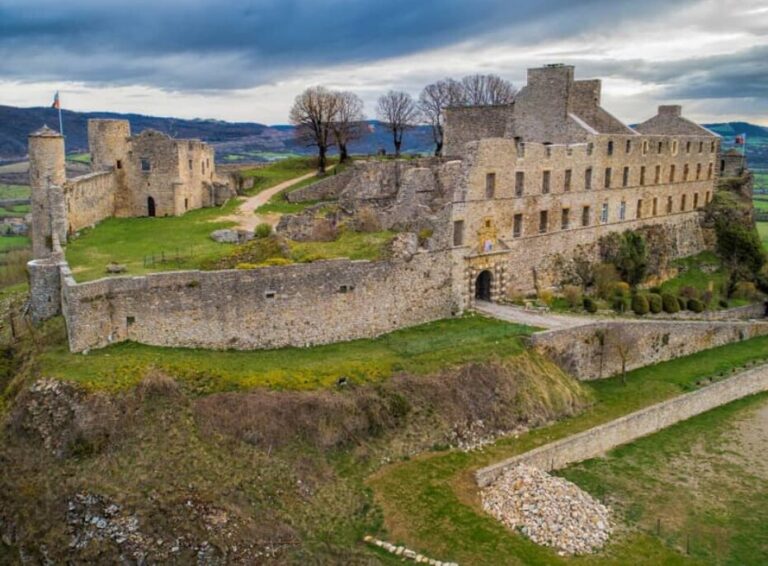
Château de Saint-Beauzély is a medieval fortified castle in France, built during the Middle Ages and first mentioned in 1189. Located in the old village of Saint-Beauzély, it was extensively remodeled at the end of the sixteenth century and later became a residence, charitable institution, and municipal cultural site.
Medieval Lords and Noble Ownership
Bernard du Lévézou held the castle in 1238. In 1255, it passed to the Combret family through the marriage of Jausion de Lévézou and Ermengault de Combret. Bérenger d’Arpajon bought it in 1360, beginning another period of aristocratic ownership.
Charlotte, the widow of Jacques d’Arpajon, sold the castle to Bertrand de Castelpers in 1554. Castelpers later sold it to the lord of Broquiès in 1580. Jean de Tauriac acquired the property through judicial seizure and sale in 1597. His daughter Bernardine de Tauriac married Antoine Grégoire des Gardies in 1621, and the Grégoire des Gardies family held the castle from 1629 to 1759.
Wars of Religion and Later Lordship
During the French Wars of Religion, the sixteenth-century conflicts between Catholics and Protestants in France, Catholic forces captured the castle on 16 October 1568. The position was retaken on 21 October 1570. On 15 February 1574, Catholic forces seized the fortress again under Captain Brunel. A Calvinist memoir from Millau, written from the Protestant perspective, records this episode.
In November 1759, the lands of Castelnau de Lévézou and Saint-Beauzély were raised to the rank of marquisate, a territorial lordship held by a marquis, for President Hippolyte Julien de Pégayrolles. After 1789, the state sold the castle to Poujade de la Devèze. His sister, Madame Saint Maur de Gaujal, donated it to charitable causes.
Religious and Municipal Use
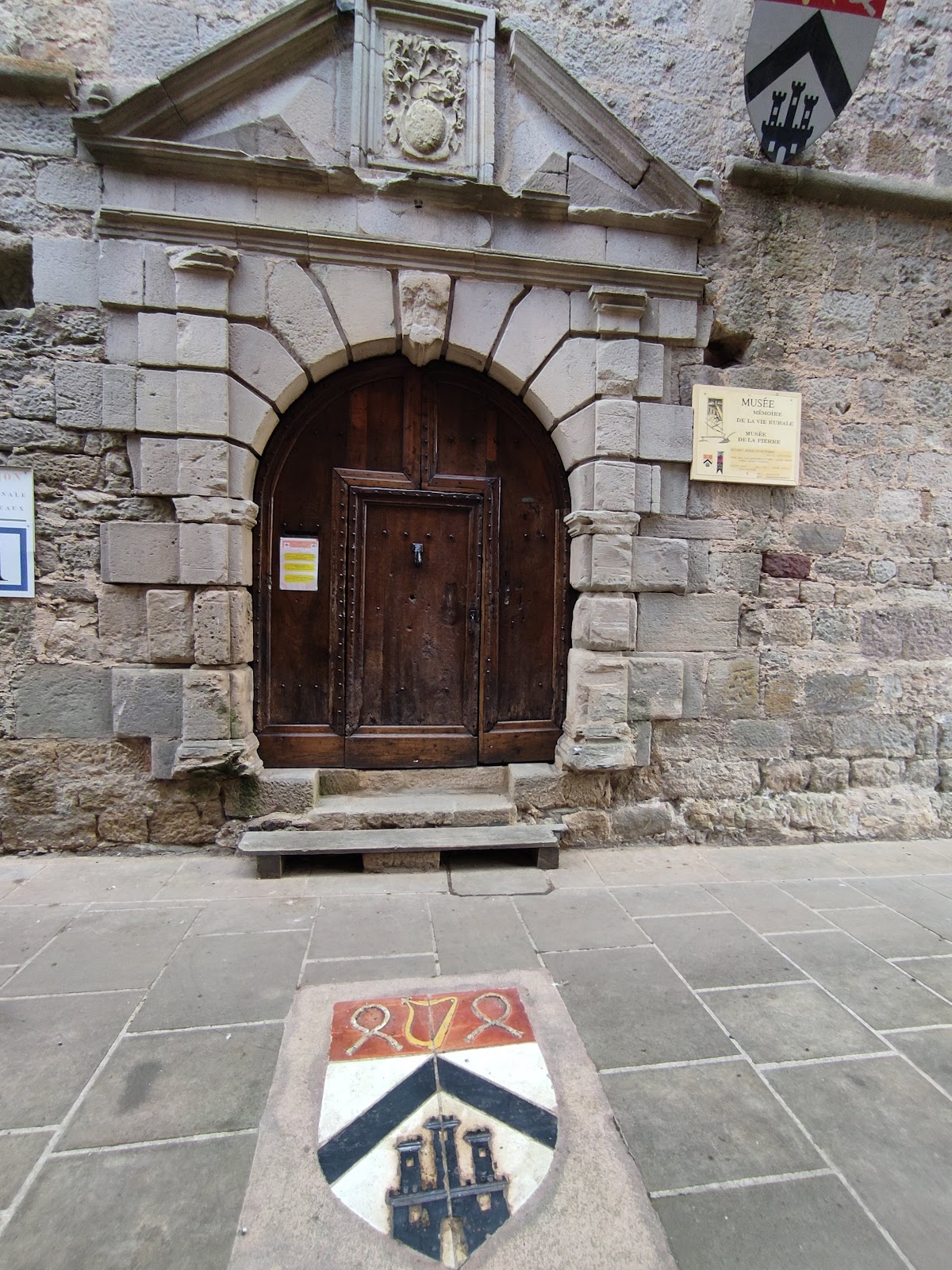
The property was sold in 1835 to the Sisters of the Holy Family of Villefranche. They later sold it to the municipality in 1960. The castle now houses the Museum of Stone Trades and Rural Life. Its interior decoration has been protected as a historic monument in France since 6 March 1998, under the national heritage system for safeguarding important buildings and features.
Remains
Castle Buildings
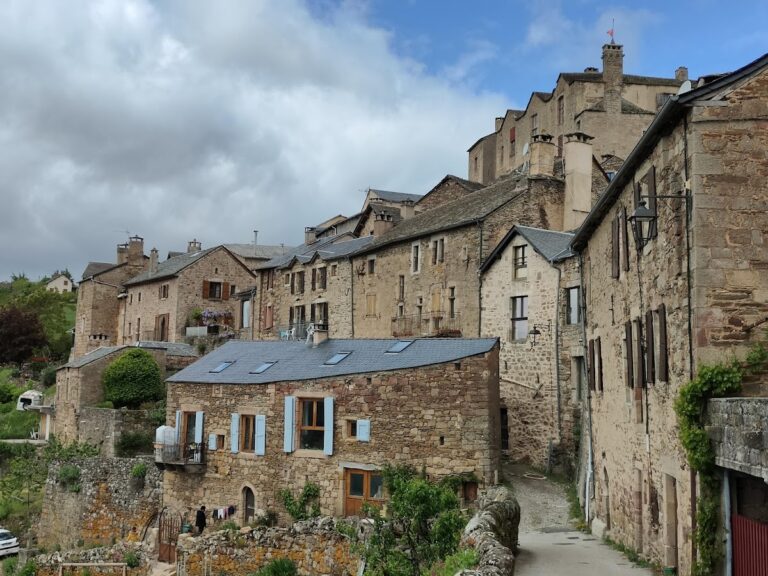
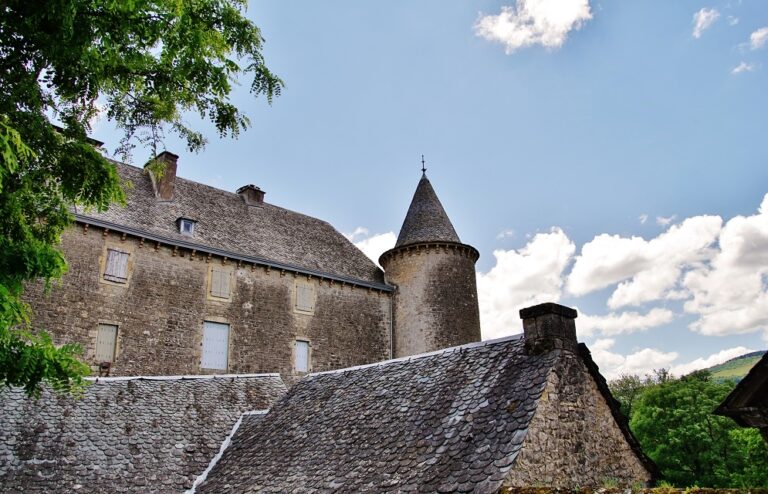
Château de Saint-Beauzély stands on the southern slope of the Lévézou Mountains, at the center of the old medieval village. Its present form comprises two building wings with walls topped by machicolations, projecting parapet structures with openings used to observe or attack people below. The roofs are covered with schist slates, and a square tower rises at the center of the principal facade without projecting beyond it.
Substantial entrances on the south and east sides are crowned by triangular pediments. Inside, a large central staircase serves the ground floor and three upper stories. The ground-floor rooms have vaulted ceilings, while mullioned windows, divided into sections by vertical stone bars, provide light to the rooms.
Town Fortifications
Madeleine Gate
The Madeleine Gate was built against the fortress and served as an entrance to the town. A passage above the gate, topped by a small watch turret, gave access to the ramparts. The upper part of the porch spanning the lane toward Rue Saint-Antoine contained a guardhouse. That structure now supports a residential story.
Ramparts and Belfry Base
In the sixteenth century, Saint-Beauzély de Lévézou had two gates that were closed at night. Sergeant Banier deposited their keys at the castle each evening. The town’s defenses formed a quadrangular circuit wall protected externally by broad ditches. Part of the northern ramparts survives as the base of the present church belfry. The western enceinte wall has three openings leading outside, houses were built against the southern ramparts, and the eastern fortification extended to the Madeleine Gate.