Algarra Castle: A Medieval Hilltop Fortress in Spain
Site at a Glance
- Rating
- 4.7
- Popularity
- Very Low
- Country
- Spain
- Primary era
- Medieval
- Eras represented
- Medieval
- Civilizations
- Crown of Castile
- Site type
- Military
- Remains
- Castle
On this page9 sections
History
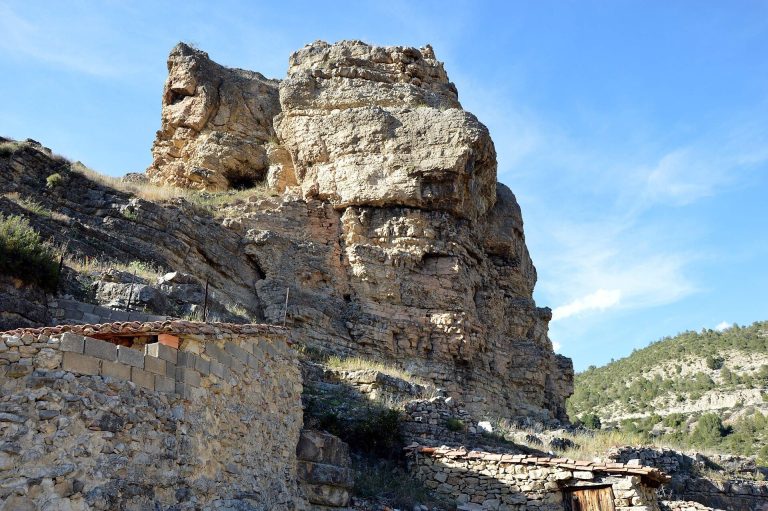
Algarra Castle is a ruined medieval fortress in Spain, built on the rocky summit above Algarra in Cuenca Province during the thirteenth century. An earlier Arab fortification occupied part of the site and may have guarded a watchtower on the route ascending from Valencia. The castle’s hilltop position gave it a defensive role over the mountain passage, the settlement below, and the surrounding cultivated land.
Early fortification and medieval development
The surviving enclosure is associated with an earlier Arab stronghold, although the castle does not appear in accounts of the Christian conquest of the area in the early thirteenth century. If it existed during that campaign, its importance was probably limited. The castle itself is dated to the thirteenth century, while its period of greatest prosperity may have come in the Late Middle Ages, when the substantial defensive walls were established or strengthened.
Seigneurial administration and decline
During the seventeenth century, Algarra Castle was held by the Marquisate of Moya, a territorial lordship governed by a marquis. In the eighteenth century, Algarra became a seigneurial town of the Marquisate of Villena, reflecting a later change in its administration. By 1845, the castle was already described as ruins. The extensive destruction of the enclosure indicates that stone from its walls, towers, and other structures was reused in later construction.
Protection and historical setting
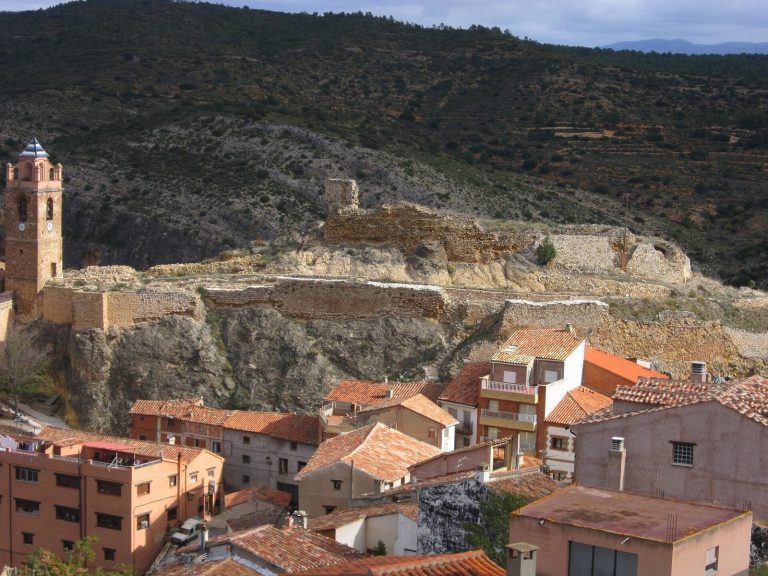
The settlement that developed under the castle’s protection occupies the southeastern slope of the hill. In 1845, its parish church was an annex of the parish church at Alcalá de la Vega. The castle is municipally owned and protected under the general declaration established by the decree of 22 April 1949 and Spain’s 1985 Historical Heritage Law. It is also designated an Asset of Cultural Interest, a formal Spanish category for protected cultural heritage.
Remains
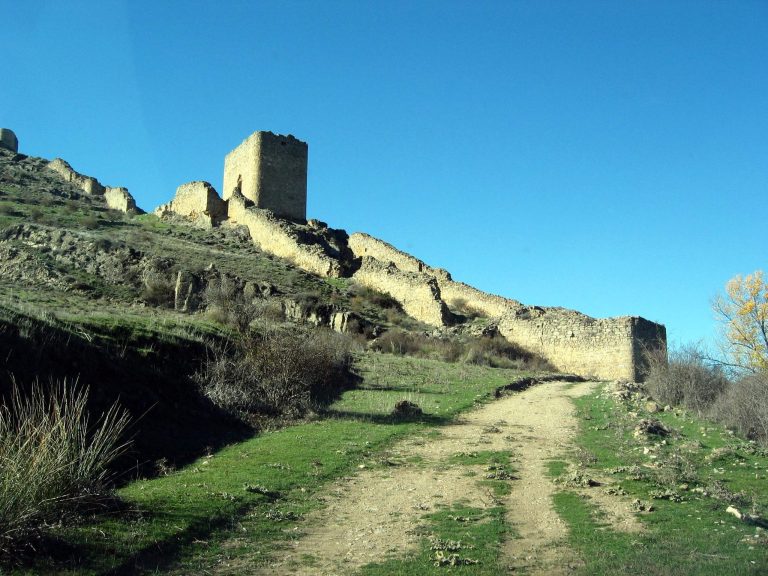
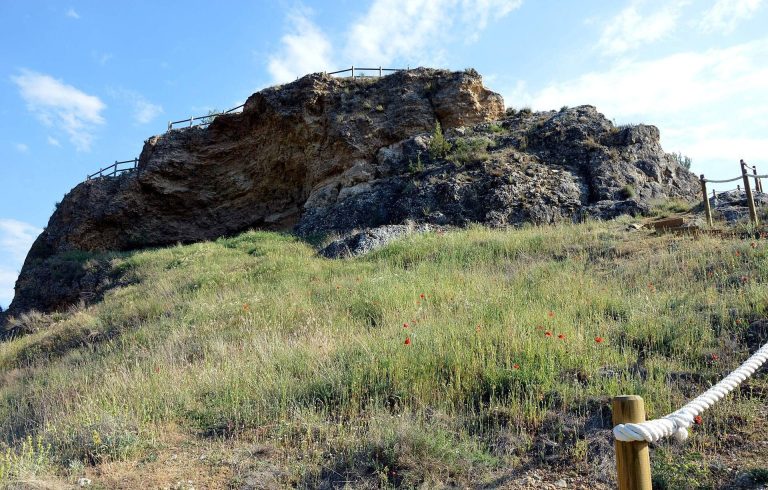
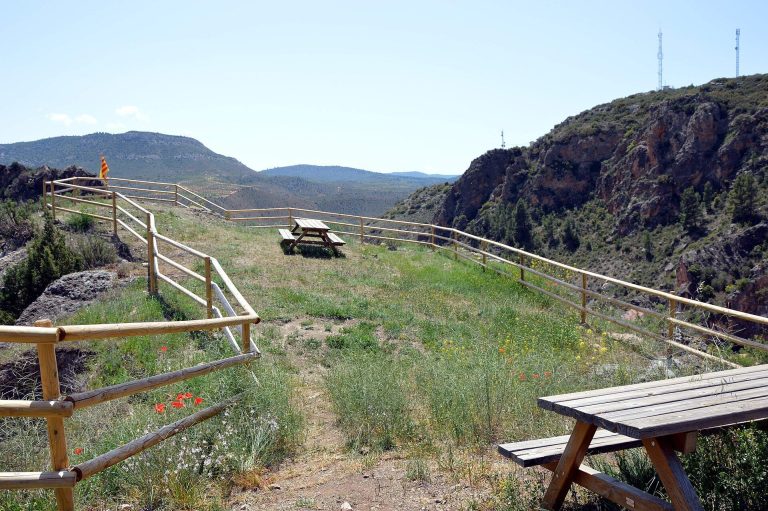
Algarra Castle occupies a rocky summit, and its elongated, irregular plan follows the shape of the terrain. The fortress formed a hilltop enclosure with a tactical and strategic purpose, defending a mountain passage and overseeing the orchards and cultivated land around Algarra. Its outer walls were built from faced rubble masonry, using irregular stones bonded with lime-and-stone mortar. Broad views extend from the hill, particularly toward the southwest, across the Algarra plain, the Algarra River, and the valleys and settlements around Casas de Garcimolina, Santo Domingo de Moya, Moya, El Arrabal de Moya, Huertos de Moya, and Landete.
Fortress enclosure
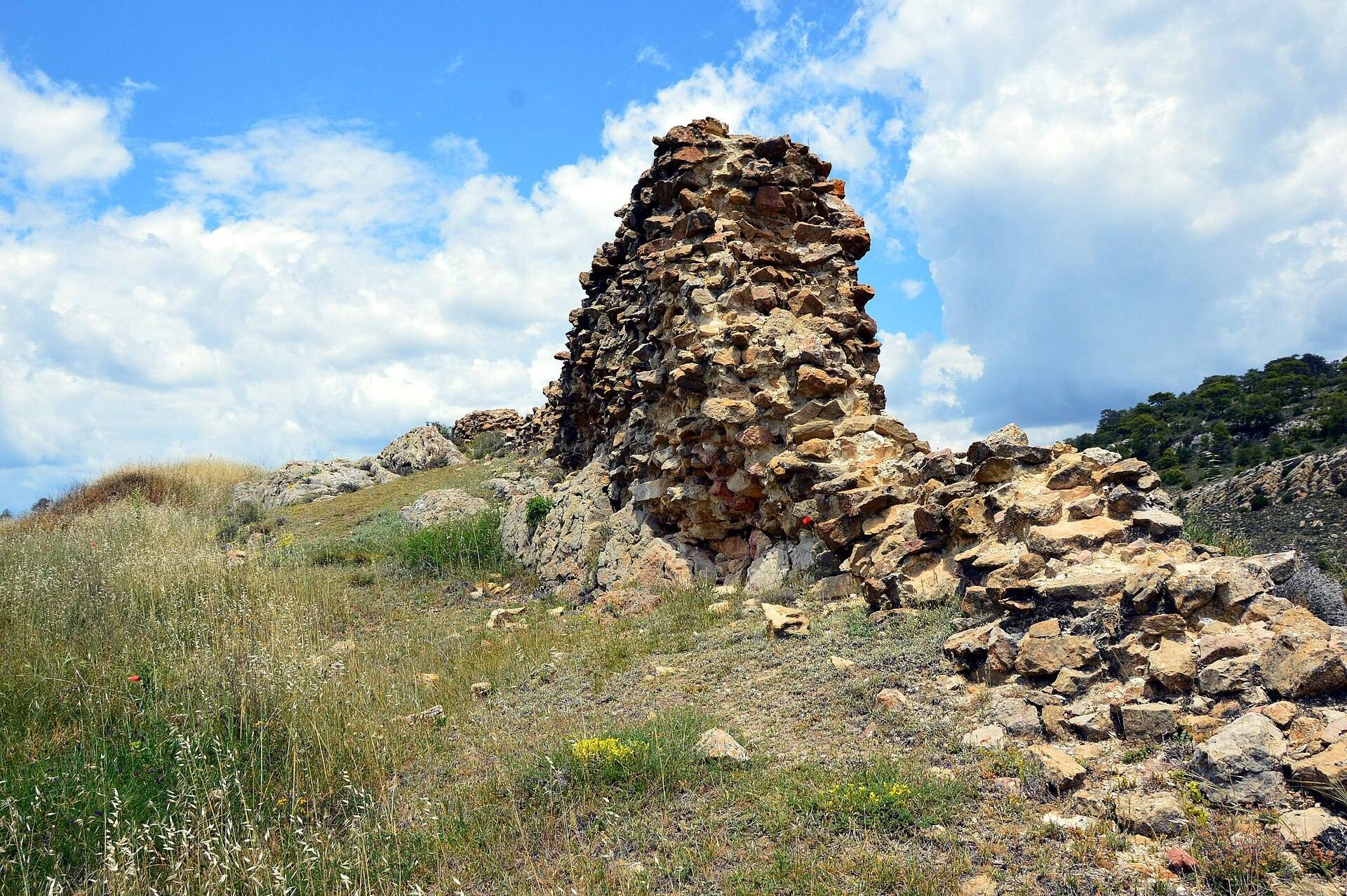
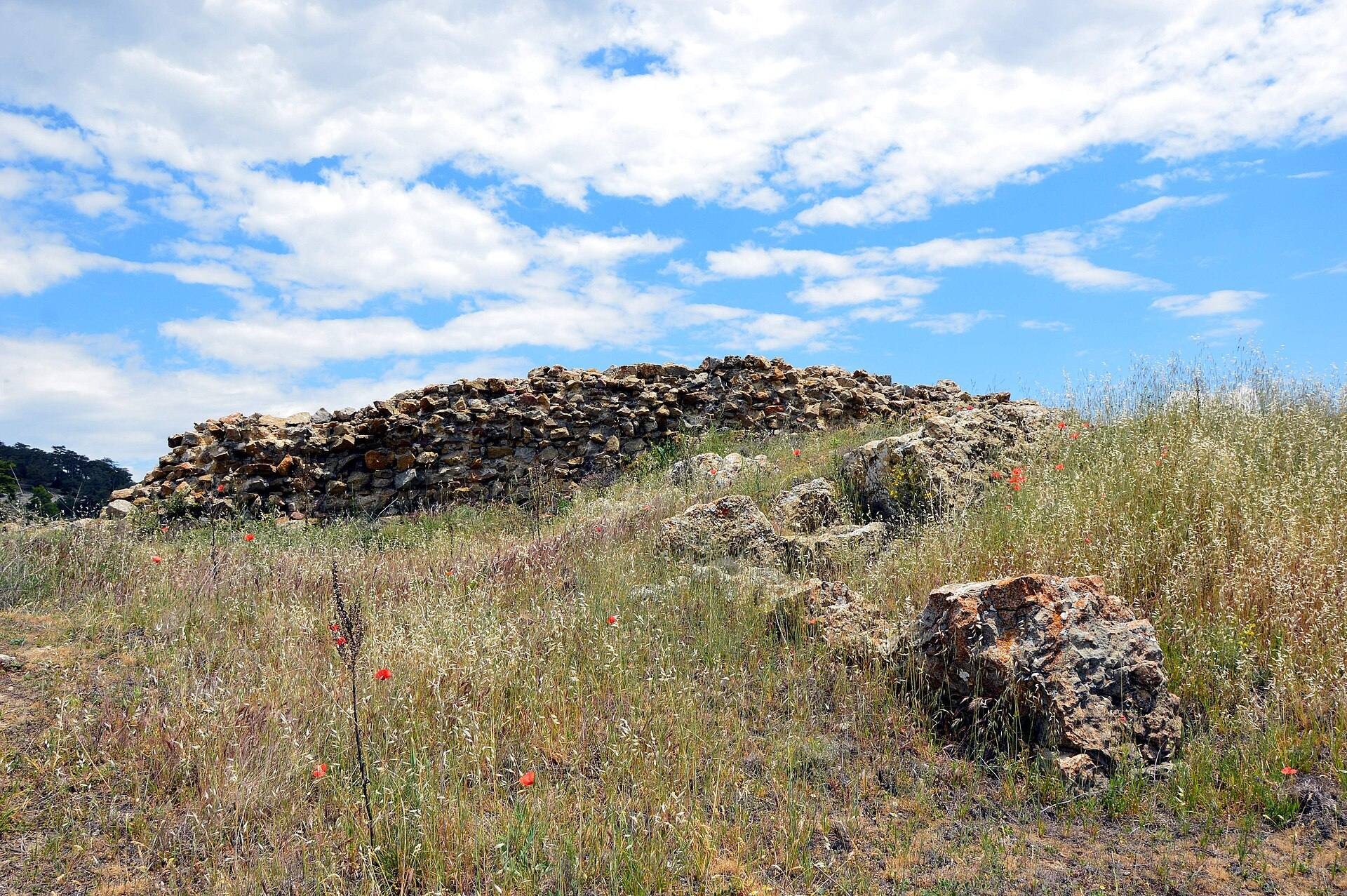
Only limited sections of the perimeter survive. These include a straight northern wall and a curved northwestern wall, both parts of the thick outer enclosure. At the northwestern end, the badly ruined remains of a structure may belong to a tower or a similar building. Together, these fragments preserve the irregular defensive outline of the medieval fortress and show how its construction adapted to the rocky summit.
Cemeteries and water supply
Parish and civil cemeteries
The southwestern part of the castle plateau contains the present parish cemetery. Inside it is a separate civil cemetery enclosure formerly used for people who had died by suicide, had been excommunicated, or had died without baptism. These burial areas occupy part of the former castle enclosure and represent later use of the fortified site.
Water reservoir
A drinking-water reservoir serving the population stands within the castle enclosure. Its presence records the continued practical use of the hilltop after the fortress had fallen into ruin.