Castello di Acri: A Bruttian Defensive Stronghold in Italy
Site at a Glance
- Rating
- 4.8
- Popularity
- Very Low
- Country
- Italy
- Primary era
- Classical
- Eras represented
- Classical, Medieval
- Civilizations
- Unclassified
- Site type
- Military
- Remains
- Castle
On this page11 sections
History
Castello di Acri, also known as Rocca dei Bruzii, is a ruined defensive stronghold in Italy, probably established by the Bruttians in the 4th century BC. The Bruttians were an ancient Italic people who controlled much of southern Calabria before and during Roman expansion. The castle occupied a strategic position on the boundary of territory associated with Sybaris, a powerful Greek city in Magna Graecia, the ancient Greek colonial region of southern Italy.
Bruttian and Roman phases
Archaeological discoveries around Acri’s old town range from the Copper Age to the Final Bronze Age. These finds support the presence of earlier communities connected with a Bruttian foundation, but they do not establish the castle’s precise construction date. The stronghold was later incorporated into the Roman defensive system. A Latin marble tablet found in 1890 bears the inscription “XII LEGIO,” while a stone fragment carries the words “Sacellum Dedicatam ad Veneri.” Small mosaic pieces found near the castle are probably Greek in origin.
Medieval castle and churches
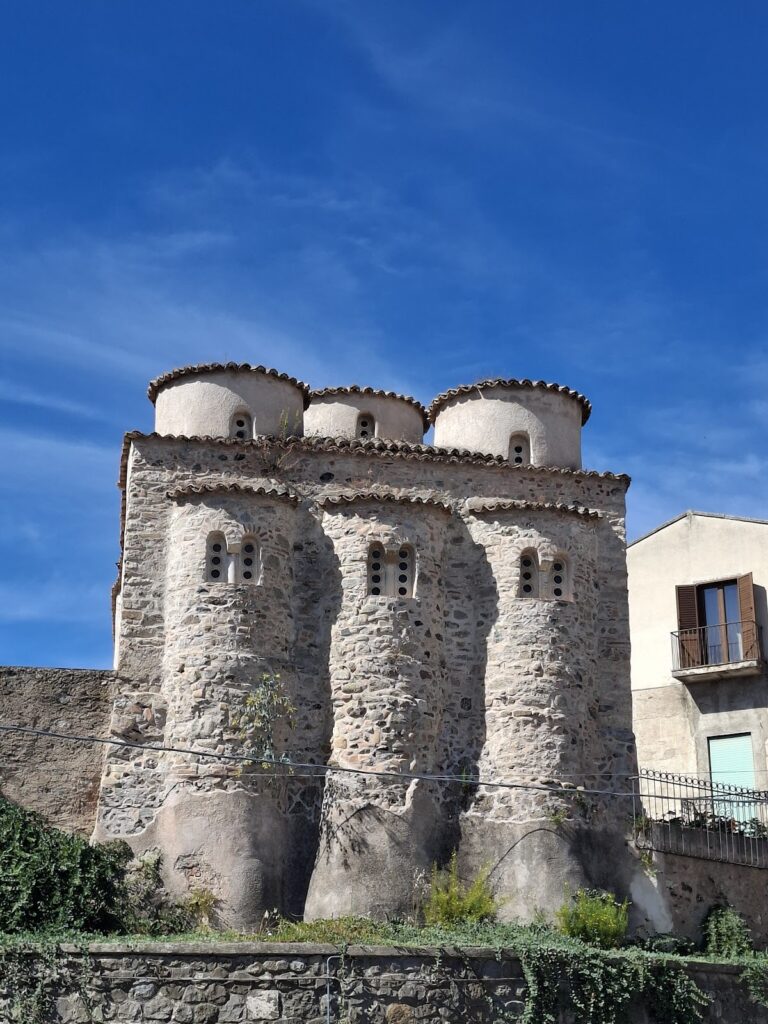
Medieval records refer to the site as Castel Vetere, meaning “a very old castle.” A 1190 Platea, a formal ecclesiastical record of diocesan properties and institutions, mentions the church of Santa Nicola ante ad Castillum in connection with the castle. At that time, the church stood within the enclosing walls, although it later occupied a position slightly outside them. Its surviving fabric contains stylistic elements attributed to the 10th and 11th centuries.
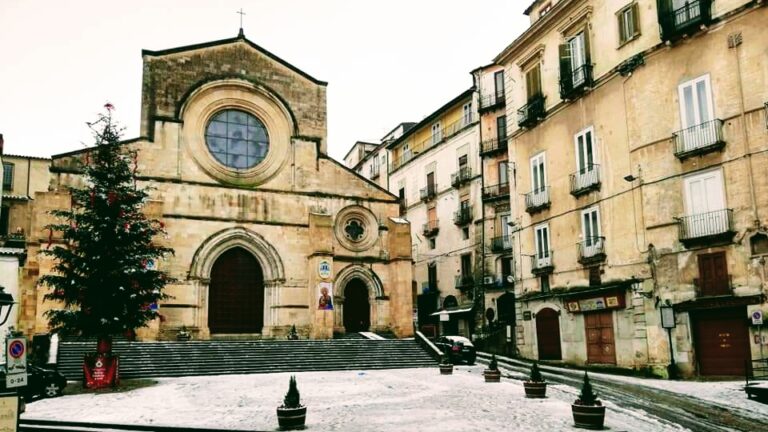
The castle walls also enclosed the Pàdia citadel and the church of Santa Maria Maggiore, Acri’s mother church. Until 1290, the church appeared in the Platea of Bishop Ruffino da Bisignano under the name “Sancta Mariae de Padiae.” Restoration work at Santa Maria Maggiore revealed traces of an early Christian temple, adding an earlier religious phase to the history of the citadel.
Later history and memory
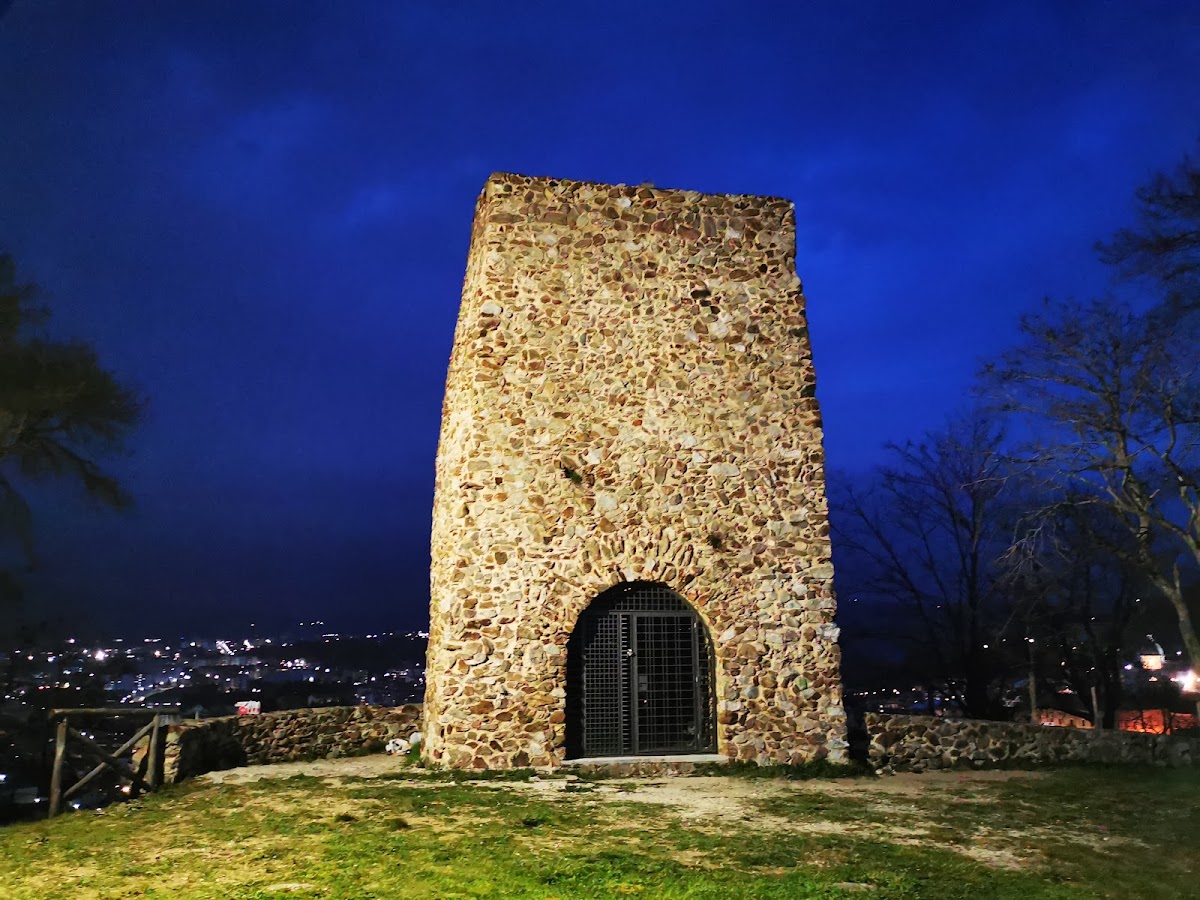
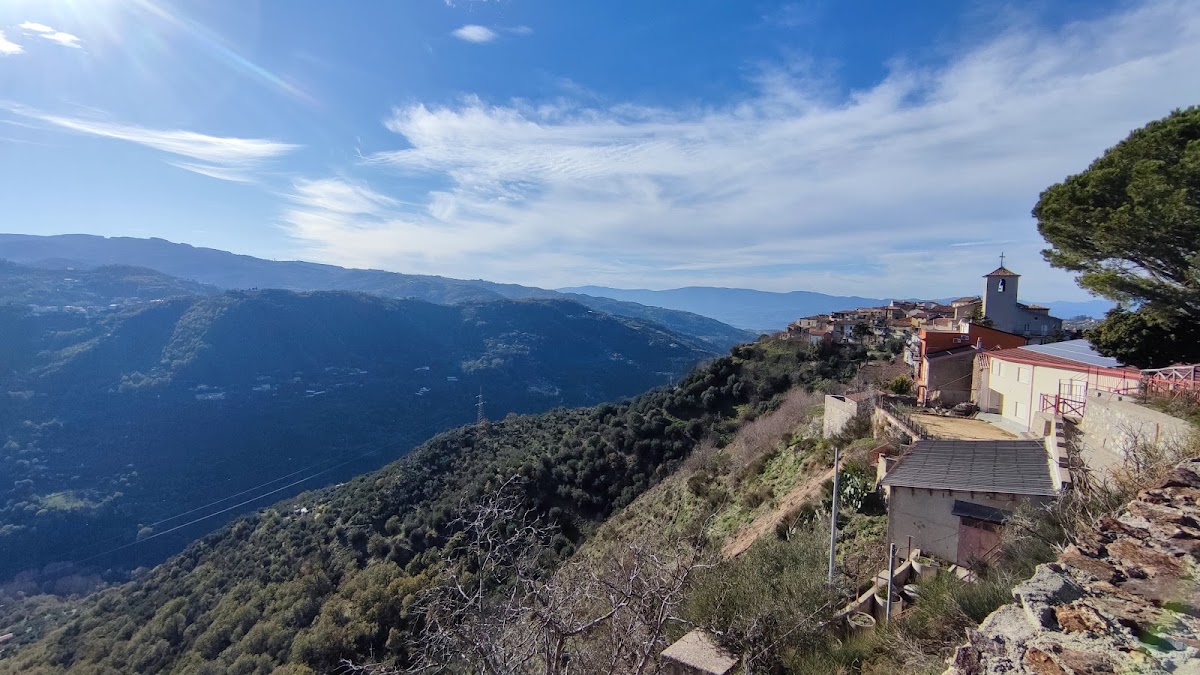
Castello di Acri is designated Italian national heritage. The castle is now a ruin, and its surviving tower has become a symbol of the city. The poet Vincenzo Julia, who lived from 1838 to 1894, dedicated the poem “Al Castello di Acri” to the site, preserving its place in the cultural memory of Acri.
Remains
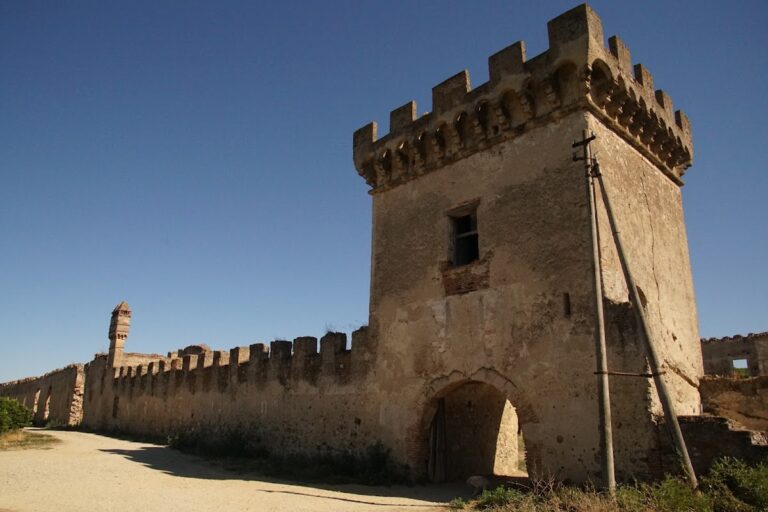
The castle occupied elevated ground at approximately 735 metres above sea level, among rocky terrain associated with the mountain summit. Its original plan was trapezoidal. Three towers stood at the highest part of the enclosure, while a fourth occupied the lower level of the defensive walls. The lower tower controlled the drawbridge or a gate fitted with a portcullis, a vertically sliding defensive gate.
Fortifications and water supply
Enclosing walls and towers
The defensive walls surrounded the Pàdia citadel, including Santa Maria Maggiore. Their upper sections were approximately 2 metres thick, while the lower-level walls were described as approximately 4 metres thick. The principal standing remnant is the surviving tower, which is identified with Acri’s symbolic castle tower.
Cistern
A cistern, a tank or reservoir for storing water, stood north of the surviving tower. It supplied water during a siege and remained visible until the early 20th century. The structure measured approximately 6 metres in height, equivalent to two storeys, and 20 metres in width.
Archaeological evidence
Inscriptions and mosaics
Material associated with the site includes the marble tablet inscribed “XII LEGIO” and the stone fragment bearing “Sacellum Dedicatam ad Veneri.” Small pieces of mosaic found near the castle are probably Greek in origin. Together, these remains provide evidence for the Roman phase and for cultural connections with the Greek communities of southern Italy.
Greek coins
Several Greek coins were found within the castle walls in 1999. The group included issues from Sybaris, Thurii, and Croton. The finds are held by the Archaeological Superintendency of the Sibaritide, the state heritage and archaeology authority responsible for material from that area.