Mojžíř Castle: A Medieval Hilltop Stronghold in Czechia

Site at a Glance
- Rating
- 3.2
- Popularity
- Very Low
- Country
- Czechia
- Primary era
- Medieval
- Eras represented
- Medieval
- Civilizations
- Holy Roman Empire, Kingdom of Bohemia
- Site type
- Military
- Remains
- Castle
On this page6 sections
History
Mojžíř Castle is a ruined medieval castle in Czechia, situated above the Mojžíř district of Ústí nad Labem. Its builder is unknown, but archaeological finds place the castle’s existence in the second half of the thirteenth century and the beginning of the fourteenth century. Later occupation cannot be ruled out.
The castle’s name
The castle is often called Wessenstein, although the name remains uncertain. The Czech historian August Sedláček suggested that this name may have resulted from confusion with Weesenstein Castle near Dohna. Castle historian Jiří Úlovec proposed the name Mojžíř, linking the site to the Lords of Lungvic, the medieval noble family associated with the Mojžíř estate.
The Lungvic estate
From the second half of the fourteenth century, the Lords of Lungvic owned the village of Mojžíř. A division of the family’s property made Mojžíř the center of an independent estate. The first known owner was Vygand of Lungvic, recorded in 1387, and the last was Děpolt of Lungvic, recorded in 1401.
Between 1401 and 1404, Václav of Vartenberk acquired the estate and incorporated it into Blansko. The Vartenberks were a Bohemian noble family. After this change, the castle was no longer needed, fell into ruin, and ceased to function as a stronghold.
Remains
Hilltop layout and setting
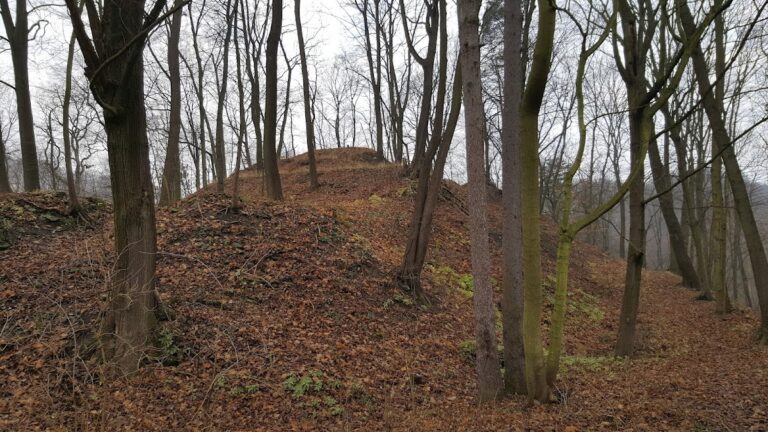
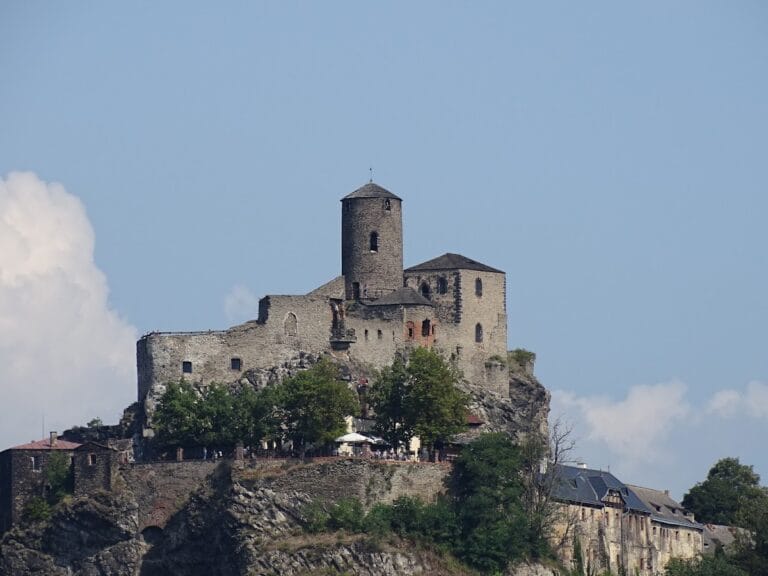
The castle stood on the left bank of the Elbe River on Strážný hill, about 275 meters above sea level. Its oval plan occupied the hill above Mojžíř. An arched ditch protected the eastern side, forming the principal surviving defensive feature of the site’s layout.
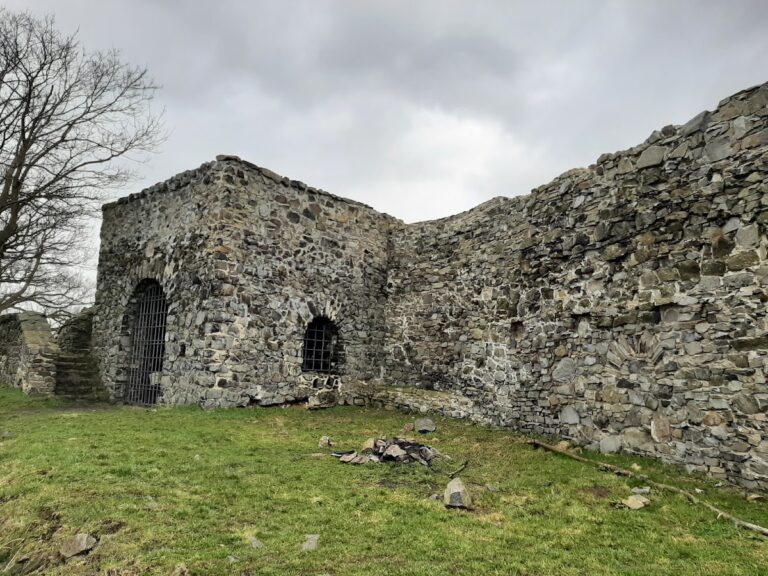
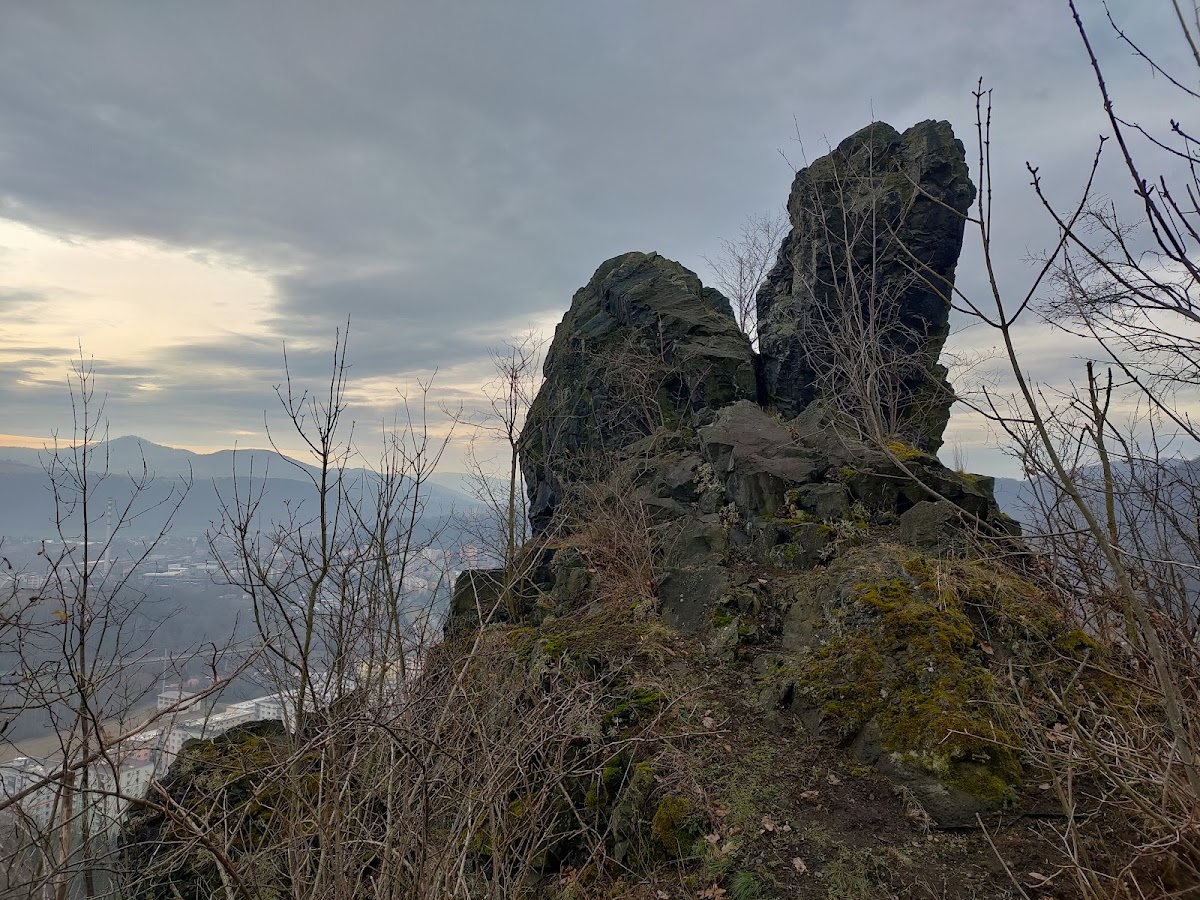
Surviving masonry
The central area contains exposed rock outcrops, while the eastern part preserves masonry remains, terrain features, and small fragments of walling. One surviving masonry fragment lies near an illegal excavation. These physical remains, together with archaeological finds, provide the main evidence for dating and interpreting the castle.