Castillo de Singra: Medieval Frontier Castle in Spain


Site at a Glance
- Rating
- 4.5
- Popularity
- Very Low
- Country
- Spain
- Primary era
- Medieval
- External website
- Open
- Eras represented
- Medieval
- Civilizations
- Crown of Aragon
- Site type
- Military
- Remains
- Castle
On this page8 sections
History
Early Settlement and Aragonese Rule
The Castillo de Singra is a ruined medieval castle in Singra, Spain, established under Alfonso I of Aragon during the Christian reconquest of territories held by Muslim rulers. Its foundation followed Alfonso’s capture of Singra in the campaign that also brought Daroca and other parts of the Jiloca valley under Aragonese control. The surrounding hills had already been settled in antiquity, as Iberian pottery from La Retuerta, Los Cabezos I, Los Cabezos II, and Cerro indicates.
Alfonso initially granted Singra to the Monastery of San Juan de la Peña, a medieval religious institution that also held land and exercised territorial authority. In 1128, after the Peace of Támara with the Kingdom of León, he transferred Singra to the Monastery of Montearagón so that the settlement could be fortified. This early defensive foundation was probably abandoned during the succession conflicts that followed Alfonso’s death, when Muslim forces retook the southern Jiloca valley.
Fourteenth-Century Frontier Defence
Singra and its castle regained importance in the fourteenth century because the settlement stood within the zone of conflict between Aragon and Castile. King Peter IV of Aragon ordered repairs in 1338, paying for the work from the income of the local mill. By 1344, responsibility for the castle had passed from the crown to the Community of Villages of Daroca, a territorial association that administered settlements and their defenses in the region.
The War of the Two Peters, fought principally from 1356 to 1366 between Peter I of Castile and Peter IV of Aragon, brought renewed military activity. By the end of 1356, Peter IV was concerned with appointing the castle’s alcaide, the commander or governor responsible for a medieval fortress. Singra formed part of the Jiloca valley’s second defensive line, whose castles were linked visually with one another and with observation towers. In 1358, when Peter I attacked the area around Monteagudo del Castillo, Peter IV treated the action as a diversion and expected the principal assault to target Singra or a neighboring castle.
Later History
By 1500, the castle had been acquired by Singra’s local mayor. King Ferdinand VII of Spain visited it on 13 April 1814. The castle’s remaining structures were later destroyed during the Carlist Wars, leaving the site in ruins. One tower survived through its reuse as the bell tower of the parish church.
Remains
Castle Enclosure
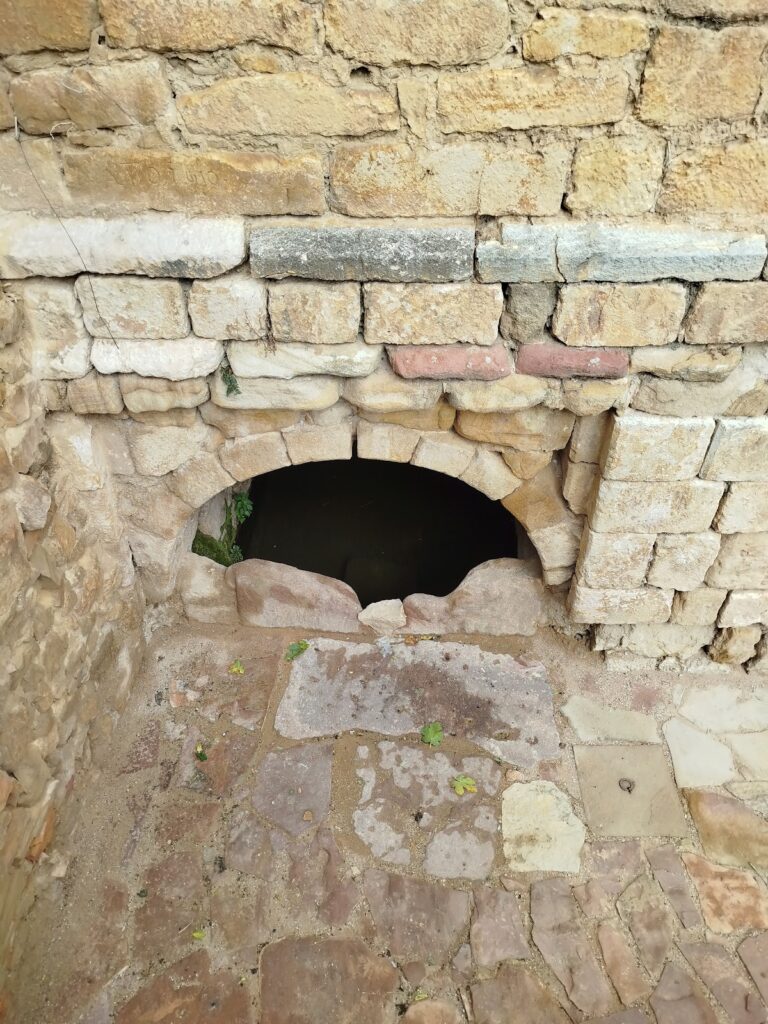
The castle occupied the hills west of Singra and was enclosed within a rectangular wall. A second rectangular building stood inside the enclosure, with a tower comparable to the structure that survives beside the parish church. The complex also contained a cistern, while an underground gallery connected the castle with the settlement. These elements define the former arrangement of the stronghold, although the castle itself now survives only in a fragmentary state.
Surviving Tower
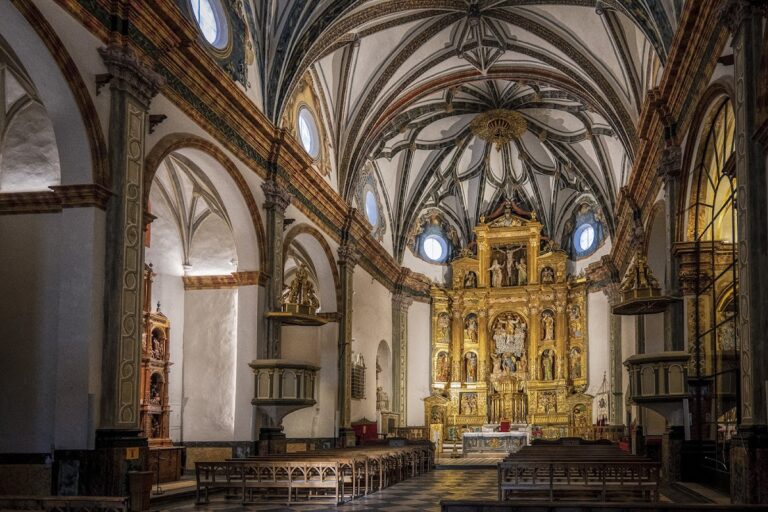
The single surviving castle tower was incorporated into the parish church as its bell tower. Its defensive origin remains visible in the arrow slits, narrow openings through which bows or crossbows could be used from protected positions. The tower is therefore both a surviving element of the medieval fortification and a later religious building component.
Geodetic Vertex
A geodetic vertex, a precisely surveyed point used as a reference for mapping, occupies the castle site at an elevation of 1,057 metres above sea level.