Château de Marines: A Renaissance Residence in France
Site at a Glance
- Rating
- 4.5
- Popularity
- Very Low
- Country
- France
- Primary era
- Early Modern
- Eras represented
- Early Modern
- Civilizations
- French
- Site type
- Domestic
- Remains
- Castle
On this page13 sections
History
Château de Marines is a Renaissance-period residence in France, in the town of Marines, associated with the reign of Francis I. Its construction followed the rise of Adrien Thiercelin de Brosse, a young lord who distinguished himself during Francis I’s war against the Swiss armies in 1515. In 1521, the king rewarded him with high justice, the authority to hear serious criminal cases and impose severe penalties, as well as tabellionage, the official authentication of legal acts. Thiercelin de Brosse then built the residence that became the present château.
From Francis I to Henry IV
Adrien Thiercelin de Brosse developed a reputation as a builder. He later completed work at the Château de Blois and, at the request of Marie de’ Medici, enlarged the Luxembourg Palace. After serving Francis I as a counsellor, he became chancellor to Henry IV.
Marines and the surrounding Vexin region were drawn into the French Wars of Religion, a series of conflicts between Catholic and Protestant factions that lasted from 1562 to 1598. The Catholic League, led by the Duke of Guise, fought the Huguenot forces of Henry IV. During the 1530s, John Calvin sought refuge in the nearby woods of Arthies, where he wrote major works.
Henry IV stayed at Château de Marines on the night of 11 August 1589, while travelling from Poissy to Gisors during his campaign against the Catholic League. At the château, he wrote to Saint-Geniès, who was fighting for him in Navarre. The letter, preserved by the Bibliothèque nationale, records the royal visit.
The Sillery and Oratorian period
After Henry IV renounced Protestantism in 1593 in an effort to secure political and religious stability, the de Brosse family was ruined. In 1603, it sold the Marines estate to Nicolas Brûlart de Sillery. Sillery became Henry IV’s chancellor in 1606 and later served as the first Keeper of the Seals of France.
Through his relationship with Cardinal Pierre de Bérulle, founder of the Oratorians, Sillery arranged for a substantial Oratorian convent to be built beside Marines church. The Oratorians were a Catholic religious congregation founded in France in the seventeenth century. The convent remained connected with the Marines estate until 1901, when the Batardy-Joly family donated it to the Diocese of Versailles, shortly before the separation of Church and state in 1905. Nicolas Malebranche, a French philosopher and Catholic priest, wrote Christian Conversations at the convent.
The de Créquy family
On 24 January 1659, Louis Brûlart de Sillery and Marie-Catherine de La Rochefoucauld sold the lordship of Marines for 660,000 livres tournois to the Marquis de Créquy. A lieutenant-general of the king’s armies, he later became Marshal de Créquy and a peer of France. The de Créquy family retained the property until 1714 through Madame de Créquy.
The Marquis de Créquy became involved in the trial of Nicolas Fouquet, the prominent statesman who had served as superintendent of finances under Louis XIV. After the king stripped him of his offices, he was temporarily exiled to his Marines estates. He later returned to royal favour and pursued a distinguished military career, culminating in the capture of Luxembourg in 1684. He died at Château de Marines in February 1687. His only son and heir, François-Joseph, was killed at the Battle of Luzzara in Piedmont on 15 August 1702.
Later owners and protection
In the eighteenth century, the estate was acquired by Thomas Rivié, Grand Master of Waters and Forests, whose fortune was linked to the Minister of War, Louvois. Rivié’s great-niece, Yvonette de Rivié, married Louis de Gouy d’Arsy, a lieutenant-general. Their son, Louis-Marthe de Gouy d’Arsy, became a colonel of dragoons and commander-general of the National Guard. He was guillotined on 23 July 1794.
The de Gouy d’Arsy family kept the estate until 1889, when Madame Paul Batardy acquired it. After her death in 1942, it passed to her grandchildren, André Joly and his wife. The estate remains in the family’s ownership.
Paul Cézanne stayed in Marines in 1888 and 1890 and painted a canvas depicting Château de Marines. The château has been protected as a registered French historic monument since 1984. The painted ceilings of three first-floor rooms were specifically registered by an order of 9 November 1984, while the surrounding park was classified as a protected site by an order of 25 February 1974.
Remains
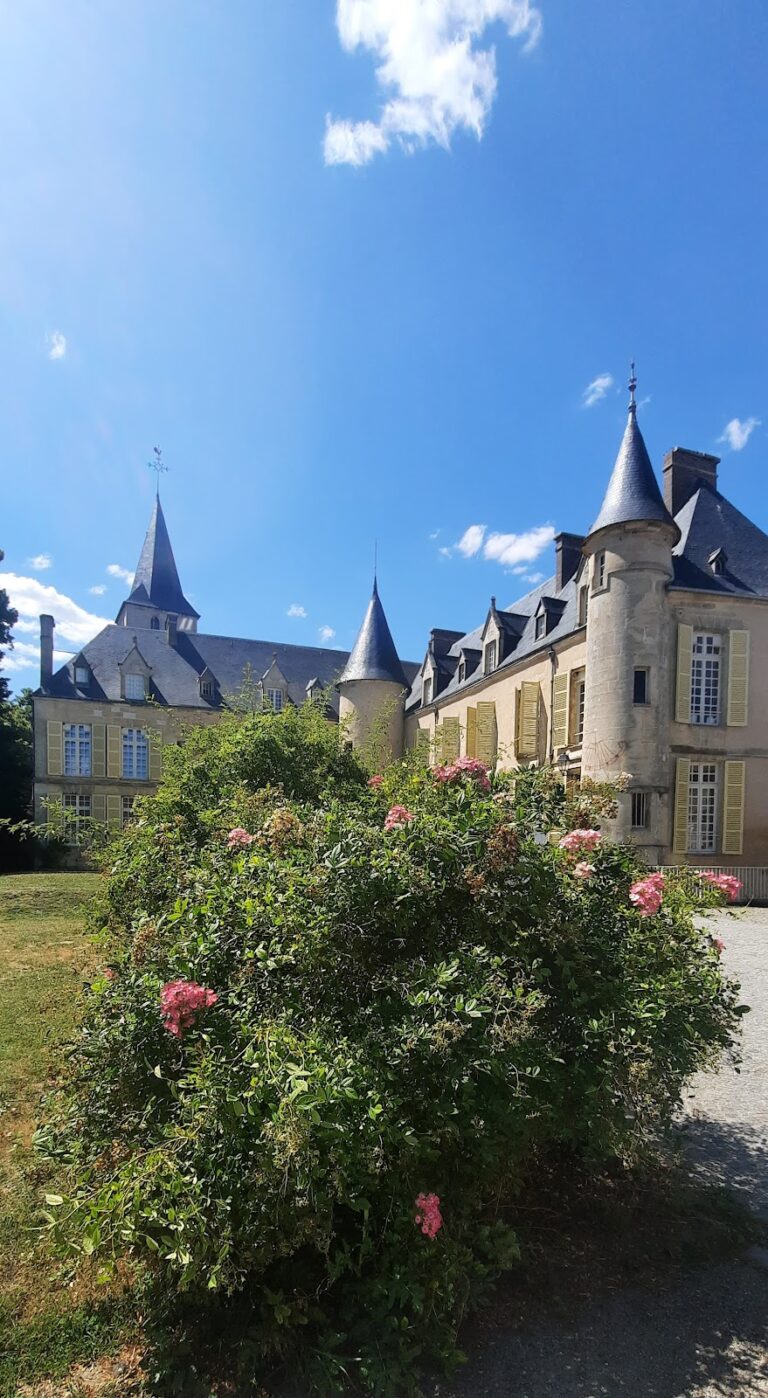
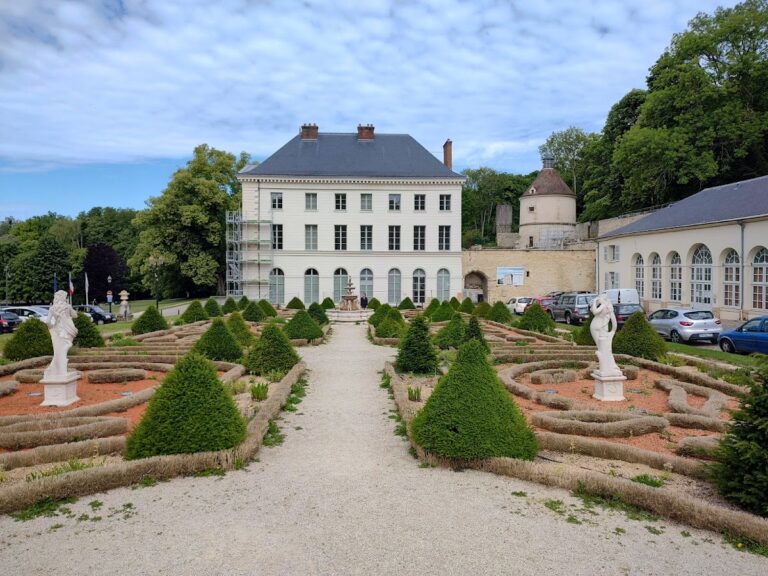
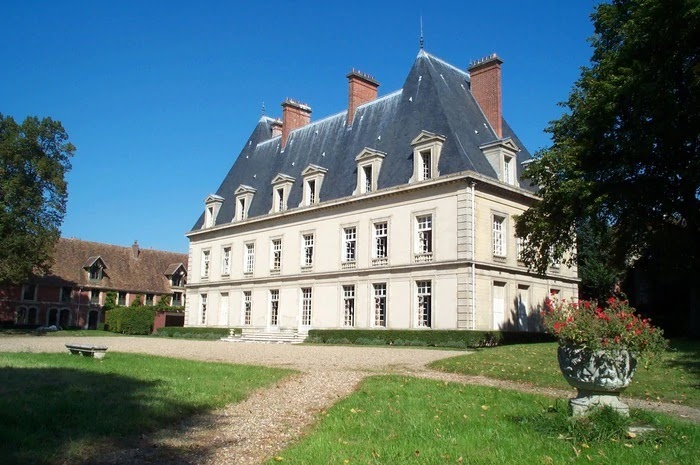
Château de Marines stands at place Peyron, where Rue Jean-Jaurès, Rue de la Libération, which borders the park, and Boulevard de la République meet. The principal building has undergone little change. Its earlier dormers were replaced by windows, and three first-floor rooms retain painted ceilings. A small turret once stood along place Peyron, but it has disappeared.
The château and former justice turret
Main residence
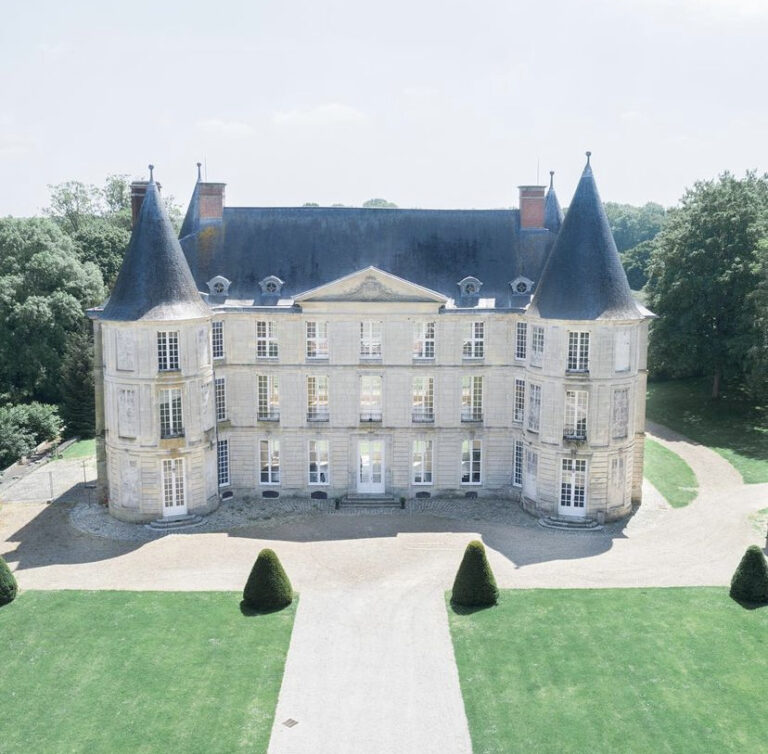
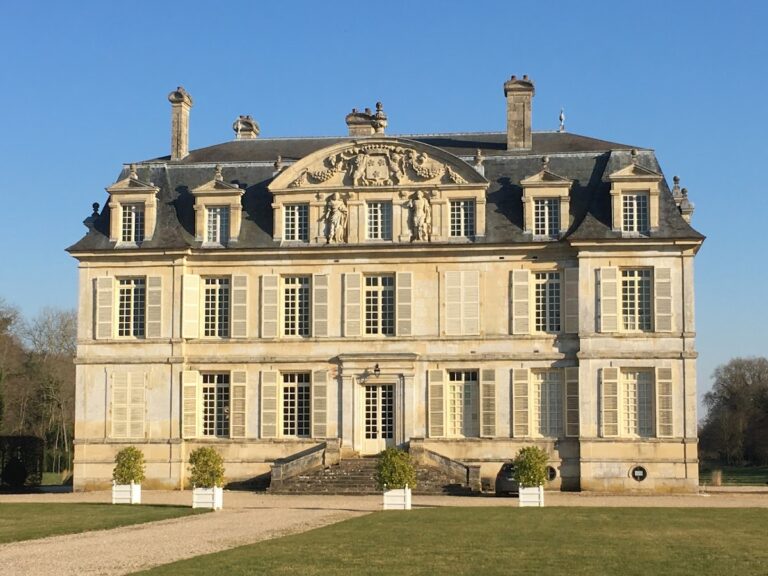
The main château is a Renaissance-period residence whose building form has remained largely intact. The surviving first-floor painted ceilings provide the principal interior feature identified at the residence and were registered specifically in 1984. The former dormers were altered to windows, recording one of the building’s later changes.
Former justice turret
The vanished turret formerly contained the chamber of justice. From this room, the lords exercised their right of high justice, including authority over serious criminal cases and severe punishments. Condemned people were taken directly from the turret onto the public square for punishment, linking the residence’s judicial function with place Peyron.
Park and religious buildings
Formal park
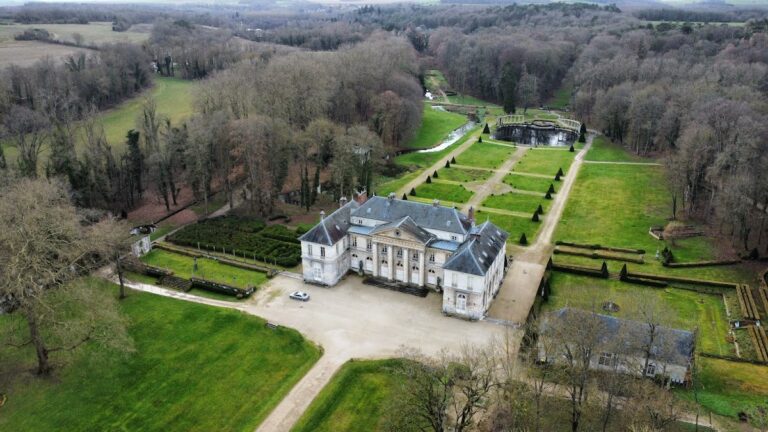
The château is surrounded by a French formal park commissioned from André Le Nôtre by the Marquis de Créquy. Le Nôtre was the principal designer associated with the formal French garden tradition of the seventeenth-century royal court. The park was classified as a protected site by order of 25 February 1974.
Mortuary chapel
Jacques Lemercier built a mortuary chapel adjoining Marines church for the Marquis de Créquy. The chapel formed part of the religious buildings connected with the estate and was intended for funeral or commemorative use.
Oratorian convent
An important Oratorian convent was built beside Marines church as part of the estate’s religious complex. Its association with Nicolas Malebranche gives the building a literary and philosophical connection, since he wrote Christian Conversations there. The convent remained attached to the estate until its donation to the Diocese of Versailles in 1901.
Nearby sites