Fuerte de Isla Verde: An Eighteenth-Century Coastal Fort in Algeciras, Spain


Site at a Glance
- Rating
- 3.6
- Popularity
- Very Low
- Country
- Spain
- Primary era
- Early Modern
- Eras represented
- Early Modern, Modern
- Civilizations
- Spanish
- Site type
- Military
- Remains
- Fort
On this page20 sections
History
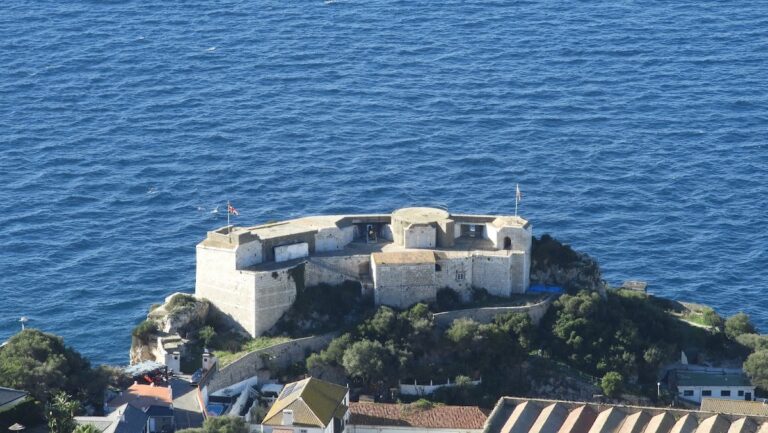
Fuerte de Isla Verde was a coastal military fortification on Isla Verde, an island off the old town of Algeciras, Spain, built during the eighteenth century to defend the Bay of Algeciras. Artillery had occupied the island before the fort was constructed, and the site later took part in the Battle of Algeciras and successive defensive programmes before being incorporated into the modern port.
Early artillery and construction
Isla Verde stood near the mouth of the Río de la Miel, offshore from Algeciras. Its name also influenced the name of the city through the Arabic expression for “Green Island.” An earlier artillery emplacement on the island was associated with the siege of Gibraltar in 1704. A battery was recorded by 1720, and a provisional battery existed by 1727.
Permanent fortification works began in 1734, after the sieges of Gibraltar had drawn attention to the vulnerability of the coast around the bay. The design was prepared by the military engineer Juan de Subreville, drawing on earlier projects by Jorge Próspero de Verboom. The fort was remodelled in 1745 under Lorenzo de Solís and adapted to the island’s roughly triangular shape. That reform added the San Joaquín provisional battery beside the entrance, together with the Beach Guardhouse.
In 1756, the barracks were adapted to serve as a prison for state prisoners. During the Great Siege of Gibraltar, the prolonged British siege of the Spanish and French garrison from 1779 to 1783, the fort received additional artillery. A shipyard was established on the nearby coast under the protection of the island batteries, where floating batteries, mobile artillery platforms mounted on vessels or floating structures, were built to designs associated with the engineer Arçon.
The Battle of Algeciras
Fuerte de Isla Verde played a direct role in the Battle of Algeciras in 1801, a naval action between the fleet of the First French Republic and the fleet of the United Kingdom. On 13 June, the French squadron sheltered in Algeciras Bay under the protection of the Santiago, San García, and Isla Verde batteries.
Isla Verde became an advanced defensive position during the fighting. Its guns damaged the British fleet, prompting Admiral James Saumarez to order a landing to seize the fort. Mortar and rifle fire met the landing force, while the defenders killed many attackers and sank several boats. Saumarez then ordered the withdrawal.
Nineteenth-century reforms
During the Peninsular War, the conflict in Spain and Portugal against Napoleonic France from 1808 to 1814, British forces demolished most Spanish fortifications around the Bay of Gibraltar in 1810. The action was intended to prevent their capture by French troops. Isla Verde Fort was spared, and reforms that year added a triangular entrance structure on the northern side beside the provisional battery.
The fort underwent repeated repairs and reinforcement during the nineteenth century. By 1821 it had five batteries, extra firing positions for muskets along the walls, and stone paving on the batteries to help move gun carriages. A severe storm caused two sections of wall to collapse in 1825. The Main Battery was enlarged in 1841 with new openings for guns, followed by three further openings and a position for riflemen. Repairs completed around 1845 enclosed areas that had not been covered by the original design.
Decline and port transformation
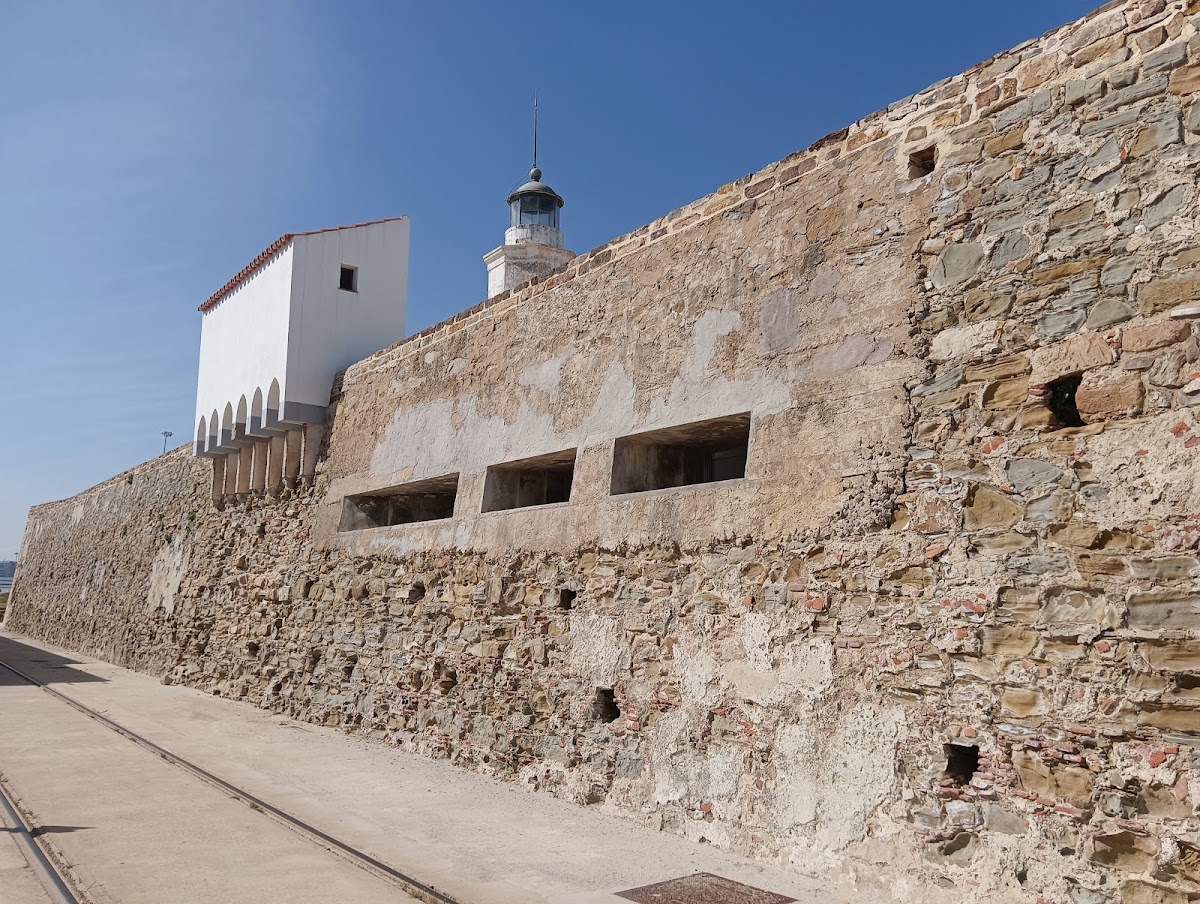
Construction deficiencies and marine erosion gradually weakened the fort, while changes in artillery technology reduced its military importance by the beginning of the twentieth century. The building of the Isla Verde Lighthouse in 1863 over the former San García Battery made that battery unusable.
In 1919, responsibility for the fort passed to the newly established Board of Harbour Works. The authority relocated the ammunition stored there to a new magazine at Punta de San García. A breakwater was built north of the island to shelter construction of the docks of the Port of Algeciras.
Military use continued for a time during the Second World War. A detachment of 40 soldiers occupied new defensive installations that included two machine-gun bunkers, a barracks, a kitchen, and a cylindrical structure for an anti-aircraft machine gun. These works formed part of the defensive programme for the Strait of Gibraltar begun in 1939.
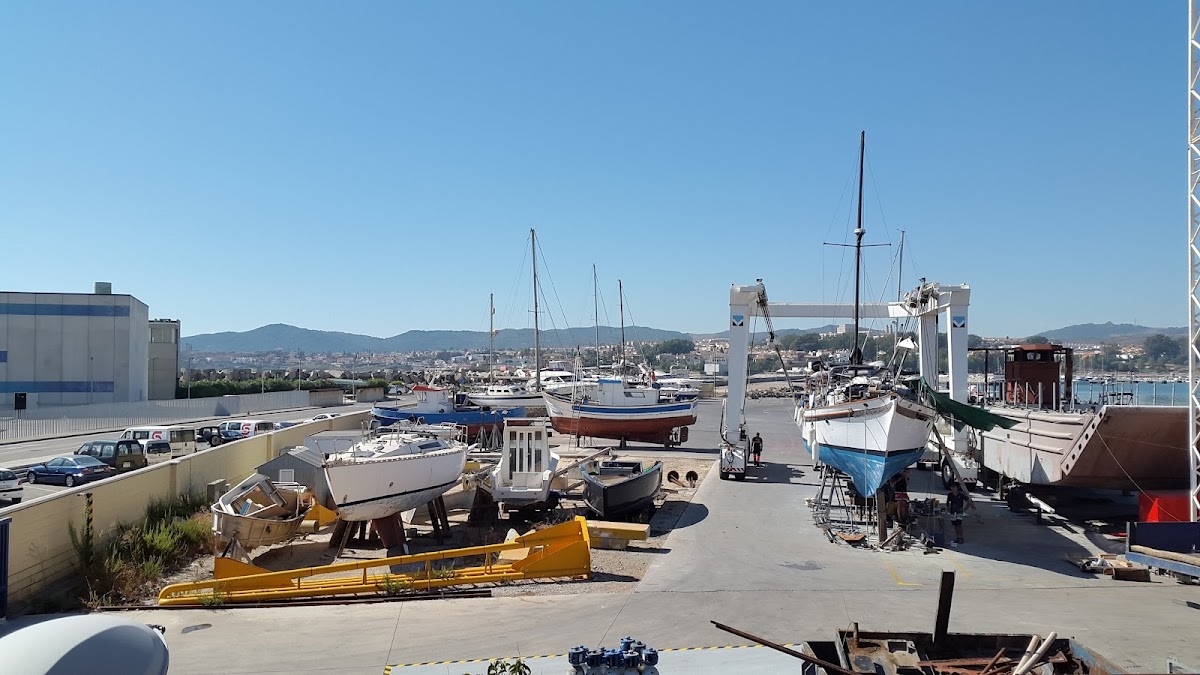
Expansion of the Port of Algeciras during the 1960s ended Isla Verde’s insular character and partly destroyed the fort. The site became an area for storage and repairs. Shipyards were built against the southern wall, internal buildings were added for repair work, and later port works degraded or destroyed further historic structures. The original buildings were subsequently demolished and the central open area was filled.
Protection and archaeological recovery
Fuerte de Isla Verde received protected status as a historical heritage site in 1985. In 1993, it received special recognition from the Government of Andalusia. Archaeological excavation and restoration sponsored by the Port Authority of Algeciras in 2006 exposed surviving parts of the fort, removed later structures, and partly reconstructed the site to suggest its earlier appearance.
Remains
Fuerte de Isla Verde followed the roughly triangular outline of the island. Three principal artillery batteries occupied the edges and were linked by a masonry wall with an escarp, the sloping outer face of a defensive wall, intended to hinder enemy landings. The entrance lay in the northwestern sector beside the beach, where obstacles strengthened the fort’s most vulnerable approach. The entrance area was remodelled several times, including the triangular works added in 1810.
Principal batteries and defenses
Algeciras and San Cristóbal Battery
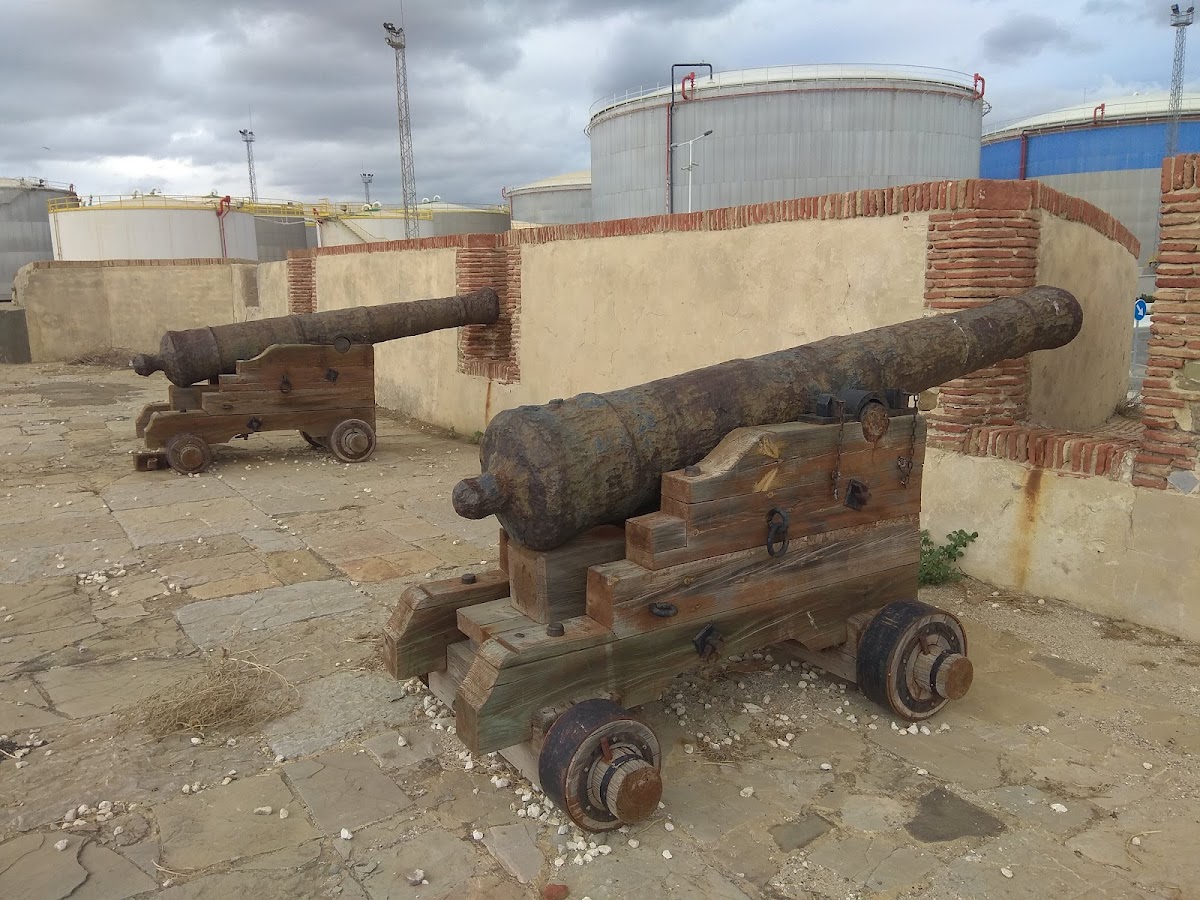
The eastern battery faced north towards the maritime approaches to Algeciras’s New Town. Known as the Algeciras Battery before 1745, it was then renamed the San Cristóbal Battery. It measured about 20 metres and could accommodate four or five guns. Its position formed part of the artillery line that followed the island’s perimeter.
Santa Bárbara Main Battery
The Main Battery occupied the southeastern side and faced the entrance to the Bay of Gibraltar. It was called the Santa Bárbara Battery from 1745 and measured about 40 metres, with capacity for thirteen heavy guns. Its field of fire overlapped that of Fuerte de San García, another coastal fortification in Algeciras. The battery was enlarged in 1841, when new gun openings were added, followed by three further openings and a riflemen’s position.
San Francisco Battery
The western battery faced southwest towards the shore battery at Punta Rodeo, with which its fire overlapped. It was known as the San García Battery before its 1745 renaming as the San Francisco Battery. The smallest of the three principal batteries, it measured about 9 metres and accommodated two guns. The Isla Verde Lighthouse, designed by Jaime Font and built in 1863, was placed over it, making the battery unusable.
Entrance defenses
The San Joaquín provisional battery stood at sea level on the northern side beside the entrance, alongside the Beach Guardhouse. The entrance defenses were reinforced with beach obstacles and altered more than once. A triangular entrance structure was added during the reforms of 1810, giving the northern approach a distinct defensive form.
Interior buildings and water supply
Main living quarters
The principal living quarters stood beside the Algeciras Battery and could house up to 70 men. Separate areas were provided for officers and soldiers, and the building included a grocery storeroom. Its position connected the accommodation area with the eastern artillery works.
Artillery barracks and store
A separate artillery barracks stood between the Main and San García batteries beside the artillery store. The store held gun carriages and spare equipment, while a large shoulder protected the building from enemy projectiles.
Powder magazine and well
The main powder magazine occupied the centre of the island. Its thick walls reduced the danger that incoming projectiles would ignite the gunpowder and ammunition stored inside. Drinking water came from a nearby well.
Port-period and wartime remains
Harbour alterations
Port expansion changed the physical relationship between the fort and the surrounding water. Shipyards were built against the southern wall, and buildings inside the fort supported repair work. These interventions altered the historic layout before the later archaeological clearance.
Second World War defenses
The 2006 archaeological intervention recovered one of the Second World War machine-gun bunkers and the adjoining cylindrical structure for anti-aircraft artillery. These features belong to the defensive works established for the Strait of Gibraltar from 1939 and preserve the fort’s later military use.
Archaeological reconstruction
The 2006 work removed structures attached to the wall and twentieth-century buildings. Excavation exposed the northern gun opening of the Main Battery, including its original paving made from Tarifa stone slabs. It also revealed the plan of the barracks and the southern wall, which had been concealed by shipyard sheds.
The surviving remains were partly reconstructed after the excavation. Fuerte de Isla Verde remains heavily transformed within the modern port, but the recovered batteries, walls, interior plans, entrance works, and wartime structures preserve the successive military and industrial changes made to the island.