Penteskoufi Castle: A Frankish Fortress near Corinth
Site at a Glance
- Rating
- 4.7
- Popularity
- Very Low
- Country
- Greece
- Primary era
- Medieval
- Eras represented
- Medieval, Early Modern
- Civilizations
- Crusader, Ottoman, Principality of Achaea, Venetian
- Site type
- Military
- Remains
- Castle
On this page8 sections
History
Penteskoufi Castle is a Frankish fortress ruin in Greece near Corinth, built by the Franks at the beginning of the thirteenth century after their conquest of Corinth. Its foundation belongs to the period when Frankish forces under Otto de la Roche established their rule after the Fourth Crusade. The castle was probably created to support the siege of Akrokorinth, the fortified acropolis of ancient Corinth, and to control the approach to its main entrance.
The Frankish siege of Akrokorinth
During the Frankish siege, the Byzantine regional ruler Leon Sgouros withdrew into Akrokorinth and continued to resist. The Chronicle of Morea states that Jacob II of Avesnes built a castle opposite the main entrance of Akrokorinth to support the siege and prevent attacks from the fortress. It names the stronghold Montesquieue or Mont Escouvé, names that are very probably connected with Penteskoufi and may explain the modern form of its name.
Leon Sgouros held out for more than two years. He launched surprise attacks, inflicted heavy losses on the besiegers, and continued to receive supplies from outside. In 1208, after the siege had weakened the defenders, he reportedly rode his horse at full speed over a precipice, choosing death rather than starvation or capture by the Franks.
Transfer of control and later military use
After Leon Sgouros died, Michael I Komnenos Dukas Angelos inherited Akrokorinth and appointed his half-brother, Theodoros I Komnenos Dukas, as governor. When supplies ran short, Theodoros surrendered the fortress to the Franks and withdrew to Argos, where he fortified himself in Larissa Castle. Penteskoufi was probably abandoned after the Frankish conquest of Akrokorinth.
The castle was later restored during the Venetian period and used as an additional defensive work for Akrokorinth. The surviving alterations may instead belong to the Ottoman period, or to one of the two periods between 1687 and 1715, when Venetian and Ottoman control followed one another. The evidence therefore leaves the precise date of these later changes uncertain.
The Greek Revolution and archaeological discoveries
Greek revolutionary fighters captured Penteskoufi in March 1821, at the beginning of the Greek Revolution. The withdrawal of Ottoman troops was finally forced on 26 January 1822. The castle is now designated as an archaeological site in Greece.
Archaeological interest in the wider area also developed in the nineteenth century. In 1879, a farmer found numerous votive tablets about 900 metres northwest of the castle. Arthur Milchhoefer investigated the location in 1880 and recovered further pieces. Excavations by the American School of Classical Studies at Athens in 1905, combined with the earlier discoveries, produced approximately 1,500 fragments of the objects known as the Pinakes of Penteskouphia, ancient votive tablets dedicated in a religious context.
Remains
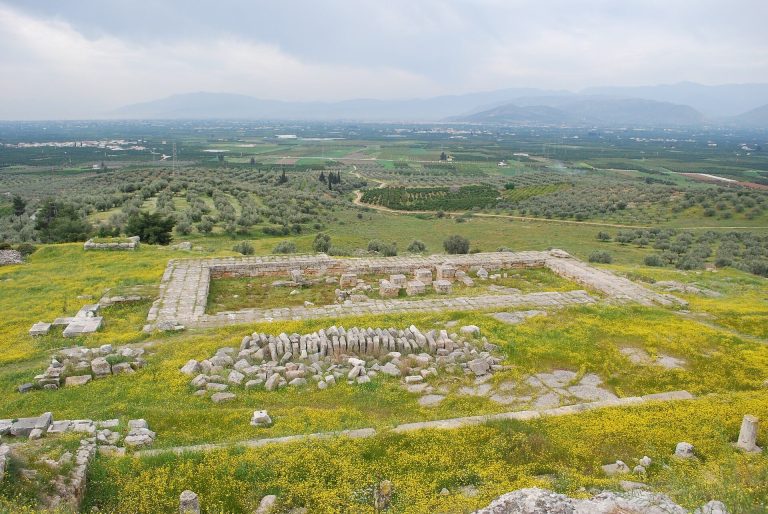
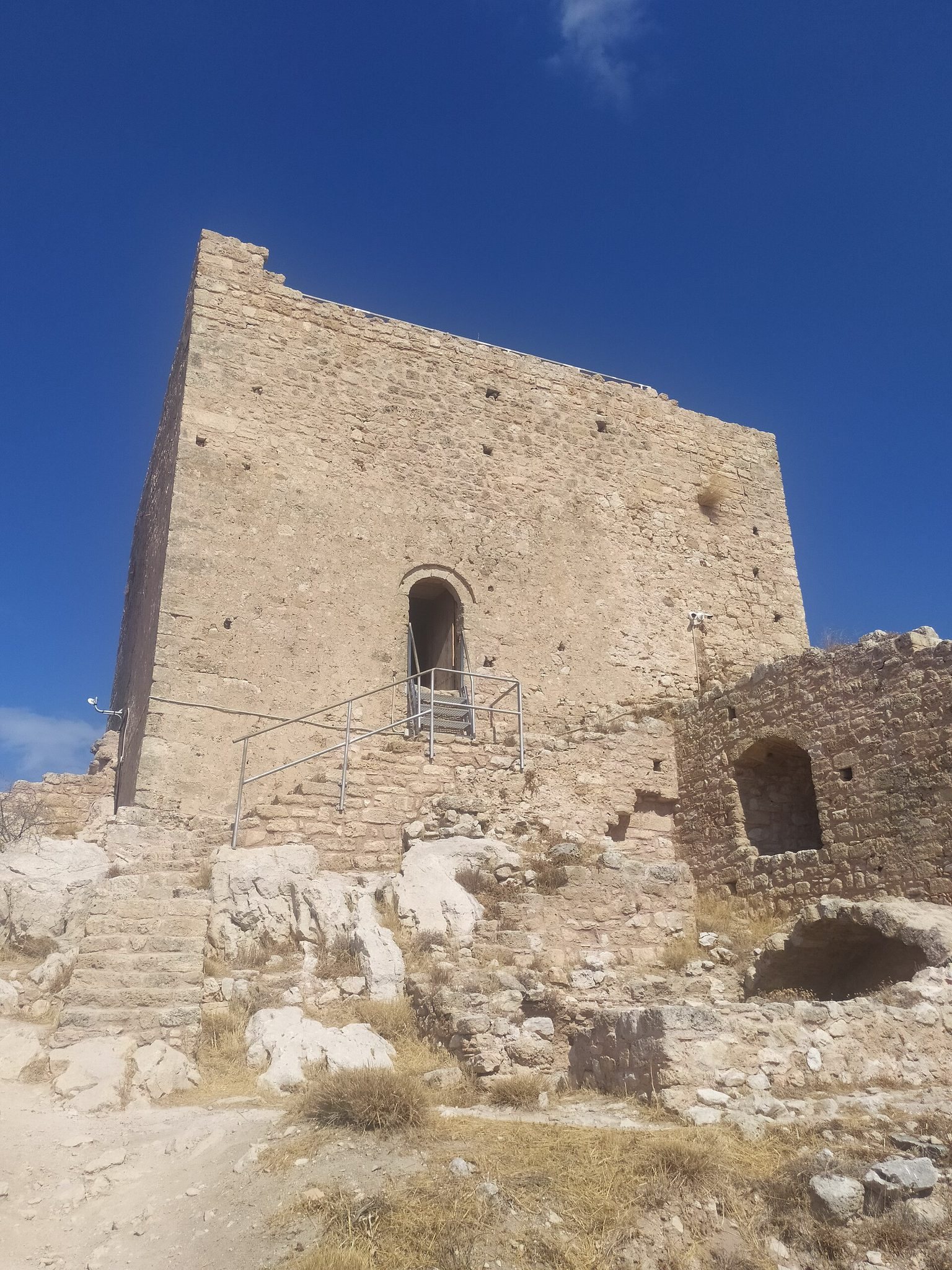
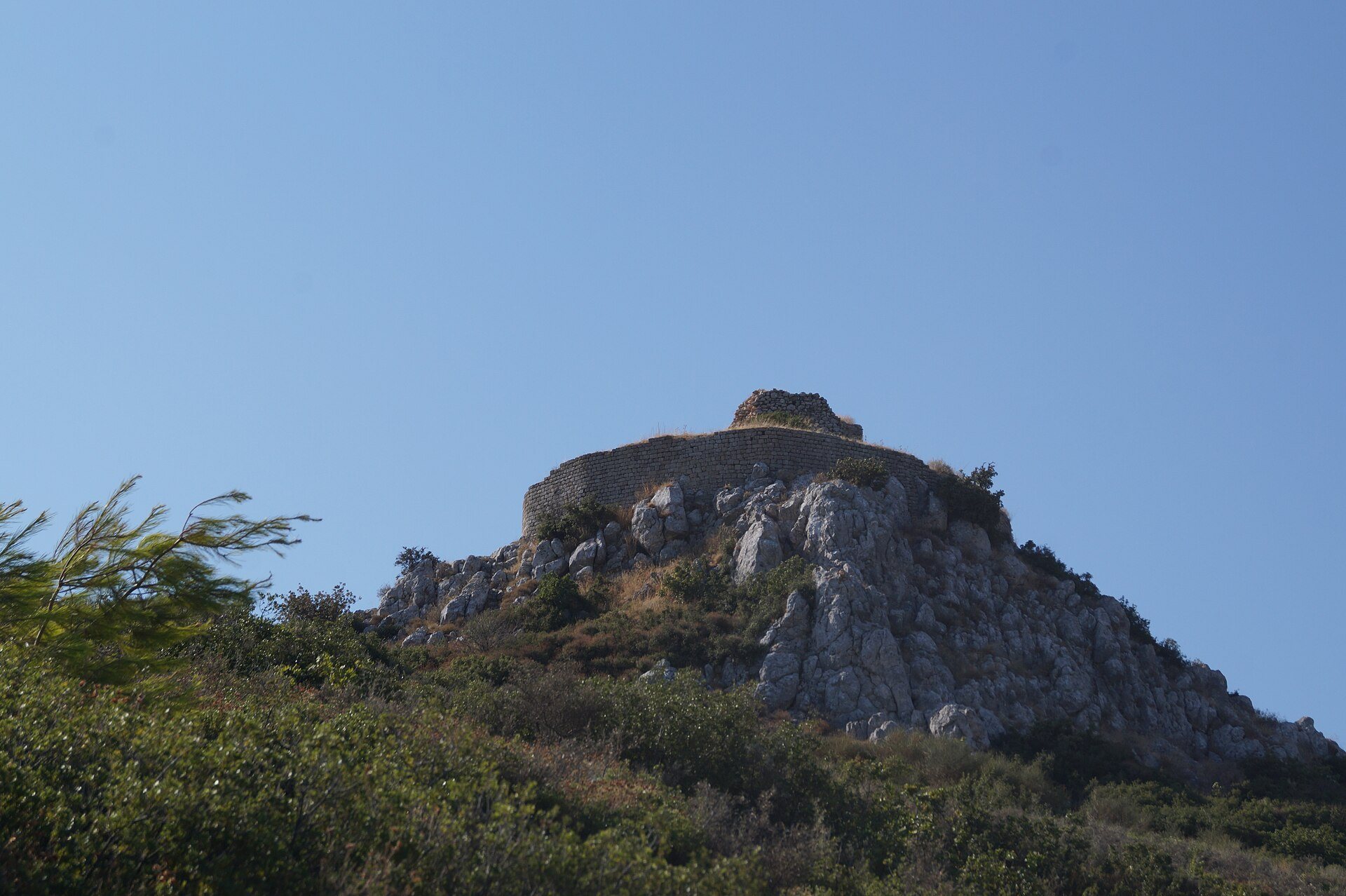
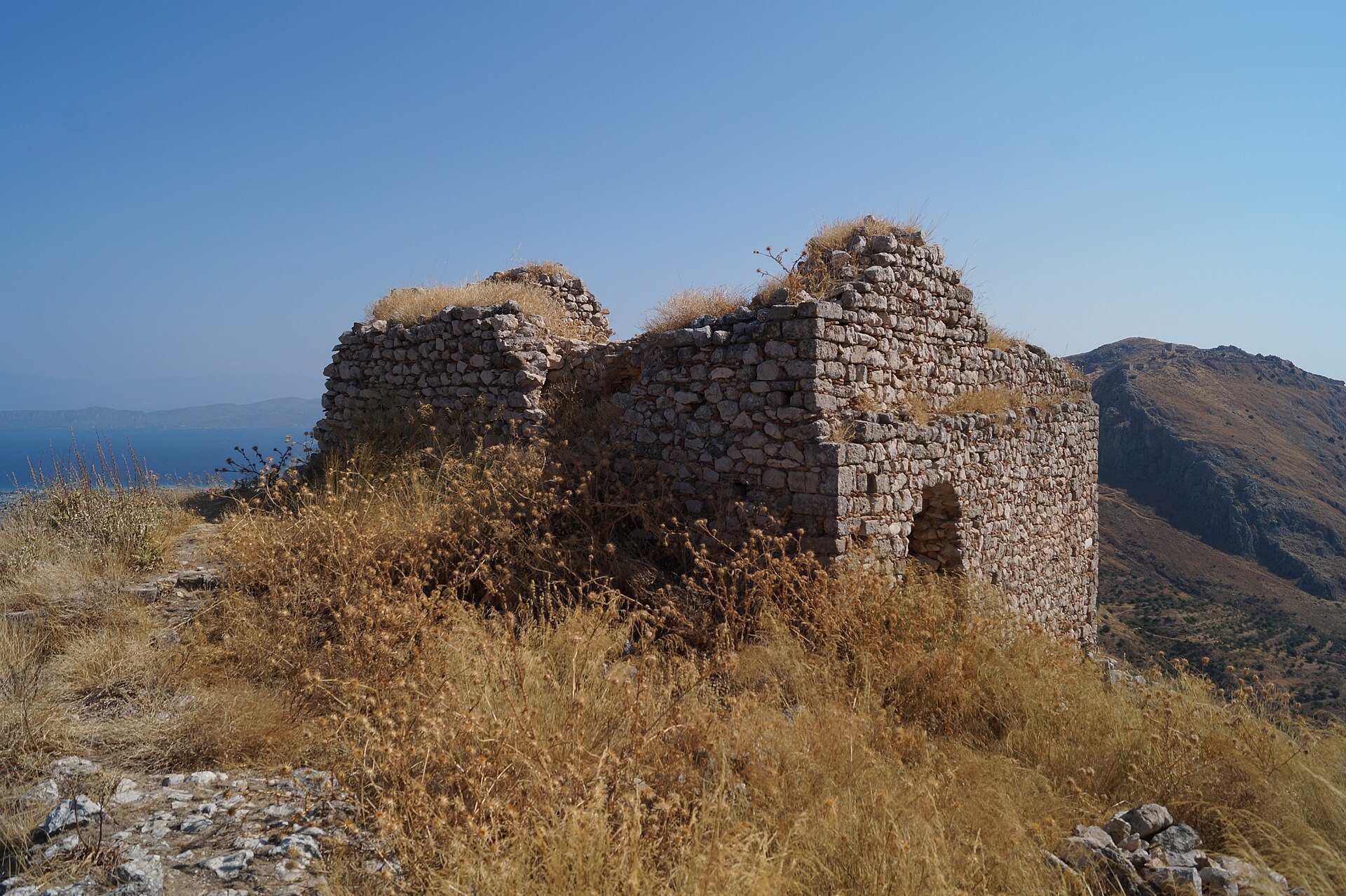
Penteskoufi Castle occupies the summit of Mount Kastraki, a 476-metre-high rocky elevation about 1.25 kilometres southwest of the main entrance to Akrokorinth. The site is a compact rock castle enclosed by substantial walls. Its roughly rectangular enclosure measured about 17 metres from west to east and 35 metres from north to south, covering a stated area of approximately 500 square metres.
Enclosure and defensive walls
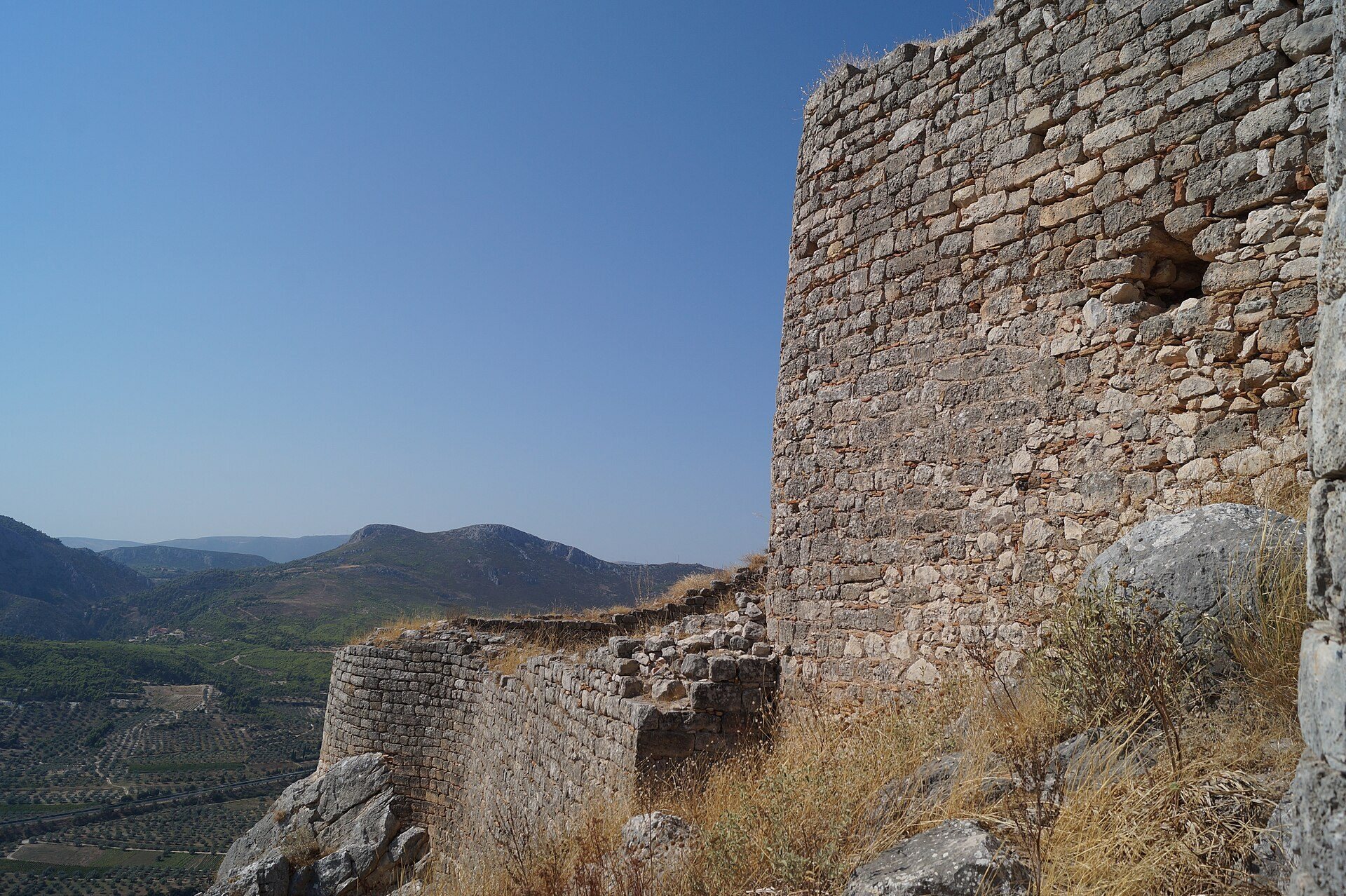
The outer wall was approximately 2.00 to 2.50 metres thick. Six loopholes belong to the second phase of the castle’s use, showing how the defensive system was adapted after the initial construction. The first phase used roughly dressed limestone, with clay bricks fitted into the spaces between the stones. Later alterations employed carefully dressed porphyry blocks, creating a visible distinction between the earlier and modified masonry.
Northern tower and entrance
A tower stood along the northern side of the enclosure. Its base measured approximately 10.50 by 9.50 metres, and its ground floor originally formed one room. A later porphyry wall divided this space into two approximately equal rooms. Entry to the tower was through a doorway on its southern side, while the castle’s sole entrance lay east of the tower.
Nearby settlement and votive tablets
The ruins of the village of Pendeskoufi lie near the Agios Andonios chapel, approximately 1.5 kilometres west of the castle. About 900 metres northwest of the fortress, the findspot associated with the Pinakes of Penteskouphia produced approximately 1,500 recovered fragments. These ancient religious tablets provide an archaeological connection between the castle’s mountainous setting and earlier activity in the surrounding area.